
A few weeks ago at the Annecy International Animation Film Festival, Danse Macabre is the last film of its block to premiere. Before it even begins, around a hundred people stand up and walk out. Spectators in matching “Let’s Stop Generative AI” stickers begin booing. Hisko Hulsing, the film’s director, stands in the theater and gives the protestors a middle finger. In a video by an audience member that’s been circulated online, you can hear one protestor: “Fuck you! This is the end of art! You should all be ashamed!”
Incidentally, Hulsing directed every episode of Undone, the Amazon Prime animated series that won Annecy’s 2020 Jury Award for a TV Series.
Here is what was booed: Danse Macabre took eleven years to make. It’s built from around 75 of Hulsing’s original oil paintings, brought to life by more than 30 artists across four studios in France, Hungary, Belgium, and The Netherlands. Hulsing structured the film around the second movement of Shostakovich’s Tenth Symphony. He shot live action reference footage on a green-screen stage.
Hulsing did not type “apocalyptic war allegory, oil painting style, make no mistakes” into a prompt box. Instead, his animation team spent two years programming custom shader systems trained on Hulsing’s own paintings, applied to character animation so it would match the texture of his canvases. Every frame the audience sees was animated by animators after those shaders were applied. Hulsing himself went through nearly every frame to touch it up by hand. He was incredibly transparent about his process before the festival; he published a behind-the-scenes video where he shows his toolchain. Along with Blender and Houdini were ControlNet, AnimateDiff, and ComfyUI — all open source tools.
This is, apparently, “the end of art”.
There is a spectrum of how to integrate AI into animation and movie-making. On one end is a fully AI-generated film: prompt in, video out, the production process itself is outsourced to a model. On the other is using AI and machine-learning techniques as a tool inside a production pipeline that remains, at every meaningful decision point, human. Danse Macabre is unambiguously the second thing. The protestors at Annecy refuse to distinguish between those.
Annecy’s artistic director Marcel Jean condemned the demonstrations while highlighting the stellar career record of Hulsing:
I cannot condone a witch hunt targeting the work of artists who explore the possibilities of these new tools with transparency.
AI exists, it affects every area of our lives, and it is not going away tomorrow. Burying our heads in the sand will not solve the problem. We have a collective responsibility to pay attention to what is happening, to reflect, and to experiment in order to establish proper boundaries for its use.
Nobody boos a chroma key. Nobody walks out over a cloth simulation or a Denoiser in a render pipeline or facial capture.
The anti-AI crowd’s reflex can no longer discriminate between its targets, therefore their critique is merely a purity test.
The poet Charles Baudelaire, in his critique of the Salon of 1859, called photography “art’s most mortal enemy” and the “refuge of all the failed painters.” It took roughly half a century for photography to be accepted as an art form at all. As I wrote about previously, in 2002 Oliver Stone told George Lucas he’d “be known as the man who killed cinema” for demonstrating digital cinematography.
Jobs were lost in the march of technical progress. Portrait painters really did lose work to daguerreotypes. The world's last roll of Kodachrome was processed in 2011. But booing the new tools and technologies does not stop artists from understanding their use and purpose.
I want to tell you about a personal hero of mine: Ub Iwerks. Iwerks drew Mickey Mouse — animating Steamboat Willie more or less single-handedly. Later in his career, he focused on a different problem entirely: how to integrate technology into animation. At his studio in the 1930s he developed his own multiplane camera. Returning to Disney he invented the multihead optical printer that combined live action and animation, winning a technical Academy Award for it in 1960. He won a second one for the sodium vapor traveling matte process. But the one innovation of his that I keep coming back to on this subject is xerography.
Iwerks adapted the Xerox process to photocopy animators pencil drawings directly onto cels, eliminating the inking stage where artists hand-traced each drawing onto celluloid. Especially important when you need to animate the millions of spots of One Hundred and One Dalmatians. It automated real jobs done by real artists, and it became the industry standard within years because it made previously impossible productions possible.
Is such a technique worthy of boos and protests?
Now, let’s talk about the other end of the spectrum: fully AI generated films. Most of them are bad. Slop, even.
That’s fine. Crap is fine.
There is honorable precedent for crap. Roger Corman built a studio machine that produced cheap, fast, frequently junk films. That machine trained Coppola, Bogdanovich, Scorsese, Cameron, and Dante. Corman turned slop into a school.
There is pedagogical value in making crap. The dismissed tool is the gate the next generation of craftspeople walk through. Somewhere a kid is making bad AI shorts and learning rhythm, pacing, and composition on a budget of practically nothing. Bad work filters itself out, as it always has, but it is not without value.
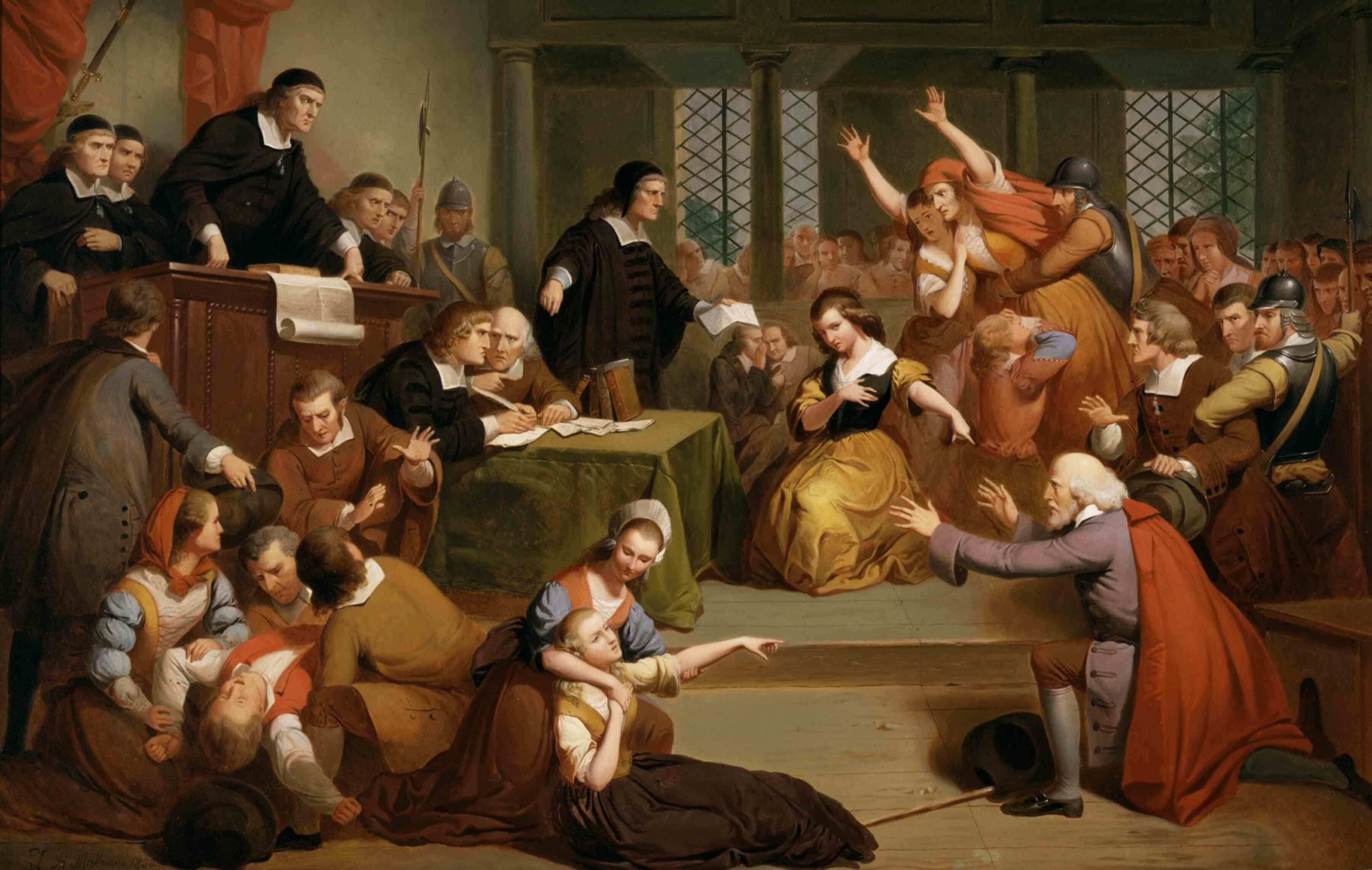
Marcel Jean used the phrase “witch hunt” and it’s a good one. The historical record on witch hunts is entirely one-directional. In a witch hunt, the accusers become the cautionary tale — we judge the hunter far harsher than the witch.
The Annecy protest did not land on some prompt-jockey passing off model output as craft. It landed on the one filmmaker with pre-established bona fides, who hired thirty artists, trained a model on his own canvases, and published his entire toolchain before anyone asked.
I find myself frequently dumbfounded at the anti-AI doomer crowd. With terms like “ecocide” being used to attack filmmakers and artists who dare experiment and explore. I hope such vitriol does not discourage the young and ambitious from learning how to tell their stories.
No posts
Comments
Nothing yet. Say the first thing.
Sign in to join the conversation.