
4/21/26
Hi Writers, it’s Nina.
Prologues exist and some are pretty great.
But most writing advice I’ve had about prologues is to never write them because they delay reader immersion in a story—annnnd the name of the writing game is to keep the reader’s attention. So if you pull them into a world that isn’t the real story and spit them out, they may resent you and not pick the book back up again.
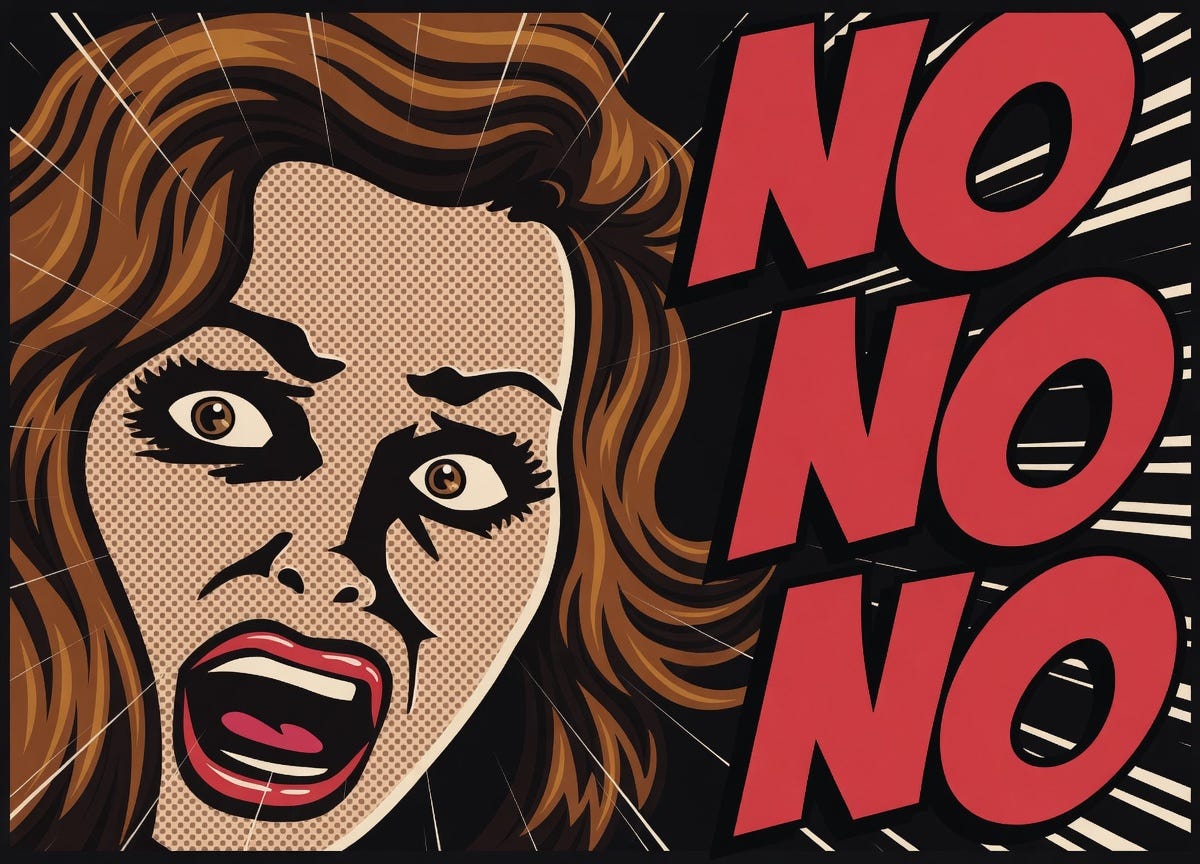
Dav Pilkey in Ook and Gluk: Kung Fu Cavemen from the Future —what? oh, did you think I was going to talk about some high-falutin canonized books with prologues? We’ll get there, but with a Pulitzer Prize winning graphic novel. But before we get to that part of the post, I have to tell you this:
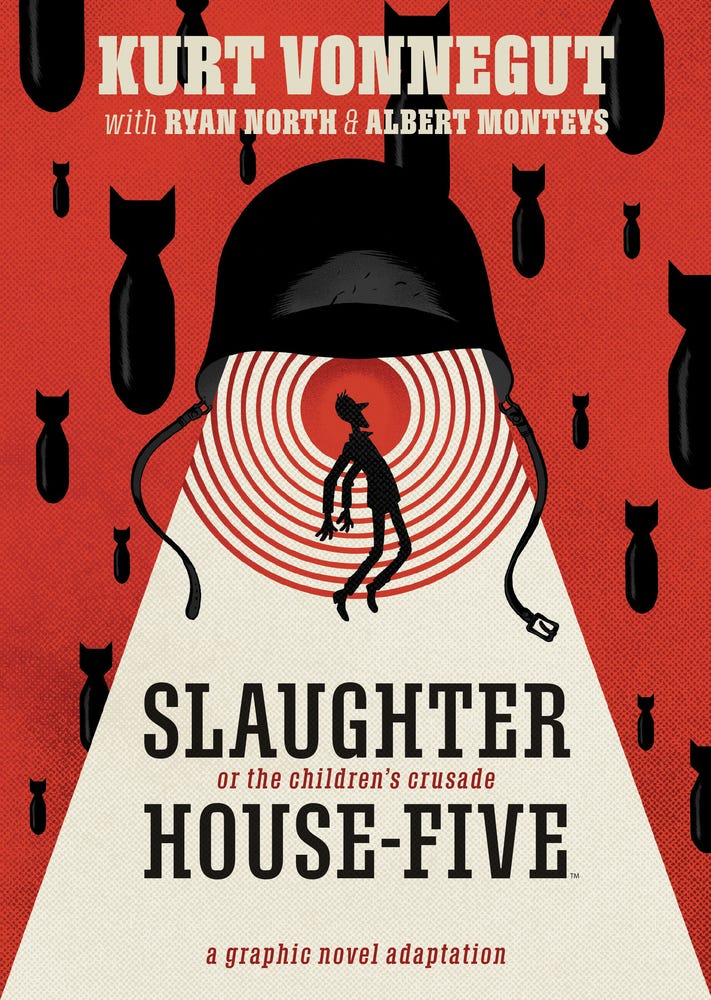
My first love was a book with words and pictures. In fact, I just finished this version of Slaughter House-Five and it was SOOO GOOD. The pictures and the words lock a reader (like me) into an unparalleled fictive dream. The sheer length of my attention span for these books could get me confused with someone who doesn’t have a smart phone.
You see, I hated that period in third grade when we moved from reading books with pictures to reading books without pictures. I was forced to be satisfied with some stupid line drawing between the chapters. I hated it, probably because I’m dyslexic (funny for a writer, I know, but there are many of us, and we are all locked in a battle of wills against the mighty word). As such, I have never let go of my love for picture books. And now when I think about regular novel structures, I also think about picture books and graphic novel structures.
So when a friend asked me why one SHOULD write a prologue, my first thought was to think about my selection of graphic novels because they use prologues more often than most novels and they are easier to conceptualize.
We can learn a lot from pictures :)
How and why do graphic novels use a prologue?
Origin stories—the original set of circumstances that make the character distinct and why they might be at the center of the story you are about to read. Remember baby Superman leaving planet Krypton as it is exploding and then landing on Earth. Then we discover that while he was a regular Kryptonian, on Earth his strength and abilities far exceed the norm.
Maus: A Survivor’s Tale by Art Spiegelman prologues his dual narrative with a memory from his own life where he falls while skating with friends, the friends leave him, when he returns home for comfort his father’s only frame of reference is being a Holocaust survivor…because how could it be anything else?
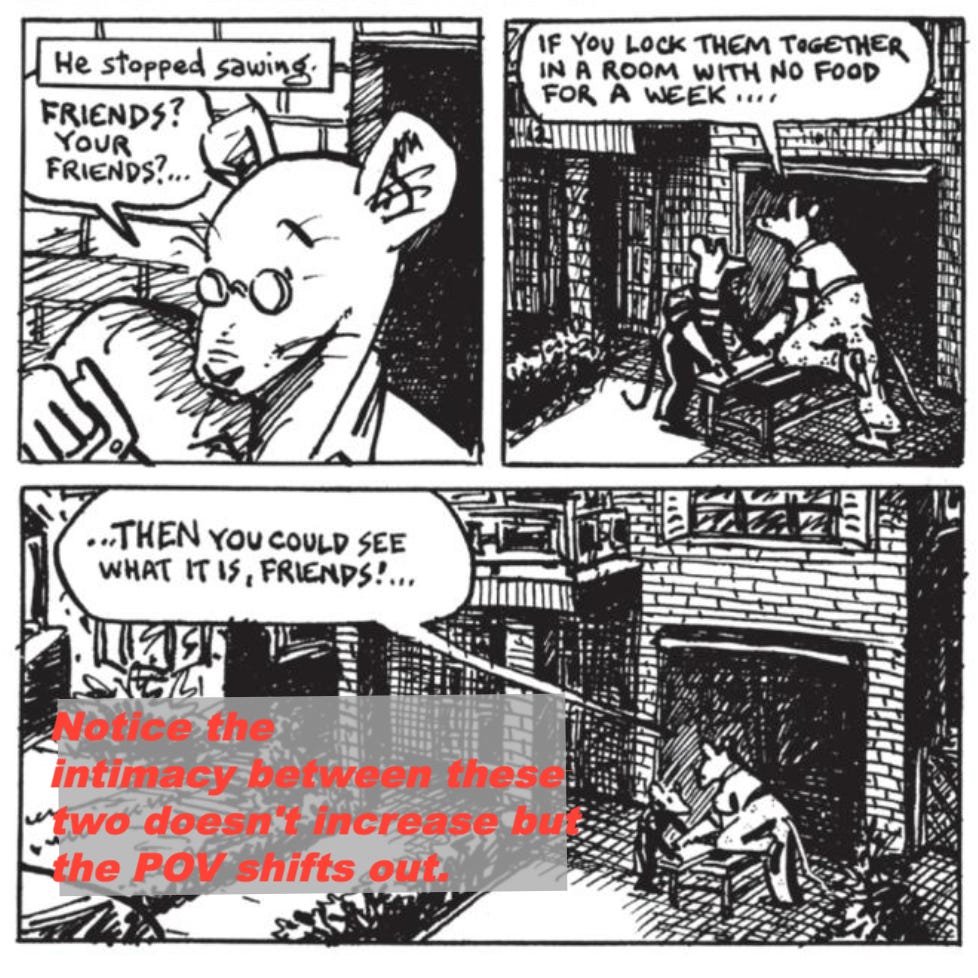
In media res or a teaser from the middle of the book. We are thrown into the action of the story. This is a signal to the reader about what to expect in terms of genre and setting and action. This is important because the writer might want to begin on a regular day in the life of a character but then the reader won’t know what kind of book to expect. Is this really a romance? Is this an action book? (Classically, and not a graphic novel, Game of Thrones did this because the White Walkers (zombies) didn’t actually appear in the series for a long time and the reader needed to know there was some strange stuff going on north of The Wall.)
Sometimes it’s a crime that begins the story, and then we meet the primary characters whose job it is to solve the crime. In this same vein, sometimes the prologue creates a question that pulls the reader along, and keeps the reader wondering how the events in the prologue will connect plot and character pieces together later on. Like a baby being born under mysterious circumstances, and then later in the book you understand who this baby is and why the circumstances of their birth needed to be a secret.
Backstory—there is information that the reader must know, an event or character interaction that frames how the beginning of the opening of the story is understood.
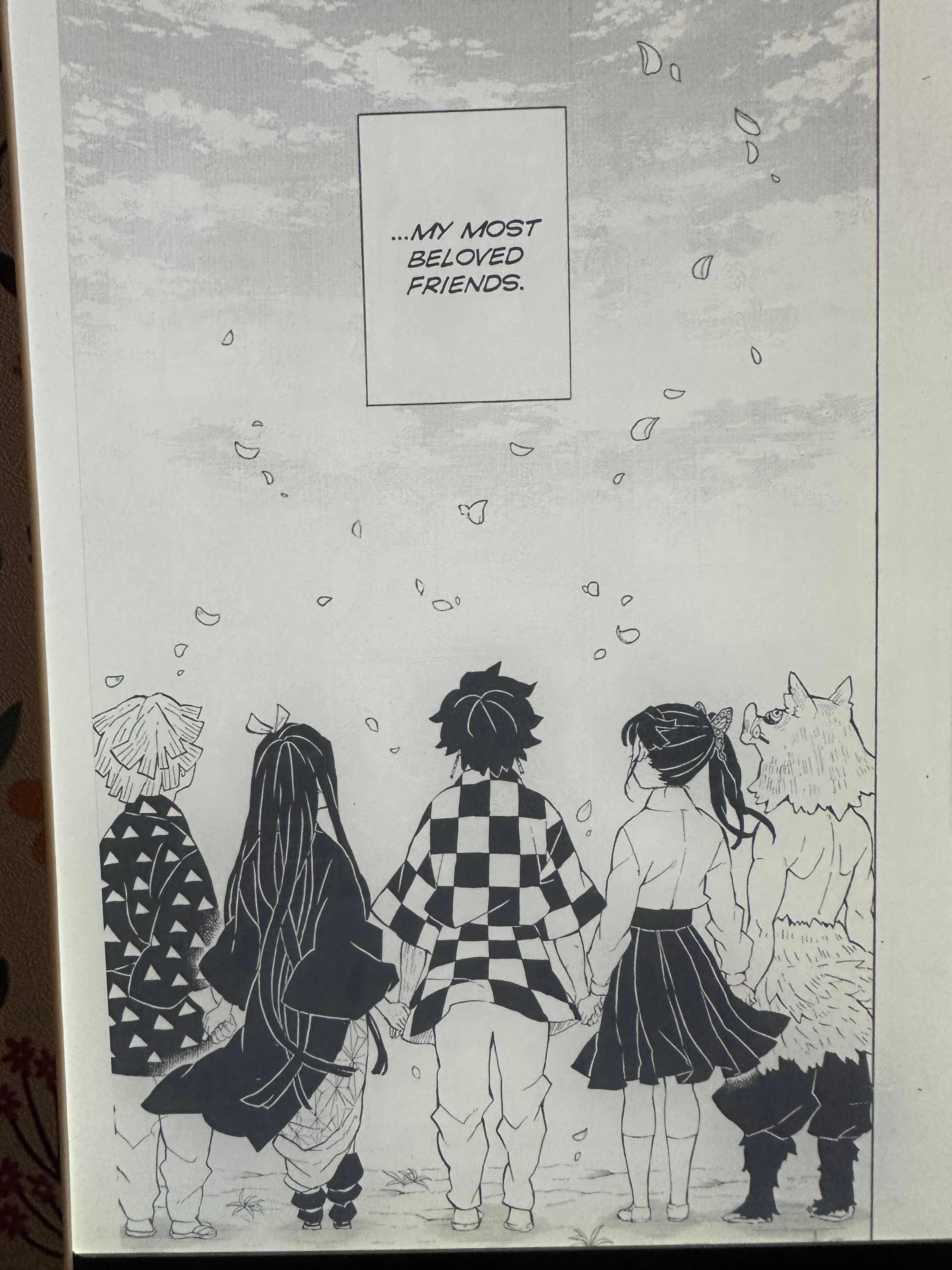
^^Here’s the opening image from the final volume of Demon Slayer: Kimetsu no Yaiba by Gotouge. Despite what follows, and it is gory as hell, there is, above all, a strong forever-kind of connection between these five characters.
But every time there is a prologue, it’s because the author NEEDS you to know this information before you can proceed in order to frame the story or to keep the reader asking…How does what I just read relate to this? which is a form of tension, and tension is a way to keep the reader reading.
In Dav Pilkey’s Ook and Gluk prologue (there are actually four) we learn some significant details about growing up in Caveland, Ohio in 500,001 BC—specifically that Big Chief Goppernopper had beef with those rascals, Ook and Gluk.
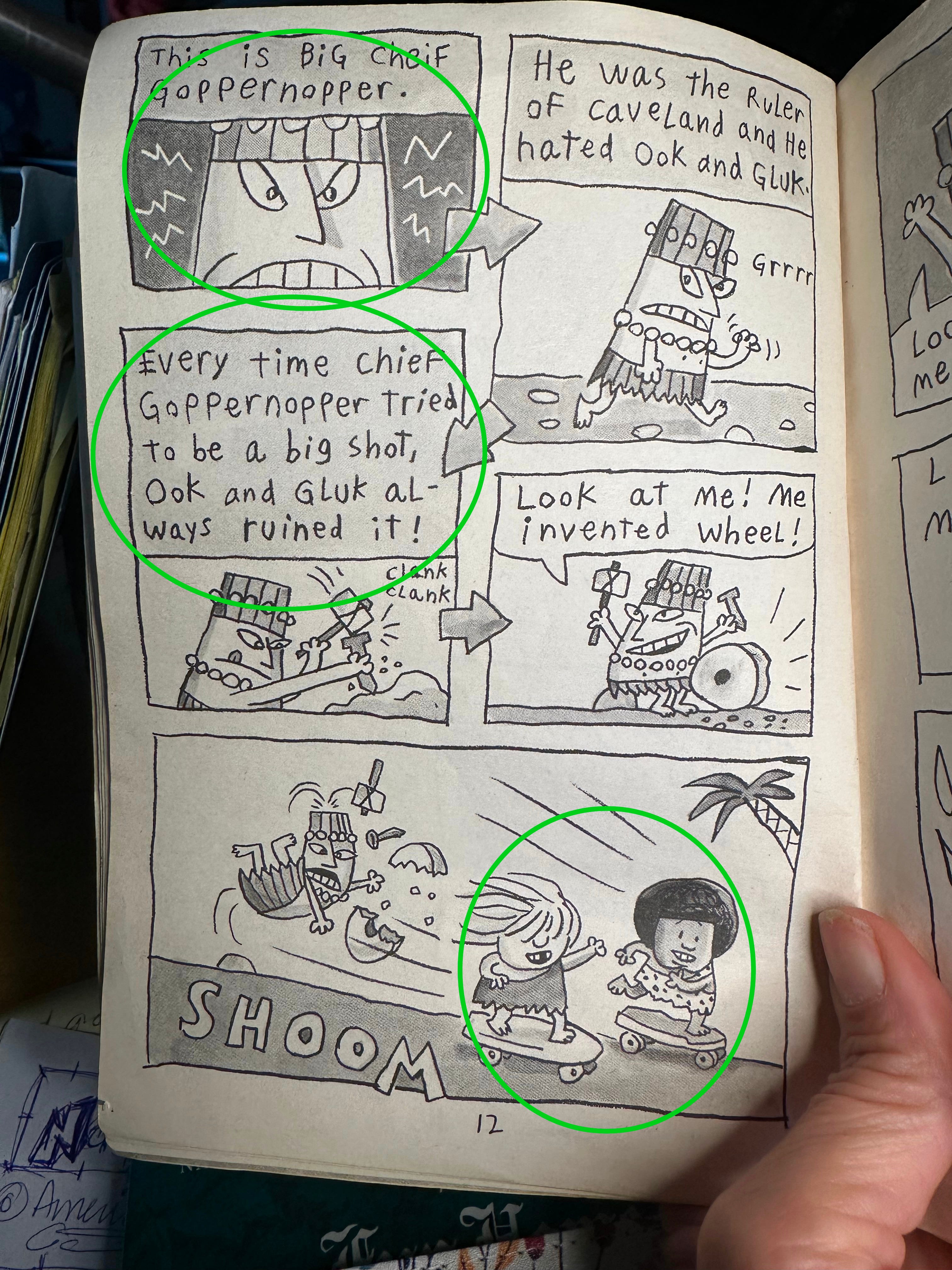
The whole story that follows is predicated on this specific moment in time.
That’s the real power of a prologue done well. It gives the reader exactly what they need to launch into the story. And if it’s done right with words and pictures (jk: or just words) the reader won’t resent you. They’ll be hooked.
I have Fun Home, Alison Bechdel’s Family Tragicomic open on my desk. The opening image is this:
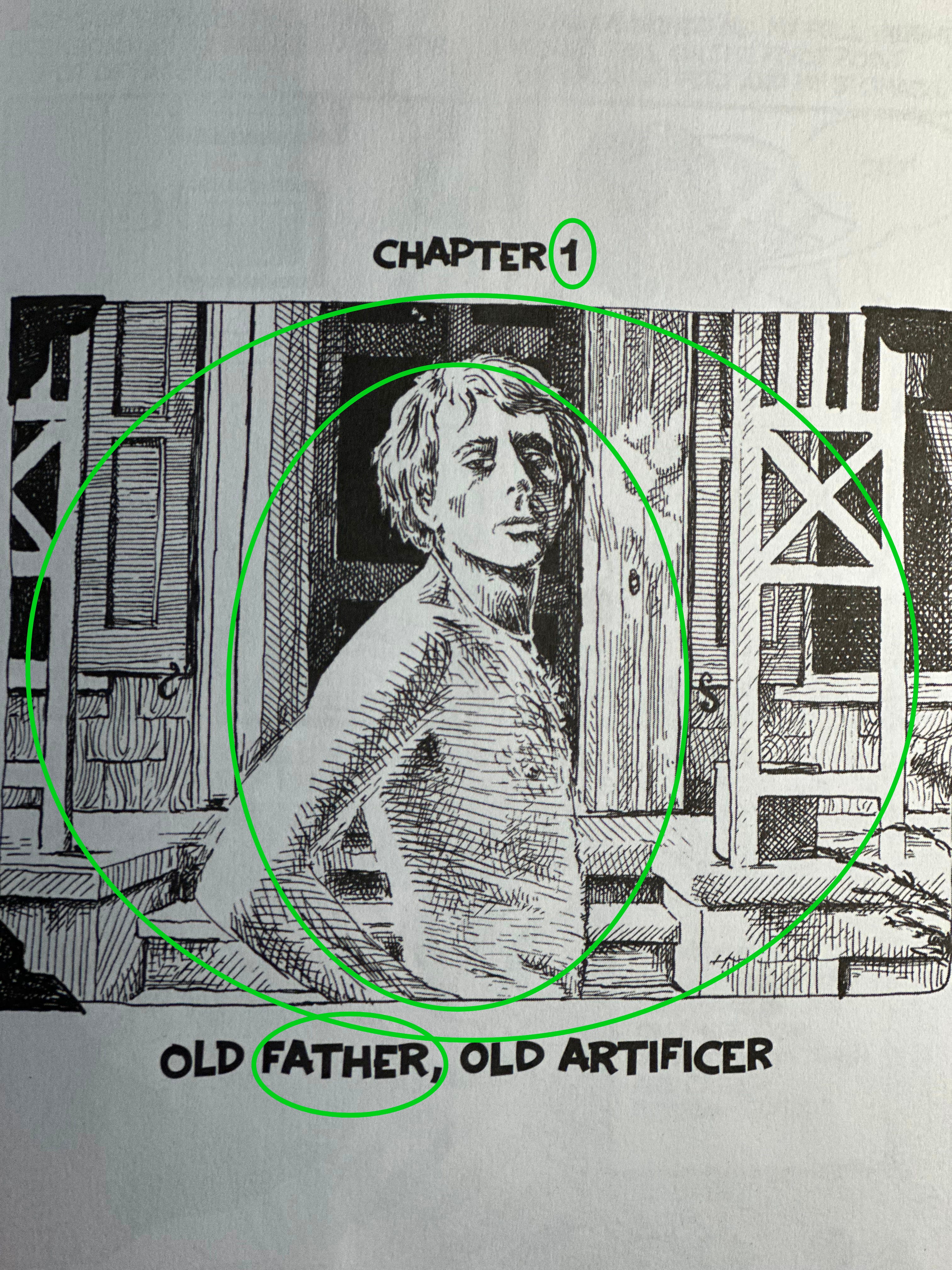
Who is centered in this image? What is this person wearing? What is he standing in front of?
Writing time:
What is the one thing (that a person close to you) should know about you and your experience growing up, before you can tell us the rest of the story? What is the opening image?
Ciao and thanks for reading,
Nina
Thursday Flash Club — Weekly on Zoom — Thursdays at 5 PM PST/ 8PM EST!
- Prompts, mini craft lessons, and community to keeps us writing, talking, and trying new things.
Writing Words into Life! Elements & Techniques of Basic Scriptwriting — April 14 - 7 pm EST
Develop dialogue, explore the playfulness of scripts, and rediscover fun in storytelling with Adam Rodriquez-Dunn.Folk Horror and Story Structure — May 12 - 7 pm EST
We explore folk horror as a storytelling framework with Andrea Adams.
Comments
Nothing yet. Say the first thing.
Sign in to join the conversation.