
Flash Club returned with Bill leading a discussion of ’s “No Time Like the Present,” a sharp, unsettling flash that gave us plenty to study. We looked at how repetition can work as both structure and escalation, how sentence length can shape tension, and how a story can build a believable world through implication rather than explanation. We also talked about turns, hinges, endings that reverberate, and the way craft choices can guide a reader’s physical experience of a piece.

Start by placing a character in a tense emotional moment: waiting for an important call, driving somewhere they should not go, cleaning something they do not want to face, or sitting with someone they’re avoiding. Use longer, calmer sentences at first, even if the character is uneasy.
As tension builds, change the rhythm. Shorten sentences. Speed things up. Use repetition, interruptions, or sudden breaks. Let the language reflect the character’s stress.
In the final section, let the structure loosen or crack open. Use fragments, clipped thoughts, rushed momentum, silence, or release. The goal is not a perfect plot, but to explore how sentence shape and rhythm can mirror emotion.
(a big shoutout to for joining us for this one!)
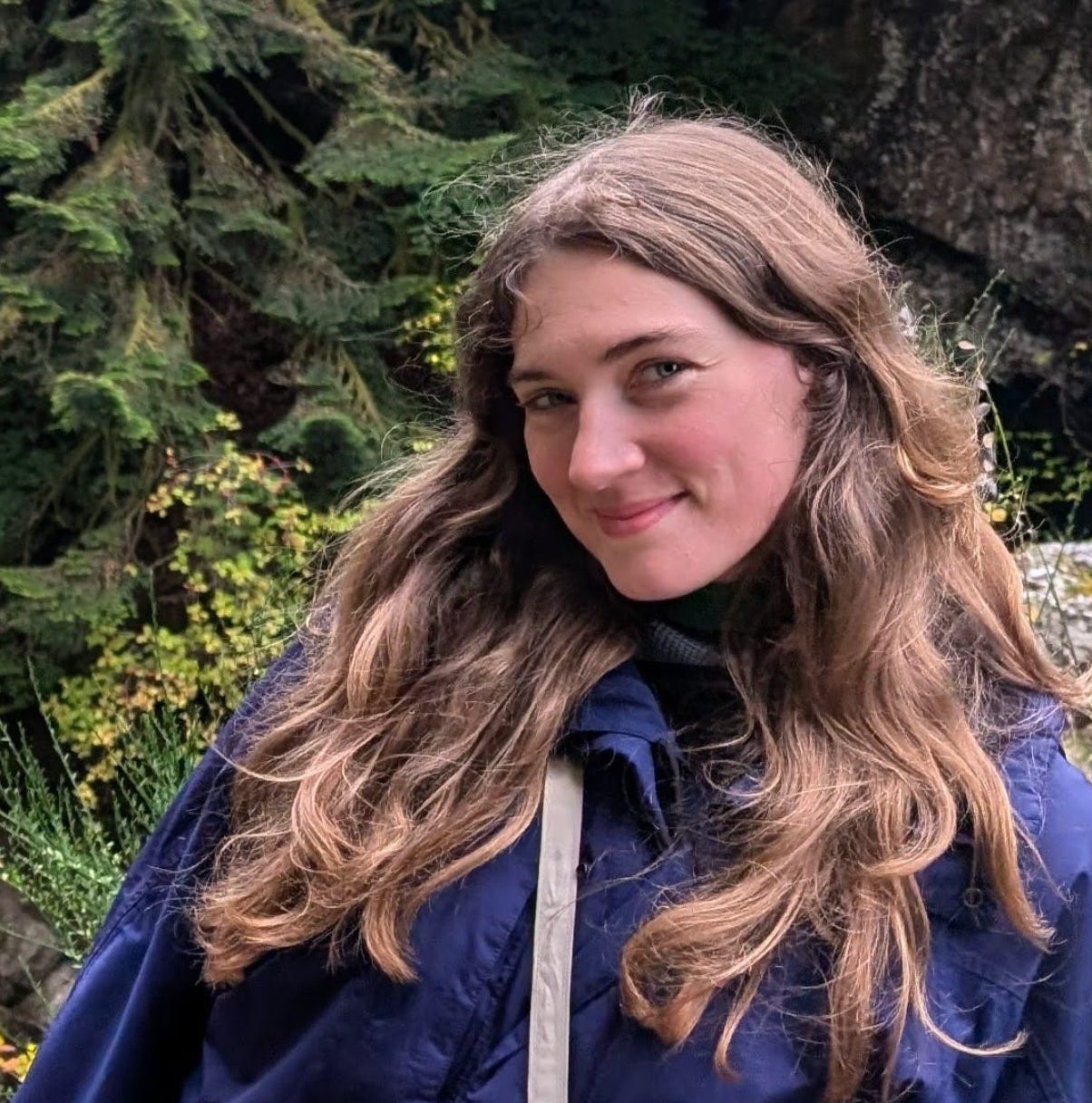
Bill had the opportunity to ask a few questions about her work…
Your prose shifts noticeably depending on the story, tight and repetitive, conversational, lyrical. How do you find the “right” voice for a piece? Do you ever rewrite a story in a completely different voice to see if it improves?
As “me” I tend toward the lyrical, sometimes in excess. I appreciate how a terse character can moderate my worst impulses. In No Time Like The Present the repetition comes from the story being a particular experiment. I suffer from OCD and have extremely repetitive thought loops which I sometimes try to combat with mantras. This story was somewhat written in that voice. For short work, voice is an early choice I make in a piece. I don’t try to change it later. For the novel I’m working on, which is written in first person, I have had to change the main character’s voice in successive drafts as I get to know her better.
I’ve been mostly writing flash but have the urge to write more long-form. How do you decide when a piece should be flash instead of something longer and more expansive? Was there ever a longer version of No Time Like the Present with more backstory or world building?
I rarely write a flash piece that is less than 990-some words. I enjoy it as an exercise in concision and editing. Sometimes in a flash story I’m tempted to add extraneous detail, but there’s no room for it. You have to scoop out everything that isn’t essential to what you’re trying to do. I do sometimes expand a story, especially when I had real difficulty staying under 1000 words. I once tacked 300 extra words on the end of No Time Like The Present, but the story didn’t need them. It just gave the ending a bit more breathing room. I’m in a weird phase of writing right now where I can either write flash or my novel but nothing in-between.
Your endings tend to feel definitive but not over-explained. Do you usually know the ending before you start, or does it emerge late in the process?
I don’t know how endings come into being… Now that I think about it, I almost never start writing a story unless I know how I want it to end. My computer is filled with first paragraphs of stories that never got written because the ending wasn’t apparent to me yet. In “No Time Like The Present”, the story is so horrible that it had to have a happy ending, anything else would be unfair. The tricky part was outsmarting the Slithig.
What’s something you’re still trying to get better at as a writer?
I’m working on a novel at the moment and am trying to get better at straying from strict chronological order in my narration. I think the beginning of a novel shouldn’t be the first chapter. It’s better to start one-third of the way through and sprinkle in the beginning as backstory. But finding when and where is tricky.
What have you read recently that really lit you up?
Oh so many things. For flash fiction, I will shout out hex literary, the magazine I read every week. Just about every piece they publish is a banger. “Dispersal” by Phoenix Alexander and “A Slow Boil” by Adrian Dallas Frandle are two I enjoyed recently. For longer work: this year I read Primeval and Other Times by Olga Tokarczuk and it rewired my brain. I am slowly working my way through her entire bibliography.
Join us every Thursday at 5 PM PST / 8 PM EST for Flash Club on Zoom.
Subscribe so you never miss the link + what we’re reading, writing, or uncovering next.
Comments
Nothing yet. Say the first thing.
Sign in to join the conversation.