
Raymond Recommends: What to Watch, Read, or Listen to This Week: Three suggestions for a stimulating week of media.
Writer’s Quote: Ray Bradbury on writing as a defense against the real world.
Creating a Dynamic Concept: You’ve got a great idea for a story. Now what?: Having a polished, developed concept can inspire you to write that novel or script.
5 Resources for Writers: Good stuff to write better.
Raymond Recommends: Watch, Read, or Listen to This

Movies: Gail Daughtry and the Celebrity Sex Pass is the funniest movie I’ve seen in a long time. Using The Wizard of Oz as its inspiration, the film follows a naive Kansas woman’s quest to even the score with her fiance by having sex with Jon Hamm. The writing by Ken Marino and director David Wain is original and delightfully surprising. Every time you think you know where a scene is going, it does something unexpected. Most important, it’s hilarious. This is a master class in writing absurdist comedy like Ace Ventura and Raising Arizona. Highly recommended.
[Here’s how the writers produced the first draft in seven days: ‘Gail Daughtry’: Inside the 7-Day Writing Exercise That’s Produced Three Feature Films]

TV: America’s Sweethearts is a docuseries about the Dallas Cowboy Cheerleaders (DCC). A friend recommended it and I shook them off scoffing that I had no interest in watching a show that promotes negative stereotypes about women that enables and encourages their oppression. I was right—and wrong. The show does women in general harm socially and politically, but it is also compelling and offers many great lessons for writers about the nature of unintended villainy and unreliable narrators. I watched all three seasons.
The title is ironic, though whether that’s intended or not is unclear. The DCC management tries to mold young women into a romanticized and unrealistic model of what they think is the ideal American Woman: thin, smiling, sexual, compliant, Christian, and needy. What’s especially sad throughout is that the young women have no idea how they have been manipulated and brainwashed into believing this is a desirable goal, despite all the evidence around them that it is self-destructive. From a young age they are rewarded with constant validation when they embrace these ideals of beauty and femininity. They don’t see how that need enslaves them into a narrow and self-destructive image.
Every one of them is an amazingly talented dancer, as we see from their audition solos. But the DCC then force them into a performing style that is 90 percent sexual, corrupting and demeaning their talent. It is a metaphor for how society views women’s worth sexually first. Their routines are basically foreplay. They are no longer dancers but one step up from strippers. [No mention is made in the show of owner Jerry Jones’ scandals, including a civil lawsuit for sexual assault scheduled for trial this year, and a paternity suit.]
The real villains of the story, though they clearly see themselves as the heroes, are the two women who run the DCC, Kelli Finglass and Judy Trammell. They are well-meaning but lack any insight into the damage they inflict through their management style. They treat the women as their daughters, which they and the cheerleaders see as a good thing. It’s not. Instead of being professional with them, they have the women desperate for their approval. When a few of the women complained about the horrendous pay, they were punished as disobedient children rather than dealt with as professional employees. Only the publicity because of the show’s popularity forced a pay raise. Finglass and Trammell have made themselves the royal matriarchs in which they are forever “loved” and needed by desperate women who deserve so much better. Sadly, no one has the insight to break the loop and free themselves. That conflict is the basis for most fiction.
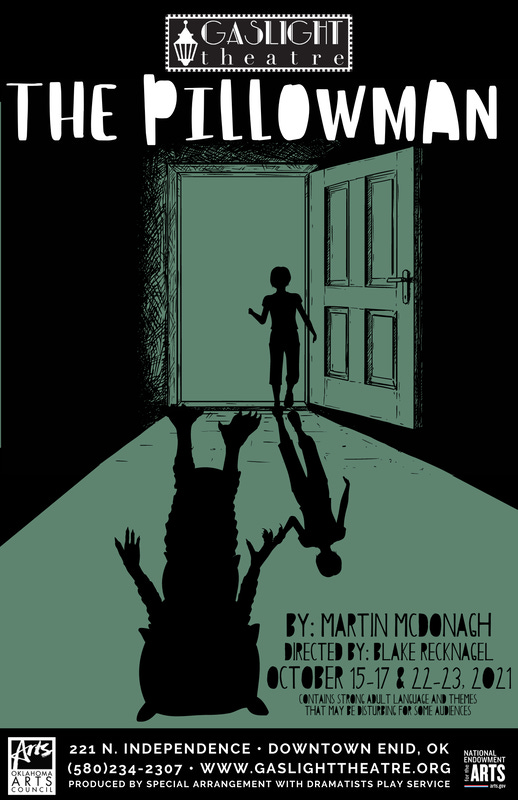
Plays: I’ve been reading plays since I was in my teens. I grew up in a small town in which there was very little theater so I had to read the scripts of the shows I heard about. Turned out it was valuable in teaching me how to write better dialogue. In a play, dialogue has to convey so much about the characters without being too direct. Because it is so much of the theater experience, it must be compelling and entertaining all on its own, often without the help of internal monologue or lots of action.
The Pillowman is a 2003 play by Martin McDonagh, one of my favorite filmmakers (In Bruges, Three Billboards Outside Ebbing, Missouri, and The Banshee of Inisherin). This play, which I read but have not seen in production, is a mash-up of Orwell’s 1984, Steinbek’s Of Mice and Men, and Kafka’s The Trial. The plot: A writer is being questioned by the police about a series of murders of children. The two cops doing the interrogating are wonderful characters, each with his own agenda. The play explores the role of art in society as well as what makes an artist. A powerful and dark work.
“You must stay drunk on writing so reality cannot destroy you.”
—Ray Bradbury
Much of each day I spend in a fictional world of my own making. Part of the time I’m writing about that world. But most of the time I’m living there, moving among the characters as they interact, opening doors that lead me into their pasts and futures. I’m a visitor there, but a fully engaged visitor who delights at my good fortune to be able to visit whenever I want. If I were a child, I’d be accused of being a habitual daydreamer, lost in my make-believe world. Guilty as charged.
However, my fictional worlds do not keep me from fully engaging in the “real” world. I interact with friends every day, I teach classes, I go to the movies with my wife, I talk on the phone with my children, I read numerous news sources. But whenever I want, I can slip off into my fictional world where I relax by concocting plot, finessing characters, delving into theme.
This is like deciding whether to go to a party in a friend’s car or to drive yourself. If you drive yourself, you can leave any time you want. You are not stuck interacting with people you don’t want to be around. You are not relying on anyone else to go where you want. The ability to enter my own fictional world at will is a superpower that both protects me from the mundane and energizes me to do more.

Coming up with a concept to write about is the easy part. Writers are inspired by so many things, including the conflicts in their own lives, their friends’ lives, and what they read in magazines and see on the news. Or just by some quiet daydreaming while driving to work. That moment of inspiration usually arrives in the form of a plot idea. A slightly sunburned writer is sitting on a plane, returning from a family vacation in Hawaii, her husband and daughter asleep beside her, when she looks out the window and asks herself, “What if when we land and there’s no one in the airport? No people at all!” Excited, she grabs the barf bag from the seat pocket in front of her and the crayon from her daughter’s tray and begins scribbling notes for a possible novel.
At the same time, a writer across the aisle is tapping away on his laptop, writing an impassioned letter to his father and mother, detailing all the reasons his visit to them ended so disastrously. But as he lists his complaints about his father’s emotional distance, overbearing expectations, and biting temper, he remembers that summer when he was ten and his father patiently taught him to build a model of the Golden Gate Bridge out of Popsicle sticks. He wonders what happened to change their relationship. Was it something he did to disappoint his father? Was it something his father did to betray his family? He opens a new document and starts describing that summer, the smell of the glue, the dank humidity in the garage, his father’s laugh when he pretended to be Godzilla about to destroy the bridge. The writer smiles, realizing there’s a novel in all this.
Will either of those concepts ever become an actual novel? Mostly, that depends on the drive and discipline of the writers. But that drive and discipline is greatly affected by their ability to maintain interest in the novel. And that interest is affected by how well they’ve thought through their concept. The domino effect of writing. Many good ideas are abandoned after fifty pages because the writer hadn’t thought through and clearly articulated the concept.
The first step in insuring you will actually finish telling the story is knowing what the story is about. That means you should be able to write the concept of your story in one simple sentence (fewer than a hundred words). The hard part of this is that beginning writers think it is impossible to do because their concepts are too complex and multi-leveled and thematically tiered, blah blah blah. While the novel itself may be all those things, the concept really isn’t. Imagine if your novel were made into a movie; how would it be described in the Netfix blurb?
What is the advantage of the one-sentence concept? It helps the writer focus on the main elements of the story: character (who are the characters most affected by the events), plot (what is the core event that causes most of the conflict), conflict (what are the conflicts that characters face with each other, with themselves, with the outside events), and theme (how and why will the character change—and if they don’t change, why not). Once you’ve asked yourselves these questions, you’ll be able to flesh out that cool idea into a workable concept that is able to support the weight of a novel or screenplay.
Let’s take one of the most complex novels in American literature, Moby-Dick, and see what the one-sentence concept might look like if Melville had to pitch it to Netflix:
A naïve young sailor joins a doomed whaling ship whose captain is obsessed with killing the giant white whale that took his leg—and with it his faith in a just universe.
We learn a lot in just 32 words. The first part of the sentence introduces the novel’s three main characters (Ishmael, Ahab, and the whale). It also introduces the plot (they are hunting a giant whale; giant=deadly), the conflicts (naïve sailor versus obsessed captain; obsessed captain versus giant whale), the stakes (“doomed ship” implies a bad ending for some) and suspense (who will survive). The second part of the sentence tells us the thematic content: the story is about loss of faith and therefore will be about a search for truth about God, nature, and humanity’s place in an indifferent universe. If Melville can imply all that in 32 words, certainly you can.
Different writers work differently. That means that some writers work better with a detailed outline that lays out everything that will happen throughout the entire novel. However, most writers don’t work that way for a very good reason. Planning too far ahead boxes the writer in, not allowing them to explore his concept as they write. It’s like planning a road trip with every stop and the duration of that stop before you leave. Yes, it’s nice to have a plan, but too tight of a plan doesn’t allow room for discovering new things, or lingering over something you had no way of knowing would interest you so much. Writing a novel is a voyage of discovery: you have a rough idea where you’re going and what you hope to see (that’s your concept), but along the way you may want to visit someplace you hadn’t thought of. A detailed outline forces the writer to go from Point A to Point B because all the subsequent points depend upon it.
That’s why it’s best to use your concept sentence as a guide (a road map) that allows you to begin your trip with high expectations and excitement about where you’re going. But then as you write chapters and learn more about the larger possibilities and meanings of your concept, you are free to take the story and characters in exciting new places that you couldn’t have anticipated before.
The plot-driven concept is usually used in genre fiction such as mystery, suspense, Western, romance, fantasy, sci-fi, and so on. The reason for this is that readers already know all the genre’s conventions and now are looking to see what the writer is going to do with those familiar conventions that is unique and exciting. In short, they are looking to be surprised. For plot-driven concepts, it helps to construct your sentence around a “what if” opening because that forces you to focus on what is unique and surprising about the concept.
Example:
What if a man wakes up to find he is married to a woman he doesn’t know, has a child he doesn’t recognize, a high-powered job he doesn’t understand, and an assassin trying to kill him for unknown reasons.
The popular “awoke with amnesia” plot is itself a sub-genre, familiar yet still intriguing. The above example is a solid concept sentence, surely enough to launch into a novel. But wait, look it over again. Are there any tweaks we might add to help us understand the story better?
Revised Example:
What if a man wakes up in a hospital with a bullet wound to find he is married to a smart, successful woman he doesn’t know, has an adoring but emotionally withdrawn child he doesn’t recognize, a high-tech job he doesn’t understand, a kinky mistress who is blackmailing him, and an assassin who is impersonating one of his friends, family or co-workers in order to kill him for unknown reasons.
Those tweaks have changed the nature of how the writer might think about the story:
1. Waking up in a hospital with a bullet wound immediately establishes the action and the stakes. It might also be the cause of why he can’t remember how he got this life. Or the bullet wound might be a misdirection, setting up the reader for a surprise later. The cause of the amnesia is something more exotic (hypnosis, a drug, etc.). And the bullet wound might turn out to not be from the assassin, but self-inflicted for some cool and surprising reason.
2. Making the wife successful and smart creates more stakes, suspicion, and suspense. More stakes because we care more about her because she seems like a good match for him. More suspense because we then want them to end up together at the end. And more suspicion because we have to wonder if maybe she’s in on whatever plot is being hatched against him.
3. The “adoring but emotionally withdrawn” child creates an opportunity to reveal the protagonist’s essential character. Because he can’t remember who he really is, he can only determine his character by how he reacts in situations. Seeing him react sympathetically with the boy reveals that about him. However, this is also an opportunity to do more. Perhaps at first he’s suspicious of everyone, including the boy. So, rather than show compassion, he’s dismissive. Now, the writer has set up the opportunity for the protagonist to change, to grow, to find his true character by forgetting his old persona. Also, finding out why the boy is emotionally withdrawn can reveal the mother’s character and make us bond more with all of them, which increases the stakes and therefore the suspense.
4. Having him work a high-tech job that he doesn’t understand sets us up for some entertaining scenes as he tries to fake his way through work while investigating who he really is. Also, high-tech sounds like the basis for motive for why he’s in this situation in the first place. His first thoughts are that he’s been targeted because he’s working on some top secret project. Of course, this all could be a red herring and the real reason isn’t apparent.
5. Here’s the tricky addition: the kinky mistress who’s blackmailing him. Now the reader doesn’t know what to think. How can this guy betray his smart and successful wife and emotionally withdrawn son? Is he just another bastard? Or is the wife much worse than we thought? Or is she not really his mistress but part of the scheme? One more plot avenue for him to explore.
6. Having the assassin pretending to be one of his friends, family or co-workers adds a mystery element that keeps the reader in suspense. Who is it?
Tweaking the concept sentence forces the writer to think more specifically about the possibilities of the plot before boxing himself in by writing that first chapter.

The character-driven concept will reveal a simple plot structure, but will focus on the emotional conflict:
Example:
Darren returns to his hometown for his twentieth high school reunion only to find he still has feelings for his high school sweetheart, now married with children.
The “returning to small town after twenty years” is also familiar, but also compelling because it has so many emotional conflicts that can provide thematic depth and still be entertaining. The above example could be tweaked to make the concept a bit more specific and therefore more intriguing and surprising:
Revised Example:
Disgraced writer Darren returns to his dying hometown for the retirement of his old basketball coach only to find he still has feelings for his high school sweetheart, now married to his brother, and who, as mayor, is embroiled in a bitter battle with a rival town to bring in a new car factory to save the town.
Here are the advantages we get from those tweaks:
1. “Disgraced writer” adds personal conflict to Darren. His trip back home is all the harder because people will know about his disgrace. Therefore, his return has to be about seeking some sort of renewal or redemption. How does a writer get disgraced? Plagiarizing, lying, revealing secrets he’s promised not to?
2. “Dying hometown” adds plot and character conflict because the people he will be running into upon his return will mostly be in financial turmoil. That breaks down politeness barriers and allows characters to reveal their feelings more directly—and sometimes cruelly. The plot conflict is created by introducing some suspense element of hope for the town, as suggested by the last part of the sentence: “bring a new car factory to save the town.”
3. Replacing the high school reunion with the retirement of the coach has several advantages. First, high school reunions are so familiar that they require certain standard scenes (such as the reunion party itself). Second, since Darren will see many of the people that he went to high school with anyway, the coach’s retirement allows us to focus on Darren’s high school experience playing basketball. It sets up a contrast between his days on the team and his current life. Third, having the coach still around, allows for someone who knows him from both times, and is personally removed, to offer insights to Darren.
4. Married to his brother? Ouch! That’s going to dredge up some serious family history and put the three of them into an even more serious moral dilemma.
5. Having his high school sweetheart the mayor battling to save her town is a nice contrast to the disgraced Darren. He can then see how far off his intended life track he has strayed. It also calls into question whether he loves her for who she is or as a savior to bring him back to life.
The key to developing the best concept sentence is to play with it for a while. Swap out certain elements for new ones the way you would different eyes, noses, and mouths on Mr. Potato Head. What if instead of the coach’s retirement party it was his mother’s funeral? What if instead of disgraced writer he’s a politician running for the U.S. Senate? Each of these tweaks creates a whole new dynamic. You just need to select the ones that excite you most as a writer. Then start writing. And don’t be afraid to continue to tweak the concept sentence as each chapter allows you to discover the characters more.

Comments
Nothing yet. Say the first thing.
Sign in to join the conversation.