
Hello Writers!
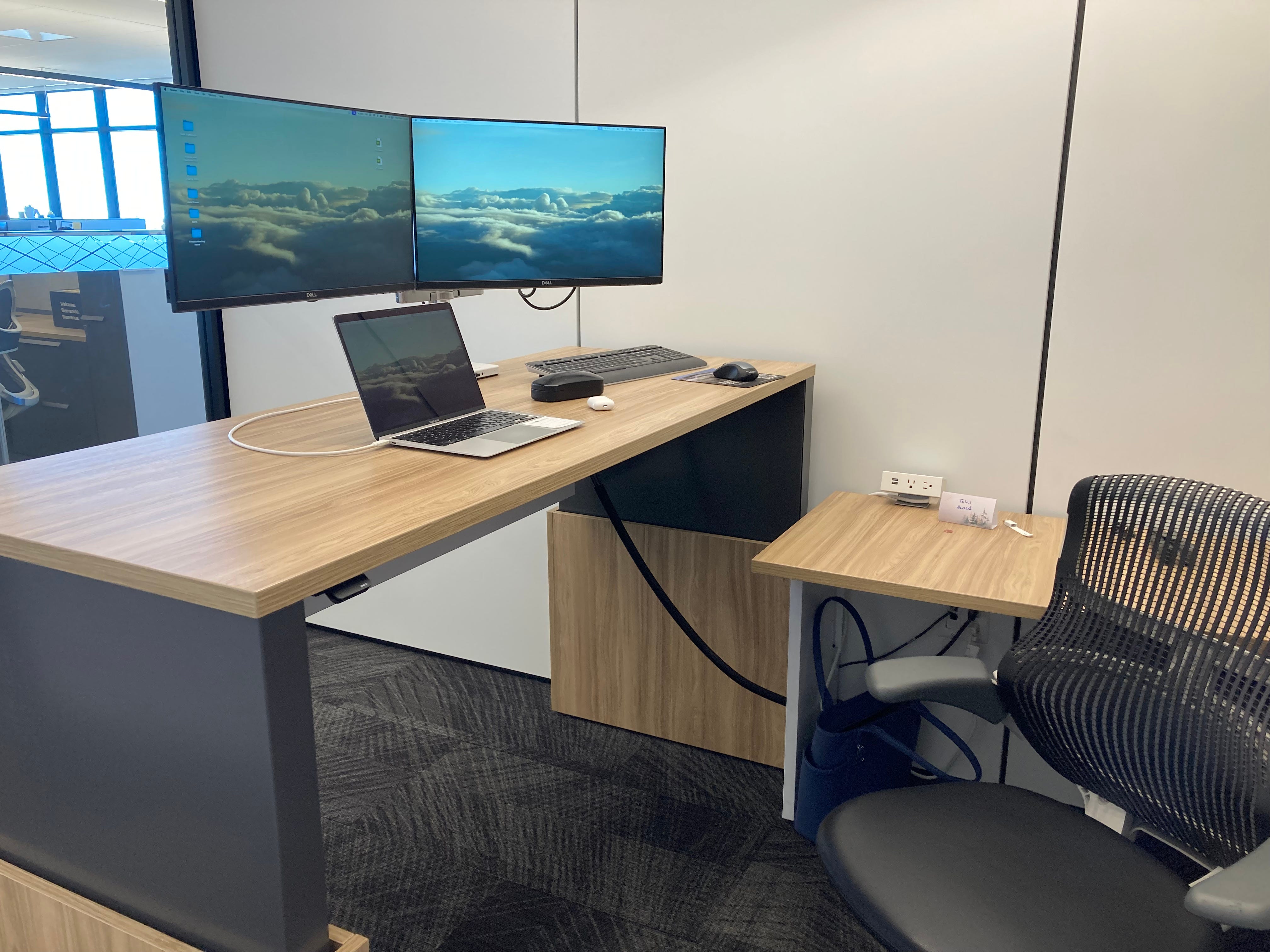
I’m writing to you Friday instead of Thursday because on Thursday I had an opportunity to go work in a real office, so I took it. It was great to get out of the house, see real humans, and eat food that someone else prepared in the company cafeteria. It was amazing that my dog couldn’t come bother me. (I forgot what it is like to work for 8 hours uninterrupted!) Even though there are a lot of cubicles at this office, they let me sit in one of the empty private offices. I even raised up the standing desk for a while to get off my butt!
Today I want to share from a conversation I had with a writing student earlier this week. I’m tutoring a grade 11 student, helping him to improve his essays. He mentioned that he has more difficulty with papers that he writes long-hand, in class, than the ones he uses a computer for.
It makes sense. I thought back to my own university exams, sitting in lecture halls for 3-hour-long stints, writing by hand with pen and paper. (The hand cramps!) Back in the day, one of my biggest helps was to take a few minutes at the beginning of an exam to think through my answer, then outline a structure on scrap paper that would flow well before starting the actual writing. So, we discussed that strategy, as well as others, but then he threw in the point, plus it is easier to write better if you can edit while you write.
I mean, yes. Two weeks ago I wrote about the power of editing for good writing.
So, I agreed, but was thinking that is sort of beside the point because ultimately you’re being graded against other students and they’re all in the same boat during an in-class writing assignment. Plus, the teachers know, and, I’m sure, adjust their expectations.
But then the young man said something else that made my brain go ding ding ding!
It’s not because using a computer allows him to edit. It’s because the computer suggests the edits.
And, of course. Word processors these days don’t just tell you when your spelling is incorrect. They fix your spelling for you (and sometimes change a perfectly-spelled word into an entirely different word. One that often doesn’t even make sense. ARGH!) They now tell you when you’ve used the wrong tense. They make suggestions about how to tighten your prose. They even predict sentences you might want to write next. Personally, I (usually) ignore these prompts because I’m a better writer than the AI is. I intuitively know that following the suggestions will weaken my writing. I dismiss them as an annoyance and wonder how to turn them off.
Any kind of assistive technology is helpful for those who need it… but it can weaken the skills of those who don’t need it but come to rely on it. I’ve been thinking of young writers who, even if they’re not actively seeking AI assistance with their communication, are being robbed of these little everyday opportunities to learn.
In the case of my tutee, he really just needs the grades. His education and career goals are more technical and hands-on. He doesn’t even enjoy reading or writing as hobbies. He’d rather play sports. I get it. I’ll help him get the grades (and hopefully spark more interest in reading while I’m at it.)
But for YOU real writers, if you want to write well, if you want to keep improving—for the love of the craft, for the sake of articulating your own heart and mind with all the beauty and nuance and originality within you—just remember that the more you rely on tech to help you—even ‘just’ with editing—the more you will be undermining your own ability.
Have a great weekend everyone. If nothing else, I hope you find some time to sit down alone and write just one gorgeous sentence.
No posts
Comments
Nothing yet. Say the first thing.
Sign in to join the conversation.