
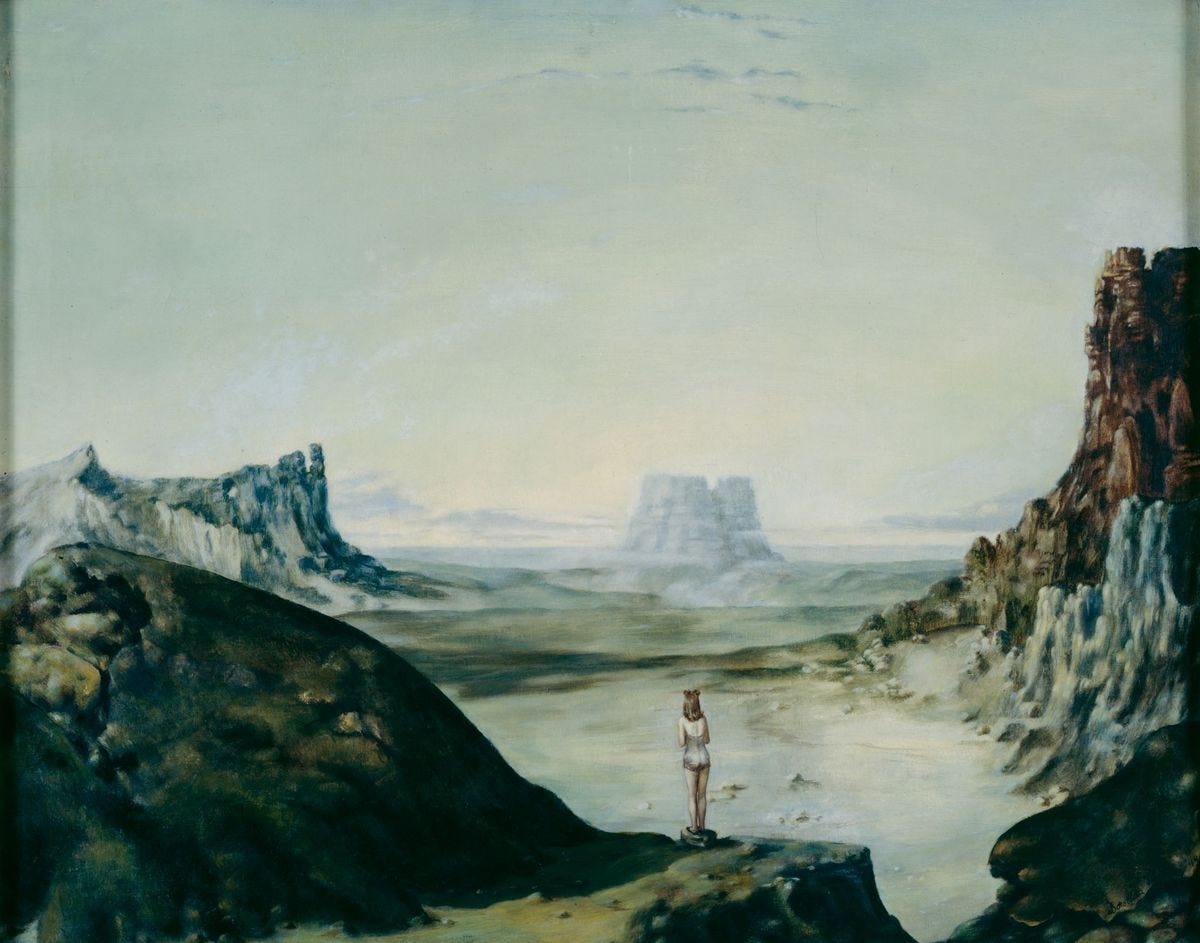
A Lonely Paradise
In times past I took the lonely steps to a strange land. I was on my own, separated from familiarity. The hell I contain, engulfed and squeezed in Eden that I resisted.
On my return to this world of strangers, it feels denser, further and larger. A feeling I cannot quite grasp. Perhaps it lingered with me on my former visit, but I fear I cannot tolerate being so alone, I have not a soul to talk to. There is no redemption to be found in my being, ‘which way I fly is hell; hell myself I am’, and in this world I do not expect that to be understood. And it is not. ‘To which the hell I suffer seems a heaven’.
I have considered that the isolation I am under is self inflicted, but what am I to do if I am to uphold my truest self. I whither away day by day for lack of closeness. The divide between heaven and hell has never been greater, and my longing and solitude never deeper.
I am so far from home. Home where I am known. For to be at home, is to be known, and to be known, is to be home. My previous farewell to hope, fear, and remorse, and goodness, I submit to once more. I am alone, I am lonely, and what use is there when you are all but strangers. Josephine x
The adjective used to describe a sense of dejection for a desired closeness or companionship. It can also be transferred into a noun, loneliness, whereby the condition of melancholy through the lack of company is addressed. Although the meaning of the word may appear timeless, the origin of its use dates back to the sixteenth century. Lonely would have been used to describe a dangerous break away from others. A lonely space, for instance, would have been a tangible and physically dangerous area to find oneself. Without an ally, you are alone, you are more vulnerable. Nowadays, the term lonely has more emphasis on ones mental state of being as opposed to physical. To be alone is not to be lonely. To be alone does not infer loneliness. To be lonely, the material distance is not necessarily a contending factor. A lonely space no longer paints a picture of a landscape scattered with material hazards, instead it becomes an empty melancholic mental state attached to a sense of longing. It is a form of distress. Rather than being left open and vulnerable to physical dangers, loneliness implies an isolation of the self from the surrounding world.
The material understanding of loneliness is notable in the poem written by John Milton (1667). In ‘Paradise Lost’, Satan crosses out of hell and into the human world. This cross over in terms of space, is the ultimate version of lonely, as it was formerly known. Satans embark into the human world means he is totally separated from the space in which he usually occupies, leaving him vulnerable. ‘...myself expose, with lonely steps to tread’. It involves a distanced self and place. The shift from the material to the abstract understanding of loneliness is perhaps due to the relevance of its meaning. To use the word lonely to describe a physical area whereby one is disconnected from others of their kind, in a very literal way, would not be as relevant as the feeling of disconnect with others in the modern age. The current pandemic, for example, may have caused a serge in loneliness. A lack of human connection, a loss of understanding with the world around oneself are possibly contending factors for loneliness within the pandemic. However, even if loneliness and aloneness do not mean entirely the same thing, they are closely linked. If one is physically alone where can one turn for human empathy?
Although loneliness leans more towards an abstract feeling and idea, it can be diagnosed. The UCLA Loneliness Scale, whereby one circles how often a statement rings true, is one way of establishing a diagnosis. For example, statements such as, ‘I cannot tolerate being so alone’, and ‘People are around me, but not with me’, are presented to the reader who can then confirm whether they often, rarely, or never relate. By acknowledging the abstract nature of loneliness however, one could argue, allows for more scope and understanding towards the feeling.
No posts
Comments
Nothing yet. Say the first thing.
Sign in to join the conversation.