
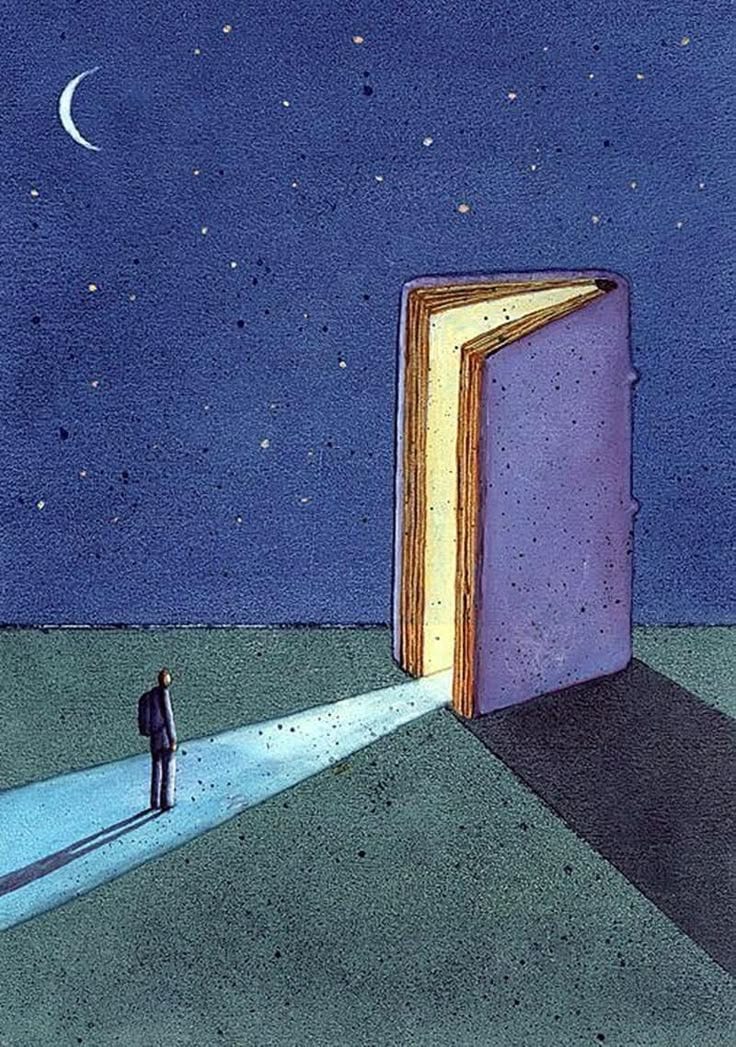
I’ve always believed that a good story finds you where you need it.
This is not to say that when a story finds you, it does so as a path towards self-improvement or enlightenment. In certain seasons of life, your subconscious mind isn’t looking for an out or a strategy for living (however much it may be needed); it’s looking for a language to understand the present.
Reading Charles Bukowski as a teenager didn’t course correct a fascination with partying and sex; it gave me a gravely voice in the back of my skull that whispered: “Find what you love and let it kill you.” Life back then was (and would remain?) a wandering carnival. And the noises and colors and rotating strangers were as discordant as falling asleep with the spins. It’s easy now, as a father, husband, and “productive member of society,” to wish in hindsight that I’d found my religiosity or a love for analytical philosophy at that moment in my life, but I’m glad I didn’t. I may have never returned to it.
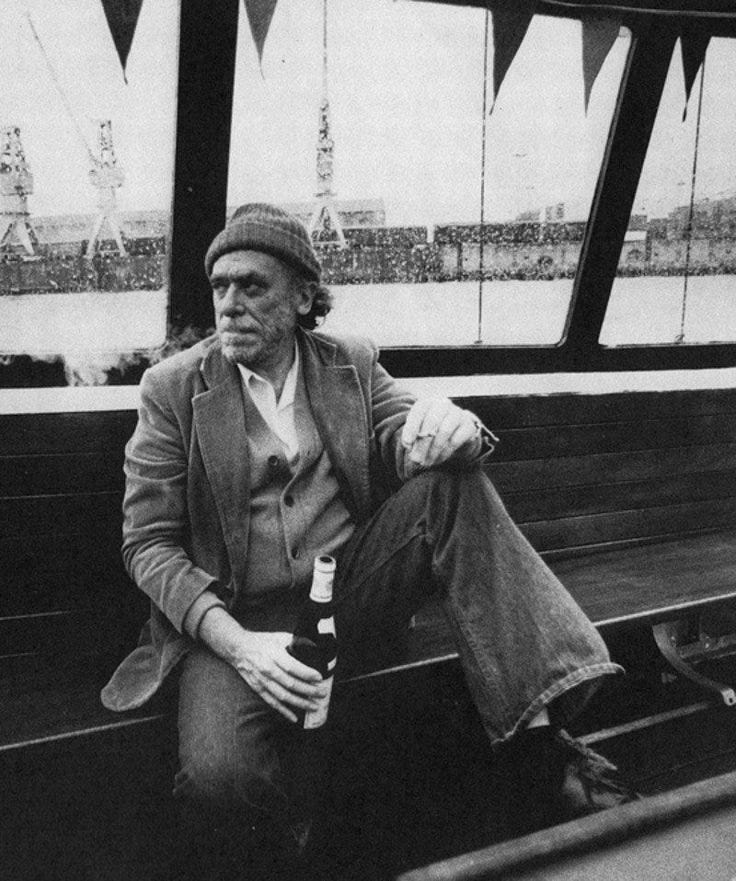
Instead, I found an appreciation for Bukowski, Joan Didion, and Hunter S. Thompson, and in them, an appreciation for the absurd. They showed me that the many odd characters in my orbit at that time were fated to fall out of my life. To friends and girlfriends, the good times of the present would simply continue on—inevitably—but the books that found me prepared the way for the dark reality awaiting around the corner. They taught me how to enjoy the chaos of the moment, to remember that what happens “now” will become a good story around a quiet campfire in twenty years, and that having one’s wits about you (as much as you could handle it) allowed you to see the reality of hedonism and naive youth as it should be.
As I got older, the Thompsons’ stories of drug binges in Vegas, Didion’s cataloging of disordered hippie communes, and Bukowski’s alcoholic love-hate rage at women didn’t connect as it once did. I could appreciate the fly-on-the-wall entertainment, but I’d moved past the need for “those” books. They found me when I needed them, when they struck my mind like lightning.
What we read and how we choose to read are seldom-discussed aspects of our optimized culture. Books take time, and time is increasingly stretched thin.
In this way, being a “reader” in 2026 often comes across as a leisure-class tell. There are those who don’t read (most people). Those who read to fill a specific emotional or physical hole (women who power through graphic fantasy smut, and the men whose entire personality revolves around ghostwritten productivity systems). And finally, there are those who read to understand.
I continuously feel the need to emphasize “some, not all” because black-and-white semantics-losers love to use their energy to pick through obvious points—so here I am doing it again.
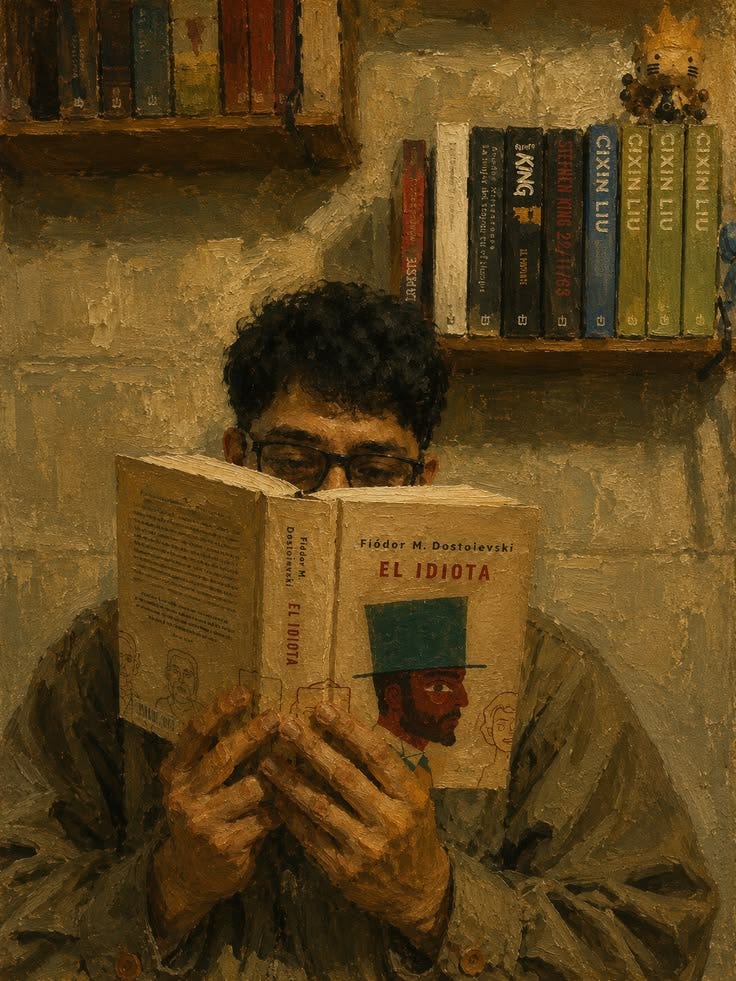
Think of the latter two types of readers as overlapping Venn diagrams. I’ve read plenty of entertaining stories that had generic characters and plots that shed little light on the human condition. Just as others may have found answers to profound questions in what they assumed was just time-passing entertainment.
The stories and books that need us aren’t “found,” inasmuch as they are received. A single guy who needs a girlfriend will go to great lengths for female attention: wearing goofy clothes, going out to party multiple nights a week, swiping on dating apps for hours—embarrassing and neglecting himself constantly in the naive hope that it’s all worth it for “the one.” We’ve all seen this type of man in the wild, and we all see how this behavior plays out. Both for him and the unfortunate, disordered woman whom he snags for a short time.
Meanwhile, the guy who works on himself, plays it cool, cultivates his interests, and seeks a deep level of personal self-respect and competence, often at the expense of what is popular or normal, eventually attracts a woman of high character with whom he can possibly build a lasting future.
Books work the same way, alright?
If a book isn’t “grabbing” you, you don’t need to read it. There is no law that says you have to struggle through Bleak House or The Count of Monte Cristo just to say that you read it. Just as there is no law telling you that you must ignore a potential red flag in a relationship just to “gain experience.”
“If you only read the books that everyone else is reading, you can only think what everyone else is thinking.”
-Haruki Murakami
Simply put, if you want entertainment on the page, it will find you, just as answers to life’s larger questions will. Do not create a complex checklist that a book must fulfill before picking it up; be open to suggestion, and most important, listen to the gut instinct guiding your choices. This is the only compass you need. If a friend, or, even better, someone who you look up to—who is living in a way that you aspire to—recommends a book, listen to them. In our lack of humility, we often forget this, but most of our decisions are downstream from the influence of others whom we respect and look up to. If you are magnetically drawn to a particular author’s work and life, follow the web of their own influence. Anybody demanding that you swallow fifty “classics” before reading what you actually want is often the most aesthetically stunted and irritating person on the earth. They read for dinner parties and pictures, not for enjoyment (as much as they may claim otherwise). There is no intelligentsia, only your instinctual pull, and this is a voice implanted in your head by God. Always remember that.
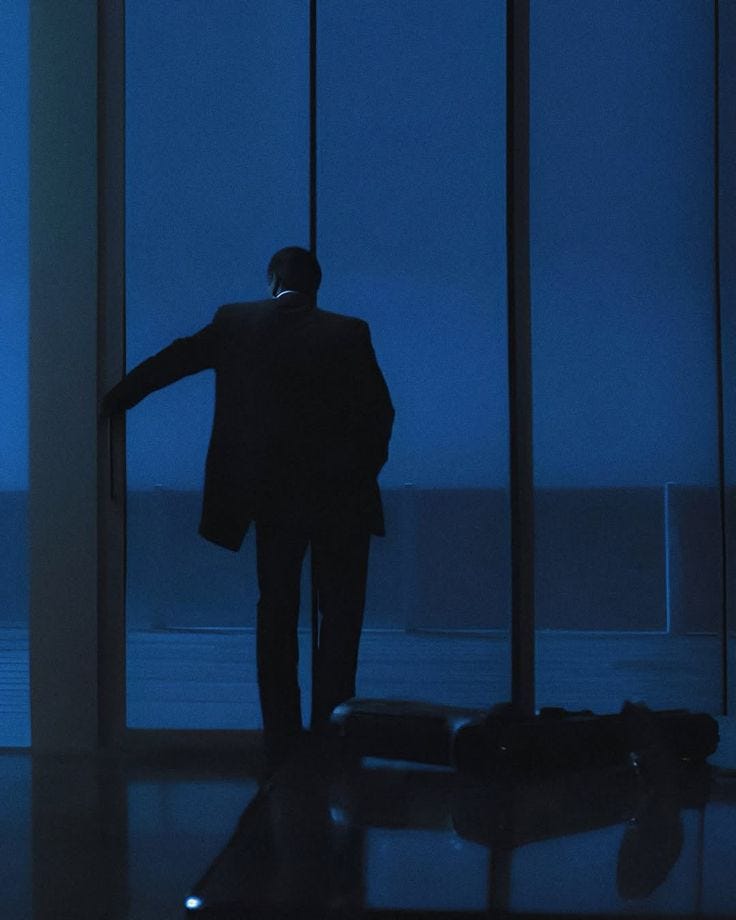
Read if you can, listen if you must. The only wrong way to receive a story is outside of the walls of the original writer’s intention, context, and theme. YouTube summaries and video essays are the literary equivalent to looking at a beautiful painting through sunglasses. The days when picking up a random book off the shelf was the best form of entertainment are long gone. And we shouldn’t expect them to return. So when you read, don’t expect it to be as satisfying as watching viral ragebait or Netflix series that cuts scenes every ten seconds. Meaningful things take time to bear fruit.
But when the right book “finds you,” it will seek to devour every aspect of your senses, intellect, emotions, and imagination. It will not wait for you to understand it; it will present itself as it is to someone on a level playing field. And often, it will not form itself into the opinions you have about what you should be reading.
Bukowski’s writing does not interest me at this current time in my life. If I “forced” myself to dig through his catalog today, I’d probably roll my eyes every time with every recurring rant about self-indulgent sex and white-collar society. But because I read him when his words gripped me—when the noise and partying of my early 20s overlapped with his world of nihilistic hedonism in the Los Angeles underground—he’s one of my favorite authors.
I appreciate Bukowski because he helped me understand my own world. Not because I wanted to say I did.
As always, thanks for reading.
-Joe
No posts
Comments
Nothing yet. Say the first thing.
Sign in to join the conversation.