

Write & Lift is an ethos of personal and spiritual development through conscious physical exertion and practice of the writing craft. Through this effort to strengthen our bodies and minds, we become anti-fragile and self-respecting sovereign individuals. Through this effort, we may stand against untruth and evil and create a new culture of vitality, strength, and virtue
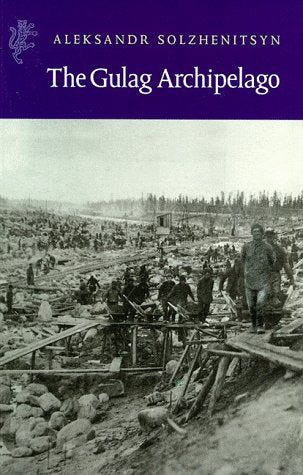
Solzhenitsyn's "The Gulag Archipelago" is a three-volume testament to the systematic brutality of Soviet communism that swallowed millions in labor camps across Russia. A warning about what happens when ideology replaces truth, when the state becomes God, and when people surrender their moral compass to the collective. Solzhenitsyn writes with surgical precision, documenting both the physical horrors and spiritual devastation of a civilization that abandoned its foundations. It is a necessary exploration of the logical endpoint of utopian thinking, showing why individual conscience matters in the face of tyranny. Every man who values freedom should understand what happens when a society forgets that some things are sacred and some lines cannot be crossed without losing one's soul.

Israel Shahak's "Jewish History, Jewish Religion" is a brutal dissection of Orthodox Judaism written by a Holocaust survivor and Israeli chemistry professor who refused to stay silent about what he witnessed in his own community. Shahak strips away sanitized narratives and exposes the supremacist elements within Talmudic law, the historical oppression justified by religious doctrine, and how ancient hatreds have been preserved in modern Israel. This isn't anti-Semitic propaganda. Rather, it's an insider's account from a man who spent decades studying Orthodox and Rabbinic Judaism firsthand. Shahak reveals how religious extremism operates when it gains political power, how victim narratives can be weaponized to justify present-day oppression, and why questioning sacred cows is essential to understanding Middle Eastern geopolitics. In an era where criticism of Israel is forbidden in the mainstream, Shahak's reminds us that no group should be immune from honest examination of their beliefs and actions.
Christopher Caldwell's "The Age of Entitlement" is a surgical examination of how the Civil Rights Act of 1964—initially sold as a temporary measure—metastasized into a permanent revolution that fundamentally transformed American society. Caldwell argues that civil rights legislation didn't just end segregation; it created a parallel constitutional system that prioritized group identity over individual rights and established bureaucratic mechanisms that now govern everything from hiring to college admissions. Caldwell explains how America ended up with two incompatible constitutional orders—one based on individual liberty, the other on group equity—and why our current political chaos is the inevitable result. He shows how civil rights morphed from seeking equal treatment into demanding equal outcomes, and how tools created to combat racism became the foundation for new institutional discrimination. In a time where questioning diversity orthodoxy can destroy careers, this book offers clear analysis of how we got here and why the conflicts tearing America apart aren't accidents, they're features of the system we built.
Thomas Sowell's "Basic Economics" is a masterclass in economic thinking that strips away academic jargon and political posturing to reveal how the world actually works. Sowell demolishes popular myths about rent control, minimum wage laws, and government intervention with logic and real-world evidence, showing how good intentions consistently produce bad outcomes when they ignore economic reality. He provides the intellectual tools to see through political rhetoric and understand why free markets, despite their imperfections, consistently outperform government planning. Sowell writes with scholarly accuracy and teaching accessibility; an antidote to magical thinking. Every citizen should understand how prices coordinate human behavior, why wealth isn't zero-sum, and why the road to prosperity runs through economic freedom rather than government control.

Louise Perry's "The Case Against the Sexual Revolution" is a devastating critique by a former liberal feminist who had the courage to admit she was wrong. Perry argues that the sexual revolution didn't liberate women, it liberated men from responsibility while women bear the costs of hookup culture and plummeting birth rates. She demolishes the myth that casual sex empowers women, showing how it serves male interests while abandoning female nature entirely. Perry exposes how contemporary feminism has betrayed the women it claims to represent, using hard data to confront uncomfortable truths about sex differences and biological reality. While questioning feminist orthodoxy destroys careers, Perry offers a roadmap back to sanity, acknowledging that men and women are different, sexual freedom often means sexual exploitation, and traditional structures existed for good reasons. Essential reading for understanding why modern women are more miserable than ever despite having more "freedom" than any generation in history.
Steve Sailer's "Noticing" is a collection of essays by America's most observant and forbidden social commentator, a man who built a career saying what everyone sees but no one is allowed to discuss. Sailer applies relentless pattern recognition to demographic trends and cultural phenomena, connecting dots that our media and academic class pretend don't exist. He documents how reality consistently contradicts official narratives about race, immigration, and social policy. Sailer possesses the rare courage to notice inconvenient truths and follow data wherever it leads, regardless of social consequences. His work explains why certain neighborhoods, schools, and cities function the way they do, why some policies succeed while others catastrophically fail, and why our ruling class desperately wants to prevent you from noticing these patterns. Pattern recognition has become thoughtcrime and Sailer's essays serve as a master class in seeing clearly through propaganda and wishful thinking that clouds public discourse.
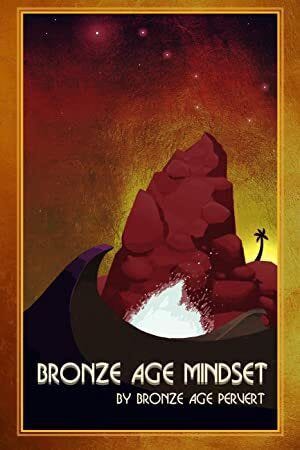
Bronze Age Pervert's "Bronze Age Mindset" is a primal scream against the bureaucratic wasteland of modern civilization, written by an anonymous philosopher (Costin Alamairu) who channels ancient warrior vitality into a manifesto for vitalistic renewal. BAP argues that Western man has been domesticated into spiritual castration, trading heroic adventure for air-conditioned comfort while celebrating the bronze age mindset of conquest, physical excellence, and tribal brotherhood. In hilarious and purposefully obscure prose, BAP diagnoses the spiritual sickness eating away at young men—the absence of meaningful struggle, physical weakness, and submission to managerial tyranny—while offering a vision of vitality rooted in ancient ideals. He writes with manic energy and classical erudition, mixing Nietzschean philosophy with rants about bodybuilding. The cult success of Bronze Age Mindset, reminds us that strength, beauty, and vital energy are goods worth celebrating and a sign of what is to come
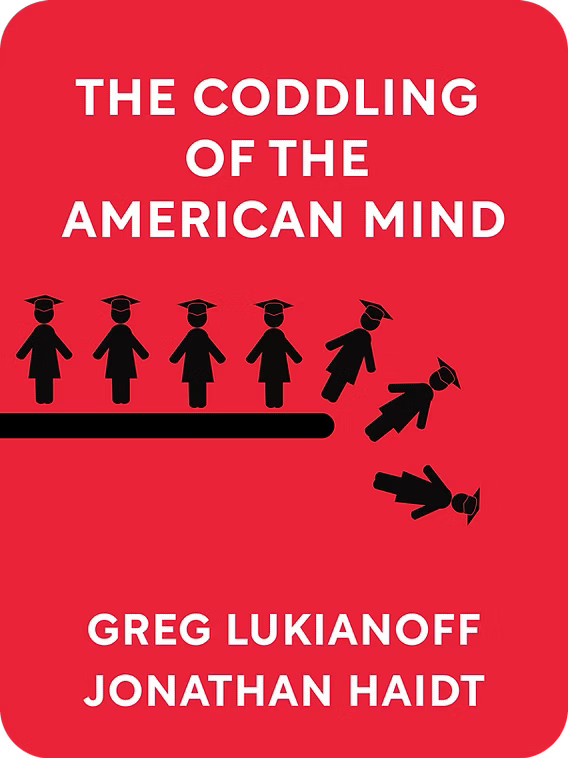
Jonathan Haidt and Greg Lukianoff's "The Coddling of the American Mind" is a devastating analysis of how American universities transformed from institutions of learning into emotional daycare centers for psychologically fragile young adults. The authors document how three "great untruths"—that feelings equal facts, that avoiding discomfort prevents growth, and that life is a battle between good and evil people—have created a generation incapable of handling disagreement or adversity. They explain why college students now require trigger warnings for Shakespeare, why free speech has become controversial on campuses, and how helicopter parenting combined with social media has produced the most anxious generation in history. The authors demonstrate that preparing young people for life means exposing them to challenge and disagreement, not protecting them from every uncomfortable idea. In an era where resilience has been replaced by fragility, this book offers a roadmap back to sanity that prioritizes intellectual growth over ideological conformity.
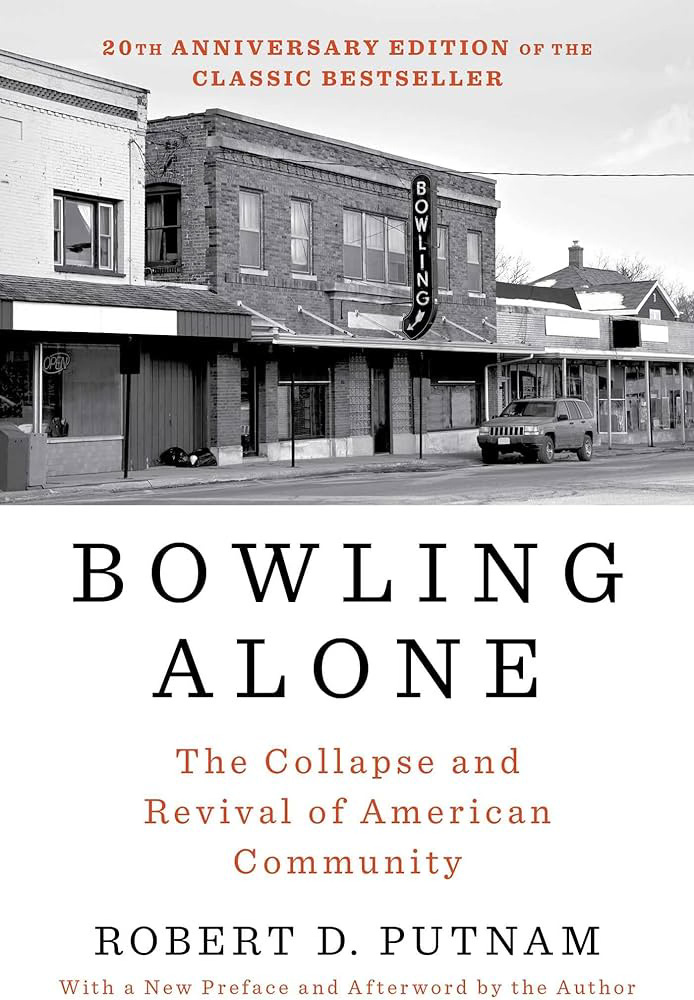
Robert Putnam's "Bowling Alone" is a study of American social capital, documenting how civic institutions that once bound communities together have collapsed over the past half-century. Putnam charts the decline of everything from church attendance to neighborhood associations, showing how Americans have retreated from collective life into isolated individualism. He explains why modern life feels so lonely, why political polarization has intensified, and why social trust has evaporated. Putnam shows that bowling leagues, civic clubs, and neighborhood gatherings that created social cohesion have been replaced by solitary activities and digital connections that can't replicate real human bonds. Using data to reveal we're more disconnected than any generation in history, this book diagnoses the spiritual poverty of modern American life. In an era where community has been replaced by consumerism and relationships by social media followers, Putnam reminds us what we've lost.
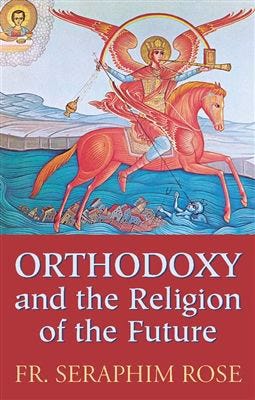
Seraphim Rose's "Orthodoxy and the Religion of the Future" is a prophetic warning about the spiritual counterfeits that would seduce Western civilization in its post-Christian decline. Writing in the 1970s, Rose predicted with uncanny accuracy how Eastern mysticism, New Age spirituality, and occult practices would fill the vacuum left by abandoned Christianity, offering false transcendence to desperate souls. Rose identifies the spiritual warfare behind our cultural chaos, showing how the "religion of the future" isn't progress but regression into pre-Christian paganism dressed in modern garb. He writes with theological precision, exposing how seemingly benign spiritual movements mask deception designed to lead souls away from Christ. He explains why yoga studios have replaced churches, why crystal healing appeals to educated professionals, and why therapeutic spirituality has conquered minds that rejected faith.
As always, thanks for reading.
-Joe
No posts
Comments
Nothing yet. Say the first thing.
Sign in to join the conversation.