

As gold prices keep setting records, luxury watchmakers face a shared problem: how to keep precious metal desirable without pricing out cautious buyers. Bvlgari answered that question decades before it became urgent. Long before two-tone watches returned to fashion, the Roman Maison paired gold with steel not as a cost-saving compromise, but as a deliberate design statement rooted in its jewelry heritage.
That philosophy traces back to the 1970s, when Bvlgari moved from jewelry into watchmaking and carried with it an aesthetic shaped by Roman architecture and bold geometry. The Bvlgari Bvlgari watch, launched in 1977 with a bezel inspired by ancient coinage, remains a touchstone; this summer brought two new mixed-metal editions with mother-of-pearl dials. The now-discontinued Diagono line extended the idea through the 1980s and 1990s, blending steel with yellow or rose gold.
This year’s Serpenti Tubogas Studs capsule, unveiled at Watches and Wonders, reaffirmed the approach with bi-metal jewelry and B.zero1 rings alongside the watches. The Serpenti Seduttori still combines steel and rose gold, even as the Octo Finissimo remains almost entirely mono-material.
Rising gold prices have sharpened the appeal of this middle ground: bi-metal pieces use less gold while keeping much of its warmth and status. Some rivals, including Audemars Piguet, Hublot, and Richard Mille, have begun pairing titanium with gold instead. Bvlgari has largely resisted, treating the two combinations as separate stories, one technical, the other rooted in jewelry craft, and its restraint feels less like caution than confidence in a design language built decades ago.
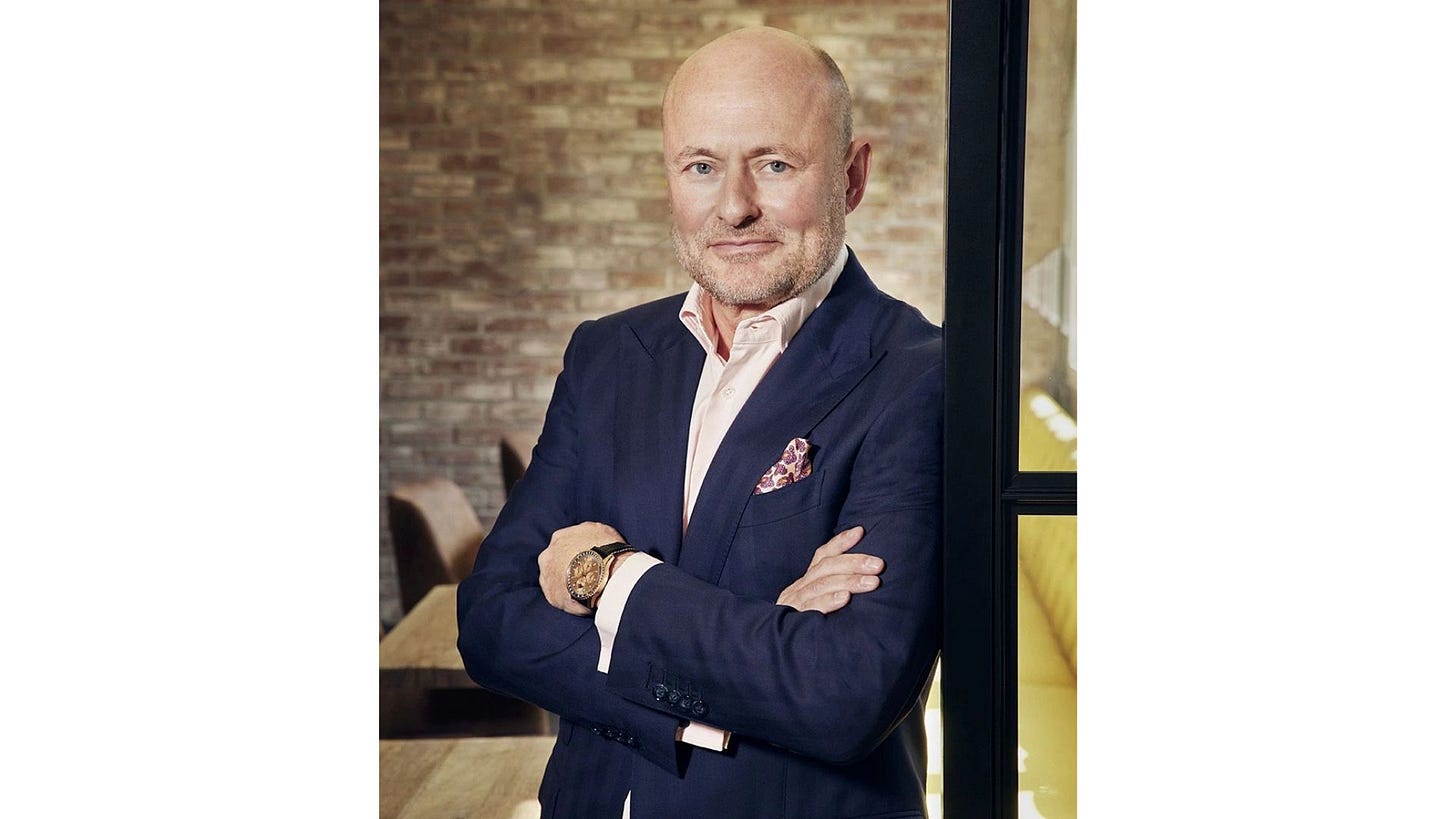
Brand revivals have become one of the watch industry’s defining trends, and few executives have shaped that trend more than Georges Kern. As CEO of the newly formed House of Brands, anchored by Breitling, Kern oversaw the April relaunch of Universal Genève and is preparing to bring back Gallet this fall. According to Kern, the current wave of revivals owes much to history: the quartz crisis of the 1970s wiped out many storied Swiss names, and a younger generation of collectors has since rediscovered those stories through vintage watches.
Kern is candid about how often revivals fail. Most attempts, he argues, underestimate the task at hand, treating heritage as sufficient on its own rather than something that must be reinterpreted for a modern audience. With Universal Genève, he says the goal was never simply to reissue old references, but to expand the identity of the house once known as Le Couturier de la Montre into something that speaks to today’s design-conscious buyers.
He outlines three mistakes to avoid: leaning on history without adding present-day value, launching halfheartedly, and entering the market without a distinct point of view. For Universal Genève, Breitling served as an incubator, supplying manufacturing know-how while letting the smaller brand retain full independence in design and positioning.
Success, in Kern’s view, also depends on financial patience. A revival demands years of investment in product development and talent before any return materializes, along with the willingness to reinterpret icons rather than simply preserve them. As Gallet’s own comeback approaches, Kern frames the challenge in the broadest possible terms: reviving a brand is not about honoring its legacy, but about building a future that deserves it.

What began in 2020 as an improvised response to the pandemic has grown into one of the watch industry’s key annual gatherings. Geneva Watch Days will return from September 2 through 6, bringing together 69 participating brands, its largest lineup yet. This year also marks a milestone: for the first time, every major stakeholder in Geneva’s watchmaking ecosystem, from public authorities to leading financial institutions, is rallying behind the event.
When the inaugural edition launched, few imagined it would last. In the summer of 2020, eight brands, including Breitling, Bvlgari, and Ulysse Nardin, joined forces to create their own showcase after major trade fairs were cancelled. That practical solution has steadily evolved into a fixture eagerly anticipated by professionals and enthusiasts alike.
The formula has changed little. A central pavilion at the Rotonde du Mont-Blanc serves as the main hub, while brands welcome visitors in hotels, boutiques, and workshops across Geneva. Free admission continues to set it apart from the more formal Watches and Wonders in April. Held at summer’s end, it now ranks as the industry’s third major annual gathering, offering brands one last chance to unveil novelties before autumn.
Growth has been steady: from fewer than 20 brands in 2020 to 33 in 2022, 51 in 2024, and 66 last year. In 2024 alone, the event drew nearly 13,800 visitors, 600 journalists, and 250 retailers.
The 2026 edition also benefits from new institutional support, including the State and City of Geneva, Geneva Tourism, and several banking groups. Beyond commerce, the program now includes guided tours, panel discussions, and Calibership, a movement-regulation competition launched in 2025. A charity auction with Phillips has raised more than CHF 400,000 for aspiring watchmakers since 2023, reinforcing the event’s role well beyond a simple trade showcase.
I have been freelancing for as long as I can remember. Now, as an employee, I am about to take my first real watchmaking holiday, and I owe it to Léon Blum and his colleagues.
At the Hôtel Matignon on June 7, 1936, employers, unions, and the French state signed what became known as the Magna Carta of French Labor. The talks moved fast out of necessity: a general strike that began on May 26 had drawn in more than a million workers by the time negotiations concluded. Among the agreement’s lasting legacies, alongside the right to strike, was a two-week paid holiday.
That idea spread quickly. The same year, the International Labour Organisation adopted the Holidays with Pay Convention, setting a minimum of six paid working days annually. Switzerland followed in 1937, when nineteen employers’ associations and a trade union linked to watchmaking signed an agreement guaranteeing six days off, making the watch industry the country’s first sector with a collective labor agreement. Over the following decades, the standard grew to four weeks. The United States remains the only advanced economy without a federal law mandating paid vacation, leaving roughly 170 million workers dependent on employer discretion.
The tradition endures in Swiss watchmaking. Each year, the Convention Patronale recommends a holiday period, and in 2026, factories in Geneva, La Chaux-de-Fonds, and the Vallée de Joux will close for three weeks, from July 20 until August 10.
After a lifetime of freelancing, taking a paid, three-week break feels almost unreal. My plans involve family, the beach, cooking, vineyards, and, if my toddler cooperates, perhaps a book. There will be no letters for the next three weeks.
Happy Holidays!
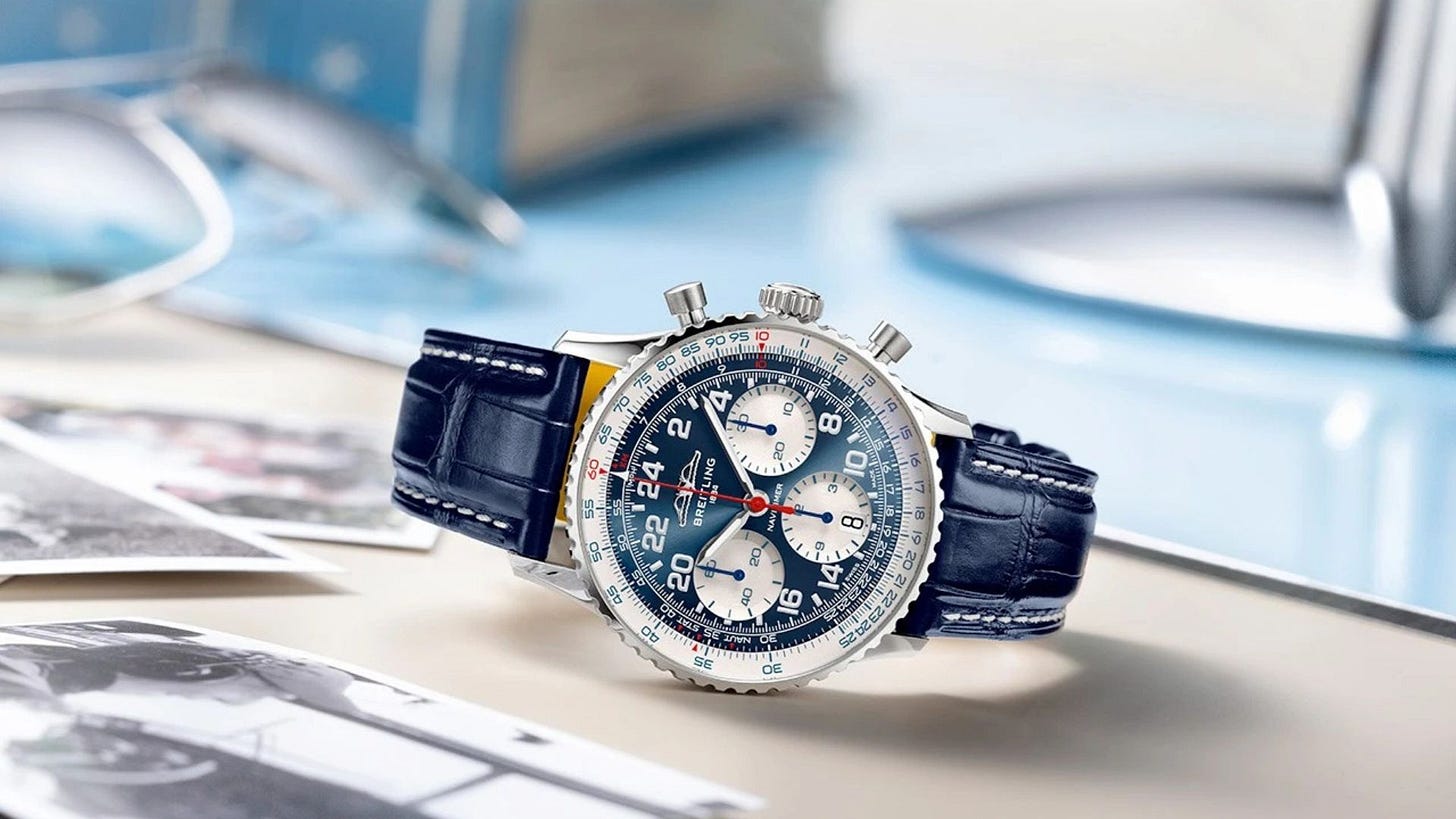
Nearly every watchmaker founded in the twentieth century eventually returns to its archives in search of a model worth reviving. The trend has grown so widespread that the Grand Prix d’Horlogerie de Genève created dedicated categories for it, Revival Watch in 2019 and Iconic Watch the year after. Among the many candidates, five stand out for having genuine stories behind them.
The rarest comes from Breitling: a 50-piece platinum edition of the Navitimer Cosmonaute worn by astronaut Scott Carpenter during his three orbits of Earth in 1962, complete with the 24-hour dial required for orbital missions.
Cartier offers the most successful case, though it raises a fair question: can a design that never left the collection truly be called a reissue? The 2026 Santos, paired with an obsidian dial and a 15-link gold bracelet, suggests that after 122 years, the answer barely matters.
Eberhard & Co. delivers the most historic revival with the Contodat, a chronograph-and-date combination first introduced in 1957 and now restored in its original 39mm case.
Omega takes the most visionary path with the Constellation Observatory, pairing a 1952 “pie-pan” design with its new Precision Laboratory, capable of certifying watches through acoustic measurement.
Finally, Longines offers the most timeless example. The Diver 59 keeps its original 42mm diameter rather than being enlarged for modern taste, proving vintage proportions can still feel entirely current.
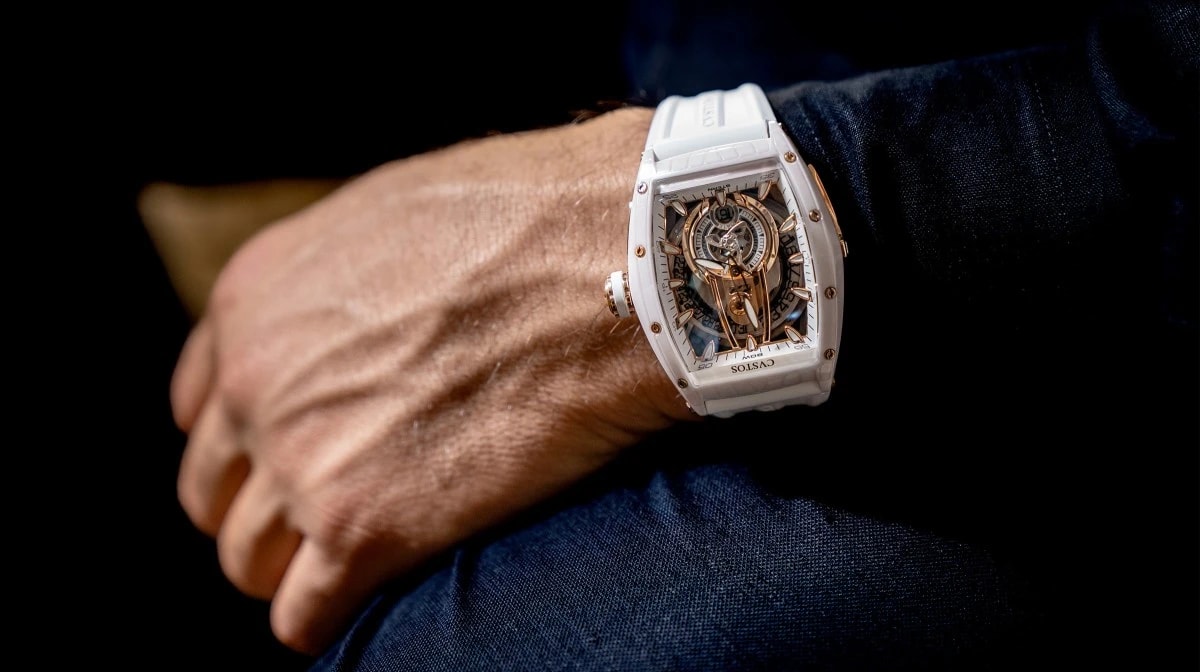
He had just flown in from LA, and maybe it was the jetlag, confirmed by a yawn midway through the photo shoot, but Arman Tsarukyan’s handshake was surprisingly soft, matching a demeanor far more humble than one might expect from a man ranked among the world’s best mixed martial artists. His competitive edge, it seems, stays inside the Octagon. Despite splitting his time with Los Angeles, Tsarukyan made the trip to Geneva to unveil the ARMAN Edition, developed with the 20-year-old brand Cvstos Genève.
“I wanted the watch to be white, and I wanted gold details inside the watch,” he said as a camera crew filmed the collaboration. Tsarukyan reviewed several 3D concepts and helped shape the final design, based on the Sealiner collection but heavily reworked. A seasoned collector himself, he knew how easily gold and steel scratch, so the team chose a stark white, 41mm ceramic case, the first time Cvstos has used the material. “I like white watches, especially ceramic. You can always see the watch on the wrist,” he said, calling the finished piece a “ten out of ten.” Limited to 100 examples, it pairs a small seconds subdial with a date at six o’clock, framed by curved bridges recalling yacht design.
Tsarukyan discovered Cvstos through fellow athlete and brand partner Karen Khachanov before meeting founder Sassoun Sirmakes. His path to MMA began at seventeen: “I fell in love from the first day I tried MMA,” he said, citing the sport’s mix of twelve disciplines. His remaining ambition is clear. “My only goal in life now is to become UFC champion,” he said, adding that afterward he hopes to give back, perhaps by opening gyms for children in underserved villages.
No posts
Comments
Nothing yet. Say the first thing.
Sign in to join the conversation.