
You’ve planned the agenda. You’ve tested the slides. You’ve got your opening line ready.
Then you walk into the room, and before you’ve said anything that matters, the people in front of you have started deciding whether to give you their attention or check out.

They won’t tell you they’re deciding. Most of them don’t even know they’re doing it.
But every participant who sits down in your session is running a private assessment, and your first ten minutes either pass or fail it.
What makes this hard is that the assessment is invisible.
Nobody raises a hand to say “I’m not sure this is worth my time yet.”
They just sit there, polite and quiet, phone face-down on the table, while a part of their brain decides how much of them you’re going to get.
Most facilitators spend those ten minutes on the wrong audience: themselves.
The bio slide.
The five-minute agenda walkthrough.
The “quick bit about my background before we start.”
It feels like good manners. It feels like setting the table.
What it actually does is answer none of the questions the people in the room are asking.
Your mistake is normal. When you’re nervous, talking about yourself is the safest thing in the room.
You know that material well, and it delays the moment when you have to make something happen.
So you fill the opening with the one topic guaranteed not to land, and you call it warming up.
There are seven questions running through their heads.
I’ve watched them surface across hundreds of rooms, in boardrooms and over video calls where half the cameras are off.
I’ll walk through all seven. But two of them carry the other five, and once you see which two, you’ll stop spreading your opening thin across all of them.
Everyone in your room has sat through a session that went nowhere. They’re assuming yours is another one until you give them a reason to think otherwise.
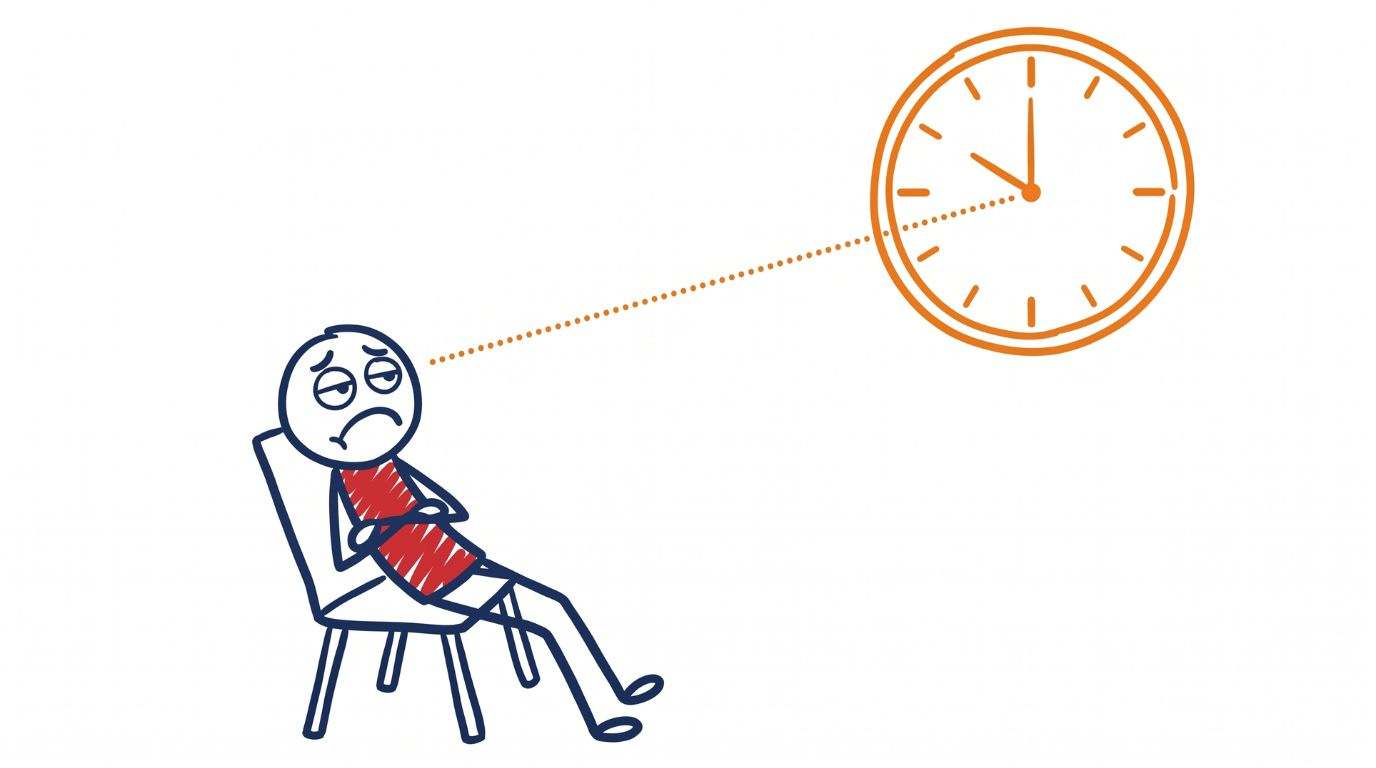
The fix is easy. State the outcome in your first sentence, before the agenda or anything else.
“By midday, you’ll have a written decision-making protocol your team built together, not one I handed you.”
Now there’s a destination, and they can tell whether they’re moving toward it.
The trap is stating an outcome that’s actually an activity in disguise.
→ Don’t: “Today we’ll explore different communication styles.”
→ Do: “You’ll leave able to give your team feedback that doesn’t make them defensive.”
The first one is a way to spend time. The second is something the participant can picture themselves using on Monday morning.
This one controls the others.
If a participant walks in worried about being publicly exposed, it doesn’t matter how sharp your outcome is or how relevant your material.
They’re spending their attention on self-protection, not on the work.

Every word you say gets filtered through a question running in the background: what happens if you point at me?
You can answer it in about three seconds.
“You’ll always start with individual writing before any group discussion. Nobody gets called on cold.”
Setting that one rule usually settles the room immediately. The mental energy that was bracing for exposure is suddenly free to spend on what you’re asking them to do.
This question sits above the rest because safety is the precondition for the rest of the list.
A person who feels safe can target your outcome and read the room.
A person who feels exposed can’t do either, because the part of the brain that handles social threat doesn’t work properly until the threat is gone.
If your session has an unavoidable spotlight role, don’t leave it to a cold volunteer.
Assign it in advance, in private.
Brief that person before the session starts so they’re not improvising.
If you’re an external facilitator, this question is being asked about you specifically.
Generic examples crash your credibility.
You walk in with a slide titled “Common Team Challenges” listing silos and communication gaps, and the room thinks, in unison, this person doesn’t know us.
Charisma won’t fix this, but five minutes of pre-work will.
Ask the sponsor for three specific examples of the problem you’re being brought in to address.
Real ones, with detail. Then use those examples in your opening.
The moment participants hear their own reality described back to them accurately, in the words they use, about the friction they live with, you’ve established you did your homework.
Or try this. A short pre-workshop survey gives you both the qualitative texture and the quantitative pattern, so you can frame the agenda around the tensions that are really there.
Sometimes participants recognise themselves in the results. Sometimes the data surprises them.
Either way, you’ve started from their world instead of a textbook’s.
Don’t translate their problems into facilitation jargon. If the team calls it “the handover mess,” call it the handover mess.
The instant you swap their words for yours, you signal you’re operating on a different level from them, and they quietly badge you as a consultant.
Your participants have inboxes filling up and people waiting on them, and they’re calculating whether this session is worth being unreachable for.
You win this battle inside the first five minutes or you don’t win it at all.
Get them working on something real before the pull of the inbox wins.

Everyone is thinking about their phone, and nobody is admitting it. Once people are actively building something, that disappears, and the phone stays in the pocket.
“Will breaks be on time? I have an important call scheduled during the lunch break.”
Somewhere in your room, right now, someone has a meeting booked over your lunch slot and is wondering about your timekeeping instead of listening to you.
They cannot relax into the work until they know you’ll run to time.
So tell them, early and specifically: breaks are at these times, lunch is at this time, and you run to the minute.
It costs you one sentence, and it lets them know they don’t need to watch the clock because you have it under control.
By the time most professionals reach your room, they’ve sat through enough presentations wearing the word “workshop” as a disguise. They’re braced for another one.
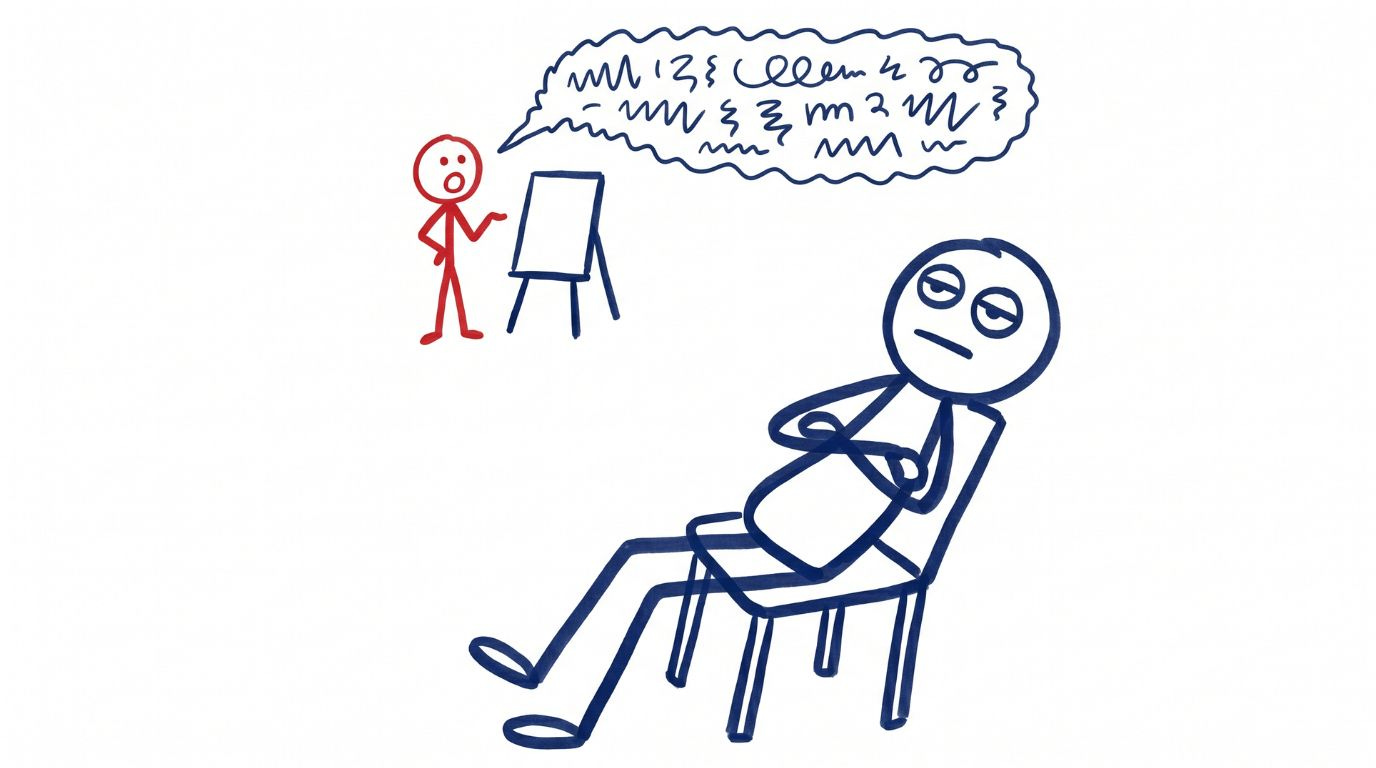
Answer it directly, in your first two minutes:
“You’ll do about 95% of the work today. I’m here to run the process, not perform it.”
Then prove it by getting them doing something within five minutes.
Being interesting isn’t enough.
People have given up their time and arrived with a hundred things on their minds, so they need to leave with something they can use on Monday, or it was just a pleasant hour they’ll forget by Tuesday.
The “will I actually do something?” question is really about whether the session will produce anything they get to keep.
The most cynical question in the room is also the most justified.
Your participants have made commitments in workshops before.
They watched those commitments evaporate the moment everyone walked out, and they’re not keen to do it again.
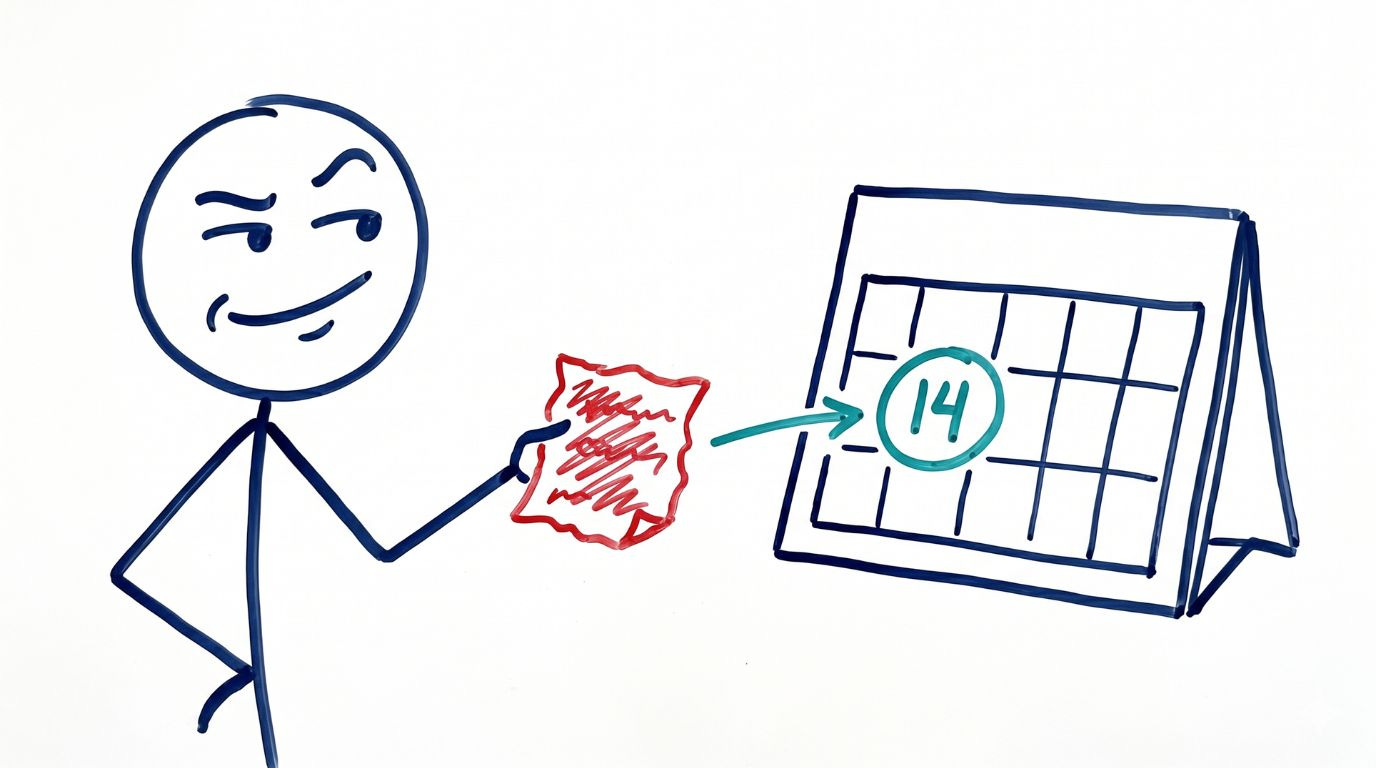
So name the follow-through upfront, in the opening, before you’ve asked them to commit to anything.
“You’ll leave today with an accountability partner and a check-in booked for fourteen days out.”
That sentence tells them this isn’t another session that ends with warm intentions and no structure.
Accountability without a name and a date attached to it is just a wish.
Show them the name-and-date exists before you ask them to invest, and the cynicism disappears.
You can’t manufacture trust in ten minutes.
What you can do is lower the cost of speaking, so a lack of trust doesn’t shut people down.
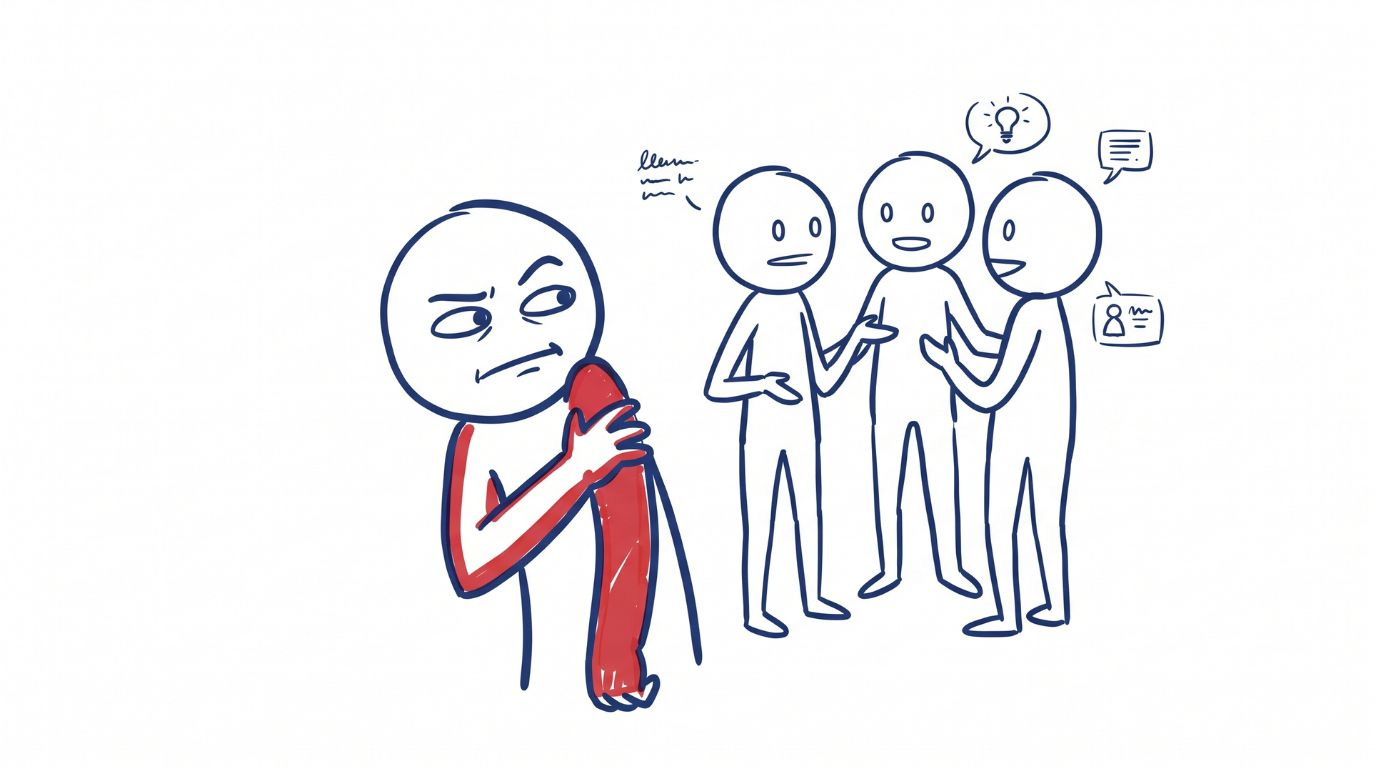
The mechanism is sequencing. Start private, go public gradually.
People write on their own first, then share in a pair, and only after that does the pair feed into the wider group.
Moving from written to paired to plenary lets a group find its feet without anyone gambling an opinion in front of their peers in minute three.
Be careful though. When you assign pairs, you might unknowingly put someone with someone they don’t trust.
You can’t always know the room’s history. So give people a graceful exit.
Let them choose their own partner where you can, or build pairings off something neutral like where they’re already sitting, and stay alert to the body language that tells you a pair isn’t working so you can reshuffle without making it a thing.
This is the opening I ran for a team brought together to fix a decision-making process that keeps stalling.
I don’t introduce myself first. I announced one line:
“By 12:30, you’ll have a decision protocol you built and agreed on together.”
That’s the outcome.
Then the rules:
“You’ll write before you talk, every time. Nobody gets called on cold. Breaks are at 10:30 and 11:45, lunch at 12:30, and I run to the minute.”
Three of the seven questions just got answered in two sentences.
Next I named their world, using the sponsor’s words.
“I know decisions here tend to die in the gap between the leadership meeting and the Thursday team sync. We’re going to fix that today.”
Whether they trust me just jumped, because I described their actual problem instead of a generic one.
Then, before the energy could settle into listening mode, I got them working.
“Take ninety seconds. On your own, write down the last decision that got stuck, and exactly where it stuck.”
No discussion yet. The session is theirs now, and I’ve spoken for under two minutes.
Only after all of that, did I say who I am. But by then they don’t need my bio.
They’ve already decided I’m worth their attention because I answered their questions instead of talking about myself.
The seven questions look like seven separate problems to solve.
They’re really one question asked seven different ways: is this worth my full attention?
Your participants decide the answer early, based on your behaviour, not your promises.
Every minute you spend on your bio and your agenda is a minute you’re answering a question nobody in the room is asking.
Every minute you spend stating the outcome, setting the rules, naming their reality, and getting them working is a minute spent answering the questions they walked in with.
Spend the first ten minutes on them, not on you.
Do that, and you don’t have to win their attention back halfway through the afternoon, because you never lost it in the first place.
If this was useful, forward it to someone who’s running a workshop this month. They’ll feel the difference in the first ten minutes.
New frameworks for facilitators every week. Subscribe if you haven’t already.
No posts
Comments
Nothing yet. Say the first thing.
Sign in to join the conversation.