
Carol tells me she drives like a turtle, but she’s whipping around the turns of rural Forsyth County roads nonetheless. She’s been driving them all her life.
As she drives, she tells me what I’m seeing. This is the house where her cousin lives; this is where so-and-so had a farm. She points out the library and tells me about the time she socked a bully there and got banned for a week as a kid.
Six generations of Carol Newsome’s family land is sprinkled between the roads and neighborhoods. She points out the old cabins, the acreage, and tells me the history. Her great-great-granddad’s house is the oldest still-standing house in town.
Rural Hall is small, but growing. There are about 3,000 residents now, but Carol remembers it from the 70s, before it became incorporated.
Carol’s dogs bark wildly as we pull into her driveway. She points to a stand of trees across the road, nestled up to the railroad tracks. Once she was offered money for that stretch of land to build an truck access for an industrial area. “But I guess that the trees and the pileated woodpecker are just more important to me than money,” she laughs.
The trees, pinned between a pallet company and the tracks, remain lush and green.
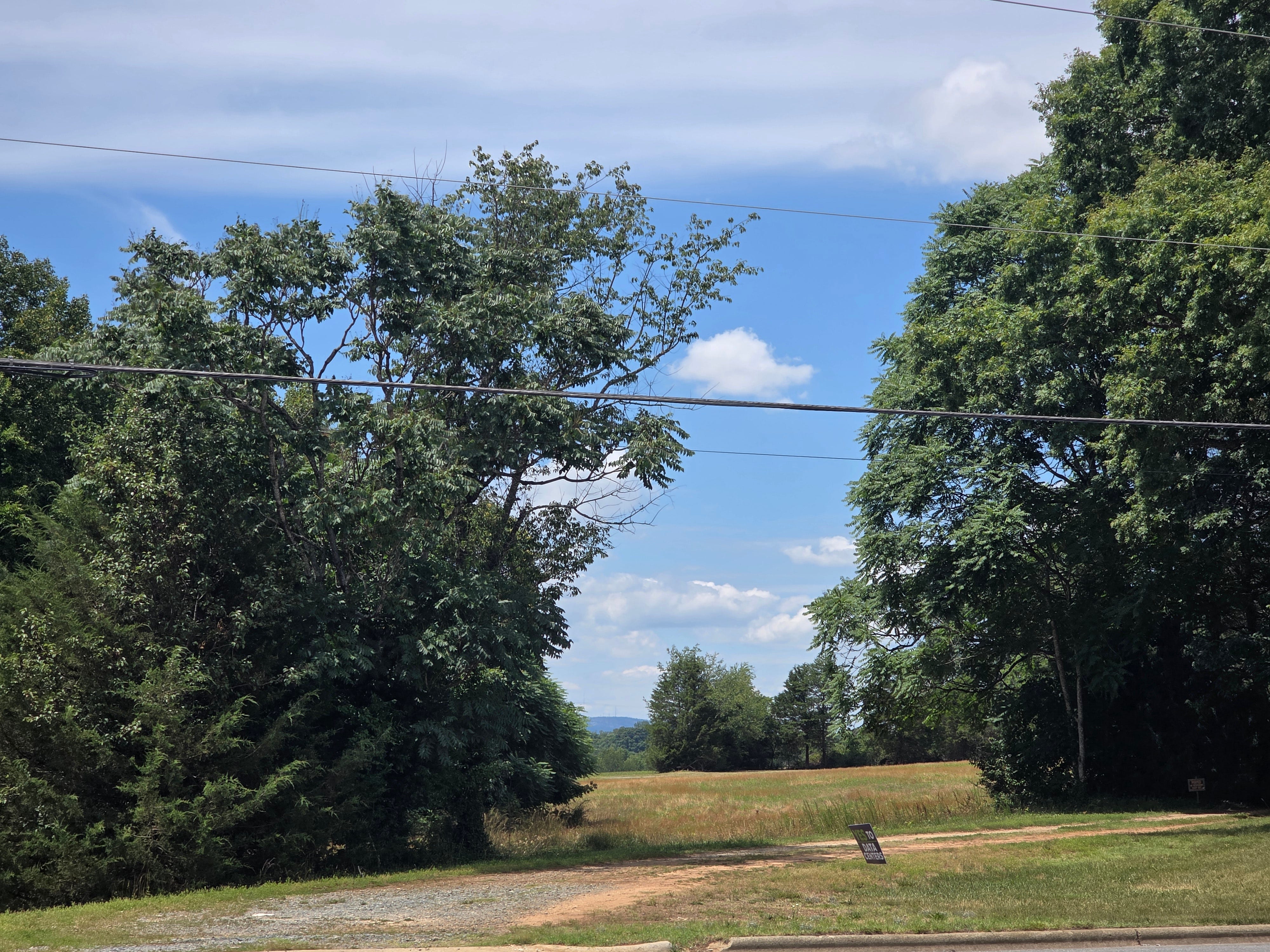
But it’s not Carol’s property that she’s brought me here to see. It’s the land just beyond those trees. That’s the land that is now being sold: the old Wall family farm.
And that’s why I’m here in the late June heat, in a small town in rural North Carolina: 129 acres of controversy.
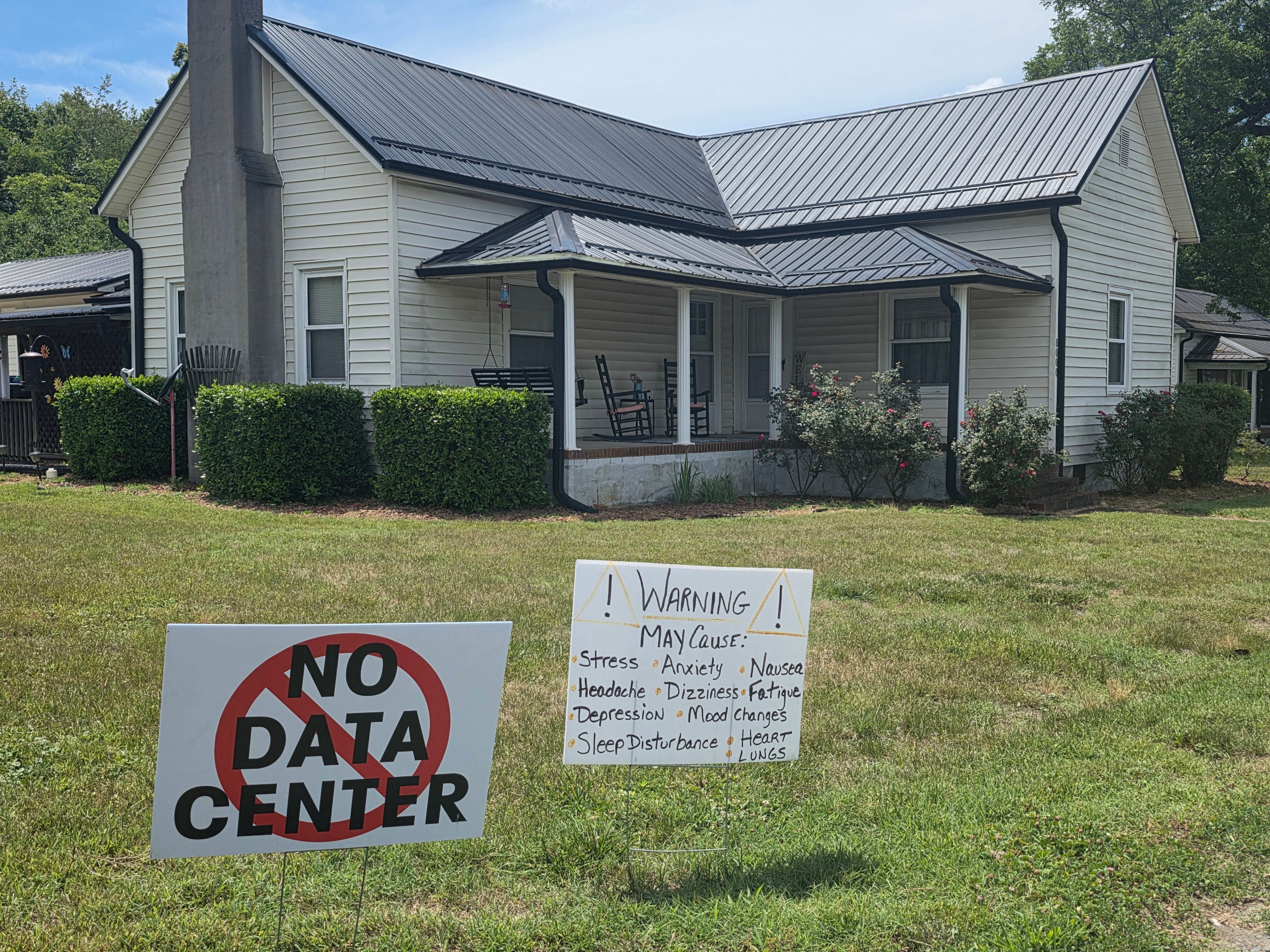
Earlier this spring, Nancy Jones got a notice in the mail from Forsyth County about the Wall farm, which sits just across the road from her property. Everyone within 500 feet of the property received notices the same day.
The notice was about a zoning change that would turn the farmland into industrial property. “There was a map on the back in a square that was yellow, and that was the proposed property for rezoning,” says Nancy. “Then all the way around that was a green area, and it showed everybody’s homes. And there mine was.”
Nancy moved to Rural Hall from northern Virginia a decade ago to find a quieter, more peaceful place. She lives here in a modest home with her daughter and grandchild on a few acres. “We’ve got chickens, we’ve got gardens, my daughter is a beekeeper. We love our little plot of land.”
It’s a good place to live; a slower pace than where she came from. Now Nancy says it feels like she’s being chased.
A second letter came, this time from a company called Montrose, saying it wanted to build a hyperscale data center on the farm. The neighbors dug around and found that Project Iron Spur would include three buildings totaling 1.3 million square feet and standing 84 feet tall. In other words, you’d be able to see the data center, with racks of air conditioners stacked on top, whirring to keep it cool, over the tree line. “It would be the only thing higher than steeples,” says Carol.
While not part of the town proper, Wall Farm is surrounded on nearly all sides by Rural Hall. Churches, a cemetery, and several small neighborhoods all back onto the farm, which is 130 acres of gently rolling pasture with a creek running through its middle.
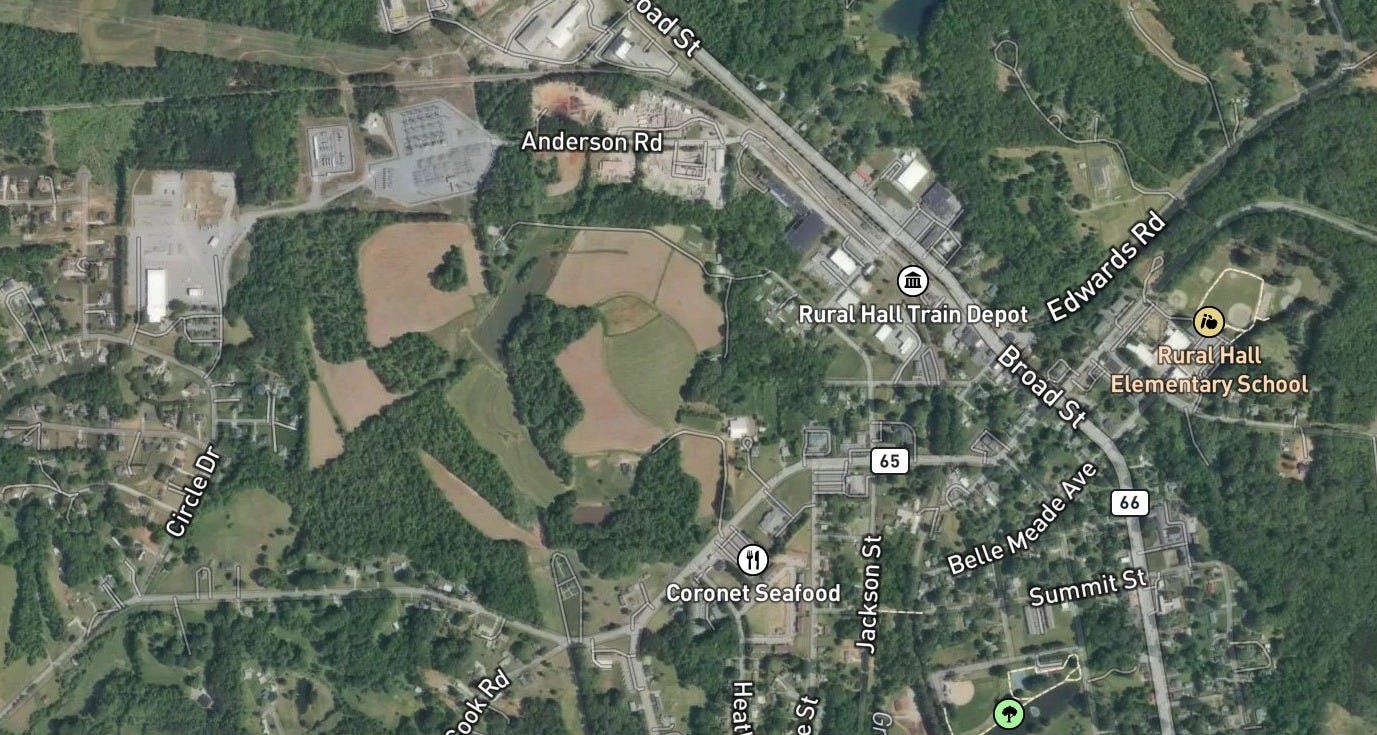
Because it’s rural land and the town is diffuse, it’s hard to describe how this land is smack in the middle of Rural Hall until you are there driving these roads with Carol. As you step out the doors of Abe’s Market, or put flowers on a grave at Nazareth Lutheran, or run the flag up the pole in front of town hall, you are looking right at Wall Farm.
“To build a data center here makes no sense. It’s like they don’t care at all about us,” says Nancy.
So when she got that letter, Nancy yelled downstairs, where her daughter Jean was working. “I yelled so loud she probably thought someone had died.”
Jean came up and looked at the letter. Like her mom, she had left northern Virginia and later Colorado because everywhere she lived, she kept getting hemmed in. “What bad luck is this?” Jean remembers thinking as she stared at the map.
“I told my mom: we can’t allow this to happen,” says Jean. The family didn’t want to—and couldn’t afford to—keep moving.
Jean thought maybe if they told the neighbors how bad these data centers are, they would convince them to oppose it. “I was getting ready to make flyers and go post them on people’s doors, but then, that same night, somebody came to our door and handed us a flyer.”
That was the good news of the day: They weren’t going to have to convince anyone this was a bad idea for Rural Hall. Everyone already knew.
“It’s hard to fight something when they won’t tell you what it is,” says Randy Adams.
Randy’s wife first told him about the data center—she had seen Carol post about it on Facebook. Carol runs a Facebook page called the Independent Hall Monitor, where she religiously posts about developments in local government. Like many small, rural places in America, the Rural Hall doesn’t have local journalists or a local paper. So, it was Carol who was watching a Council Meeting and caught the town manager’s brief mention of a “rezoning request” in the very last minutes before they adjourned.
While Randy had lived here a long time, he had never had the time to pay much attention to local politics. He’d spent his career as a truck driver, the last 21 years at UPS in neighboring Greensboro. “It was a 45-minute drive to get there, 45 minutes to get back, and no days were less than 10 hours. I couldn’t do anything but work at UPS, you know, take a bath, swallow my food, sleep six hours, and then it was time to go back to work.” He certainly never had the time to watch hours of town council meetings, so Carol’s posts had become a go-to source for the Adams and many of their neighbors.
But for all those years he couldn’t be involved in his community, Randy knew he was going to jump in now. “I had seen some stuff about data centers, but didn’t really lock in. I thought, well, that’s bad,” he said. “When I heard it was here, I thought, oh no, we don’t, we don’t want this at all.”
For Randy, it was the gall of it all. He’s spent his whole life living in this little corner of North Carolina, raising his family, working hard, and being a good neighbor. To him, the data center was all about outsiders who didn’t understand—or care about—their little slice of heaven or their lives.
“To have somebody in another part of the country see this land,” he says, “and then hire somebody to put in a permit for something that we don’t even want without any discussion, like they’re going to ram it down your throat, and they try to be so slick, it’s like a Kafka-esque story.”
Randy didn’t know the mayor of Rural Hall personally, but knew he lived on the road behind him. He figured that the mayor, Terry Bennett, main job was to hear from constituents and protect the town. So he looked up his number and gave him a call.
“I called him up to see what he knew about it,” explains Randy. “And he starts going… this thing is not going to bother anybody. I don’t know why you’re upset. What’s the problem here?” Randy realized the mayor knew very little about the project.
“I said [to the mayor] you were elected to protect us. All these fireworks and parades and all that stuff is great, but that’s not what you were elected for. You were elected to protect this town, and this is where you should step up.”
When the mayor and the council had little to offer except that “things will be fine,” Carol, Nancy, Jean, Randy, and a growing number of other residents were left to fill in the gaps. They began researching other data centers of the same size and scale to see how they had impacted local communities. Had they lived up to their promises of increased tax revenue? Did they create any local jobs? Or did they drive up electrical prices and use up local water? Nancy bought a decibel reader and visited other data centers of similar size to measure the noise.
What they found out didn’t look good for Rural Hall.
“If it hadn’t been for Carol and people like her, this would probably win with no problem,” says Randy. “We wouldn’t even know what was happening. They’d probably be tearing the ground up over there right now.”
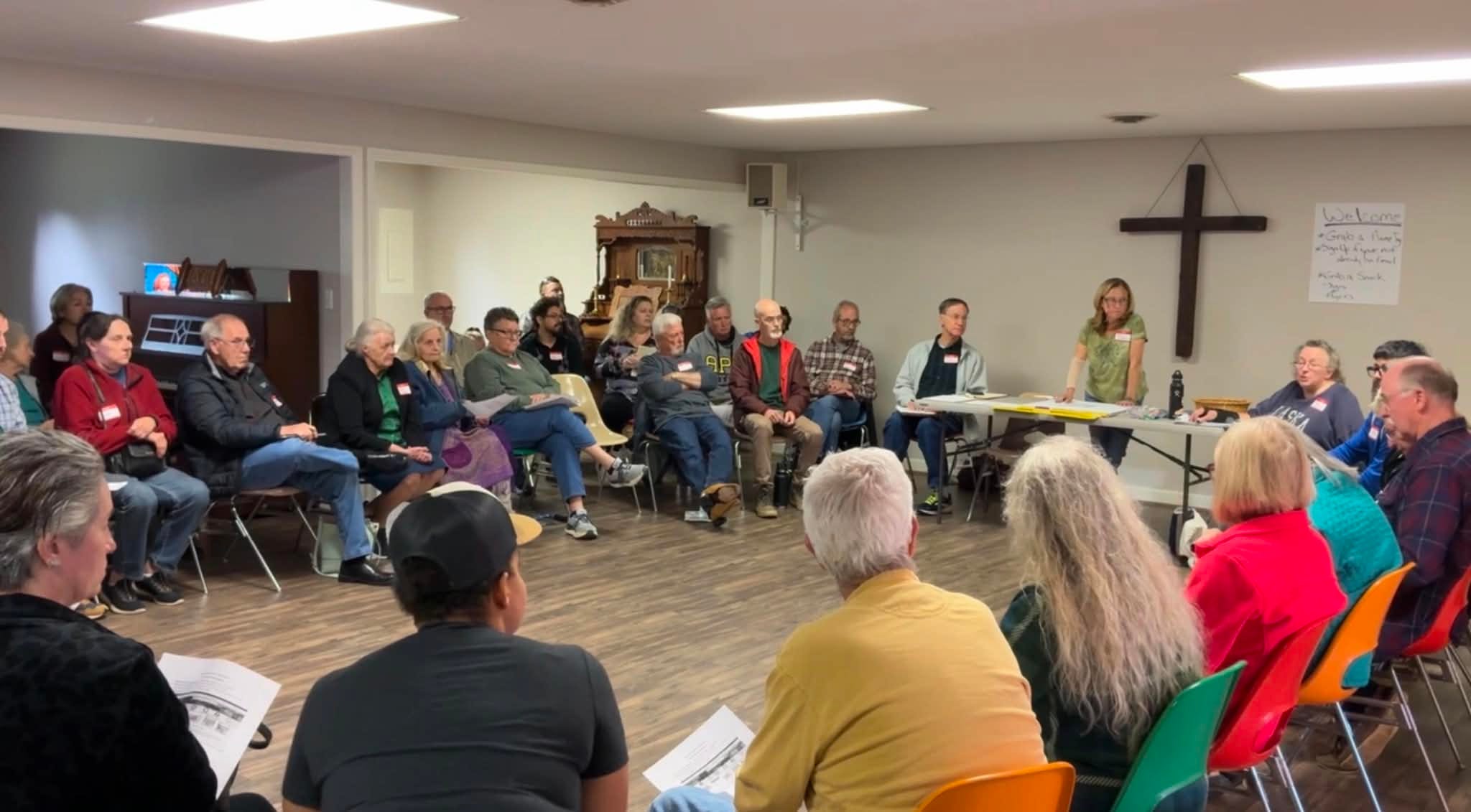
It was March 10th that Carol posted about the proposed data center on the Independent Hall Monitor Facebook page. By the end of the week, a petition was circulating, and days later, a private Facebook group called No Data Center Rural Hall was created as a central digital place to communicate from. Some residents wrote letters to the editor for the nearby Winston-Salem Journal, and others began canvassing neighborhoods around Rural Hall.
The letter Nancy had received from Montrose included a meeting date when the developer would describe the project. Despite the developer’s attempts to limit the number of people invited, people in town felt like everyone should have the chance to attend. As they knocked on doors and spread the word online, they invited people to come out. They started a GoFundMe, pooling resources for a rental van to get people who don’t drive to the meeting.
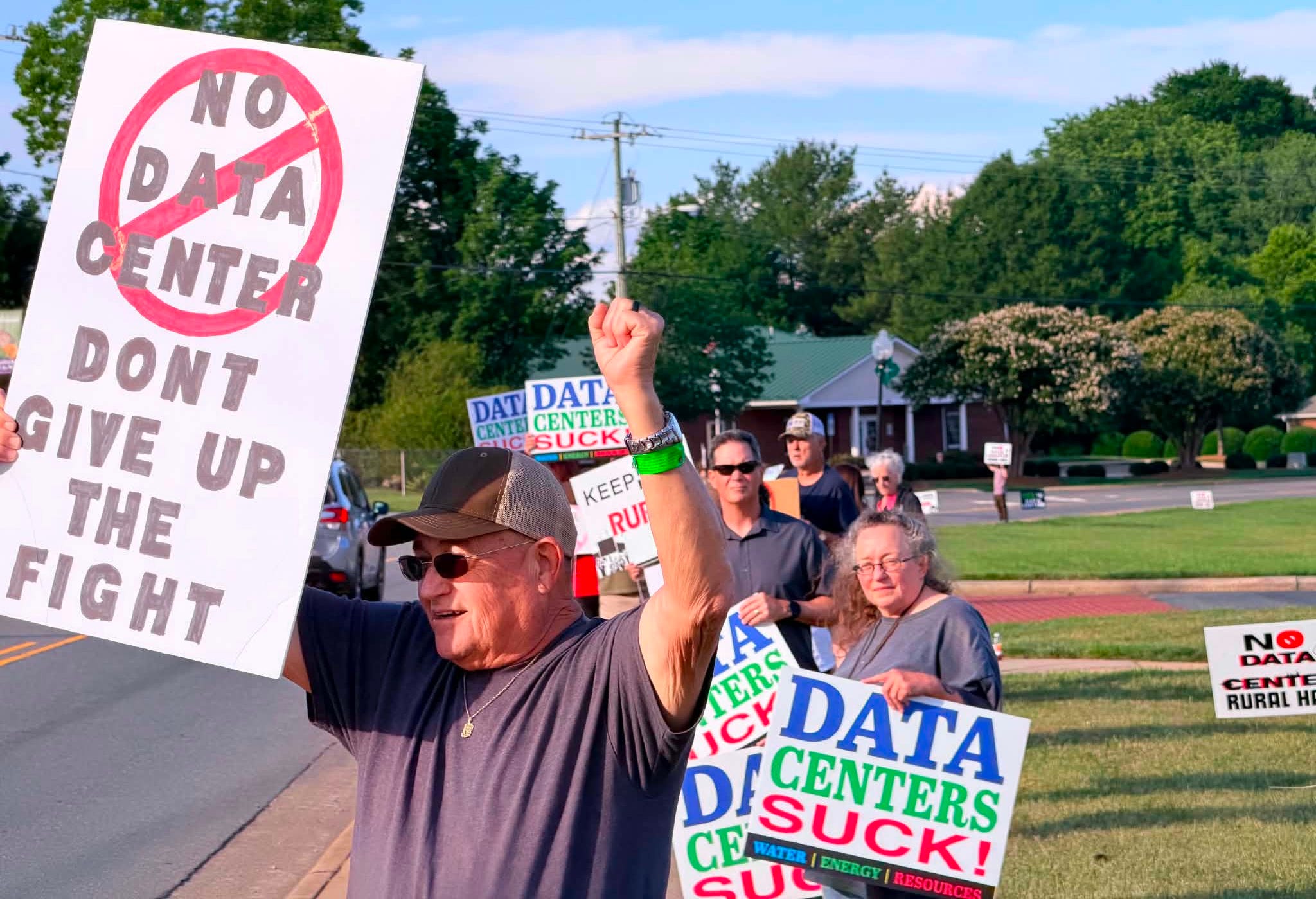
On March 30th, the meeting was packed. People who couldn’t get in held a rally outside. This was new for Rural Hall; it’s a know-your-neighbor-but-mind-your-own-business kind of town. Carol says a couple of retired police officers had gotten involved. “I said we need to have a rally outside the library before the developer’s meeting, and a couple of the guys said, ‘we can’t protest!’ I said, ‘it’s not a protest, we’re just making people aware that this is happening!’”
One retired officer agreed to come so long as it was just holding signs and afterward approached Carol and said: “This was great! I’m so pumped! When are we doing it again?”
Like this story? Share it.
They did do it again… and again and again. The residents began holding weekly citizen-led meetings about the data center, rotating facilitators so new people got a chance to lead and new voices could be heard. They created three teams that people could plug into: Research, Communications, and Strategy. For the first time in memory, so many people showed up at town hall meetings that cars had to be parked on the lawn.
I came to Rural Hall knowing the general concerns about data centers: They make noise and drive up local residents’ electric bills. They guzzle water and bring very few, if any, jobs.
I also came with ties to this area of the South. I live one county over, went to high school right up the road, spent summers swimming in the nearby Yadkin River, and I’ve hiked Pilot Mountain countless times, which I can see off in the distance as Carol drives me around.
I also arrived knowing a bit about small town organizing. I’ve been part of and written about hundreds of grassroots organizing campaigns here in North Carolina and across the country; I’ve sat in on town council meetings from Georgia to California. And, importantly, I’ve seen what industry and corporate America does to our towns: I’ve seen polluted water come out of people’s kitchen sinks, Dollar Generals shut down mom and pop groceries, an opioid crisis ravage holler after holler, and paychecks so low you can’t believe this is the United States.
So on one hand, I knew what I would be writing about. But on the other hand, I was struggling to understand: Why data centers? With all the bullshit small towns deal with, what is it about data centers that broke the camel’s back?
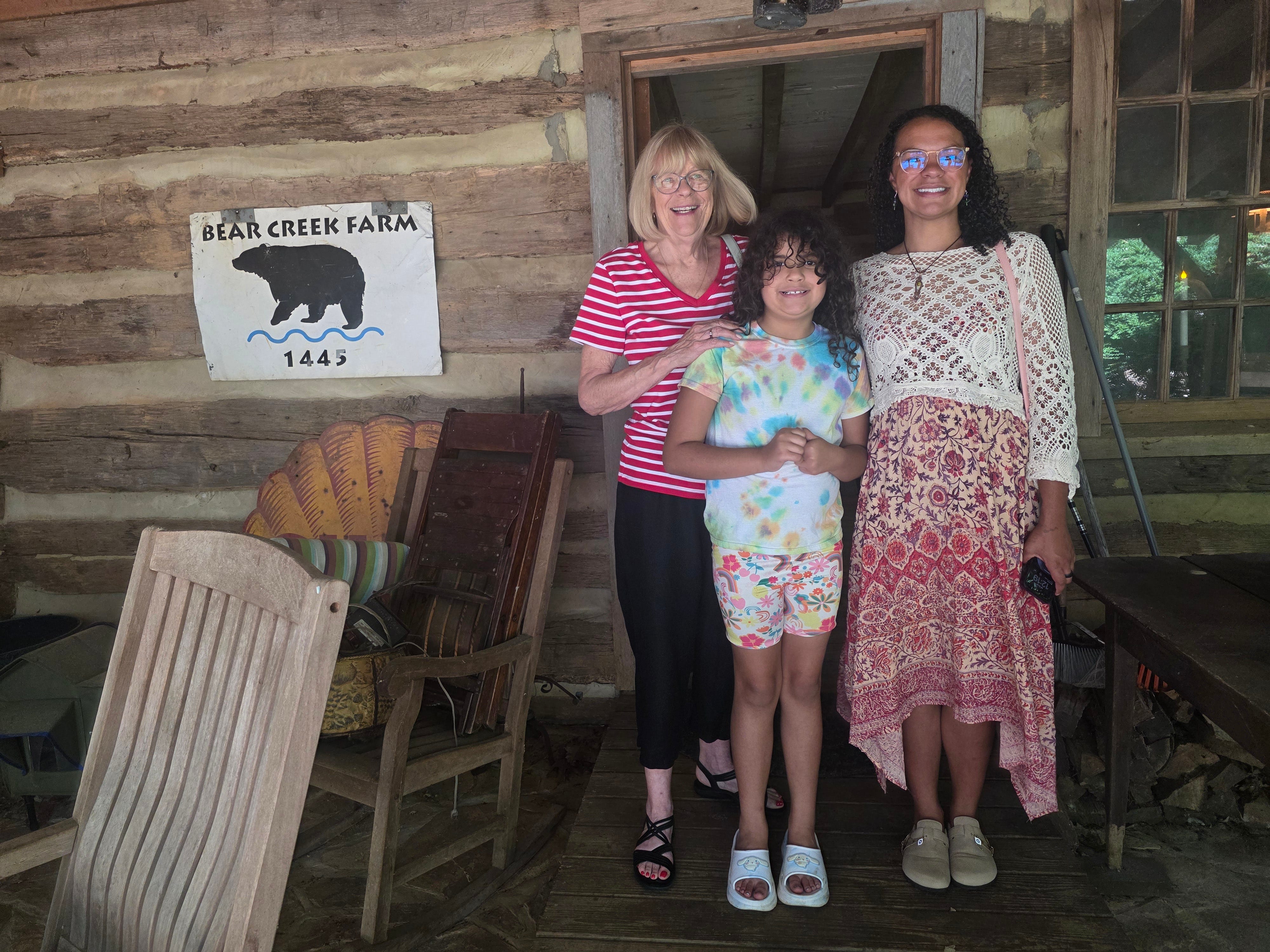
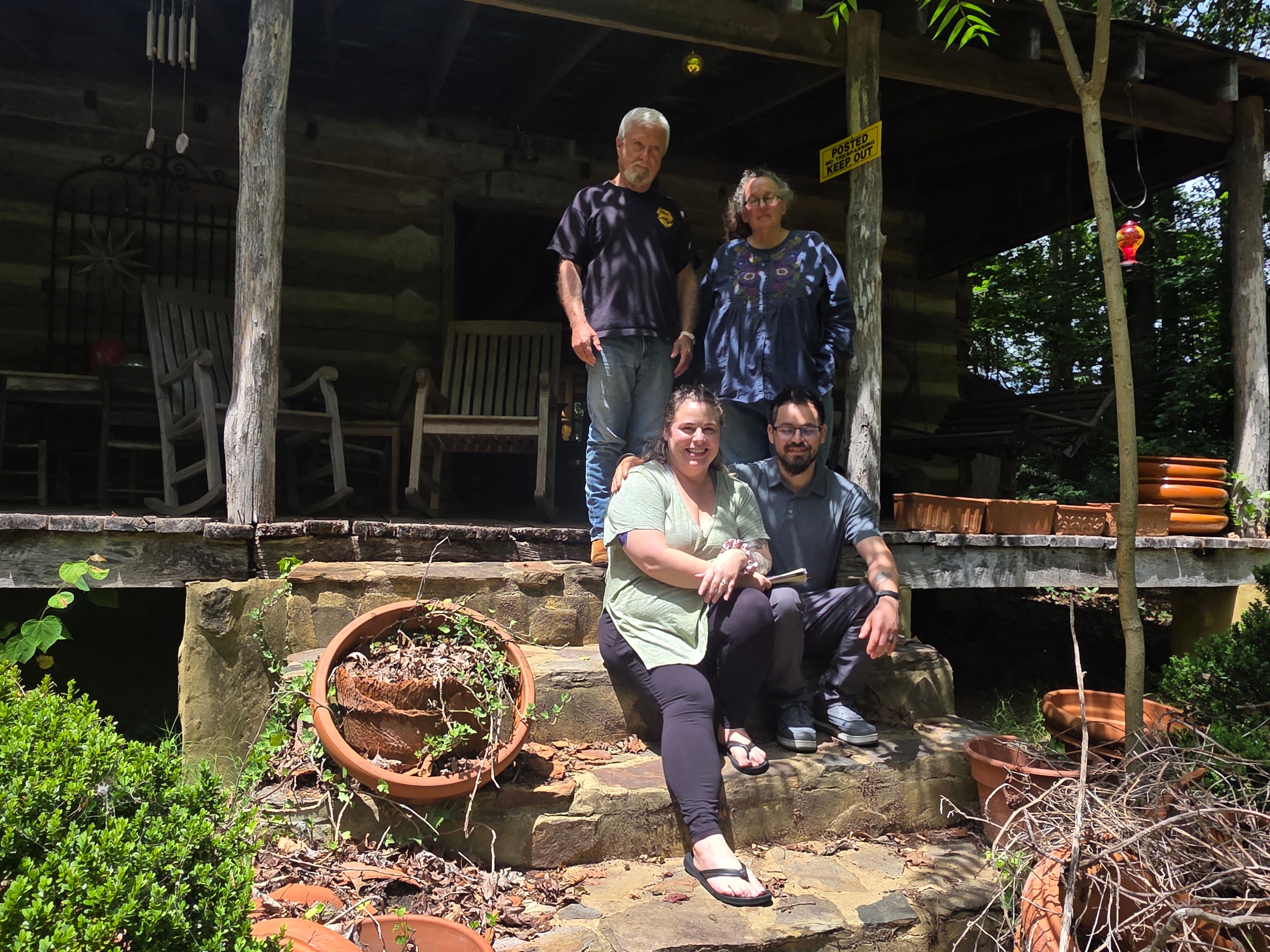
Randy, Carol, and I were sitting around the big wooden kitchen table in Carol’s family cabin. It was hot outside, but with the thick log walls and the doors open, it was comfortable inside. Soon, a young couple, Amberlee Mabe and Andrew Rojas, joined us. Carol made another pot of coffee.
Amberlee’s mom got the zoning notice. The data center would be built a stone’s throw from her back door. Amberlee worries about this—about her mom’s health next to a large industrial site and about the house losing all its value. She’s afraid that her mother, who lives on a fixed income, will lose all that she’s got. Her house is paid off, her bank account is slim; she hadn’t planned to have to start again.
It all seems so unfair, how people can work their whole lives to get a little something and have it all destroyed by some company they’d never heard of. But when I ask Amberlee and Andrew why they’ve gotten involved in this fight against the data center, it doesn’t only have to do with Amberlee’s mom.
There is something more existential happening in these anti-data center fights. There’s general anxiety about AI and technology; a real sense that who wins in the future being built is already set.
This future is being built without our consent. “They’re shoving AI in everything, so it’s unavoidable,” says Andrew. “And then later on they kind of push it on us, like, oh, well, you’re relying on data centers so that’s why we have to build them. But we didn’t ask for this technology, we didn’t ask for it to be in everything, and we certainly didn’t ask for this data center.”
And, Carol points out, the people who they are fighting against—the mayor, the city council, the planning boards, even the developers and their lawyers and all their middlemen—none of them actually want the data center either. “There is just money to be made, bags of money, and they figure that someone needs to grab those bags of money before this thing is or isn’t built.”
It’s as if everyone is racing towards a future that none of us designed and none of us really want. We get the sense this future isn’t designed for us, but we are running towards it anyway. That’s how little power we all feel.
“There’s a subconscious thing there,” explains Randy. “Because I think almost everybody feels like everything’s going so fast you can’t keep up. It is, and this is a way to strike at that.”
Their first win came when the Forsyth County Planning Board recommended denial of the rezoning request. “Now that’s only a recommendation; the County Commission needs to vote on it still,” warns Carol.
Their next win was the Rural Hall Town Council voting to pass a resolution opposing data centers—well, it was sort of a win. “It was a Mickey Mouse resolution,” says Randy. “It barely said anything at all.”
Still, the resolution passed unanimously, and Mayor Bennett was quoted by a local TV station saying: “It’s obvious we are against the data center coming here.” While local residents weren’t so sure they trusted this resolution, it was obvious that their pressure on local leaders was working.
In Rural Hall, and everywhere, small-town lawmakers seem to be caught by surprise by data center opposition. They are, truly, bumbling through. Council members seem bowled over by industry representatives who are paid to perform a certain song-and-dance routine, and then are shocked when community members step up and say “no.” In Rural Hall, the mayor seems downright upset by their constituents weighing in: he has repeatedly threatened to shut down meetings and throw people out.
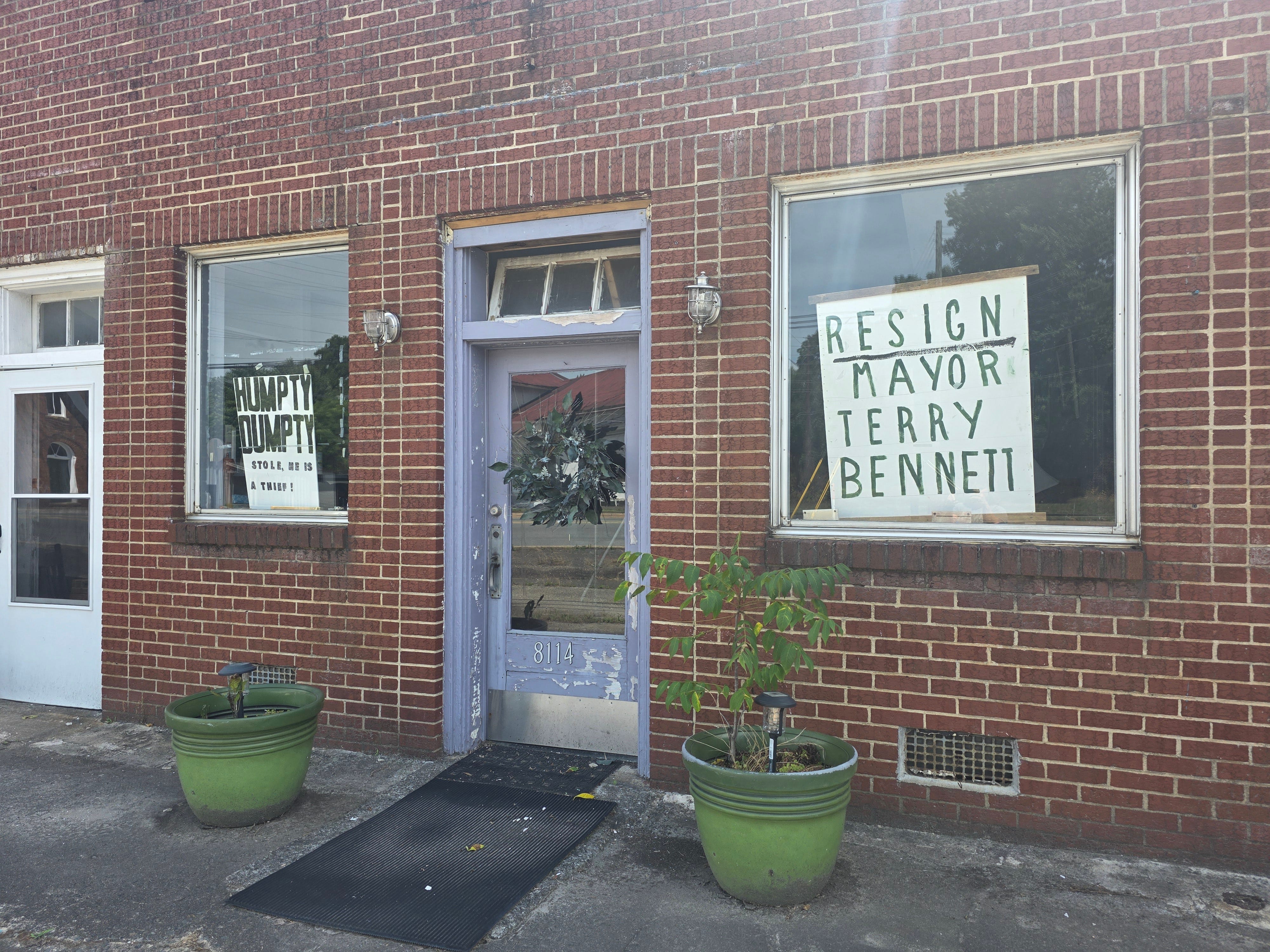
And it turns out that everyone who was suspicious of the resolution was right. Only weeks after passing the no data center resolution unanimously, in late June the council reversed course and negated the resolution. Only one council member voted against the new resolution and stuck with his previous vote.
What changed? After the County Board recommended the zoning not be approved, Mayor Bennett said the developer assured him that they could get the land annexed into Rural Hall, directing additional tax revenue to the town.
Of course, one would think annexation would be a decision that a developer wouldn’t control.
To Carol, Nancy, Jean, Randy, Amberlee, and Andrew, it sure feels like they are being cut out of power. Clearly, conversations are being had, and decisions are being made in places where the people are not allowed in, but big corporations are.
Carol is filing public records requests to find out what back-door conversations are happening; the group is considering filing complaints over public meeting violations. “We’re fighting something, we’re fighting somebody, and they won’t tell us what they’re going to do and how they’re gonna do it,” says Randy. “It never crossed their mind that they would actually have to tell us either. But they do.”
All over the country small-town residents are getting a big lesson in democracy.
The United States has more than 3,000 operational data centers, and that number is expected to grow substantially in the years ahead. More than 1,500 new data centers are in various stages of development nationwide, and, as they become a harder and harder sell, 67% of planned data centers are now in rural areas, like Rural Hall.
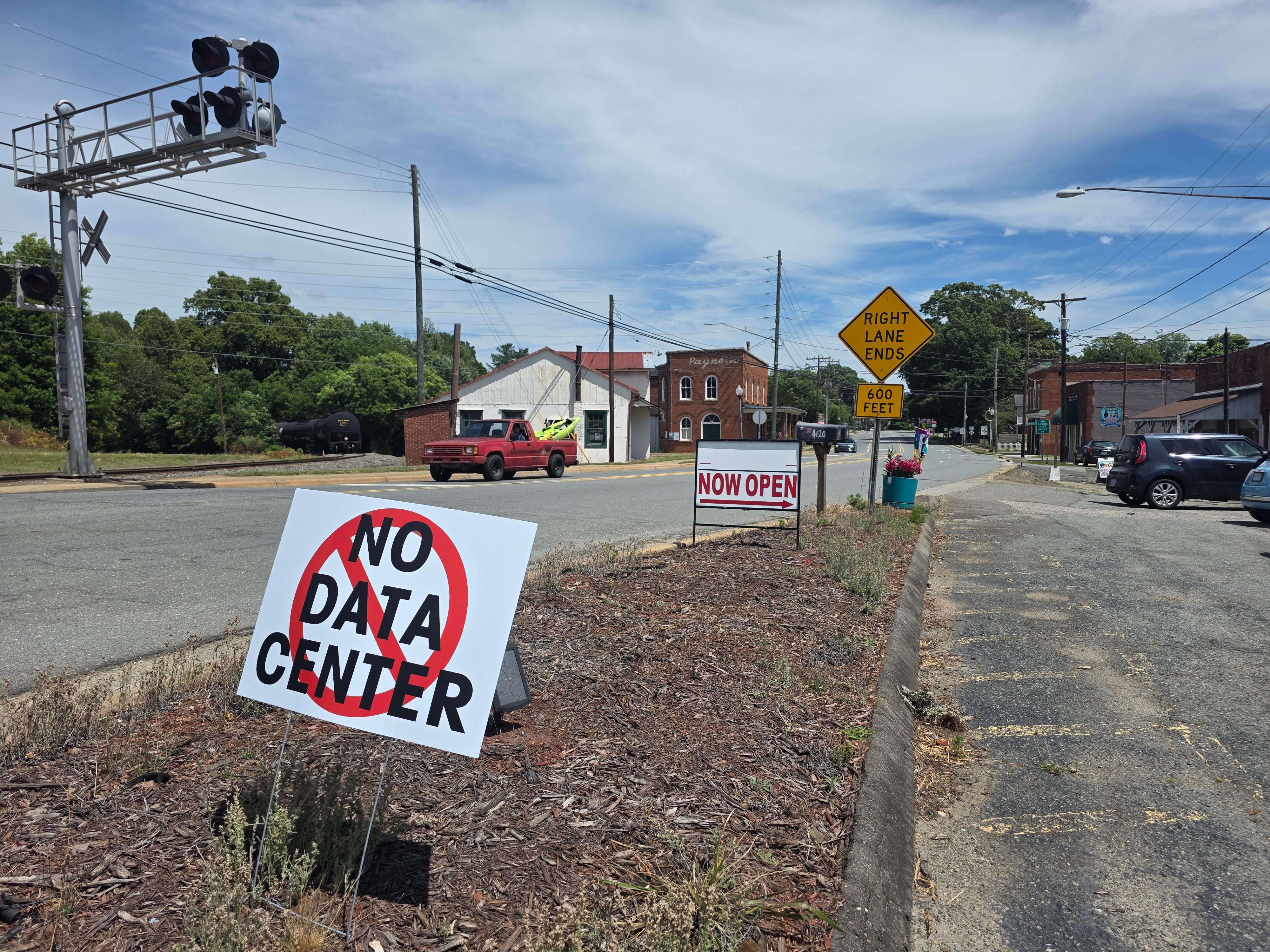
“It feels like they want to come here because they think we don’t have the power to defend ourselves,” says Carol.
“And because our local government doesn’t even seem to know how to stop them,” adds Randy.
“But they’re wrong,” Nancy laughs.
Many of the people here are organizing around something for the first time—and getting a crash course in how to muck through meeting minutes, plat maps, and public record laws. They are seeing the inner workings of government up close—and seeing who has power and who doesn’t. Sometimes it seems like the local government is learning alongside them. A recent public records request response included an email from the town clerk to the town manager asking: “Hey, I just wanted to make sure it’s okay that I send the map sent to us about the data center to Carol?”
They’ve been able to turn to other North Carolina communities for advice and guidance. Boone, Canton, and Kings Mountain have all passed data center moratoriums, as have Gates and Chatham counties. Neighboring Stokes County is currently fighting a data center; in the March primary, incumbents who had supported a massive data center complex in Walnut Cove were resoundingly rejected—an outcome politicians in Rural Hall might want to pay attention to.
The residents of Rural Hall are committed to keeping the pressure on until Project Iron Spur is dead and gone. Their focus is on July 30th, when the Forsyth County Board of Commissioners will vote on the rezoning. Their petition currently has over 5,000 signatures, exceeding the town’s own population. Even in the sweltering July heat, they continue to knock on their neighbors’ doors and table at local events, making sure that everyone in Rural Hall has the opportunity to know what’s happening at the heart of their town, and how they can help stop it.
Regardless of what happens with the old Wall farm, the residents of Rural Hall have unlocked something exciting and new here. This has always been a friendly, community-minded place, but it seems like money and power have called most of the shots—often at the expense of the hard-working folks. “I think we are starting to see that doesn’t have to be the case and we have bigger power together,” says Carol of the organizing they have done.
Randy is in awe of how so many people have shown up in just a few quick months: “I would have said, before this data center thing arrived, that if there had been some big project and somebody said, ‘Do you think we could get the community together?’ I’d have said, ‘Absolutely not.’ But I was wrong.”
“I did not realize how much of Rural Hall existed,” says Amberlee. “I just thought it was so much smaller and now meeting people from every age group, demographic, family, like it’s just… it’s amazing, and like we can all come together for this one thing.”
“I do think data centers are going to be what reunites the United States,” says Jean. “It’s like, oh, wait, we actually do have things in common. So, at the end of the day, you know, when we look back on this 10 years from now, we’ll be able to say, you know, maybe it was kind of a good thing, because we’re gonna be okay.”
Comments
Nothing yet. Say the first thing.
Sign in to join the conversation.