
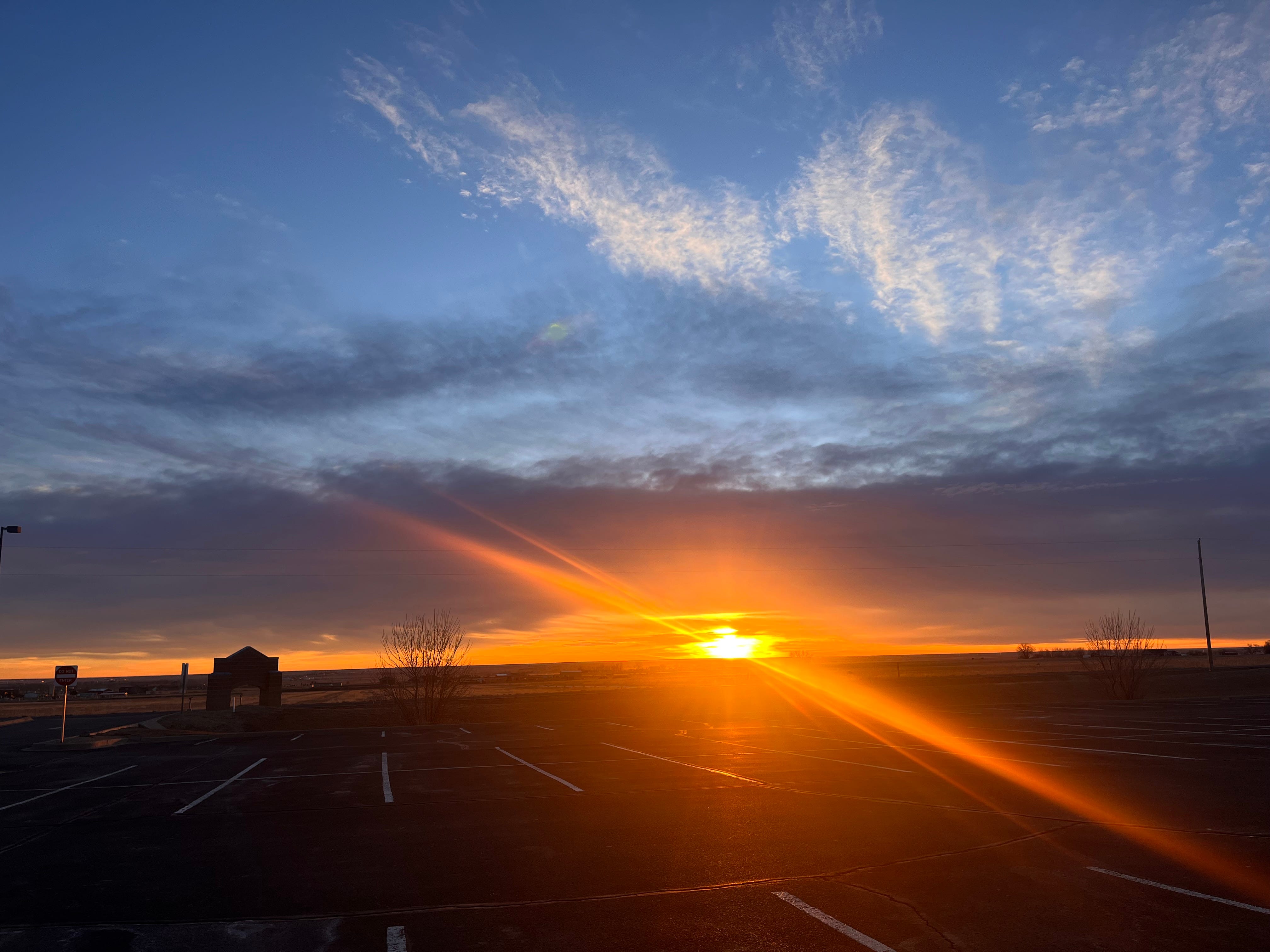
Lochbuie, Colorado, is a small place, under a big open sky.
For sixty years, families have moved here to stretch out; to have more space. In fact, it was first called Space City for exactly this reason. Spacious Living Mobile Home Park, the first development, still makes up a large area of Lochbuie, which was incorporated as a town in 1974.
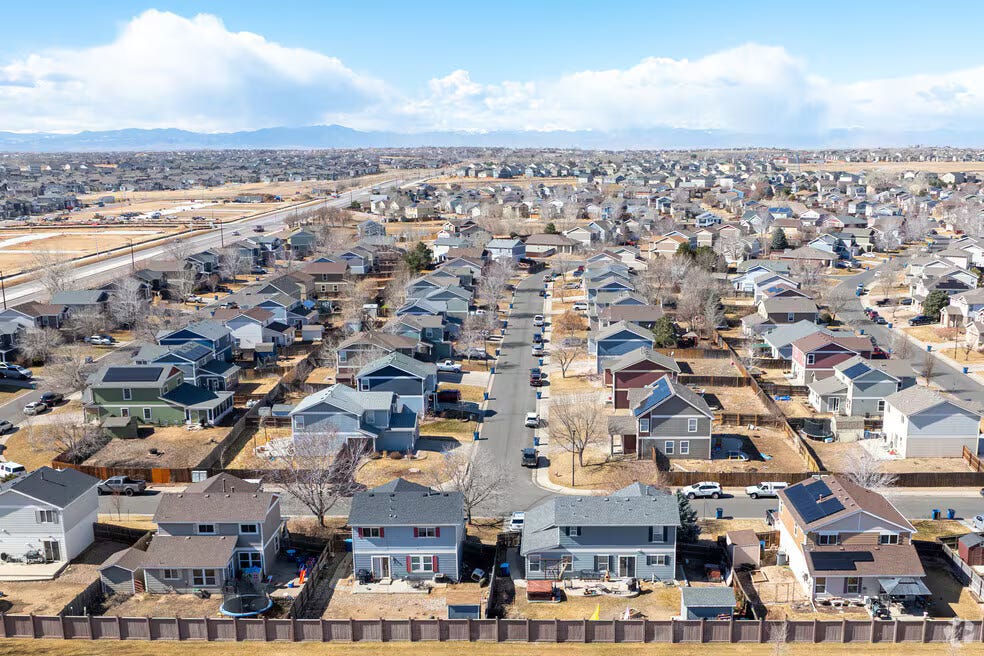
Lochbuie today is still mostly residential; tidy neighborhoods with modest homes and cul-de-sacs. “I fondly refer to us as a town without a downtown,” says Mayor Jamie Jeffery.
There may be no main street, but Lochbuie has neighborhood parks, playgrounds and sidewalks. Kids can ride their bikes here. People can walk their dogs. It’s a nice place to live. Being only 30 miles outside downtown Denver, growth is inevitable. Jamie says at its heart Lochbuie really is a small town, but with a population of over 9,000, it’s pushing the limits of that designation. New neighborhoods are being built; farm and ranch land abut the tidy yards of new developments with names like Bella Vista and Silver Peaks.
Lochbuie has always been a place you come to in order to grow; grow a family, grow a career, grow a little garden outside your front door. It’s an empty canvas, a tabula rasa, a place of possibility. The sky is so big here, and the land so vast it feels like you could dream up just about anything and put it right here.
“We want to grow, but we want to grow carefully,” says Jeffery. “We want to grow responsibly. We want to grow well.”
That’s where our story begins.
Share this story with your friends.
“Who should determine that growth?” asks Marylou Withrow, who has lived in Lochbuie for 30 years. “That’s what we need to be talking about.”
Like Jamie Jeffery, Marylou loves Lochbuie. She and her husband built a house here in the 1990s and have always imagined passing it on to her son, a grandchild, or maybe one of her nieces.
Marylou also welcomes growth: “I’d like to see a few more restaurants and places to shop; personally, I’d love a car wash to come in.” The arid, dusty land is beautiful, but can do a number on a vehicle. But so far, those businesses haven’t arrived. Instead, in 2025, Lochbuie got a new soil-bagging facility and now the town is awaiting plans for a large train switching yard; the land has been annexed into Lochbuie. These facilities will bring jobs to the area, but they also come with costs.
“My biggest concern about these projects is that we didn’t know about them until they were a done deal,” says Marylou. Of course, the projects had gone through the correct processes at the town board for approval, but Marylou feels like she and other residents didn’t know– people are busy in their lives and can’t always keep up. She contrasts these projects to 2016, when local voters were able to weigh in through a ballot initiative on whether or not Lochbuie would allow retail pot sales in their town. In that case, residents voted against dispensaries. “To me, we should be able to weigh in over any big development or business, especially when it could impact our town or our health so significantly.”
Concerned about what growth was coming to Lochbuie, Marylou started driving to the Lochbuie town hall on Tuesday evenings, taking a seat in the hardback chairs, listening carefully to what was going on.
When she became the local middle school principal, Jamie Jeffery moved her family to Lochbuie. “School administrators should always live where they work,” she said. She fell in love with the town - so much so that she ran to be on the town board and, after a few years of that, for mayor. She’s been in that role now for two years. “When I became mayor, we didn’t have a formal process of how to get items onto the agenda; bring proposals. I wanted to establish that so both town council members and the public could see what we were doing and engage with us.” Jamie spent the first two years formalizing this process with the town board and ironing out the details.
Just as that process was finalized, Jamie learned that Lochbuie’s two neighboring towns– Hudson to the north and Brighton to the west– had both been approached with proposals to build data centers. With all the open land surrounding them, she figured little Lochbuie could be next.
Nationally, there is a mad rush to build data centers in advance of the predicted– and uncertain– AI boom. Speculators are coming into towns to buy up land. While the numbers aren’t entirely clear, it’s been reported that proposals for new data centers are up 40 to 60% over just last year.All of this is happening while a serious drought is hitting the country; those drought conditions have hardly spared Weld County, where Lochbuie sits. The drainage ditches and rivers in the area sit dry; car tires spin up dust clouds. 517 of the current 800 proposed data centers are to be built on already drought-stricken land.
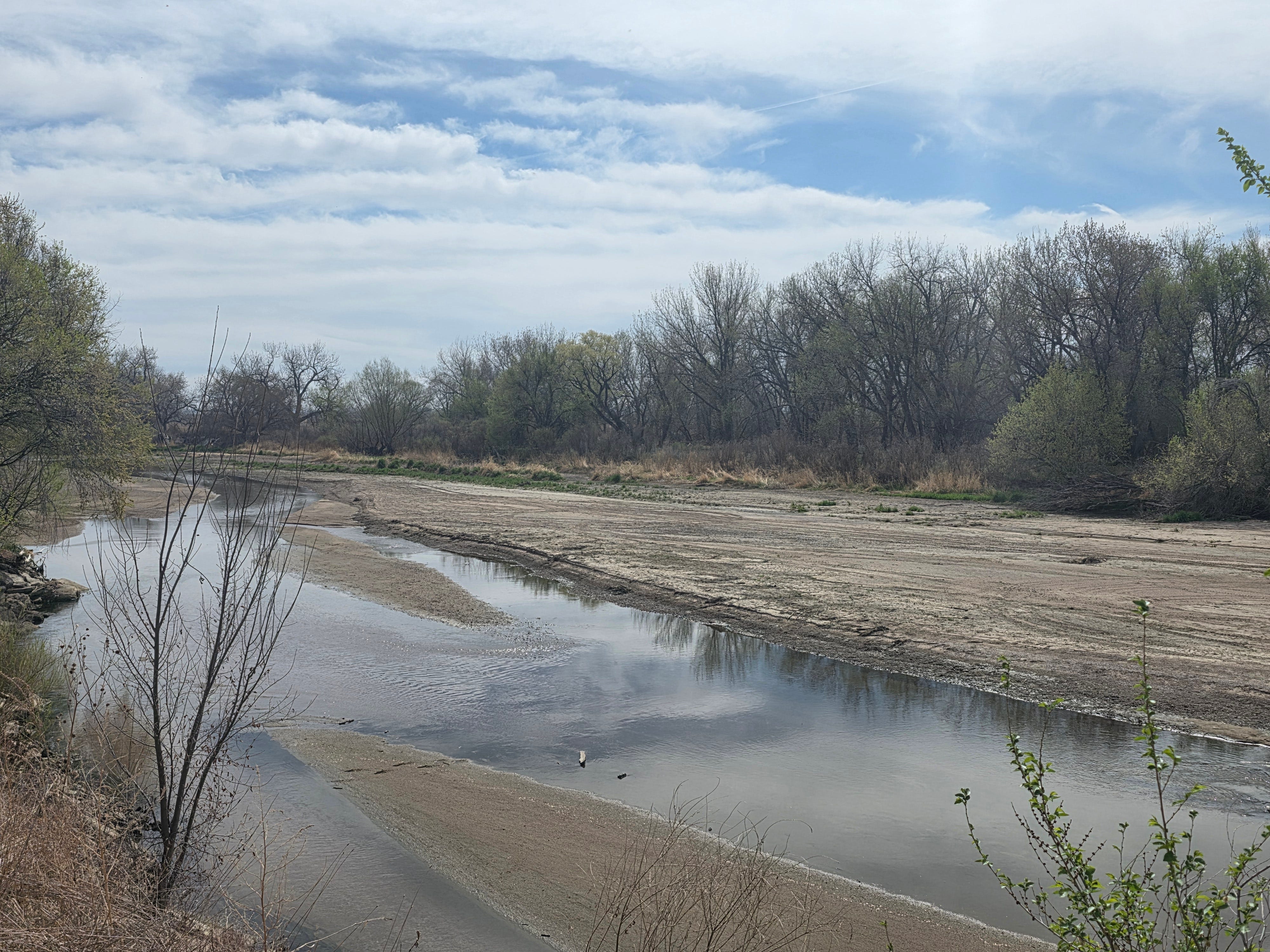
“In this area of Colorado, water is a huge issue,” Jamie explains. “With these data centers, you can get into open and closed loop discussions, but no matter what, it impacts the water. And if I’m trying to think about the future of this town and the people who live here, I know that water is one of the most important resources we have– and could lose.”
So Jamie decided to do something different for Lochbuie. Instead of waiting for developers to come and pitch their projects, instead of having their lobbyists come sing their song, Lochbuie was going to speak first.
Using the new process, Jamie introduced the first proposal: A moratorium on data centers.
When Marylou heard about the data centers being planned in Hudson and Brighton, she thought: “Oh no, here they come.”
“I’m not against growth. It just has to be the right growth, and a data center isn’t the right growth by a long shot.” The facilities not only gobble up water, but they don’t even bring jobs to the towns they settle in.
So when she got a text from an organizing group called With Many Hands asking if she’d come speak out in support of the data center moratorium, Marylou agreed. “At first I really wasn’t sure about getting involved, but the text did get me doing research. And after a few days of learning more about data centers, I couldn’t sit this out.”
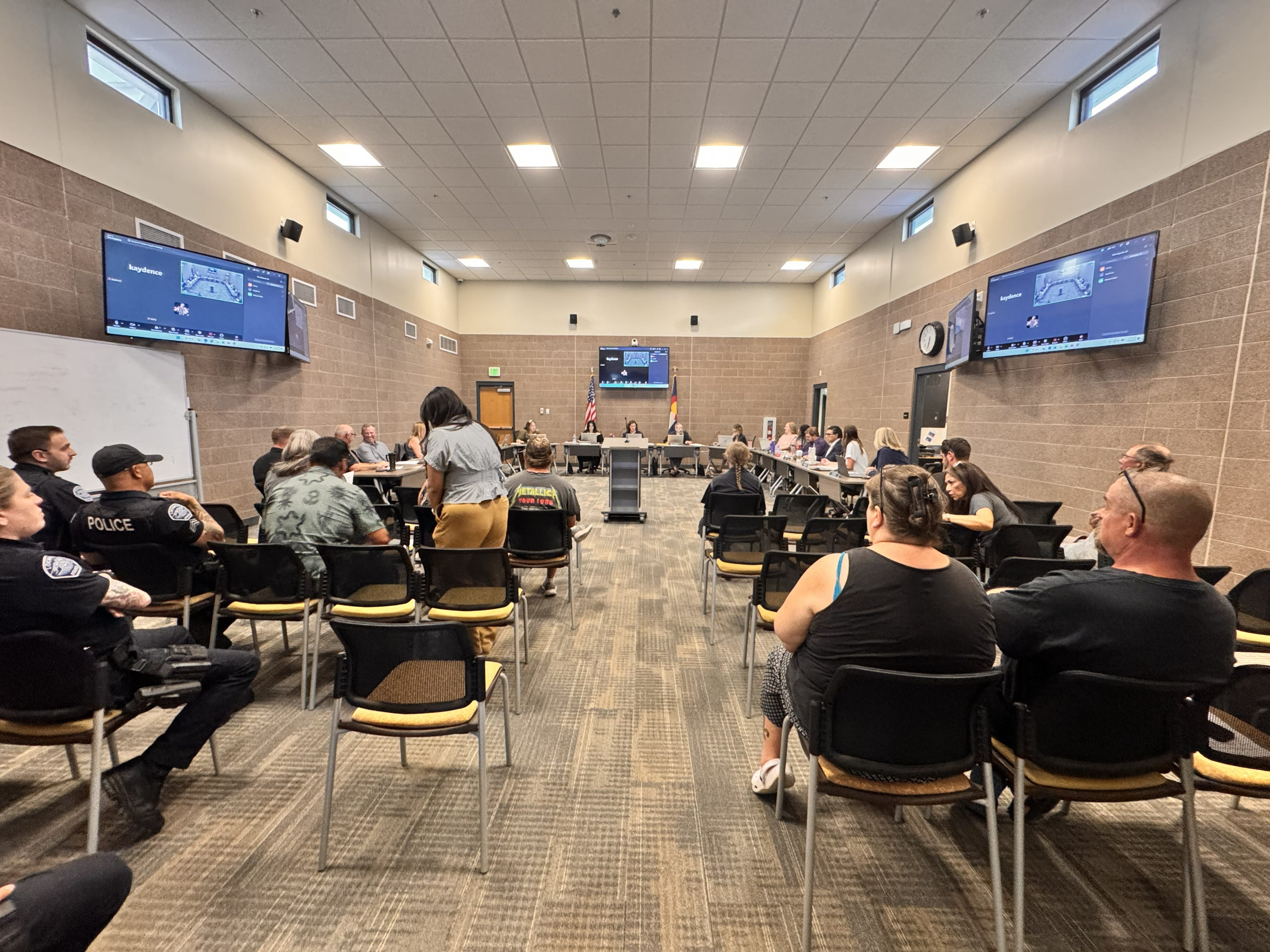
Twenty-five people, including Marylou, showed up to the town meeting; even more joined by Zoom. 200 people sent in emails supporting a moratorium. “There were far more people than we had seen before,” says Jaime Jeffrey of the turnout. “It was great. This is exactly the type of discussion and engagement I want.”
One resident after another spoke about why they opposed data centers in Lochbuie. They talked about the water. They talked about the noise. They talked about energy prices and the cost of living. They talked about this rush to build data centers, to build them bigger and bigger, all for an AI future that no one asked for– and that no one in Lochbuie needs.
One speaker suggested a three-year ban; when Marylou spoke, she suggested five years. “One year, three years– that’s not enough. This is all happening now– we won’t know the impacts of these centers for at least 5 years,” she said. “We don’t want to be a town that gets this wrong.”
The council voted 6-1 for a five-year pause on new data centers. Little Lochbuie enacted the longest active data center moratorium in Colorado. “It felt like we were taking such a positive step towards controlling our own growth; our future,” says Marylou.
In the comments on Facebook posts, Marylou reads what local residents say they want in Lochbuie. A lot of people say that they want more activities for kids, especially teens. A youth center, a rec center, more places to go and things to do. Other people talk about wanting more shops, a grocery store, a coffee shop, a bakery. Marylou would like a library.
No one mentions a data center. “That is something a big company that doesn’t live here wants, not us.”
Marylou plans to return to City Council and maybe propose a process by which Lochbuie residents can vote on developments; she wants citizens to be able to determine their own direction and growth. She wants to make sure that companies who come to the town have something real to offer Lochbuie and its residents: “If a company wants to come here, they should pay what I pay. They shouldn’t get tax breaks or exemptions. Let’s stop making it so easy all the time for corporations to ruin our town.”
The mayor, Jamie Jeffery, is committed to enabling that conversation. “My career has been about education and empowerment– if I can cheerlead and encourage residents to be involved and bring their ideas forth, that’s going to be my greatest contribution here.”
So, sure, Lochbuie set the standard for small Colorado towns and data center moratoriums– but even bigger than that, they’ve started a bigger, even more important process: Taking the reins from the big monied developers and putting them back in the hands of the everyday people who live here.
The future should be Lochbuie’s to choose.
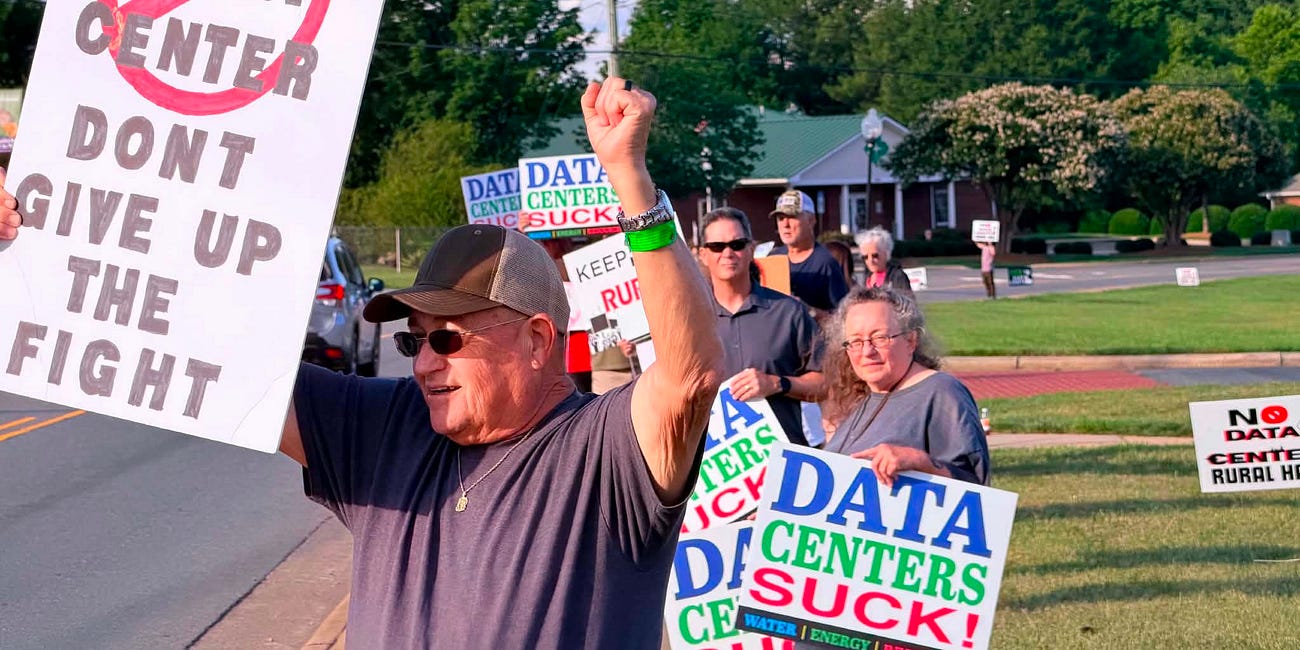
In case you missed it: Looking for more stories about small towns and data center organizing? Check out this story from Rural Hall, North Carolina, where a hyperscale data center was proposed… and defeated.
We didn't ask for any of this.
·
Jul 20
Carol tells me she drives like a turtle, but she’s whipping around the turns of rural Forsyth County roads nonetheless. She’s been driving them all her life.
Looking for even more stories about working-class people organizing in their hometowns? Check out this story about Catholic women organizing through The Dorothea Project:
Comments
Nothing yet. Say the first thing.
Sign in to join the conversation.