
A boy arrives on a bicycle with two flats.
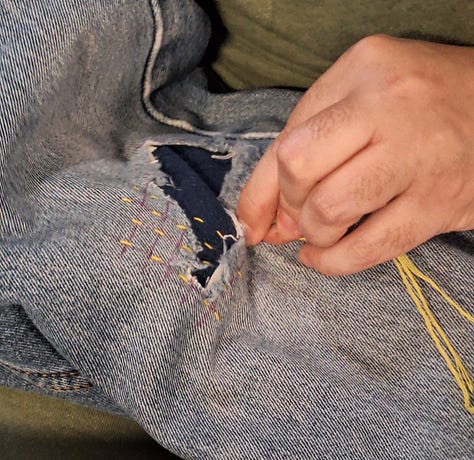
A man carries a pair of jeans slung across his arm, holes in the knees. A woman lifts a sewing machine out of her car and carries it, cord dangling, through the front doors of the Joy Bomb Social Center.
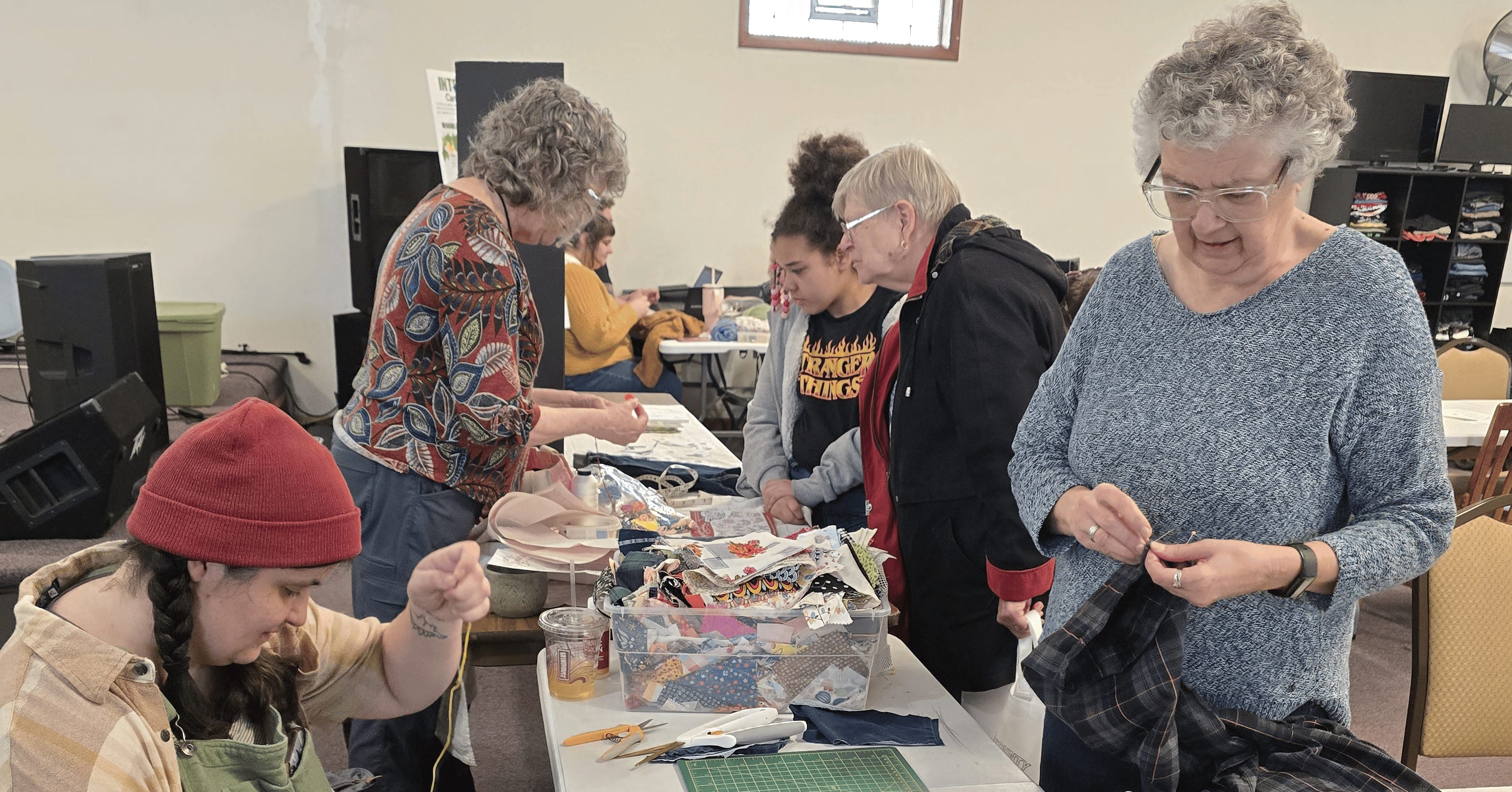
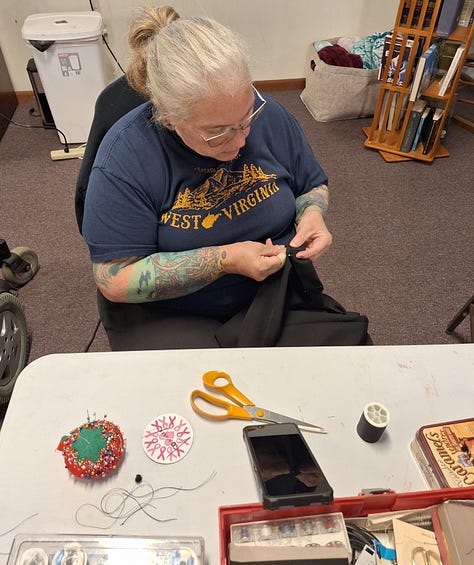
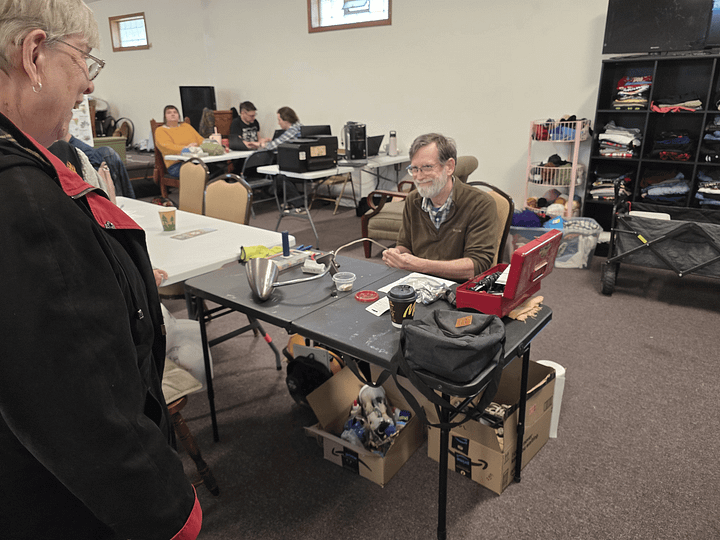
Inside, the cheerful clatter of a dozen small conversations fills the air. Volunteers put their pliers and hammers, thread and paints, glue, yarn, and sewing machines out on long plastic tables, at the ready.
This is Joy Bomb’s first Fix-it-Fair, where what’s broken can be repaired.
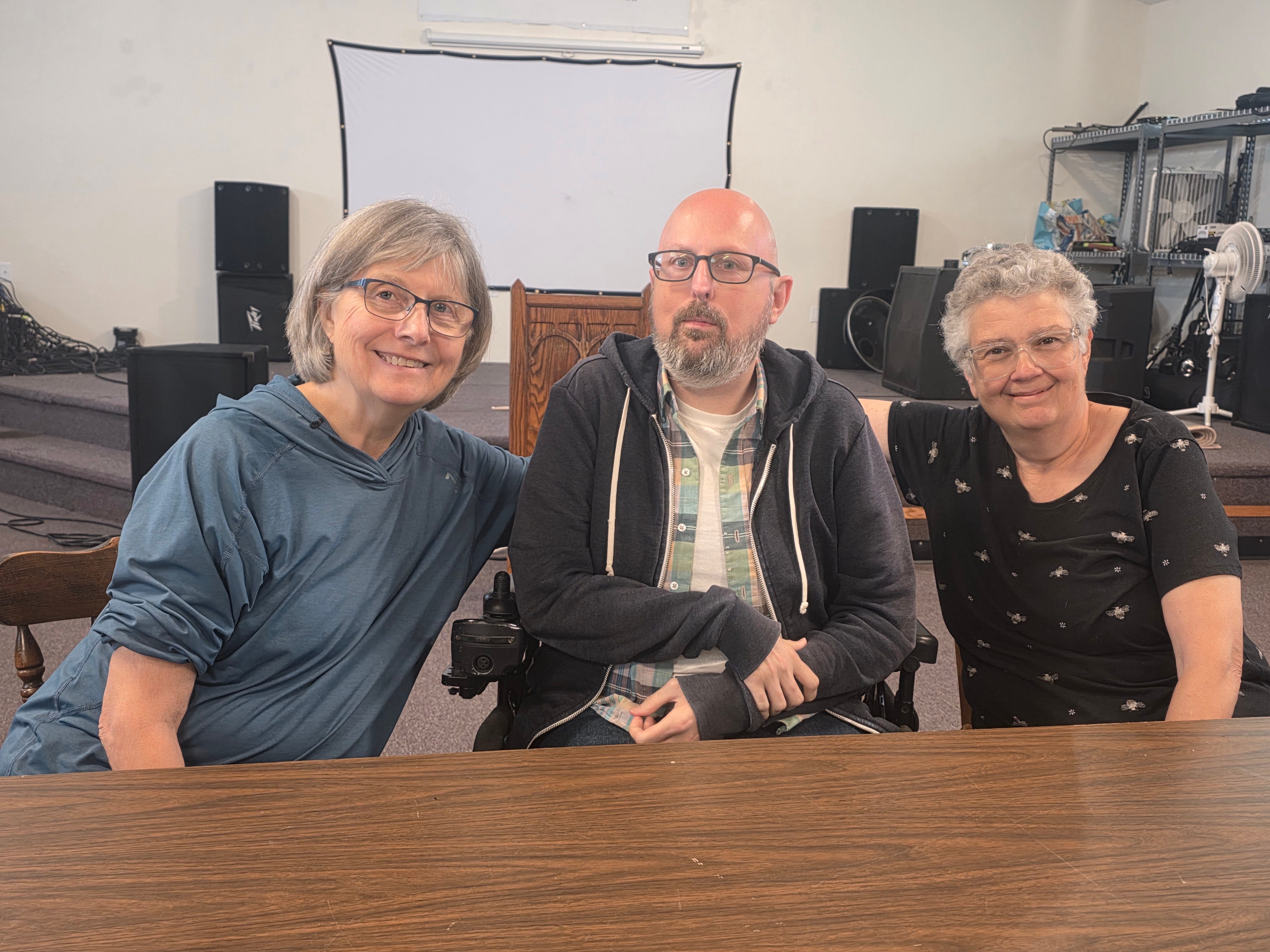
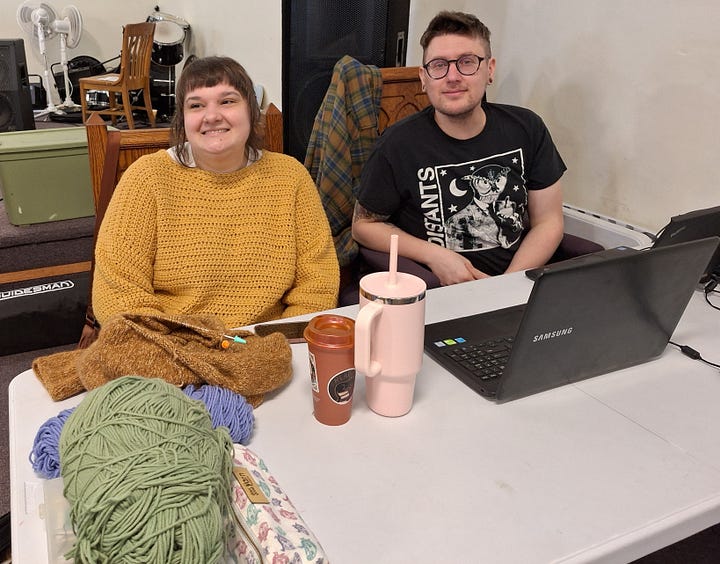
Cathy Perrin, Connie Wachala, and Adam Scartozzi sit about and talk like old friends. They make jokes and poke fun at each other, but also smile fondly and nod along encouragingly while the others talk.
After seeing a similar event in a neighboring community, Cathy and Connie wanted to bring a Fix-it-Fair to Lake Station, Indiana. Adam offered up the space at Joy Bomb, an old church-turned-community center that hosts everything from metal shows to food giveaways.
Lake Station is positioned in a long, 50-mile stretch of small industrial cities spilling out from Chicago and lining Lake Michigan from Whiting to Michigan City. While it’s by no means remote, it still feels isolated: The town is hemmed in by highways and heavy industry.
Connie, who grew up in neighboring East Chicago, says this part of Indiana is filled with blue-collar steel and refinery workers. Cathy, who lives in nearby Highland, nods along; her father was a steelworker, her husband was a steelworker, and her son works in hazardous waste. These jobs at Nippon and US Steel are relatively stable, but also difficult and grueling. Local residents who haven’t gotten on at the plants mostly work in the service economy – living paycheck to paycheck, as most working-class people do.
While there are a few million-dollar homes on the lake, Adam says “there really is no wealthy area here.”
People are working hard, but just making do.
Bringing a fix-it-fair to Lake Station made sense: It’s a place where people have always made something from nothing.
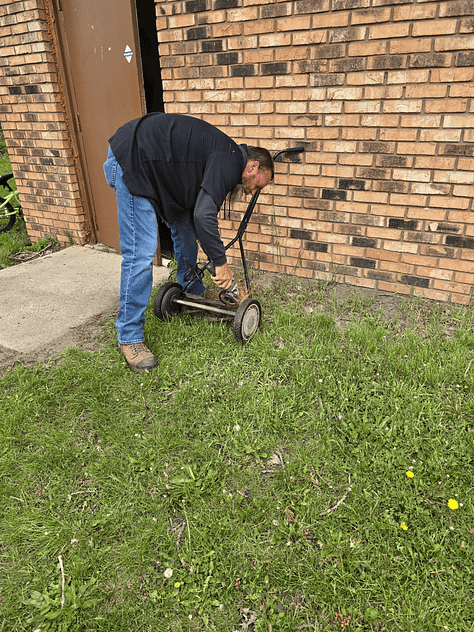
Fixing things isn’t a new concept for working people– on the contrary, it’s a way of life. This is the kind of town where you’ll see people replacing their rotors in their driveway and tires are plugged endlessly. In the yard across the street from Joy Bomb, a man is jerry-rigging a lawnmower choke with a length of chain. “Almost everyone knows how to do something,” says Connie.
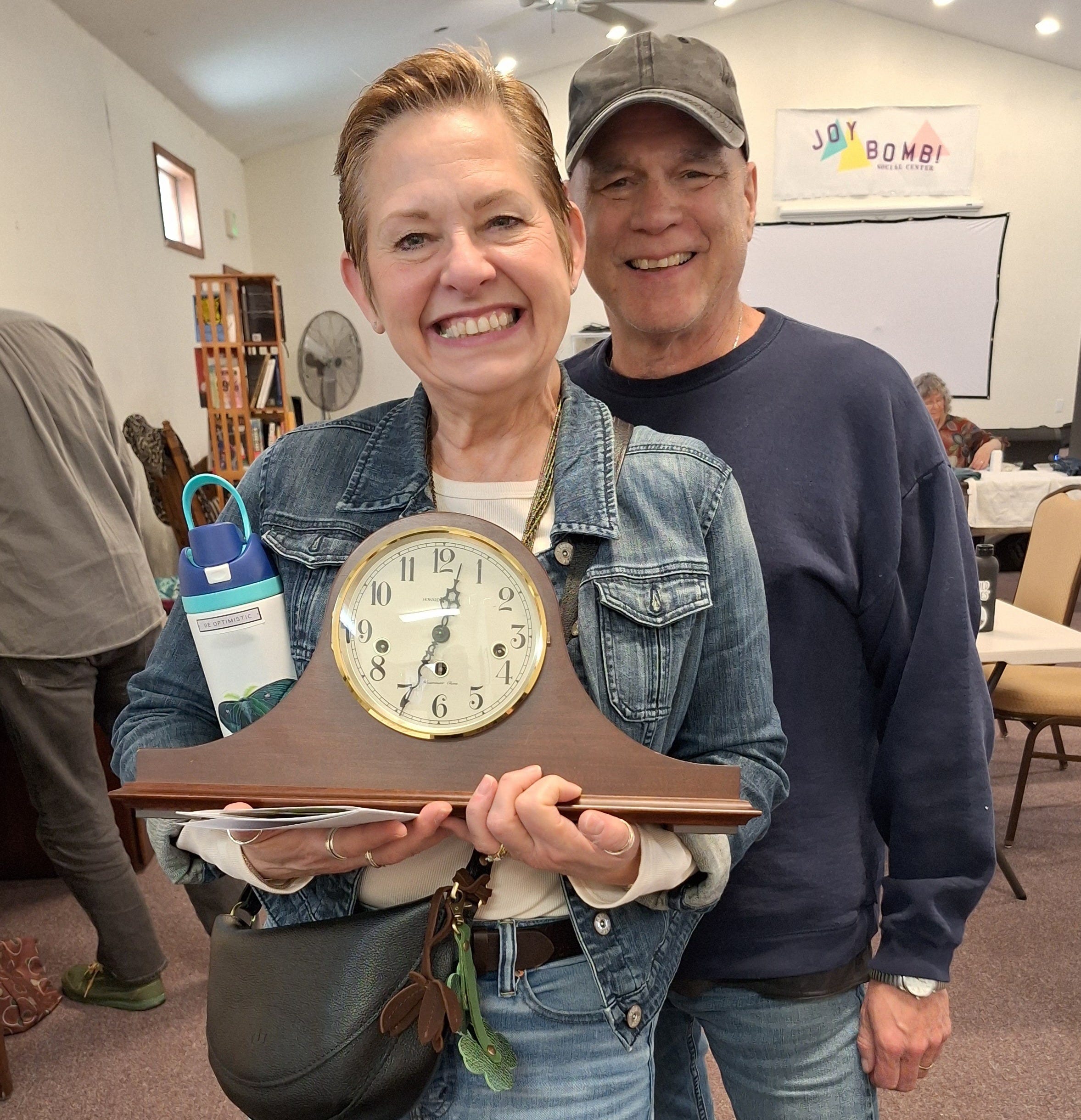
Because of this, finding the volunteers for the Fix-it-Fair was easy. Adam loves to sew; one of his oldest friends knows how to repair clocks. A member of Connie and Cathy’s sustainability group knits; her husband works in IT.
The list of volunteer fixers grew rapidly. Connie says they were pleasantly surprised at the types of new people they could reach out to and invite in– for example, they spent some time trying to track down a man a few towns over who repairs bicycles in his front yard.
“The event turned out to be a good way to invite people who aren’t usually involved in,” observes Cathy. “It really helps to recognize the unique skills that people have when inviting them to join in community events so they know their role and what it is they have to contribute.” A repair technician who works on refrigerators and washer/dryers came— he was able to work on a few small appliances that people brought in.
“People really do like to give and like to be useful to their neighbors,” observes Adam.
“Sometimes it feels like we are asking a big favor of people when we ask them to volunteer,” says Connie. “But everyone really wanted to be asked and wanted to come.”
“It was as rewarding for the volunteers as for the people getting their items fixed,” says Cathy.
“And,” Adam adds, “Sometimes those people were one and the same.”
Everywhere in America, inflation is high, wages are stagnant, and budgets are tight.
But just as people need to save a buck and hold on to things longer, companies are intentionally designing their products so they can’t be repaired. Cellphones slow down a year after buying them; a new fridge might only last a few years. The intent behind this planned obsolescence is clear: If corporations can control the lifespan of the products they create, then they can keep us buying new stuff. It is now common business practice for manufacturers to design products to be glued shut, to seal batteries, and to use proprietary parts to force purchases over repair.
Not only have consumers lost their ability to keep items they’ve purchased longer, but also working-class service technicians and repair workers are losing their jobs.
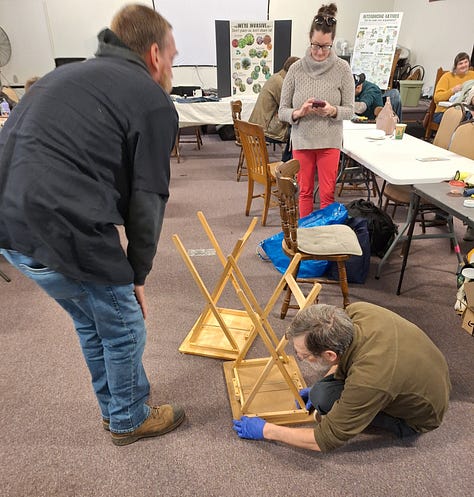
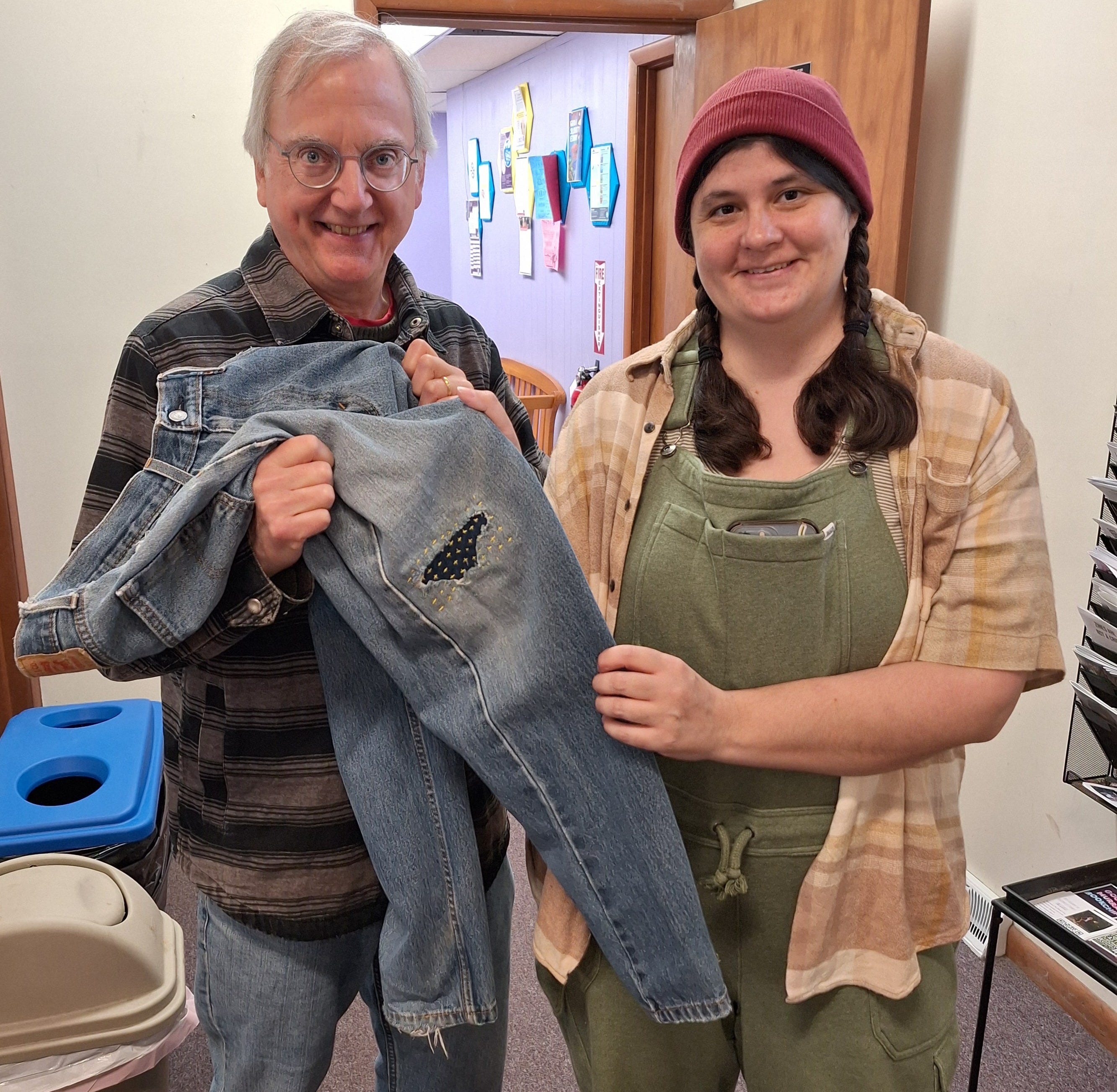
So while the Fix-it-Fair’s volunteers probably don’t think of their sewing and soldering skills as particularly radical, each repair is a small punch up against big corporation control. People brought TV trays with broken legs, laptops with viruses, sweaters with fraying edges to Joy Bomb that day. There were bicycles and weed whackers, an old reel lawn mower that needed its blades sharpened. One woman brought a coin purse with a broken zipper, causing multiple fixers to pool resources and brainstorm the repair.
The conversations at the Fix-it-Fair were more likely to be about how to use dental floss to repair a shoe than to be about politics. Still, in a place like Lake Station, people understand politics and power because they understand the economy- and no doubt it was in the back of their minds. People here understand how things are rigged, and how it’s the big corporations that have rigged them. So while in other places– like Texas and California, Oregon and Colorado– residents have fought hard to pass right-to-repair bills, here in Lake Station, these fixers are keeping it simple for now: They’ve got broken stuff, they’ve got working tools, and they’ve got each other.
“If it’s broke, fix it” reads the flyer for the event.
At one point during Joy Bomb’s Fix-it-Fair, a slight woman who had bought a too-large shirt at a thrift store stood with a group of seamstresses bustling around her, pinning and tucking the garment to shape. “It looked like it was her wedding day,” laughs Connie, recalling the scene.
The event was, hands down, a success. “What I can’t believe is that we didn’t do this before,” Cathy adds.
“Now that we have done it once, we have the system down and can do it again– we know where to promote it, we have a base of fixers to invite,” says Adam.
The trio wants to continue the event with some regularity, potentially adding on new locations and including more people. They’ve thought about doing “pop-up repairs” where they might pitch a tent in a public place or someone’s yard.
I think they’re onto something in Lake Station. As people tighten their budgets and try to make what they buy last longer, and as communities seek new ways to interact with each other, the simple idea of a Fix-it-Fair seems tailor-made for working-class towns like this.
Furthermore, I like the message. Yes, we need to live more sustainably, regulate our consumption, and reduce our waste. Yes, so many of us are broke, and repairing things saves money. Yes, we can punch up at our common enemy, the big corporations that increasingly want to control not just our pocketbooks, but our lives and communities.
But most of all, I like the metaphor. In places like this that have cracked under the weight of a rigged system and uneven economy, working-class people will do what we’ve always done: We’ll look around at what we have, kick the tires, knock off the dirt, and duct tape it back together until it runs. If we can do that with a mower, who says we can’t with an economy… or a country?
Follow Joy Bomb Social Center here.
Learn more about Highland Neighbors for Sustainability here.
In Case You Missed It: A group of Colorado moms are adding yet another thing to their plate… pressuring their local elected officials to pass childcare legislation. Learn more about how they are doing it here:
A Future Where Moms Aren't So Overwhelmed
·
Apr 27
Heather Haaland wanted children in her twenties, but as time passed into her thirties, she figured she probably wouldn’t. Diapers, clothing, the sheer number of snacks, after school activities. “How on earth would I ever afford them?” she said.
Comments
Nothing yet. Say the first thing.
Sign in to join the conversation.