
My heart is so full at this time of year with such plant beauty all around me, I find that plants hold, support and fill me with joy, I only wish everyone could experience this wherever they are.
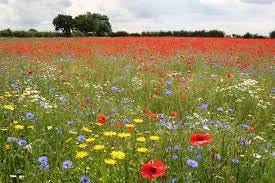
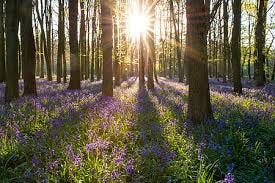
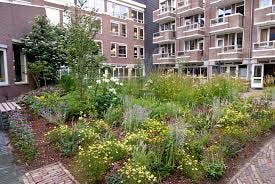
Always fond of flowers, attracted by their external beauty and purity. Now my eyes were opened to their inner beauty, all alike revealing glorious traces of the thoughts of God, and leading on and on into the infinite cosmos....
my eyes never closed on the plant glory I had seen.
John Muir
Plants are everywhere whether you live in a city or vast wilderness, they freely create such incredible beauty.
In this wildflower course I am bringing together all my articles on plants and writing many more to help you immerse fully in nature wherever you are. Each stage will be filled with detailed plant profiles which will include the poetry, herbal uses, wildlife value and folklore of each species.
If you join the Woodland Bard you will have access to this course in an easy sequential format as well as access to our Woodland Bard Course which includes detailed articles on trees and woodland ecology and a deep analysis of Irish Mythology.
Everyone who subscribes will Support our ‘Devoted to Plants Initiative’ and help to promote and grow our wonderful plant friends.
Help us make a difference:

If you prefer you can join or donate to the plants through the website which will give you access for three months to the course- JOIN HERE
A simple common plant has the ability to awaken a joy within us, a joy untainted by life’s challenges that remains with us throughout our lives, there is no limit to the gifts of nature we just simply need to stop and soak it up. As the poem below on wildflowers states all that is needed is a free moment to appear, nothing more:
O the prickly sow thistle that grew in the hollow of the Near Field.
I used it as a high jump coming home in the evening –
A hurdle race over the puce blossoms of the sow thistles.
Am I late?
Am I tired?
Is my heart sealed
From the ravening passion that will eat it out
Till there is not one pure moment left?O the greater fleabane that grew at the back of the potato-pit.
I often trampled through it looking for rabbit burrows!
The burnet saxifrage was there in profusion
And the autumn gentian –
I knew them all by eyesight long before I knew their names.
We were in love before we were introduced.Let me not moralize or have remorse, for these names
Purify a corner of my mind;
I jump over them and rub them with my hands,
And a free moment appears brand new and spacious
Where I may live beyond the reach of desire.On Reading a Book on Common Wild Flowers by Patrick Kavanagh
Please explore Meeting Plant Friends article for more information on identification.
Let us begin:
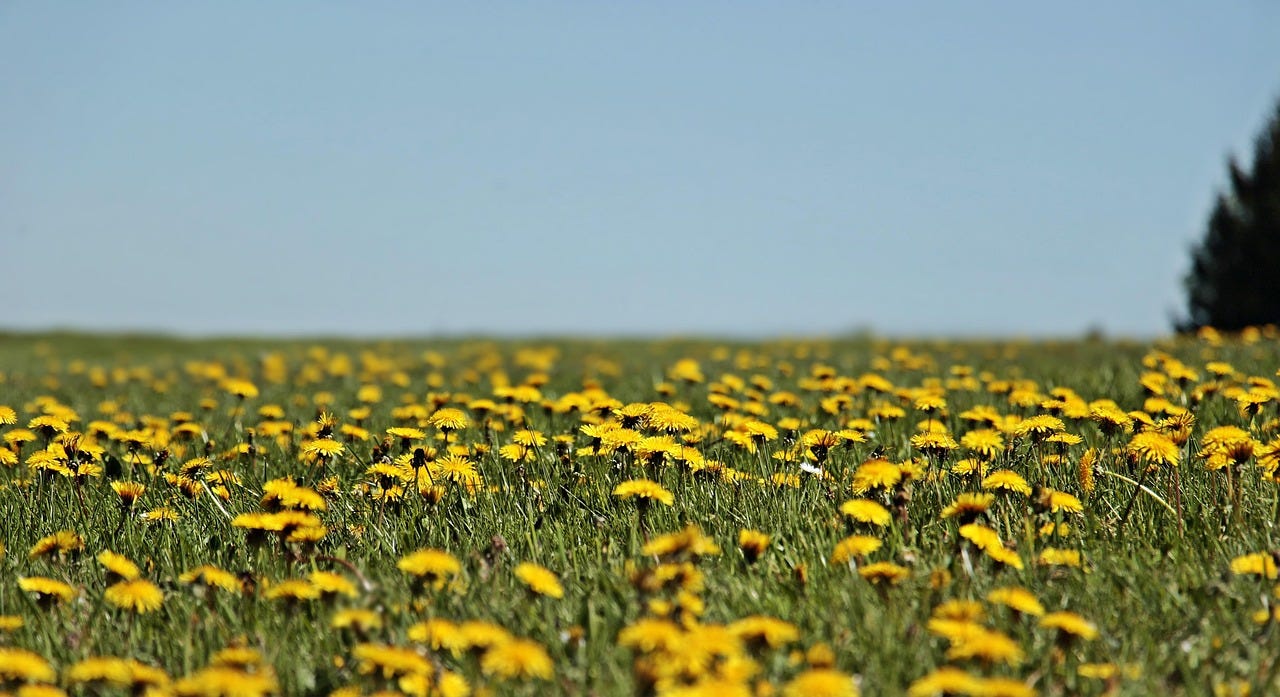
Common Name: Dandelion Latin : Taraxacum officinale Family: Asteraceae (compositae)
History and/or use: Roast roots for a beverage and use leaves for salad. Effective blood purifier.
Wildlife Value: Key nectar source.
The classic folk tale of the Dandelion is of the Leprechaun who hides its gold under the plant. The question therefore is what is the gold in the soil, where do the dandelion roots stretch down to? Dandelion is the quality of connection, it provides one of the early main sources of nectar for our winged delights, its golden flower attracts the nectar seeking insect people. John Muir describes our insects as beautiful winged people waltzing together in pure play and hilarious enjoyment. The gold under the plant is the very essence of life, the soil, minerals and the insects and fungi from which all life stems from. No matter how hard our lives may seem the dandelion implores us to find the gold in the earth and treasure it more than ever!
‘Here’s the dandelion rhyme: see my leaves with tooth-like edges, blow my clocks to tell the time, see me flaunting by the hedges, in the meadow, in the lane, pull me up- I grow again.
Asking neither leave nor pardon, sillies, what are you about with your spades and hoes of iron?
You can never drive me out- me, the dauntless dandelion!’Cicely Mary Barker 1925
If you have any medical conditions please check with a medical herbalist first before taking any plant and only harvest it if you are 100% sure what it is!
The word dandelion is a corruption of the French ‘dent de lion’ which means ‘lions tooth’ referring to the shape of the leaf. Dandelion is yet another common plant which is underrated. In medieval times it was grown as a vegetable and cooked like spinach or it was added to salads. It is rich in vitamins A and C and is a superior diuretic as it replaces the potassium lost in the process.
The leaves are also a strong equivalent to frusemide and can be used for hypertension when dried.
The root can also be used as a vegetable sautéed in vegetable oil and is a powerful liver tonic and coffee substitute. Use the root dried or fresh.
To make coffee dig up your fresh roots, wash and dry them, then bake in the oven for about ten minutes on a low heat. Provided they are not burnt they taste delicious, just add hot water and according to preference some fresh milk.
If you wish to do it over an open fire chop the root up small and flash fry them with no oil.
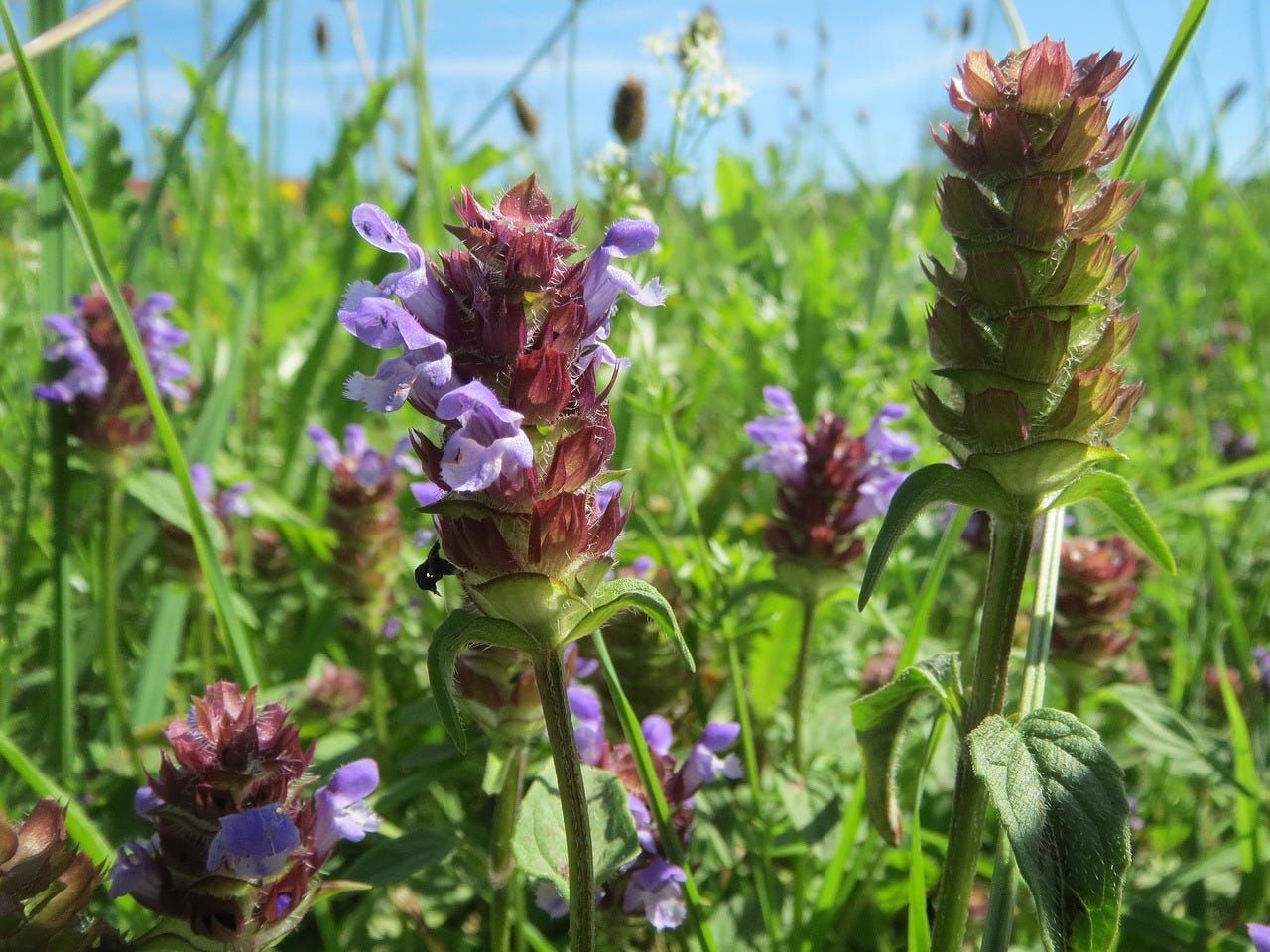
Common Name: Selfheal Latin : Prunella vulgaris Family: Lamiaceae
History and/or use: Excellent astringent for wounds and for internal bleeding.
Wildlife Value: Ground cover and nectar provider.
Habitat: Grassy, often bare place inc. lawns and woods.
‘When little Elves have cut themselves,
Or Mouse has hurt her tail,
Or Froggie’s arm has come to harm,
This herb will never fail.
The Faeries’ skill can cure each ill
And soothe the sorest pain;
She’ll bathe and bind, and soon she’ll find, that they are well again.’
Mary Cicely Barker
Selfheal has many folk names including Carpenter’s herb, hook-heal and sickly wort, each describing its use or how others have experienced the plant in different regions. The above names speak of the carpenter, farmer and patient’s relationship with the plant.
Selfheal survives well in grasslands, waste spaces and more open woodlands. A close cut lawn in summer can look beautiful with the purple flowers of selfheal to enliven the otherwise monocultural sward. There is a rarer species known as the cut-leaved self heal ( Prunella laciniata) which has cut leaves and white flowers.
Both the Latin and common name of this plant point to its continued use as a herb. Prunella or Brunella is the German name for a sore throat. Dioscorides knew of the plant’s use for sore throats and treated inflammations of the throat and tonsils with this plant.
The common name of selfheal as well as the folk names of hook- heal, sickly-wort and carpenter’s herb all imply an obvious link to medicinal usage. In the doctrines of signatures (the concept that every plant has a signature that tells us its use), the flower of this plant is said to resemble a hook and as in the past many common wounds were from billhooks and sickles this implied its use to stanch bleeding.
Selfheal does staunch bleeding effectively and is also used for internal bleeding as a syrup or as a tea.
It is also used for respiratory complaints, piles and in Ireland to treat heart trouble. It is less known as a cure for colds.
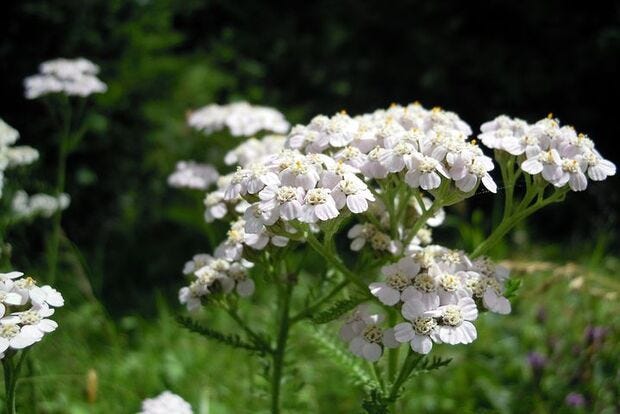
Common Name: Yarrow Latin : Achillea millefolium Family: Asteraceae
History and/or use: Yarrow is full of nutrients and minerals and can help sleep, pain and bleeding
Wildlife Value: Invertebrate food plant.
‘Among the harebells and the grass, the grass all feathery with seed, I dream, and see all the people pass:
They pay me little heed.
And yet the children (so I think) in spite of other flowers more dear, would miss my clusters white and pink, if I should disappear.’Cicely Mary Barker 1925
This common plant seen in the verges and other grassy habitats is an effective herb for many wounds containing a natural antiseptic called cineol. It can also help to hasten the clotting time of blood which has given rise to its folk name ‘nosebleed’. The herb can be used fresh or dried and put direct onto a wound or made into an ointment.
Yarrow induces sweating, can help you sleep, eases pain and reduces bleeding. Yarrow is full of nutrients and minerals and when mixed with vervain I have found it to be ideal for fevers and nerve pain. It helps aid digestion and is a good general tonic for the system.
If you have any medical conditions please check with a medical herbalist first before taking any plant and only harvest it if you are 100% sure what it is!
Its Latin name Achillea reminds us that Achilles used it to cure wounds inflicted by iron weapons as did the Anglo-Saxons warriors. In Ireland the plant is said to drive away evil and therefore sickness.
It is also considered a Woman’s herb increasing attractiveness and protecting them from men.
‘I will pick green yarrow that my figure may be fuller, that my voice may be sweeter, that my lips will be like the juice of the strawberry.... I shall wound every man, but no man shall wound me.’
The above Gaelic chant implies it is a herb under the protection of the Goddess.
The plant itself speaks of tenacity as it is able to lie low when the grass is cut building up its strength from a strong tap root and yet is capable of growing high when left to its own devices. Its many clusters of flowers and numerous leaves continue its tale of tenacity, a plant worth respecting and a beautiful addition to the grass sward.
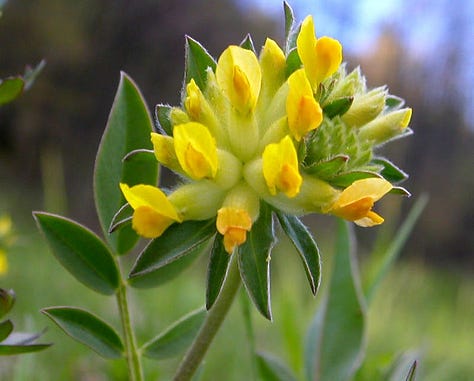
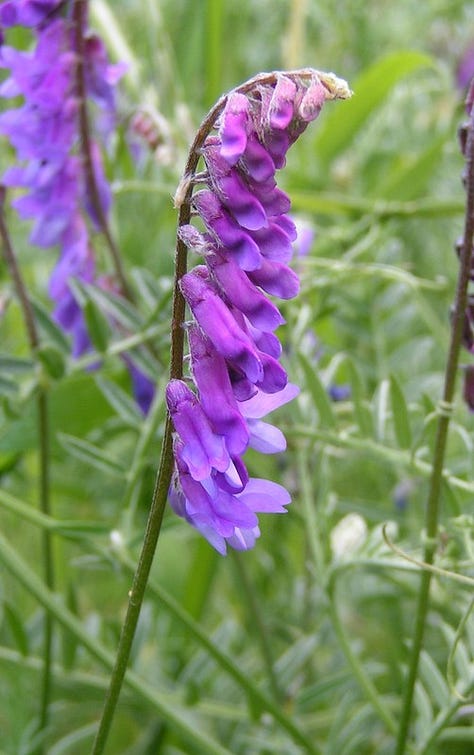
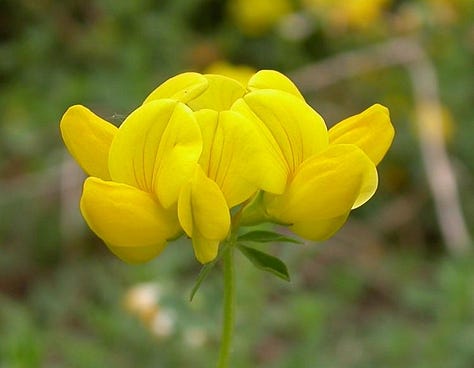
Kidney Vetch Tufted Vetch Bird's foot trefoil
Common Name: Tufted Vetch Latin : Vicia cracca Family: Fabaceae
History and/or use: edible leaves cooked as a vegetable and seeds if processed - not recommended.
Wildlife Value: Nectar source for invertebrates
Out on the Downs I visit rich meadows filled with fragrant and pyramidal orchids surrounded by a lush verdure, sprinkled with the yellow and purple gems of the the pea family ‘Fabaceae’.
The flowers of these plants are undeniably distinctive especially if memories of sweet peas grown in the garden or the eating of field peas in farmer’s fields spring to mind.
However the peas I speak of provide valuable food not in their fruit but in their delightful flowers made of a standard, two wings and a keel. The bee lands on the keel ( bottom petal) the wings ( petals each side) open out and the bee takes a fill of pure nectar. Colour and scent are the attraction and pure nectar the reward, this phenomenon could not be dreamt up in the greatest novel, it is a tiny yet vast world where beauty reigns supreme.
Therefore go to a meadow and spot the purple and yellow pea flowers of vetches and trefoils, look up the names of tufted vetch (Vicia cracca), horseshoe vetch (Hippocrepis comosa), kidney vetch (Anthyllis vulneraria) birds-foot trefoil (Lotus corniculatus),black medick (Medicago lupulina) and ribbed melilot (Melilotus officinalis) and take out a good field guide or go on a local walk with an expert in your area. You may wish to leave the guide book at home and leave the naming to others as you soak in the beauty.
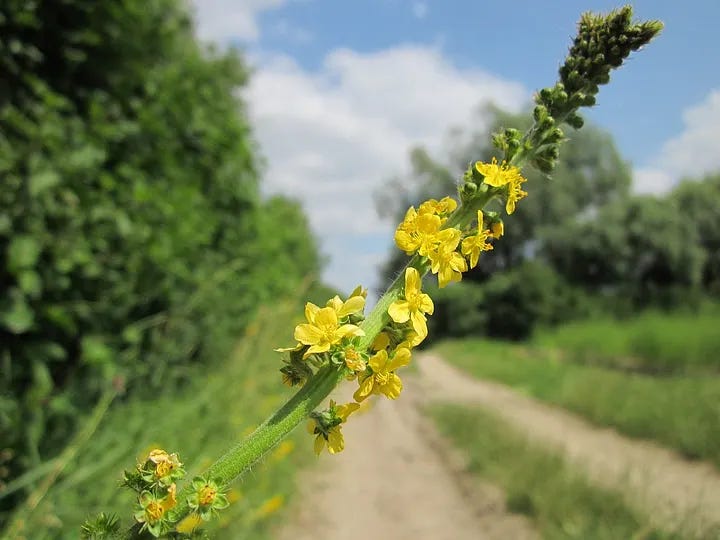
Common Name: Agrimony Latin : Agrimonia eupatoria Family: Rosaceae
History and/or use: Stimulating tea for sore throats and digestion
Wildlife Value: Nectar source for invertebrates
In June this plant’s upright bright yellow flowers brighten up field margins, road verges and hedgerows.
The name Agrimony may be from the Greek word meaning ‘wild flower of the field’ or ‘spot on the eye’.
The Latin ‘eupatoria’ may be connecting the plant to King Mithradates Eupator who resisted the roman conquest of Asia minor in the first century BC.
Agrimony is a delightful plant that is a common sight on the chalk downland near where I live.
Its flowers attract many insects seeking its nectar including bees. Its fruits will hook onto animal fur to aid distribution.
I could not describe the plant better than Cicely Mary Barker in the following verse:
'Spikes of yellow flowers, all along the lane;
When the petals vanish, burrs of red remain.
First the spike of flowers, then the spike of burrs;
Carry them like soldiers, smartly, little sirs!'
A plant that is well worth harvesting, it lifts the spirits making an invigorating tea for many complaints from aching joints to sore throats. It is a good general summer tonic.
Please do not harvest without expert advice or help from a qualified herbalist.
Agrimony is also an old remedy for poor sight, loss of memory, snake bite and liver complaints. It can also help with coughs, skin eruptions, cystitis and is soothing for the vocal chords when taken as a stimulating tea.
Fragrant agrimony is a larger more branched species with fragrant leaves which you will tend to find on more acid soils on woodland margins.
Agrimony in folklore is known as fairy's wand or fairy's rod and it certainly casts a spell of beauty around us on a summer day.
Everyone who subscribes will Support our ‘Devoted to Plants Initiative’ and help to promote and grow our wonderful plant friends.
Help us make a difference:
No posts
Comments
Nothing yet. Say the first thing.
Sign in to join the conversation.