
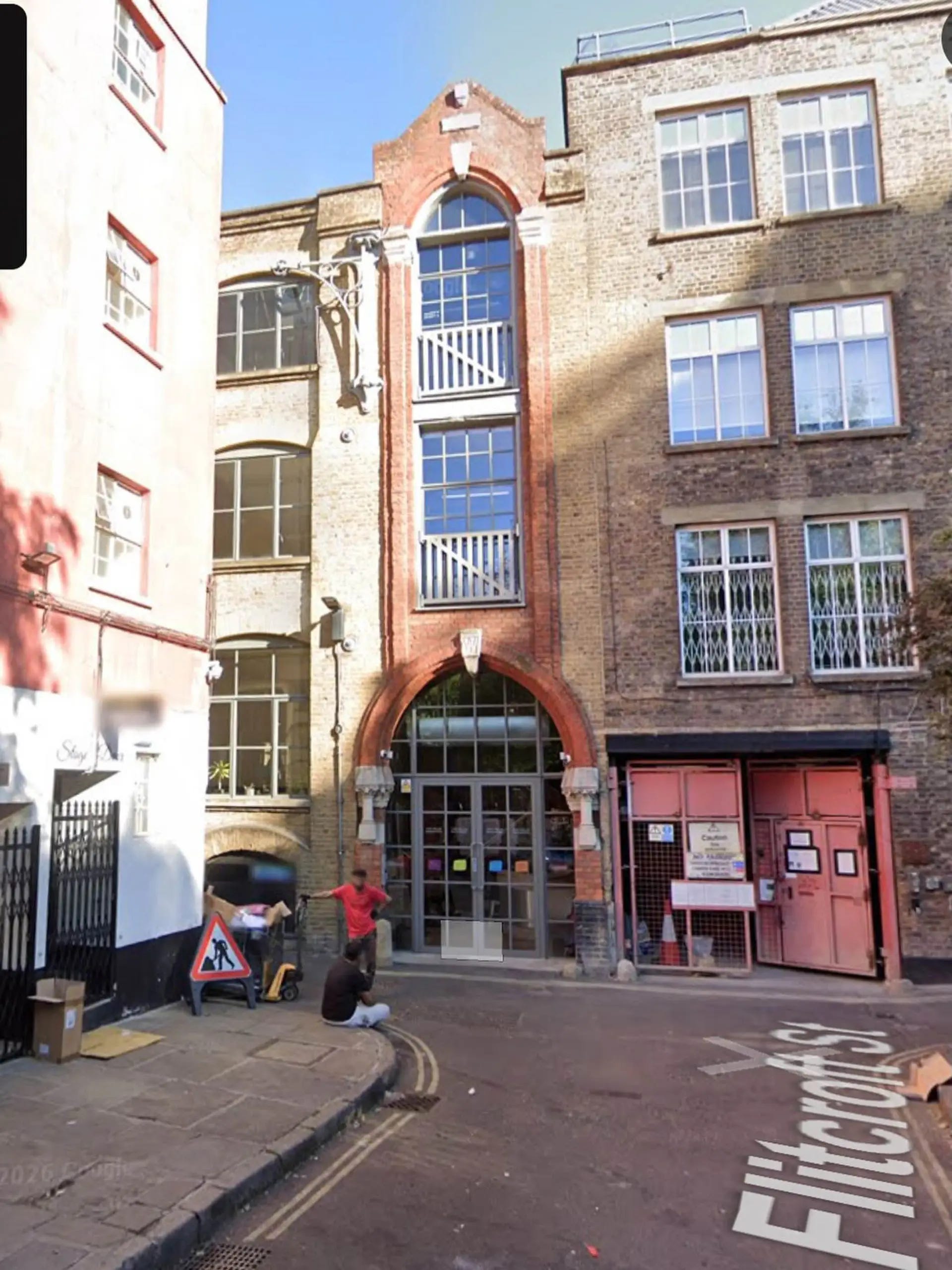
In May, there was an article in The Observer about The Backbeat Club, a semi-secret illegal venue in the West End established during the 1990s, where you could drink, dance, watch live football and buy weed from people hidden behind plasterboard walls. The club occupied a four-storey warehouse just off Charing Cross Road, before expanding into EMI’s old recording studios nearby. By the time the operation was raided by armed police in 1998, it had been making £100k per month.
“This was a London of low rents, of affordable food,” wrote Tomo Delaney, the piece’s author, who was a regular at the club. “No franchises. No big chain coffee shops. The city had yet to be cleaned up.”
When I read Delaney’s account, I reacted the same way as when I heard about Hung’s, HK Diner, The Stockpot and The New Piccadilly, former central London canteens that would go viral if they were open today. At first, I was amazed that they ever existed. Then I felt jealous, of those that enjoyed a West End I never can.
Fortunately, this inexpensive version of London never really went away. It’s just mostly further out now, in diverse areas like Harlesden, Catford and Wood Green. It persists on high streets lined with independents, in Southall, Harringay, Deptford, Walworth, Tooting, Ilford and East Ham. It persists in South Bermondsey and Upper Edmonton, on whose industrial estates London’s weirder nightclubs operate today.
Fragments of the non-chain city can also still be found in the West End. I see them in the area’s parks, libraries, museums and other free spaces. I see them in the shops, pubs, cafes and restaurants that cost what you’d expect and no more, that have regulars and say something about where they are.
My list of 100 such places ranges from churches to swimming pools, record shops to haberdashers, vintners and basement bars to Italian delis and French patisseries. I wish I got to experience how this area used to be, but these places make me think the West End is actually still pretty good.
1. Outdoor public spaces
2. Indoor public spaces
3. Sports centres
4. Museums and galleries
5. Churches
6. Cinema
7. Record shops
8. Magazine shops
9. Bookshops
10. Specialist shops
11. Tea, coffee and food suppliers
12. Wine and booze shops
13. Pubs
14. Bars
15. Chinese restaurants
16. Sandwich bars
17. Cafes
18. Caffs
19. Bakeries
20. Ice cream and dessert places
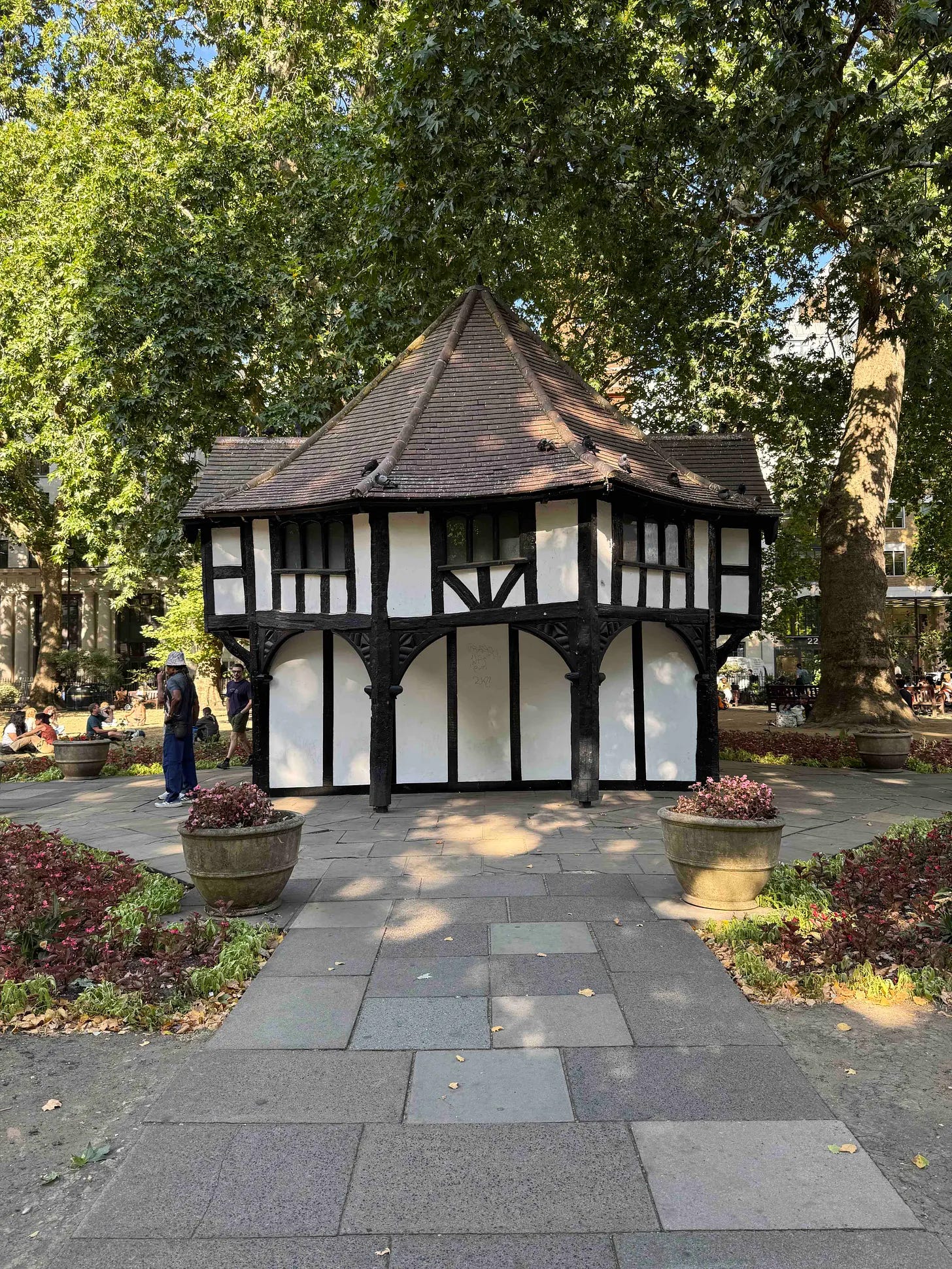
I see the West End’s public parks and garden squares as great big gifts to this city.
Soho Square: A hangout more important to Londoners than Trafalgar Square, where people eat, sleep, drink, smoke and play table tennis for free.
The Phoenix Garden: Simply the most peaceful place to eat a packed lunch in Zone 1. I love its uneven pathways and various homemade benches.
St James’s Square Garden: In the 1700s, St James’s Square was a new development for dukes and earls. Some of its Georgian townhouses still exist; this beautified patch of land between them is open to the public five days a week.
St James’s Park: The funny thing about all the tourists in St James’s Park is that they act like they’ve never seen a pigeon before, when this wonderful green space is really a haven for wigeons, coots, moorhens, grey herons and more.
Green Park: There’s a lot to love about Green Park, but my favourite things in it are its still-functioning gas lamps.
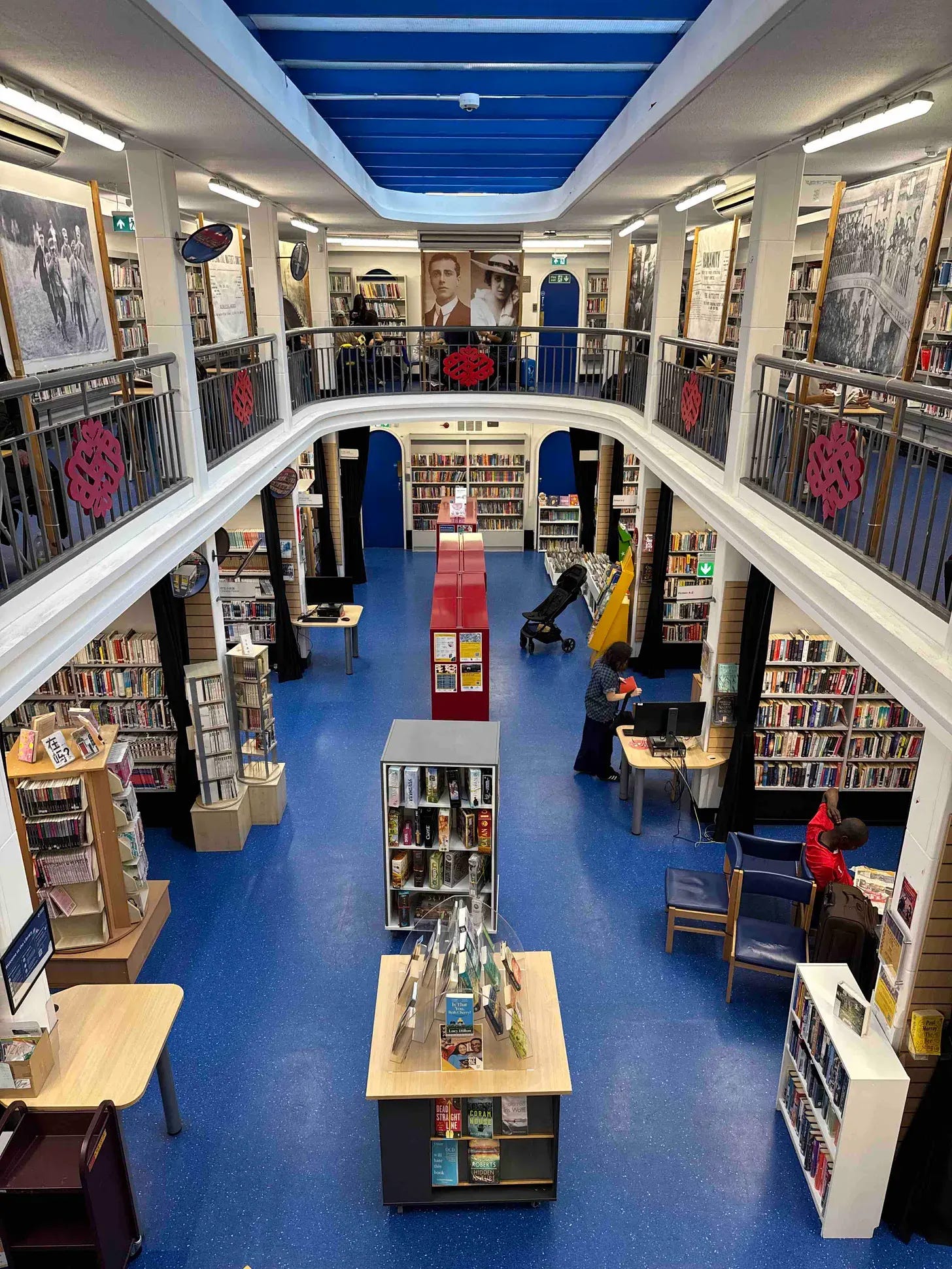
The West End doesn’t quite have multifloor lounges like the Barbican Centre or Royal Festival Hall, but there are still some places where you can sit down inside for free.
Charing Cross Library: This linoleum-floored library provides much more than books, offering daytime refuge for many, as well as a place to play mahjong.
West End Arts Library: A truly gorgeous, two-floor library, full of art, music, fashion, design and more. I once saw a guy reading musical notation here, silently conducting to an invisible orchestra. (Previously called Westminster Reference Library.)
Marylebone Library: Just a well-equipped local library, that makes you see Marylebone as a more central version of St John’s Wood or Hampstead.
Mayfair Library: I’ve only been here once, and I was surprised by its foot-worn mosaic, stained glass windows and the fact that Mayfair has a free space like this.
Royal Opera House: I’ve sat in the seating area by the Royal Opera House’s entrance a few times now without buying anything and have never been moved along.
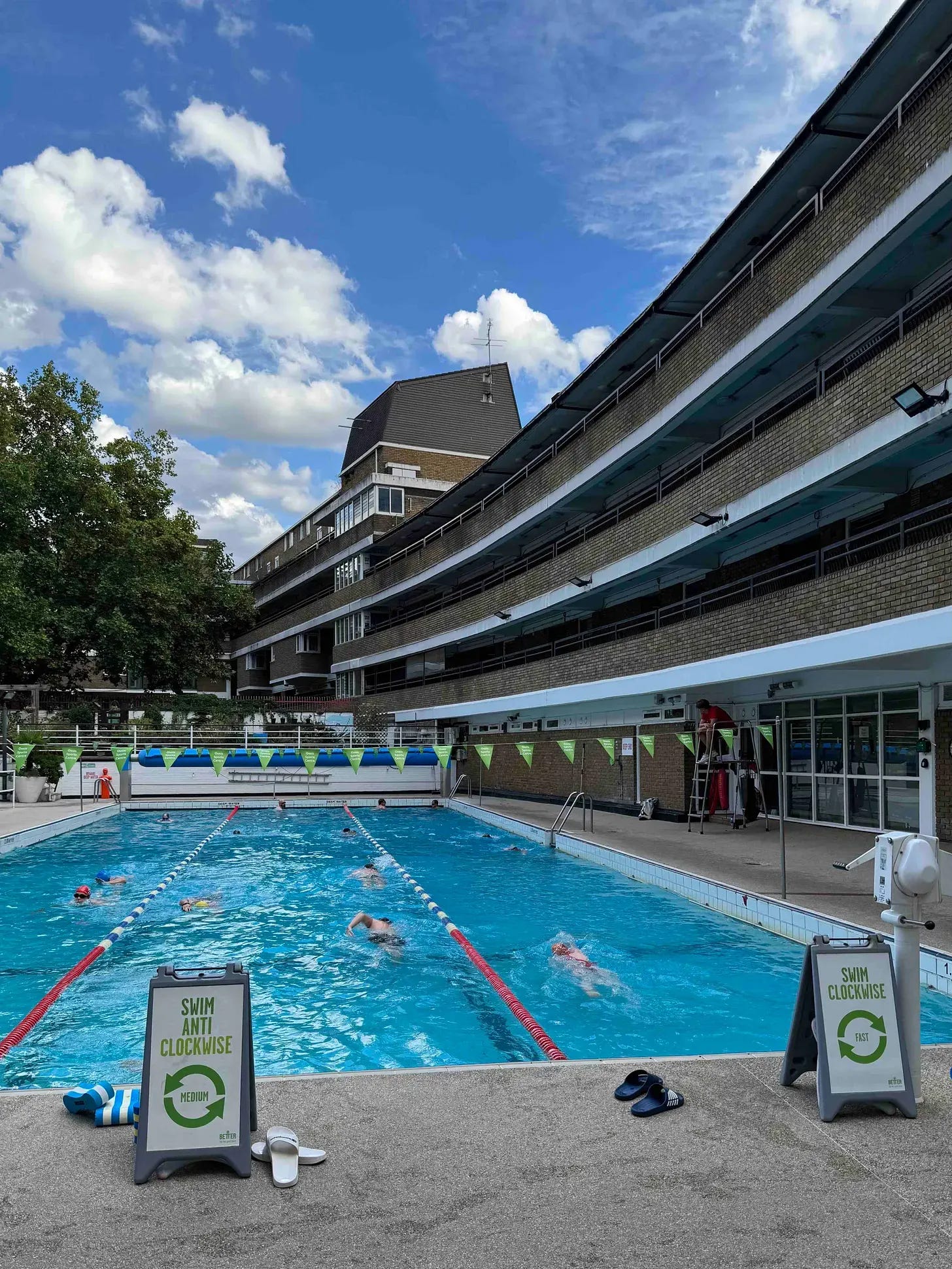
Every now and then, I catch glimpses of people who appear to live in or near the West End and seem normal rather than ultra-wealthy. I feel like these two buildings attract a lot of them.
Oasis Sports Centre: If you didn’t know already, there’s a huge sports centre next to Covent Garden, with a gym, squash courts and a heated outdoor pool. You can swim there for £8.45.
Marshall Street Leisure Centre and Spa: If you didn’t know already, there’s also a huge sports centre in the middle of Soho, with a beautiful 1930s pool. You can swim there for £9.35.
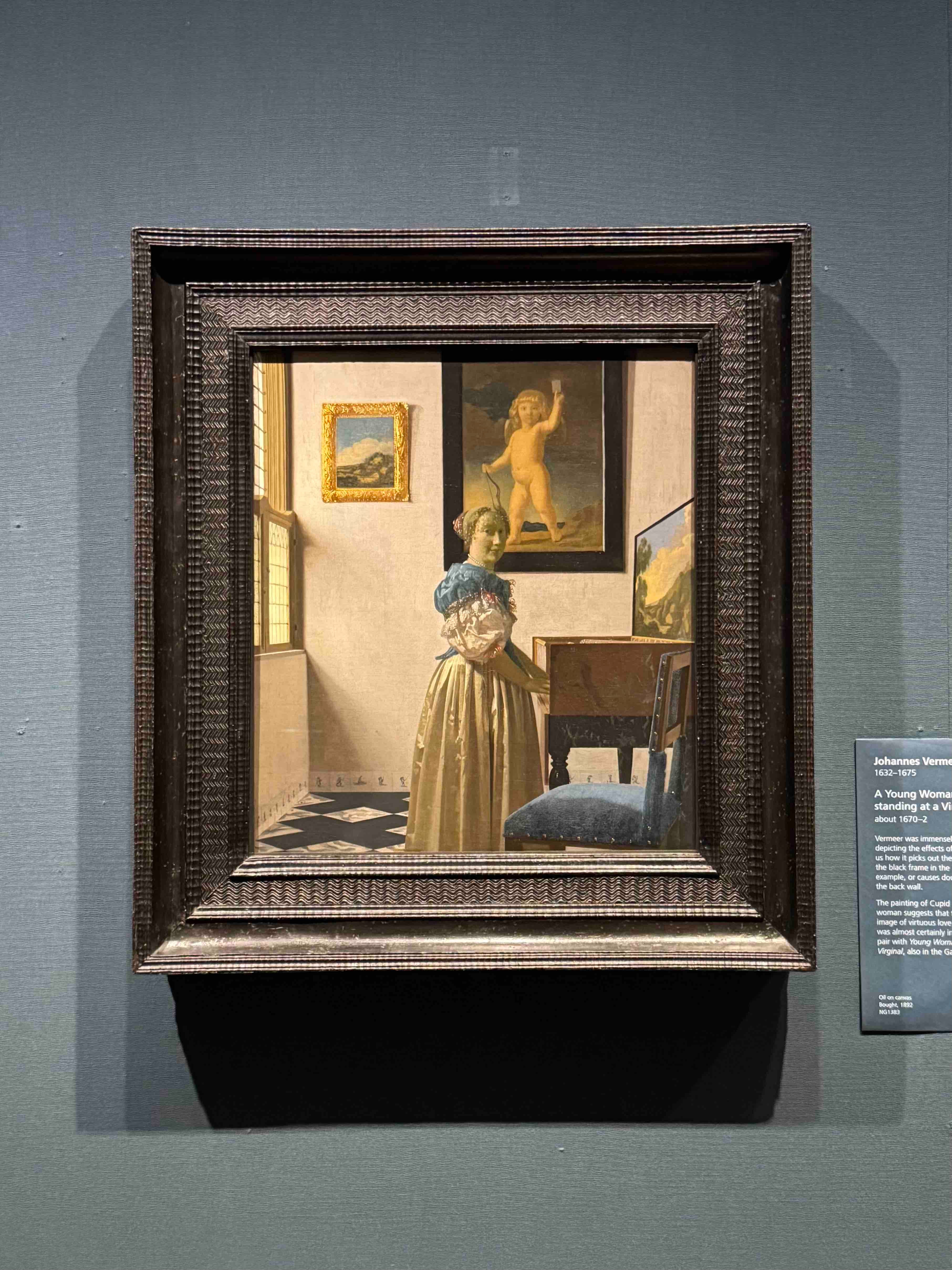
As well as its green spaces, public buildings and local authority gyms, some of the West End’s exorbitance is offset by its free and less costly cultural spaces.
National Gallery: London’s Louvre, except you can just walk in for free. I highly recommend Frederick Wiseman’s forensic documentary about its inner workings.
National Portrait Gallery: “We look after the world’s greatest collection of portraits,” the NPG’s website says. Again, I find it incredible that you can look at them without paying anything.
Royal Academy of Arts: I love going to exhibitions at the RA, but I also really like looking at the antique doorbell by its entrance.
Institute of Contemporary Arts: It makes me happy that such a progressive space is on the same road as Buckingham Palace. The ICA’s a useful public building too and sometimes I pop in just to use its loo.
Sadie Coles HQ: I visited Sadie Coles for the first time to pick up a print copy of this London A-Z that I worked on, but then I stuck around because it’s such a captivating, whitewashed space.
Photographer’s Gallery: I’ve only been here once, to see a Peter Mitchell retrospective, and it was one of the best exhibitions I’ve ever seen.
The Wallace Collection: Again, I find it wild that this mansion full of chandeliers, Old Masters, pistols, daggers and scabbards is free to visit.
London Transport Museum: I’m not ashamed to say that my favourite part of this museum is its shop.
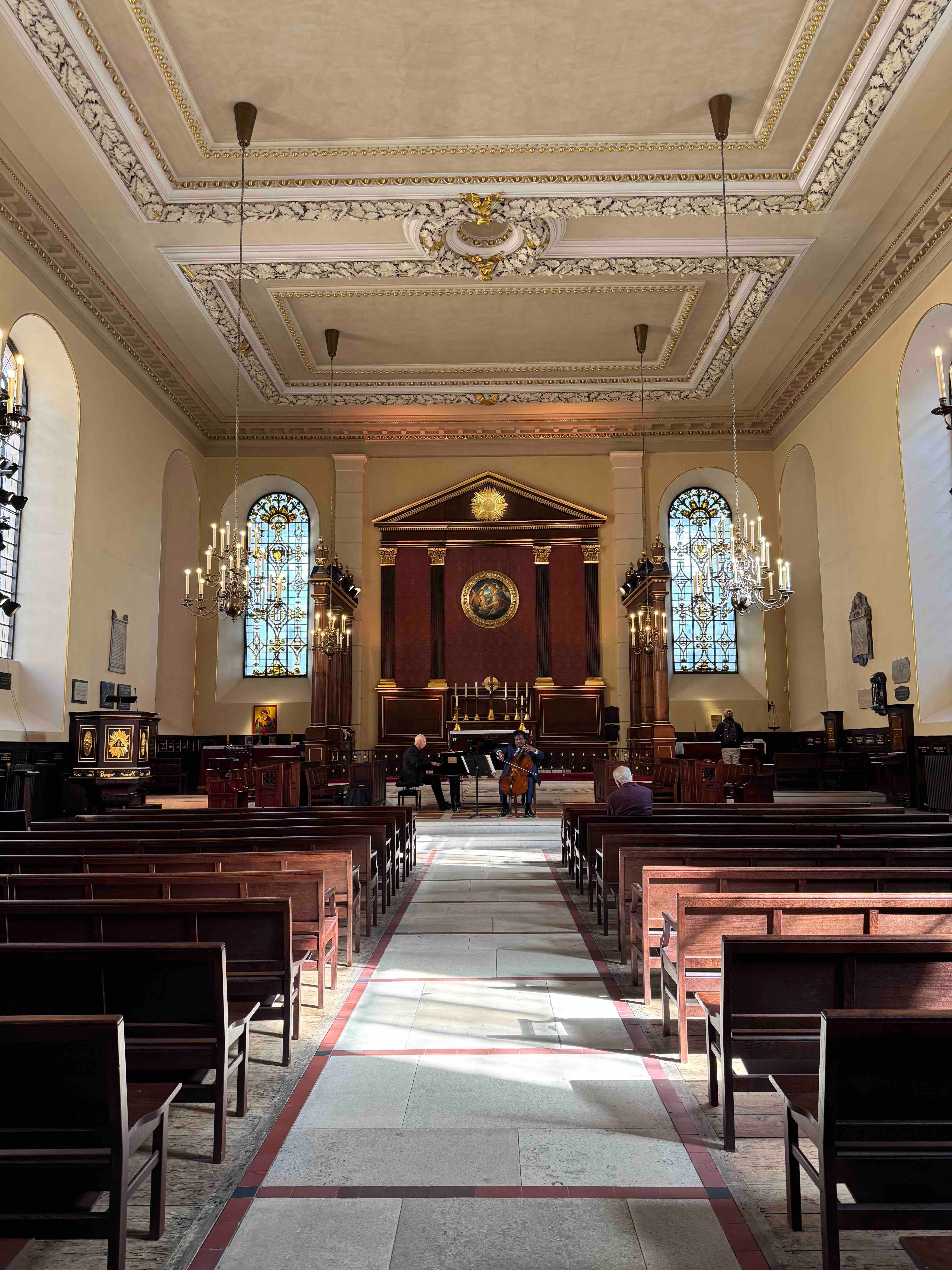
I see churches as another form of free museum. They are often the oldest building on a street and welcoming even if you don’t believe in god.
St Paul’s Church, Covent Garden: Last time I was here, I watched a free cello and piano performance.
St Patrick’s Catholic Church, Soho: I love how this church, between Oxford Street and Tottenham Court Road, seems to be permanently full of Catholic tourists engaged in quiet prayer.
Our Lady of the Assumption & St. Gregory Church, Soho: Another popular Catholic church in Soho, with beautifully aged carpets and a lovely fusty smell.
Notre Dame de France, Leicester Square: In the same way that St Peter’s in Clerkenwell was built for Italian immigrants, you may know that this church was built for Soho’s former French population.
St James’s Church, Piccadilly: Every now and then, I go into this church to look at the ornamental screen behind the altar, which features wooden carvings of things like fruit and sea shells.
Comments
Nothing yet. Say the first thing.
Sign in to join the conversation.