

I like remembering the good ol’ days of Internet 1.0. Some of my defunct early favorites:
Sixdegrees was my first taste of a social network way back in 1997. I loved finding friends. The web felt like magic.
Friendster, launched before Facebook, was fun. It peaked at 115 million users and a $53 million valuation. Domain guru Mike Carson recently bought the URL for $30k to revive it as a network for people you know in real life.
Plastic.com was an early social news aggregator I relied on before Digg and Reddit. It was founded by Steven Johnson, one of my favorite non-fiction writer/entrepreneurs, who went on to co-found NotebookLM.
Google Reader was the most valuable early RSS reader. Before it was killed, I depended on it to read cool online writing and random blogs by my friends.
Epinions, founded in 1999, was the most useful review site online, before the days of bot-generated, spammy reviews.
In honor of that old Internet, I’m sharing a short piece below by Lizzy Spano of mymind, a private place online to save everything you care about.
(I wrote about the mymind app here. It’s like a digital garden for saving your ideas and inspiration and keeping them organized and searchable).
Lizzy runs the excellent Mind Palace Substack on creativity, philosophy, and a bit of everything in between. Here’s her essay: 👇
Lizzy: On the old internet, you were in charge. You said “show me this” and then dug your own rabbit holes.
The new internet just says “you’ll probably like this” over and over to keep the feedback loop open.
The new internet steers your attention. Algorithms and AI-driven feeds reward continuity. Their survival depends on keeping you hooked. Every click, pause or reaction you give becomes a signal. That signal is used to keep you engaged and your attention moving in one predetermined direction.
Remember when you discovered new singles on MySpace and purchased each one with excitement, then became obsessed with the entire album for months?
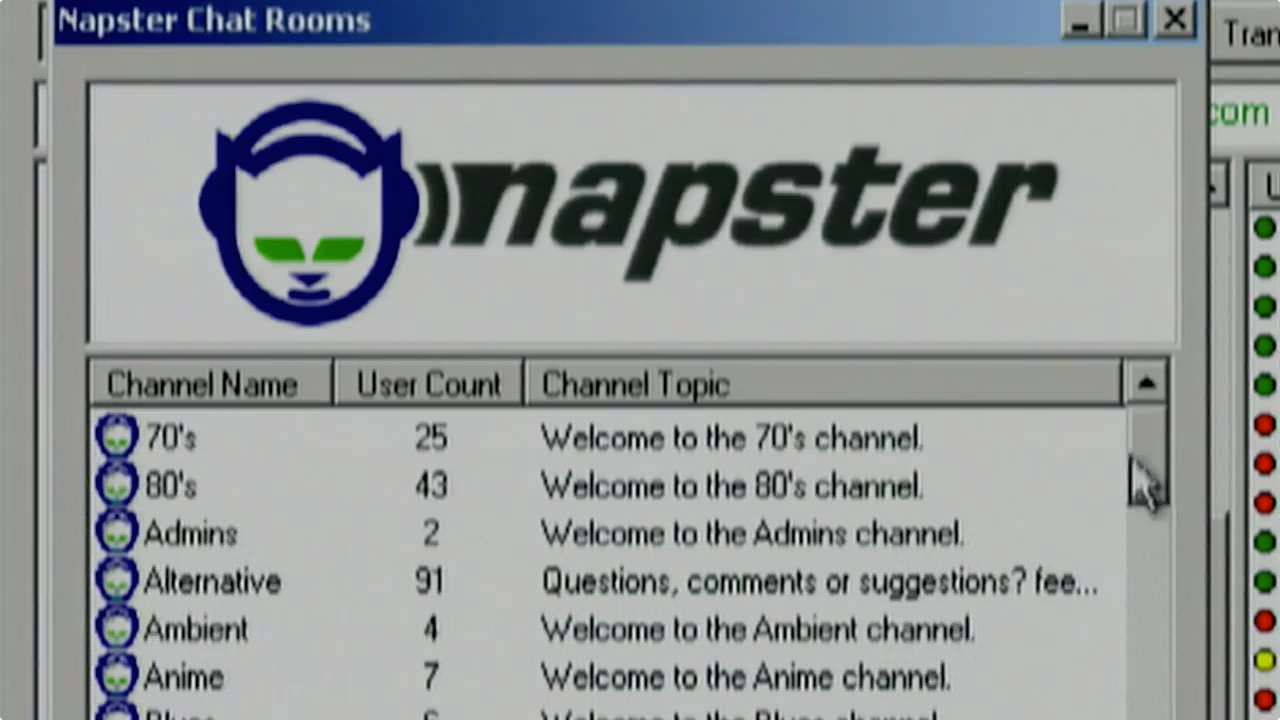
Remember when you joined that weird niche chatroom and got in an argument for two hours with the handle @real_avril_lavigne8 who ended up being your best online friend for two years?
Remember when you were planning a trip and found a random site for a tiny local lodge or bed & breakfast instead of Airbnb recommending a room to you?
The beauty of the old internet was the manual process. It was HARD to find good stuff. That was the fun of it. You had to consciously dig and seek out what interested you, which further deepened your connection to it.
The things you found were random, scattered. They required you to pull them together and make sense of them in your own way. Using the internet was more of a creative act back then. You carved out this little corner of it that felt like yours only.
Now, ironically, we have the “For You” tab. A feed of garbage endlessly optimized to keep you scrolling. It doesn’t care about the quality or depth of what it’s showing you. It’s like spoon-feeding a child sugar cubes. We keep eating it and even start craving it. What was never really “for us” consumes our minds and our time to where we don’t really know what IS for us anymore. Four hours later we look up from our phones and have already forgotten everything we scrolled by, wondering why we feel like sh-t.
mymind (the product I work on) feels like the closest thing to the old internet I’m getting right now, which was our whole idea building it. I don’t see it as a replacement for the current internet, but more as a retreat.
It’s a private place online where you can escape and rest your mind for a little while. A version of the internet in which you control your attention. No feeds wasting your time, no ads convincing you to buy something you don’t need, no notifications distracting you. No algorithms putting you in a perpetual loop of the same tired aesthetics and ideas. In mymind you follow your own curiosity and build a space that’s entirely yours. I think of it as my private digital garden.

I’m not trying to avoid the internet entirely. It still offers so much. I’m just trying to change how I behave online so I’m not constantly responding and reacting. The passivity of that makes me feel like my life isn’t even my own. Like every thought I have, thing I purchase, opinion I form, place I go, emotion I have is actually manipulated by an algorithm to serve some other purpose.
I still use social media, and it still sometimes gives me little gems that open up my curiosity and lead me somewhere new. But now I try to be more conscious about finding sources and content that’s meaningful. Which is hard. Which is a lot more like using the old internet. You can see how I’m doing that in practice in this essay (I call it “bloomscrolling”).
When I do find those gems that actually feel like they’re FOR ME, I put them in mymind. I’m slowly building a treasure trove of things I care about in a beautiful, peaceful place away from the algorithms, where I can explore them deeper later or find connections between them. The way we did in the 90s and early 2000s, when it all felt so much purer.
The internet is still a magical place (Substack right now is proof of that) but more than ever, it requires intentionality and digging to benefit from it, instead of it benefiting from you.
Comments
Nothing yet. Say the first thing.
Sign in to join the conversation.