
Sometime last year, the Substack algorithm kept feeding me posts about matriarchy. Whether it was of my own volition or the algorithmic universe’s assumption that I’d vibe with matrifocal thinking, this concept kept popping up in my life and I was curious. I didn’t know anything about matriarchy.
I didn’t want the Substack explanation or the Google definition. I wanted to go deep. This led me down a rabbit hole and I ended up purchasing an academic anthology, The Legacy of Mothers: Matriarchies and the Gift Economy as Post-Capitalist Alternatives edited by Erella Shadmi. I was fascinated reading about real-life matrifocal indigenous communities and present-day mini-matriarchies functioning around the world today. It was especially interesting reading Shadmi’s own essay about how matriarchal power structures could be used to bring about peace in Israel and Palestine. Her anthology was published in 2021.
But it was Annine van der Meer’s essay, “Divine Surprise: The Female Side of God,” that really piqued my interest. She drew on her own research on Venus art and presented seven common poses consistently expressed in Venus art across cultures and throughout history. She argues in her research that the realm of spiritual power has always belonged to women. It’s not until very recently, historically speaking, that men tried to usurp what has always been divinely feminine—power—and twist it for their own aims (dominance).
The yoga teacher in me wanted to see these “poses” and the essay was a good advertisement for going deeper into van der Meer’s work on Venus Art. I tracked down her 700-page tome, The Language of MA the Primal Mother: The evolution of the female image in 40,000 years of global Venus Art, only available in university libraries, and put in an Interlibrary Loan Request through my public library (public libraries for the win!). My Venus Art bible showed up right before Christmas and I nerded out for four weeks learning about art history in prehistoric times.
Van der Meer analyzed thousands of images, statues, artforms and artefacts from civilizations across the world throughout time and found commonality in the depicted forms. Women were idolized across cultures, across timespans, in seven recurring poses that mirror familiar poses in yoga practice.
Drawing on this work, I couldn’t help but develop a yoga practice honoring these poses of feminine power. These poses celebrate the cycles of womanhood, imbuing meaning, power, and purpose into each stage of a woman’s life. Embodying these poses challenges our present culture, which discards women's wisdom generally, exploits young feminine beauty, and buries everything that happens after a woman turns 30.
These poses symbolize birth, power, giving life, the nurturance of the mother, a surrender to universal code, and a balance of both feminine and masculine energies. They encompass birth, mothering, spiritual authority, grieving, praying, death, and crone wisdom.
I think of these ancient artefacts, displayed today in museums across the world, as the ancient prerequisites for the true Power Poses. Amy Cuddy’s research may have been debunked and debated in academic circles, but you can’t deny the power of embodying poses depicting female power since the time of the Ice Age.
I’m calling this a restorative power practice in the sense that it’s purpose is to restore you to your divine feminine power via the ancestresses, brought to you by 40,000 years worth of celebrating the spiritual feminine.
Enjoy!

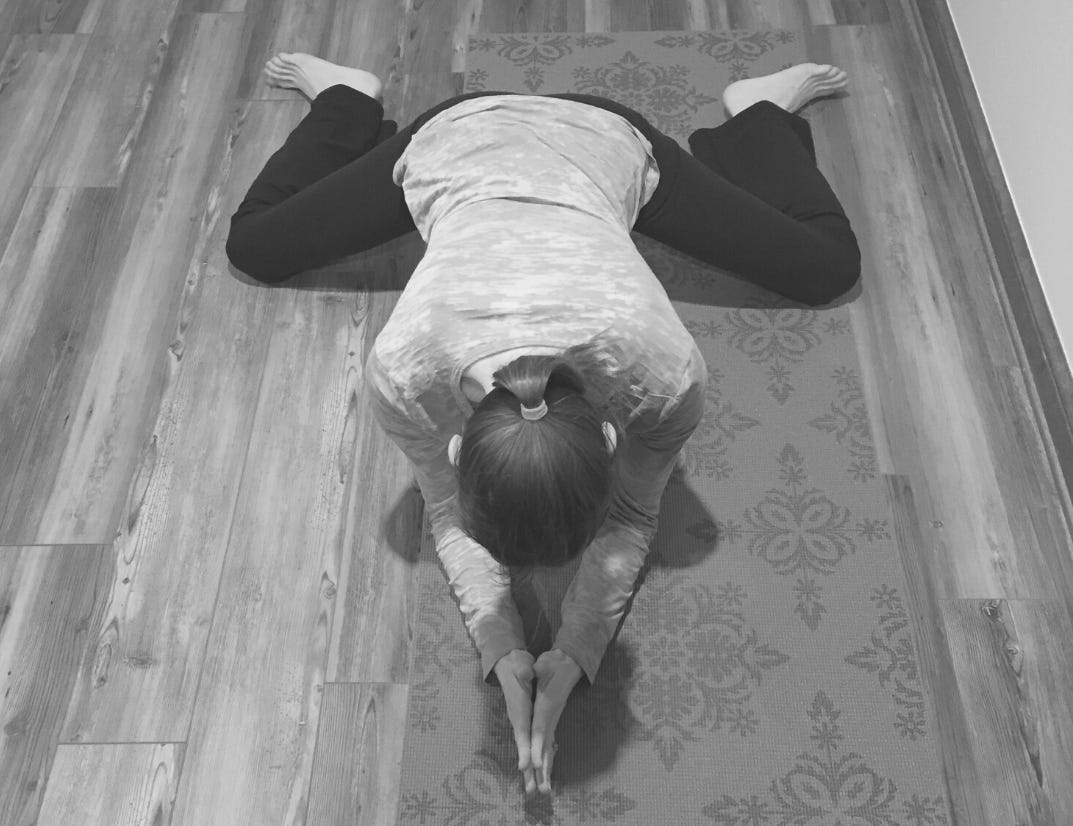
Frog Pose
This pose is commonly depicted in early art forms, representing the true power women possess to gestate, deliver, and bring Earthside life incarnate. Regardless of your ability or choices around giving birth, this pose serves as a powerful reminder that you hold that potential within you. Patriarchal societies have fought hard to shame women for their innate power. This pose reminds you to open up to it and receive its magnitude. You have the power to bring new life into this world.
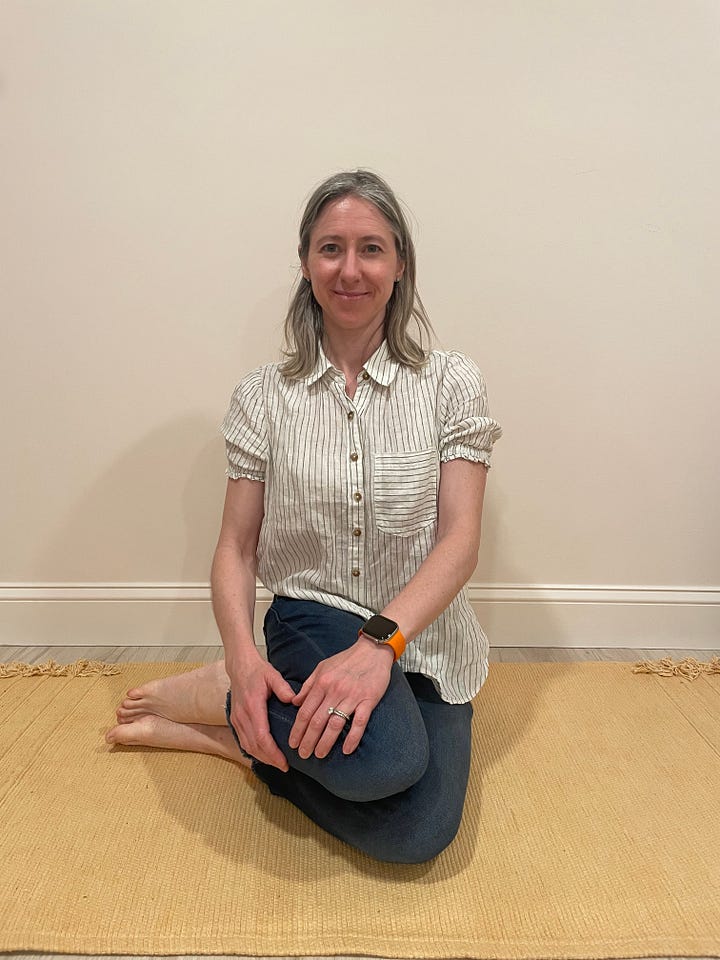
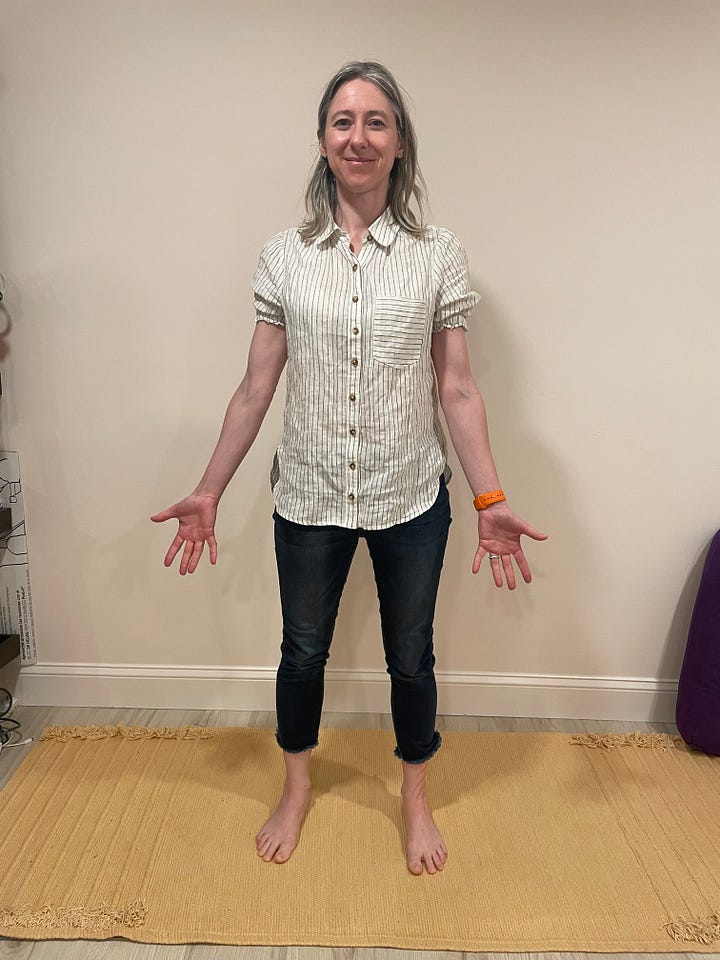
Mermaid/Easy Pose —> Standing Mountain
This short sequence follows the wise woman from her seat of power, a seat taken in a position of comfort and ease, as was commonly depicted in Paleolithic art forms, to a more modern understanding of power where the wise woman rises to a standing position, though strength is still experienced through gentleness and grounded balance.
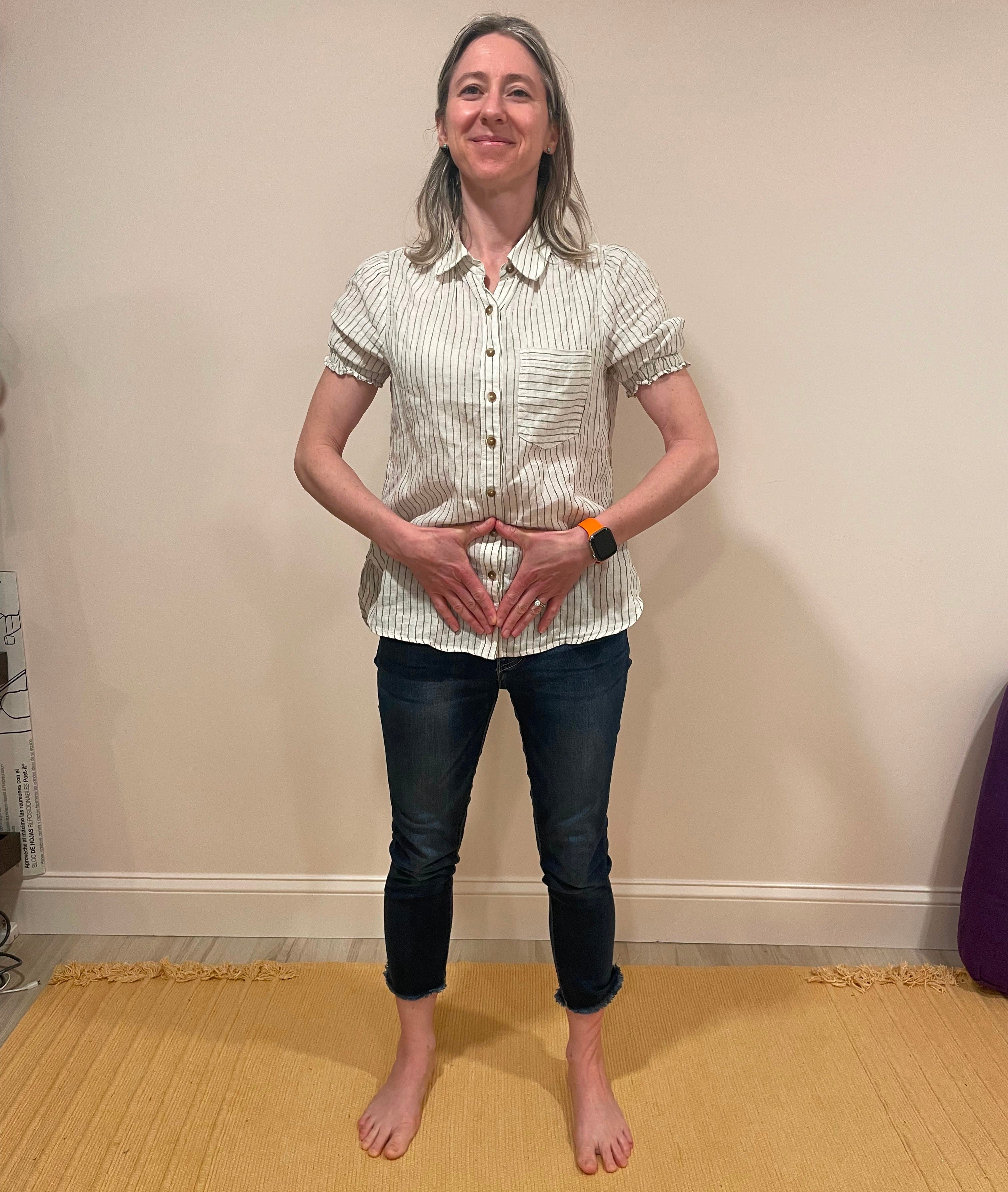
Mountain Pose with Womb Mudra
This pose represents the feminine capacity to not only bear life but also nourish, support, guide, and shape it. The womb mudra utilized in this pose shows up in Uma Dinsmore Tuli’s work and was also often depicted in cave paintings and ancient figurines.
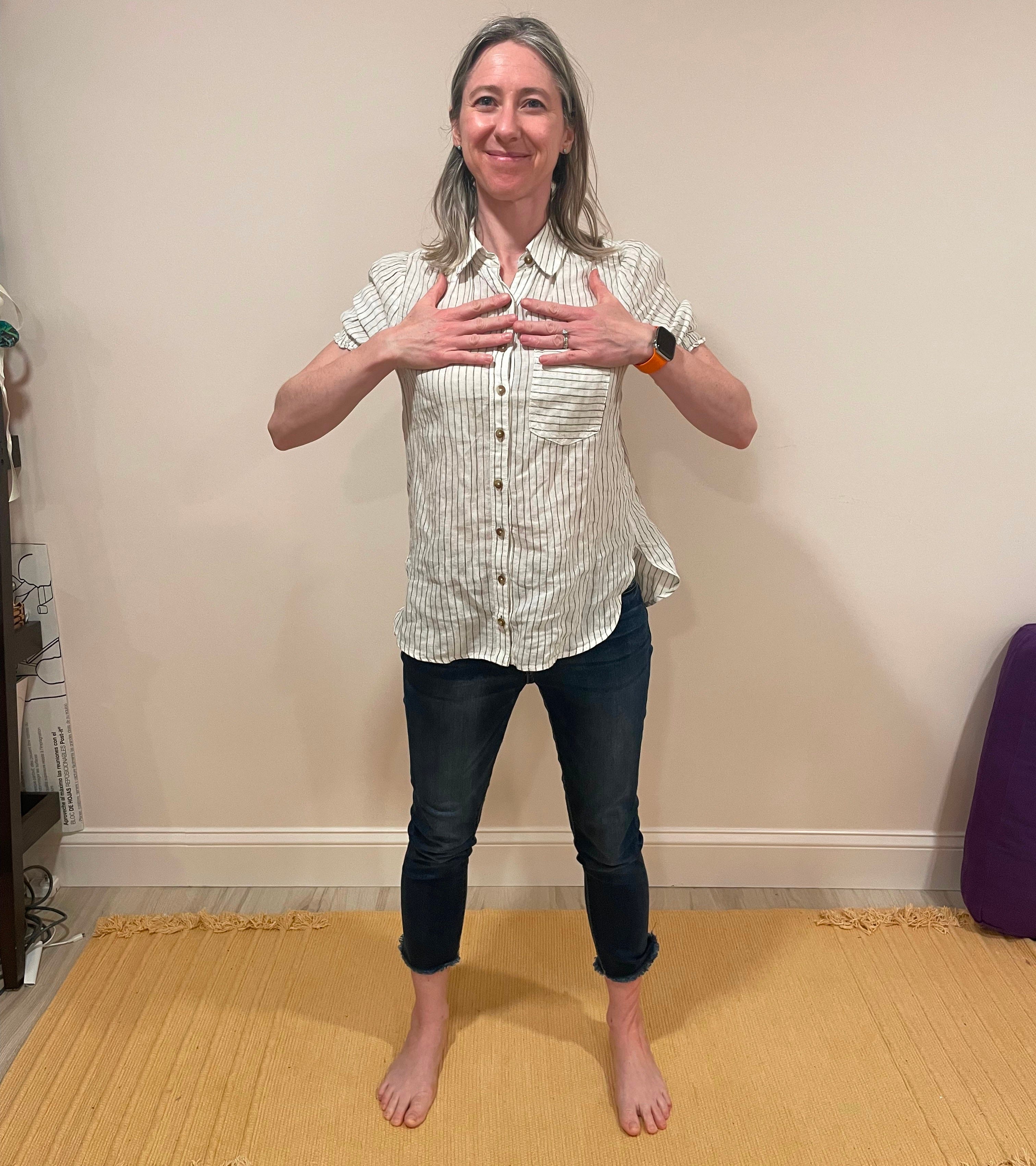
Mountain Pose with hands on breasts
This pose is the most risqué of the group, but 40,000 years ago no one would have thought that. Venus art commonly depicted women proudly presenting their life-giving breasts. It was the prudish, Victorian-era male archeologists making the discoveries of these ancient artifacts who were unable to seriously consider this depiction of power and instead had their heads in their pants, thereby labeling ancient women as “promiscuous.” Van der Meer argues these women are not at all promiscuous, rather they are being good mothers and proudly providing nourishment to their children, thank you very much.
Standing and humming
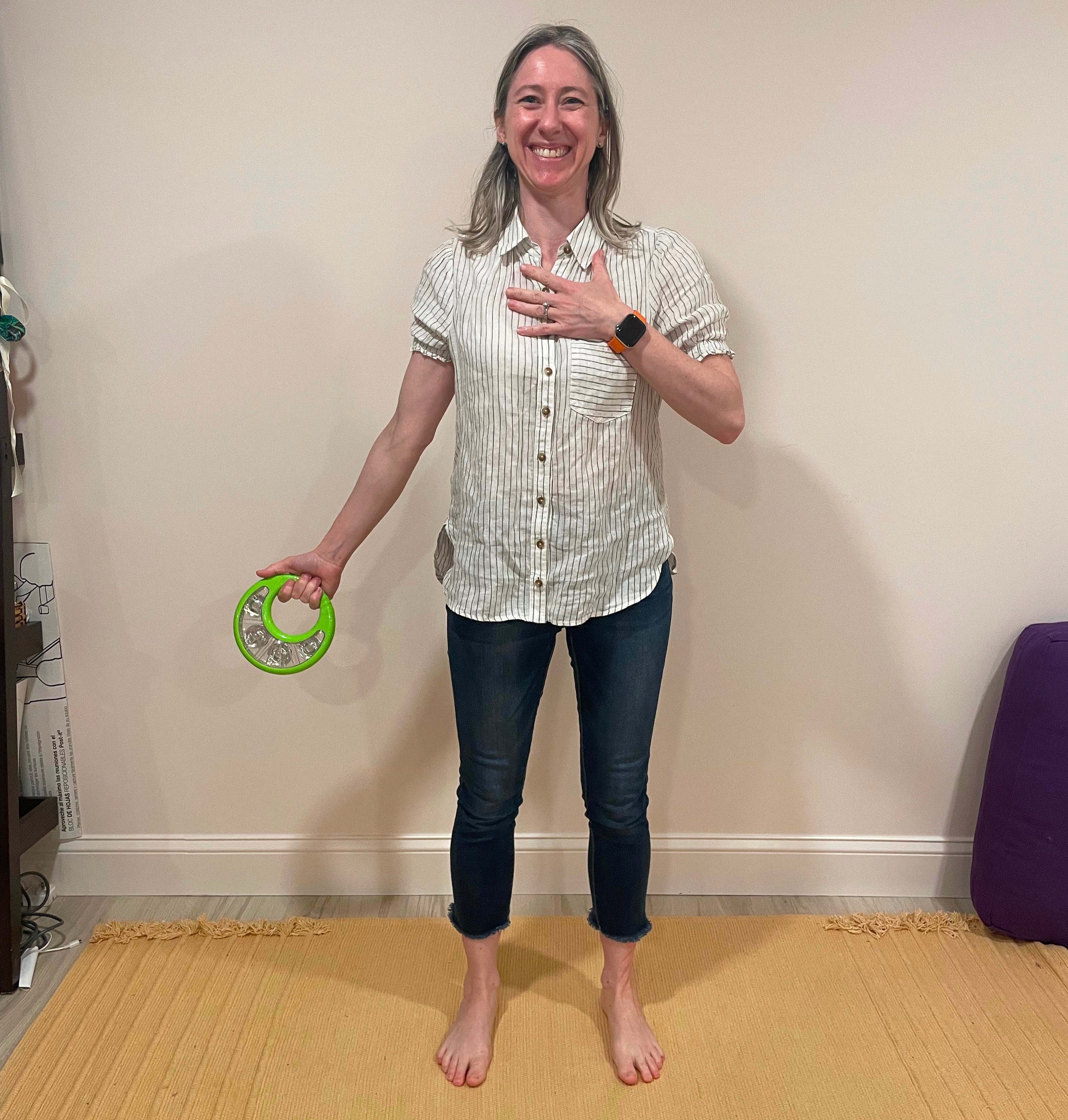
One of the common depictions of women in Venus Art has figures standing surrounded by plants and animals. This is another iteration of the power of Mother energy, and an embodiment of woman as Mother Nature. Sometimes, these depictions also included women holding tambourines or totems for particular animals. The tambourine can symbolize music and sound as a source of energetic care. You could take this pose (or the entire series) outside, standing barefoot on the ground, you can grab that tambourine you have lying around your house (if you’re a mother of a young child, I bet you have one!) and play a little organic tune, or you can hum. Humming is a powerful way to connect you with cosmic vibration. It’s also breath work in disguise. Nervous system reset benefits meet divine feminine embodiment. Om is a powerful companion here, too.
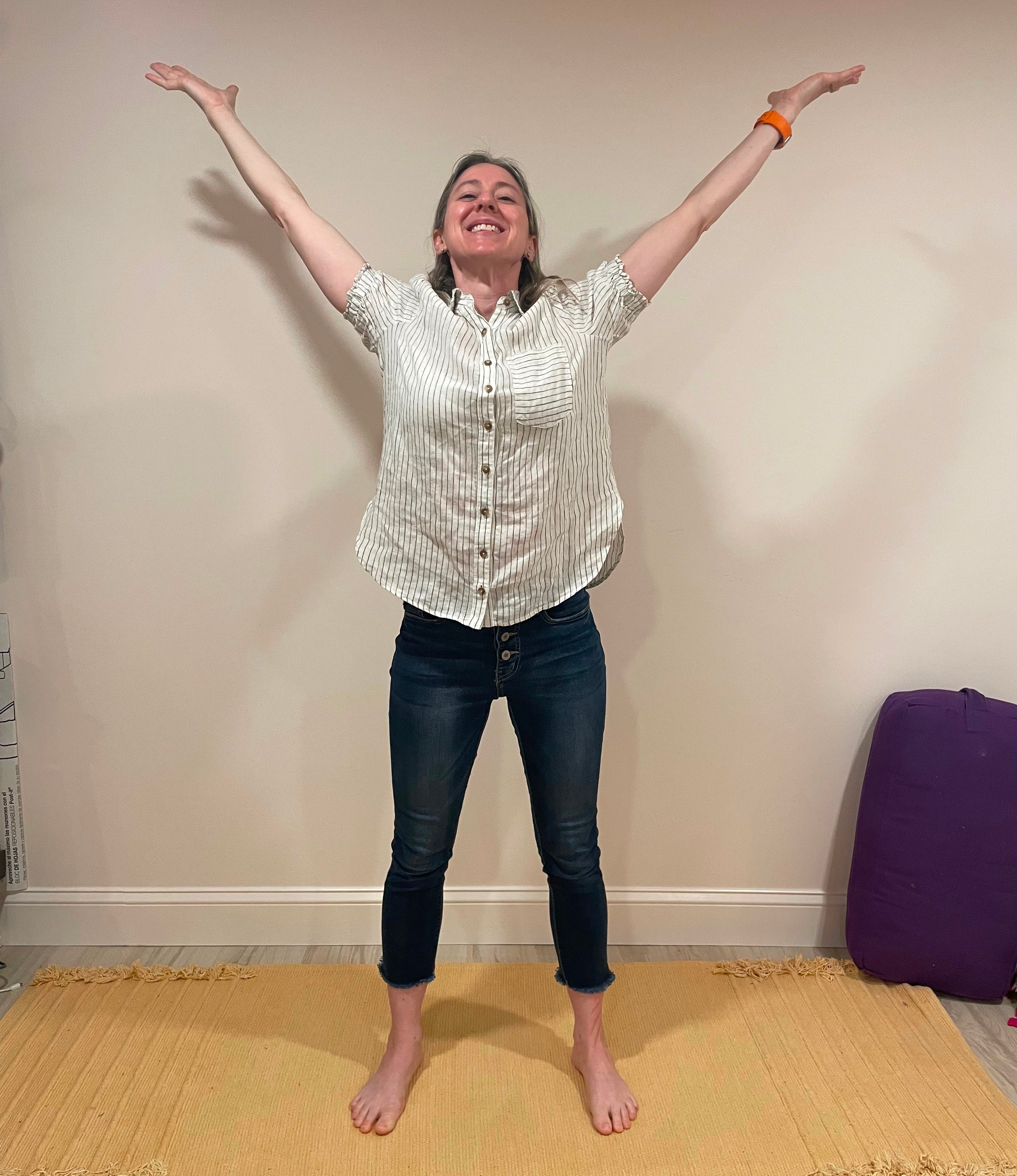
Standing with uplifted arms
Now, you rise up. Lift your arms to the heavens and become the witness. You are the human intermediary of the cosmic life force and energy. You, as you are, invoke the divine, just by being you.
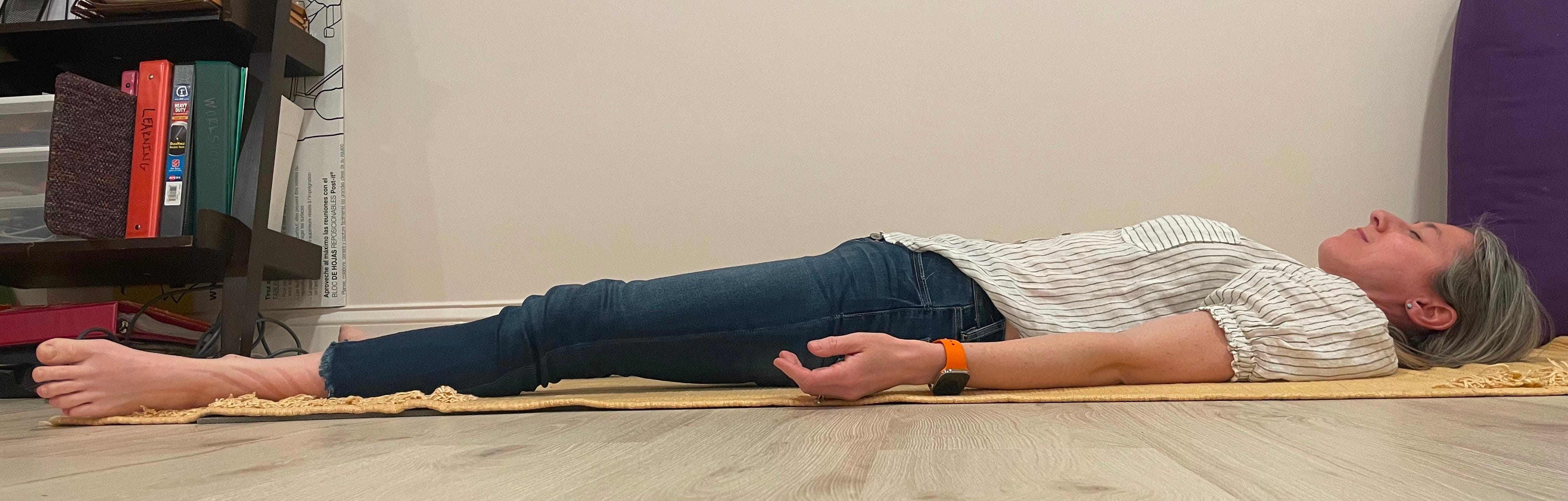
Savasana
The cycle is the birth/rebirth/death cycle. Death is part of the package. Death has always been marked by important rituals in cultures across the world, just like every other stage of life. It was commemorated and it was natural. We are born. We live, and hopefully transform and grow. Then we die. And so it is. But in America, we try to hide it away. Unfortunately, you can’t hide reality.
Sunday, April 5
Easter
National Body Care Day
National Caramel Day
National Dandelion Day
National Deep Dish Pizza Day
Monday, April 6
Jump Over Things Day
National Acai Bowl Day
National Library Day
National Pajama Day
Tuesday, April 7
International Beaver Day
Motherhood and Beauty Day
National Coffee Cake Day
National No Housework Day
Wednesday, April 8
International Feng Shui Awareness Day
International Kids Yoga Day
Pygmy Hippo Day
Thursday, April 9
National Mature Women’s Day
National Unicorn Day
Friday, April 10
Encourage a Young Writer Day
Global Work From Home Day
Golfer’s Day
National Siblings Day
Saturday, April 11
National Clean Up Your Pantry Day
Slow Art Day
With gratitude,
Ashley
Comments
Nothing yet. Say the first thing.
Sign in to join the conversation.