Good morning, and welcome to the Women in Dermatology newsletter from Chronicle Companies. We’re pleased to have you join us. Let’s get you up to date on new findings regarding dermatologic issues that affect women—and the female dermatologists who treat them. We welcome your feedback and suggestions. Please let us know if you have any comments or observations. You can email them to us at health@chronicle.org. This biweekly bulletin is presented with the support of our friends at Galderma Canada.
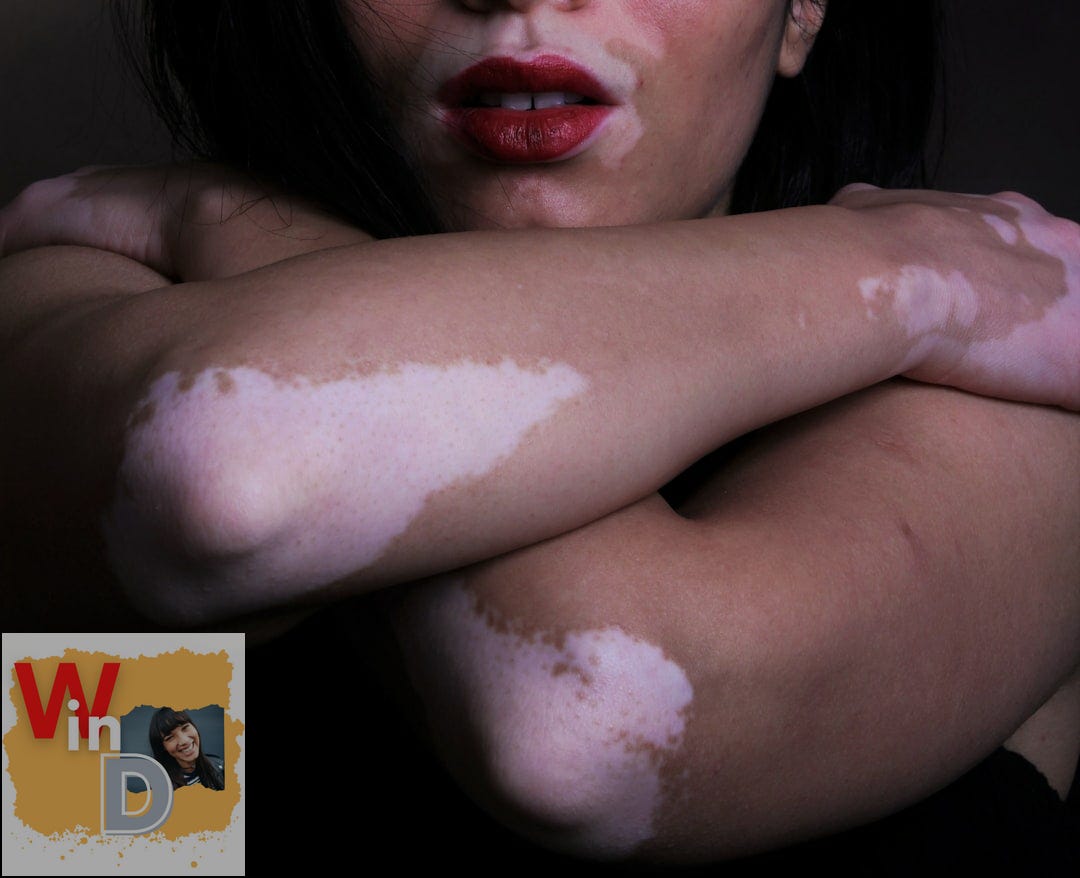
A study in Psychology, Health & Medicine (May 31, 2026) evaluated how Brazilian men and women with vitiligo explain the onset and progression of their condition. The researchers found that women were more likely to attribute vitiligo to psychological factors such as stress, anxiety, or depression, while men more often cited genetic causes.
The study included 232 Brazilian adults with dermatologist-confirmed vitiligo who completed an online survey. Participants were asked whether they associated the onset or progression of their vitiligo with any specific factors. The researchers then analyzed the responses to identify common patterns and gender-related differences.
Photo by Hanen BOUBAHRI
The results showed that stress was the most frequently reported trigger, followed by emotional factors, rumination, genetics, depression, family loss, trauma, sadness, and anxiety. Many participants described the appearance of vitiligo after emotionally significant life events, including breakups, grieving, burnout, and periods of intense psychological distress.
The results revealed that women were more likely to connect vitiligo onset to emotional and mental health factors. Stress, depression, sadness, and anxiety were all reported more frequently by women. In contrast, men were about four times more likely to attribute vitiligo to hereditary factors and family history.
The semantic analysis supported these findings. The results showed that words such as “stress,” “depression,” and “emotional factors” were more commonly used by women to describe vitiligo onset, while men commonly used terms to describe genetic inheritance. The authors note that these patterns suggest that gender influences how participants understand and explain their condition.
The researchers also found that beliefs about disease progression were less varied than beliefs about disease onset. Both women and men commonly associate worsening vitiligo with psychological factors, particularly stress, state of mind, and work-related pressures.
The Takeaway: The study found that women were more likely to associate vitiligo onset with psychological factors and stress, while men associated it with genetics. Stress was the most reported trigger for vitiligo onset. Women were four times less likely than men to attribute vitiligo to genetic inheritance and family history. Many participants linked the appearance of vitiligo to major life events and periods of emotional distress. Both women and men commonly associated vitiligo progression with psychological factors.
A study in Clinical, Cosmetic and Investigational Dermatology examined early facial skin aging in young Chinese women. The researchers found that several signs of aging begin during young adulthood, including declines in skin elasticity and sebum production, increases in wrinkles and skin roughness, and gradual changes in skin tone and pigmentation.
The authors evaluated 500 women aged 18 to 33 years, assessing 45 physiological skin parameters associated with barrier function, colour, texture, pigmentation, and wrinkles using various non-invasive skin assessment techniques. The results showed that latent ultraviolet damage accumulated in the early 20s, visible pigmentation increased after the late 20s, and skin elasticity began to decline more clearly around age 30. The findings suggest that measurable signs of facial aging appear earlier than previously recognized.
A study published in Drug Discoveries & Therapeutics evaluated the effects of a topical cream containing ferulic acid on women’s skin dullness. The researchers found that ferulic acid reduced skin pigmentation and improved the appearance of dark and yellowish skin dullness.
In this single-blind study, 24 healthy women applied a cream containing 1% ferulic acid to one side of the face and a placebo cream to the other side. The results showed that the ferulic acid-treated side experienced a significant reduction in melanin levels compared with the placebo-treated side. Laboratory analyses also found that ferulic acid affected genes involved in skin pigmentation and skin aging, suggesting it may help reduce melanin production and improve skin dullness.
A study from the University of Santiago de Chile evaluated a community-based skin cancer screening campaign aimed at improving early detection among women living in an underserved urban area. The researchers found that community-based skin cancer screening programs can help identify potentially malignant lesions and improve access to early diagnosis.
The campaign was conducted in March 2025 in the Huechuraba commune in northern Santiago, Chile. Dermatologists and nursing staff examined 257 women using clinical assessment and dermatoscopy. Most of the women relied on the public healthcare system. The results revealed that five women had suspicious lesions, including one lesion consistent with melanoma, and four consistent with non-melanoma skin cancer. Benign pigmented lesions were the most common finding. Most patients were managed through primary care, while others were referred for specialist evaluation or minor surgery.
A study in Dermatologic Therapy assessed potential adverse events associated with bimekizumab. The researchers found that adverse event reports related to bimekizumab were more common in women than in men. The authors evaluated reports of bimekizumab adverse events from the fourth quarter of 2023 to the fourth quarter of 2024, which were extracted from the U.S. FDA Adverse Event Reporting System database. A total of 7,444 bimekizumab-related reports were identified. The results showed that known adverse events, including Candida infections, injection-site pain, latent tuberculosis, inflammatory bowel disease, and suicidal depression, were commonly reported. The study also identified additional potential safety signals, including Mycoplasma pneumonia, erysipelas, cellulitis, lung abscess, staphylococcal sepsis, eye infections, chapped lips, hemorrhagic diarrhea, and Lyme disease. However, the authors note that further studies are needed to determine whether these events were directly related to bimekizumab use.
Toronto-based dermatologist Dr. Marissa Joseph gives a presentation on skin sensitivity across the ethnic spectrum at the Skin Spectrum Summit in Toronto in October 2025.
A case report in the Kaohsiung Journal of Medical Sciences described a 47-year-old woman who presented with a progressively enlarging scalp lesion. The mass was initially the size of a soybean and grew to the size of a peanut. It was well-defined and showed no obvious changes on the skin surface. The patient had a history of surgically treated breast cancer 10 years before the scalp mass appeared. A dermatologic examination revealed skin thickening, and the medical team performed a biopsy. Tumour cells showed enlarged, hyperchromatic nuclei and marked cellular atypia. Immunohistochemical staining was positive for markers consistent with breast cancer, including TRPS-1, GATA-3, CK7, estrogen receptor, and progesterone receptor. The lesion was diagnosed as an isolated scalp metastasis from breast cancer. Additional imaging of the breasts, liver, and lungs found no evidence of metastases elsewhere in the body. No tumour recurrence or new metastatic lesions were detected during six months of follow-up.
You are receiving this newsletter because you subscribe to Women in Dermatology or another Chronicle journal, have attended a Skin Spectrum Summit live event or webinar, or have previously requested a subscription to one of our newsletters. If you no longer wish to subscribe to this newsletter, please email the subject line “Unsubscribe Women in Dermatology” to health@chronicle.org.
Chronicle Companies publish Women in Dermatology: 1460 The Queensway, Suite 212, Etobicoke, Ont. M8Z 1S4






Comments
Nothing yet. Say the first thing.
Sign in to join the conversation.