
🚨 Are you building something cool? Join our waitlist to be featured in our spotlight series!
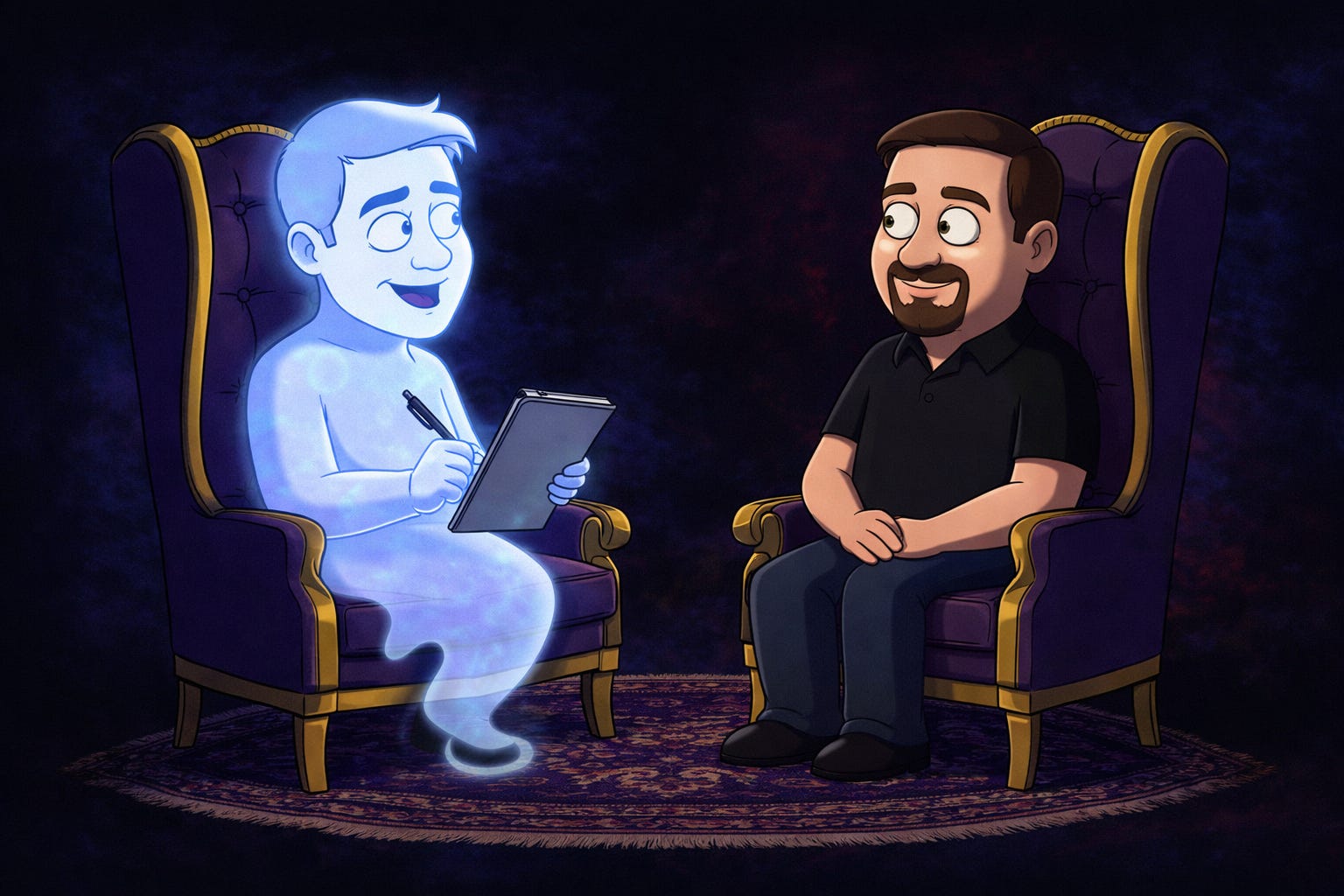
I’ve been gone for a bit. Not in a dramatic way.
Okay… maybe a little dramatic, but no manifesto. No “I’m logging off forever” post.
This spotlight has been sitting in my drafts for so long that I’m fairly sure Finn Tropy assumed I died quietly in a ditch somewhere off the I-95.
Fair assumption, but not reality.
Here I am, writing beyond the grave. Taking things to the next level as I drift around in my ghostly state. Apparently, I’m harder to kill than I thought.
The truth is simpler. I disappeared into building RingHouse, an agency focused on doing one unglamorous thing very well: making sure businesses never miss calls.
I didn’t forget this piece. I didn’t become Casper. I’ve just been heads-down, doing the kind of work that doesn’t leave much time for posting. And I didn’t want to publish this half-present. Finn’s work deserved more than a rushed intro written between calls. So I waited. I waited, and I waited, and I waited some more…
And what follows is worth the wait.
It’s the story of a builder who didn’t stop building when the “career” part ended, and who approached online writing the same way he approached engineering: with curiosity, rigor, and a low tolerance for nonsense.
Before we get into the weeds, I asked Finn to explain who he is, what he’s building, and why Substack Pro Studio exists.
Q: Who are you, and what are you building?
A: I’m a recently retired engineer who swapped spreadsheets and IT production systems for sentences and paragraphs. After building high-tech products and IT systems for over 40 years and managing global teams across 24 countries, I thought I was done.
It turns out that I just wasn’t done building. Two years ago, I fell in love with online writing. Pretty quickly, I realized writers face the same challenges I used to solve in tech: limited time, messy feedback, and too many unknowns.
So, I created Substack Pro Studio - a kind of “Swiss Army knife” for Notes. It helps writers schedule smarter, see real-time results, and even receive an AI nudge when needed. It’s part tool, part growth coach, part cheerleader - designed to make the creative grind feel a little lighter.
Q: What sparked the idea?
A: After writing on Medium for 18 months, I did a retrospective to figure out what was working and what didn’t resonate with my readers. You can read it from here.
I decided to focus on a few things:
Listen for reader feedback and build a better understanding of my audience.
Provide readers with practical tools and guides.
Help to solve problems and document the steps taken
Work on my Finn’sights Newsletter for another channel to distribute my stories on Substack.
Add more products like The Top Authors Dashboard on Gumroad
This was a truly pivotal moment for me, and it changed the trajectory of my newsletter. I started with 24 subscribers, and a year later, I now have over 1,150. I wrote this article about my transformation over the last 12 months.
Q: How do you explain this to different people?
A: To a writer friend, I’d say: “Imagine having a growth coach who doesn’t sleep, doesn’t nag, and never loses your notes. That’s Substack Pro Studio. It helps you plan your posts, track what’s working, and grow your audience without burning yourself out.”
To a fellow builder or engineer, I’d say: “It’s a connected system that layers scheduling, analytics, and lightweight AI on top of Substack APIs. Essentially, it converts messy Notes activity into structured data, performs engagement analysis, and automates the feedback loop. Think lean startup but applied to online writing: build, measure, learn, repeat.”
Q: What’s been your toughest moment so far?
A: In February 2025, I ran a Substack Growth & Analytics Survey to get a clearer sense of what writers actually wanted. The results pushed me to build the Substack Dashboard - a big project that ultimately tracked 105,074 newsletters, 2.868 million posts, and 1.792 million Notes.
The problem? I still had a demanding 9–5 job, so my “nights and weekends” turned into “late nights and very early mornings.” Docker containers, Grafana dashboards, PostgreSQL pipelines - it all came together, but so did the stress. By the end of February, I was pretty fried. However, quitting wasn’t an option, as I wanted to finish what I had started.
Q: What did you underestimate going in?
A: I seriously underestimated how complicated (and humbling) the Substack Dashboard would be. By April 5th, I launched it with high hopes. Twenty people signed up. Nineteen cancelled. One stayed out of either loyalty or pity. That stung, but it also taught me lessons I carry into every project now:
Don’t trust survey data alone - talk to real humans.
Build small, test often, validate everything.
Never launch something complicated without proper beta testing.
Hard truths, but better than repeating the same mistake at scale.
Q: What’s the proudest milestone so far?
A: The proudest moment was the Substack Pro Studio launch on August 29th. I’d been building in small increments since June, layering in every hard lesson from the past year. This time, I had 23 beta testers putting it through its paces, and their feedback was overwhelmingly positive.
For the first time, I wasn’t just tinkering - I was shipping something people genuinely loved. Seeing writers replicate my own growth results with the tool felt like magic. That was the “this is working” moment.
Over 341 customers are using Substack Pro Studio (including my collaborative product with Yana) within one month after its launch.
Q: Any surprising use cases?
A: One of the most fun surprises came from collaborating with Yana G.Y. She initially asked me for datasets to help her train a custom GPT for Notes. She then designed a clever way to surface Notes with high engagement, sorted by fields so she could filter thousands at a glance.
Before long, she had a “Notes Writer” GPT trained on the data - and we ended up integrating it with Substack Pro Studio. Watching someone take my work and remix it into something entirely new was a proud, unexpected twist.
Q: What sets you apart in such a crowded space?
A: I stand out by building only for Substack writers. Everything comes from my own experience publishing (and often fumbling) on the platform, and it gets refined through constant feedback from fellow creators.
My mission is to help writers grow without burning out - turning messy, time-consuming tasks into simple, almost invisible workflows.
This isn’t some generic software - it’s writer-first craft, co-created with the community. If it feels personal and practical rather than overwhelming, then I know I’m on the right track.
Q: Where do you see this in 3–5 years?
A: In 3–5 years, I see my products becoming the go-to growth platform for independent writers.
The current building blocks—scheduling, analytics, and engagement reports—will evolve into a connected system, a lean AI-first CRM explicitly designed for creators. I’m taking the first steps, as explained in this article, by pulling Substack and Gumroad data in the background and connecting it to the Claude AI desktop app so that you can receive personalized insights tied to your actual audience, their behaviors, and your revenue.
I started beta testing StackContacts in early December 2025, and within the first week, 8 of 12 beta testers had their AI-powered CRM system up and running.
The bigger picture isn’t just software, though. It’s a thriving community of writers helping each other grow smarter, share insights, and stay sustainable. If I can give writers more time for creativity and less stress about growth, that’s the future I want to build.
Q: What’s the bigger mission here?
A: The bigger mission is to make independent writing sustainable. Too many talented writers burn out: not from lack of ideas, but from the grind of growth. My goal is to give them leverage - simple, data-driven tools that amplify their reach and protect their creative energy.
Ultimately, it’s about helping writers build lasting, independent businesses without losing the joy of writing or their sanity.
Q: What does success mean to you personally?
A: For me, success isn’t signups or revenue graphs - it’s seeing writers use what I’ve built to stay independent and energized. If my tools help someone publish with less stress, reach more readers, or simply feel a bit lighter in their creative journey, that’s worth everything.
On a personal level, success means knowing I’ve made the writing path a little less lonely and far more enjoyable.
Q: What tools or resources have been indispensable?
A: I live inside a handful of tools: VS Code and Cursor for building, Posthog for seeing metrics and what’s really happening, and Obsidian for organizing my chaos.
But the real lifesaver? Long walks iwith my dog - because sometimes the best debugging happens away from a keyboard. That, and coffee. Lots of coffee.
Q: Who inspires you?
A: I draw inspiration from many indie hackers and creators who build in public - people who share the messy middle, not just the highlight reel. Writers like those on Substack who continue to show up, even when growth feels slow, remind me why I do this. Yana G.Y. is one of those inspiring people whom I met initially on Medium, and we started collaborating over a year ago
Orel has an excellent WriteStack service. We are chatting with Orel very frequently.
Karen Spinner , created the StackDigest tool to get curated digests on Substacks. She is a very talented creator you want to follow.
Yana G.Y. offers various tools, including custom GPTs that I have frequently utilized when creating Notes. We built a collaboration product CreativeTech Substack Pro Studio (GPT Bundle), that combines our best products in one package.
Q: What advice would you give someone starting out?
A: Start small and show up often. Don’t wait for perfect - it never comes.
Publish, learn, adjust, repeat. Listen closely to your readers; they’ll tell you what matters more than any metric.
Protect your creative energy like it’s gold, and remember: growth isn’t about one big leap - it’s about a hundred small, consistent steps. And yes, coffee helps here too.
Q: Where can people try your product, follow your work, or get in touch?
A: You can try Substack Pro Studio on Gumroad, read my newsletter Finn’sights, or just reach out - I love chatting with fellow creators. If you’re on Substack, chances are we’ll bump into each other in Notes. And if not, email works too (preferably with good subject lines)
Coming back to Substack feels a bit like that scene in The Lost World where they walk back into the abandoned control room. Cobwebs in the corners. Dust on the consoles. Monitors dark. Everything looks abandoned, but nothing is actually broken.
You flip the switchboard back on and, one by one, the systems wake up. Screens glow. Fans spin. The muscle memory kicks in faster than expected.
Reading Finn’s story again after months of building RingHouse was grounding in the best way. Same game. Different terrain. Real users. Real fatigue. Real systems that either reduce friction or quietly grind people down. That part never changes.
Finn didn’t build for attention. He built for endurance. For writers who want to keep showing up without lighting themselves on fire in the process. That’s rare. And it’s why this piece stuck with me long after I finished the interview.
More spotlights are coming. More writing too. I’m easing back into the chair. Slowly. Deliberately. And hopefully with fewer multi-month gaps that make people wonder if I’m still alive.
We’re the team behind whatisthat.ai, the AI discovery platform (beta) built to cut through the noise. If you found this useful, pass it on. Share it, forward it, spread it. Every share helps us grow and puts real insights into more hands. 🙏
If you liked this, you might like these too:
The Style Bible: A Creator’s Guide to Building Voice with Precision
Opinion: AI to Mars? The Dumbest Smartest Idea That Might Just Work
I Built My Entire AI Consulting Agency on Replit and Here’s What Happened
The SEO Tool Power Rankings: Giants, Gainers, and Global Oddities

Comments
Nothing yet. Say the first thing.
Sign in to join the conversation.