

There may be a way to help clear microplastics out of your body.
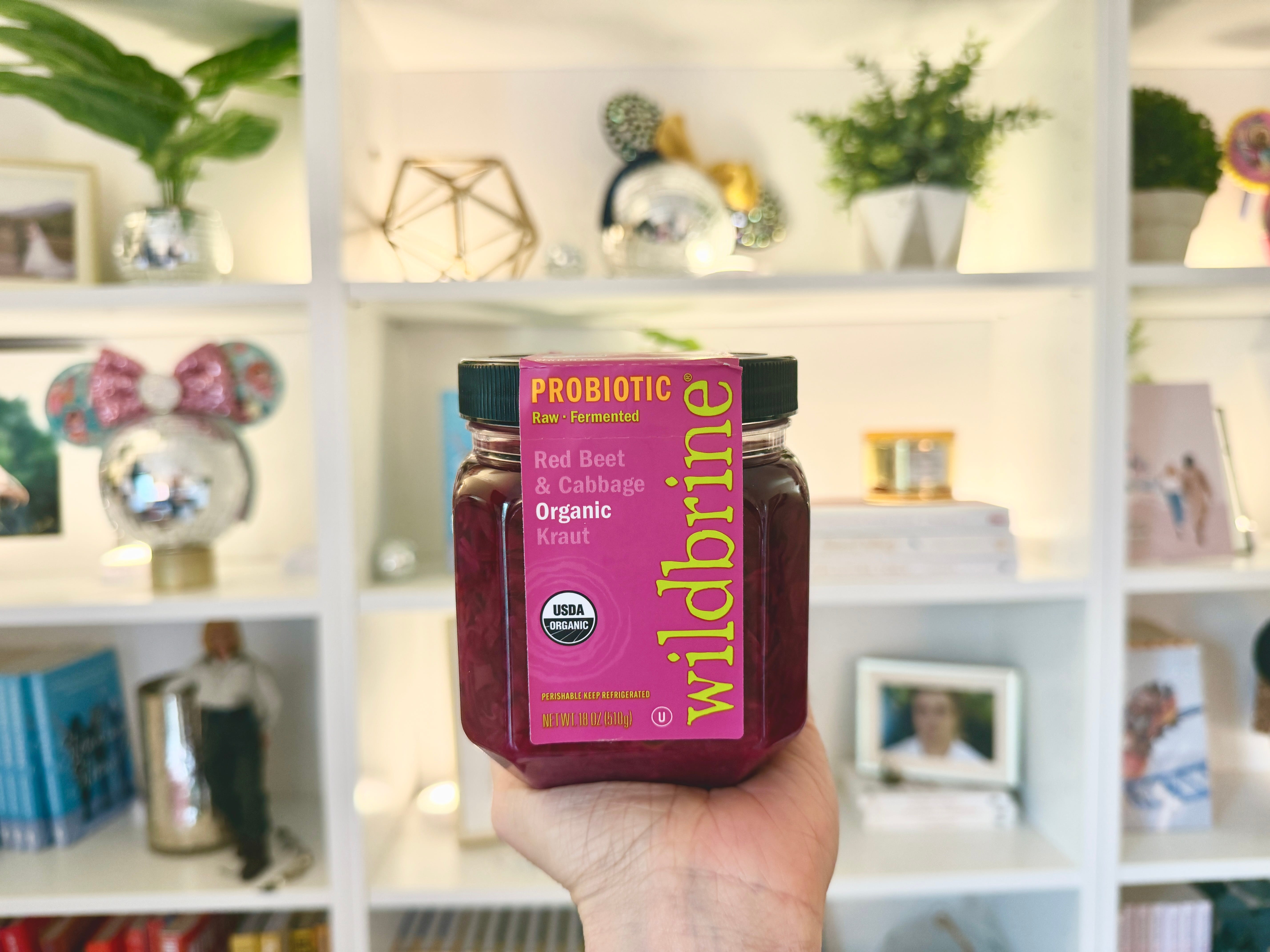
I know how that sounds. Every time I read a headline like that I assume someone is about to sell me a charcoal smoothie. But a new study out of the World Institute of Kimchi in Seoul changed how I think about the few spoonfuls of Wildbrine sauerkraut I eat with lunch.
Researchers found that a specific bacterium found in kimchi, Leuconostoc mesenteroides CBA3656, latches onto plastic particles in the intestine like a magnet finding a paperclip. The mice that got the bacterium pooped out more than twice as many nanoplastics as the mice that didn’t. The headlines went a little wild. “Kimchi flushes plastic from your body.”
The gut is the main way ingested plastic gets back out. Certain microbes speed that process up. Which means the question isn’t really about kimchi. It’s about whether your gut is doing the job it’s supposed to do. And for a lot of us in midlife, the answer is that it’s quietly falling behind.
The research team, led by Drs. Se Hee Lee and Tae Woong Whon, tested two lactic acid bacteria against polystyrene nanoplastics, the kind that come from broken-down takeout containers and water bottles. In a beaker, both bacteria bound about 87% of the plastic. Impressive, but a beaker is not your intestines.
So they simulated intestinal fluid. The reference strain dropped from 85% to 3%. The kimchi strain, CBA3656, held at 57%. A bacterium that can keep doing its job inside an actual human gut.
Then they tested it in mice. Male and female mice given CBA3656 excreted more than twice the nanoplastics in their feces. The plastic wasn’t disappearing. It was getting bound up by the bacteria and walked out the door.
Mice are not women. (Though somewhere a Korean lab tech spent her week cataloging mouse droppings under a microscope, and I want to send her flowers.) Polystyrene is one type of plastic out of dozens. Grocery store kraut is not the same as a lab-isolated strain at therapeutic dose. Nobody has run this study in humans yet.
What we have is a strong proof of concept that probiotics can bind plastic. We also have a small human study using shellfish-derived fiber that doubled fecal plastic output. Same principle: bind it, move it out.
The kicker on the kimchi research is this. Leuconostoc mesenteroides, the species in the study, is dominant in kimchi and present in raw sauerkraut, especially during early fermentation. Not the exact strain at the exact dose, but the same family doing similar work. So my spoonfuls of Wildbrine are not the answer to microplastics. They are, however, sitting in the same neighborhood as the answer.
The gut you had at 28 is not the gut you have at 48. Estrogen helps keep your gut microbiome diverse, and when estrogen drops in perimenopause, the bacteria drop with it. Stomach acid thins out. Bile flow gets lazy. Things take their sweet time. The exit ramp loses speed at the exact moment your lifetime plastic load is highest.
You did not do this to yourself. Nobody told you the plumbing was on a clock. Add it to the list of things nobody mentioned, right between “your favorite jeans will betray you” and “you’ll start sweating at meetings.”
So the women carrying the heaviest cumulative load are the women whose disposal system is slowing down. And those women are us.
You can’t detox plastic out of your brain tissue with green juice. Anyone who tells you otherwise is selling something.
What you can do is support the exit ramp.
Here’s what’s in my own rotation:
Wildbrine raw sauerkraut and fermented beets. A few spoonfuls with lunch, most days. Refrigerated, never pasteurized, full of live lactic acid bacteria including the Leuconostoc family. Real kimchi works the same way.
Fiber to a level your body can use. Most women over 40 eat 12 to 15 grams a day. The target for binding action and regular elimination is closer to 25 to 30. Fiber acts as a physical sponge for plastic particles, and it feeds the bacteria that do the binding. Beans, lentils, raspberries, chia, cooked-and-cooled potatoes, oats. Boring. Effective.
Less plastic going in. The biggest source of dietary microplastic for most American women is bottled water. After that, takeout containers heated in the microwave, polypropylene tea bags, anything wrapped in plastic and warmed. Filtered tap water in a glass or stainless container reduces your daily intake significantly. I still occasionally use bottled water when I have to. Pick your battles.
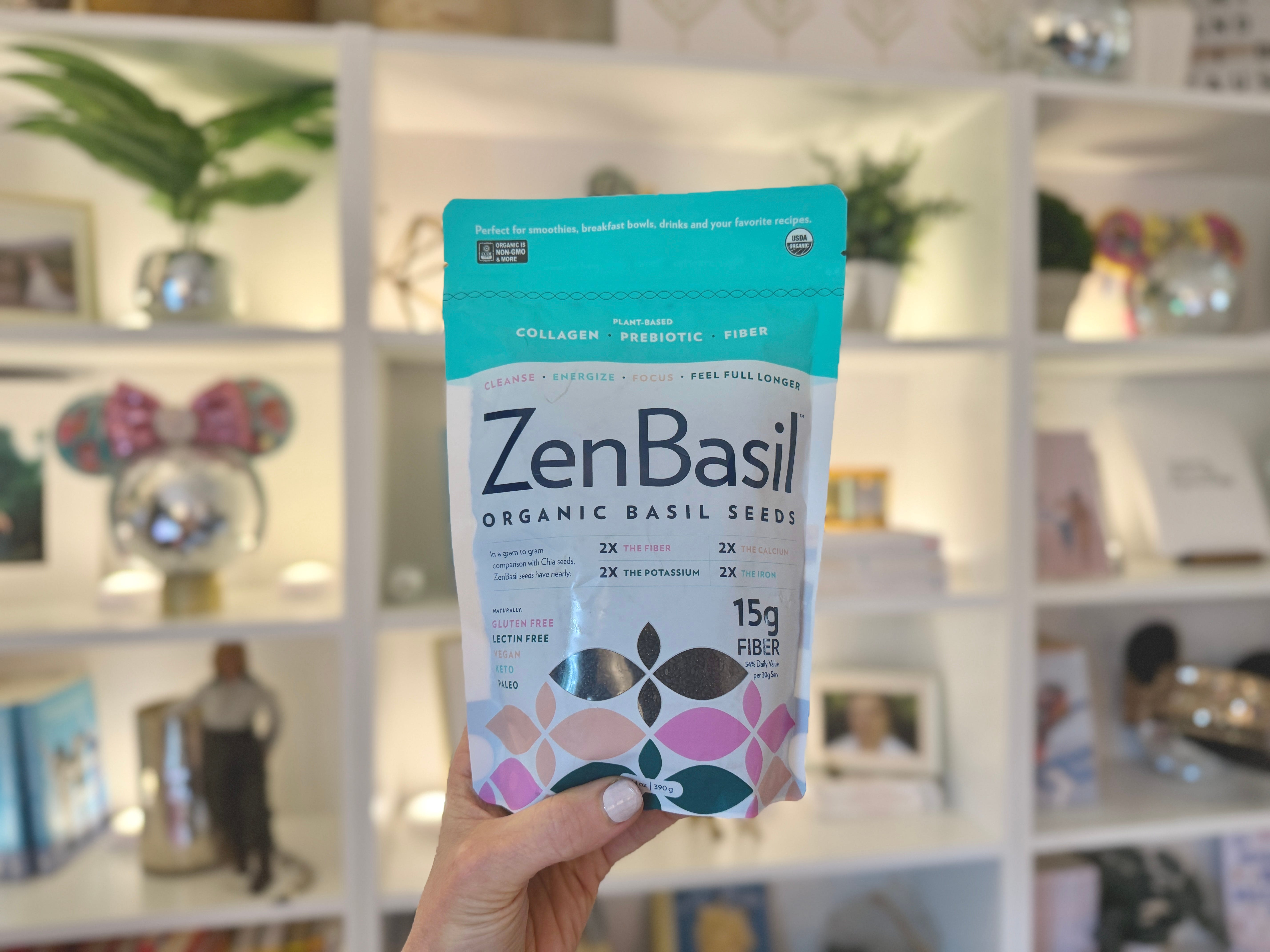
Skip the fiber supplements. A 2024 study found microplastic contamination in every dietary fiber supplement tested. The fiber supplement industry is selling you the very thing you’re trying to remove. For an easy fiber boost, stir chia seeds or basil seeds into water, yogurt, or a smoothie. Two tablespoons of chia gives you about 10 grams of fiber. The same amount of basil seeds gives you 15, which is roughly 50% more.
Keep things moving. The longer particles sit in your gut, the more time they have to interact with the lining. Water, walking, magnesium glycinate if your doctor approves. The faster the transit, the less re-absorption.
I can’t promise you a body free of plastic. Nobody can.
The body has a disposal system, and it runs through your gut. It depends on bacteria you can feed, fiber you can eat, and a few habits you can change without buying a single supplement.
Your gut is the exit ramp for everything you don’t want to keep. Including the plastic.
Feed it like you mean it for one week. Sauerkraut at lunch. Beans at dinner. Tap water in a glass. See what happens.
A woman who tends her gut is a woman who picks up the broom inside her own house. The plastic is what we sweep out.
Comments
Nothing yet. Say the first thing.
Sign in to join the conversation.