
Note to readers: I had a problem with the original version of this post not showing up correctly on the sailwindriver.com blog page. I am republishing it as a two-part post. Part 2 can be found here.1
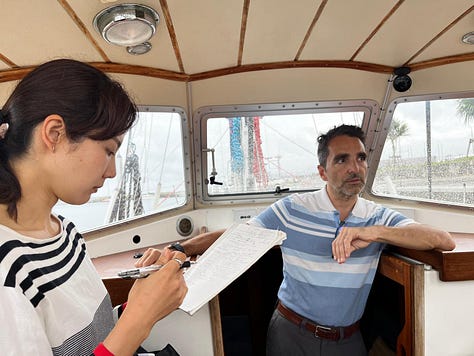
Okinawa’s wonder started with the arrival procedure at Yonabaru Marina. This was my official entry point into Japan, and the officials from Customs, Coast Guard, Biosecurity, and Immigration arrived on-time to conduct their inspections. They were professional, very thorough, friendly, and welcoming. Doubtless, I was craving human company after 32 days alone at sea and anyone would have been acceptable at that moment, but the way I was treated by officialdom felt refreshing. They seemed genuinely curious about foreigners coming to their country.
Yonabaru is a bedroom community and my arrival over the New Year’s holiday meant it was extra quiet. You wouldn’t have known it was New Year’s Eve a couple days later: no fireworks, late night revelers, honking car horns or anything else. Only a handful of restaurants were open for the next few days, and I got to know them all during several 10-15 kilometer walks.
During that first quiet week I cleaned and put the boat away in preparation for a monthlong trip back home. I met Lowell Sheppard, a Canadian sailor and YouTuber who’s been living in Japan for 27 years. He took me by car to a hardware store and a marine chandlery, where I purchased a long wood board to put between my fenders and the concrete walls that are common here in Japan, and two extra large orange styrofoam fenders needed as part of that wall tie-up process.
Sam Sung aboard Berlinetta and his able crew Mr. Kim helped me set bow and stern anchors to keep the boat off the concrete wall during the prevailing northerly winds. Scott (an American boater residing in Okinawa for many years) kept an eye on Wind River during my absence, as did the most able staff of Yonabaru Marina, Ishida-san and Ikegami-san, sending pictures from time to time. There was a lot of prep that went into ensuring Wind River stayed safe for the month and, as I’ve said in past posts, it takes a village to make a dream come true. Thank you all!2
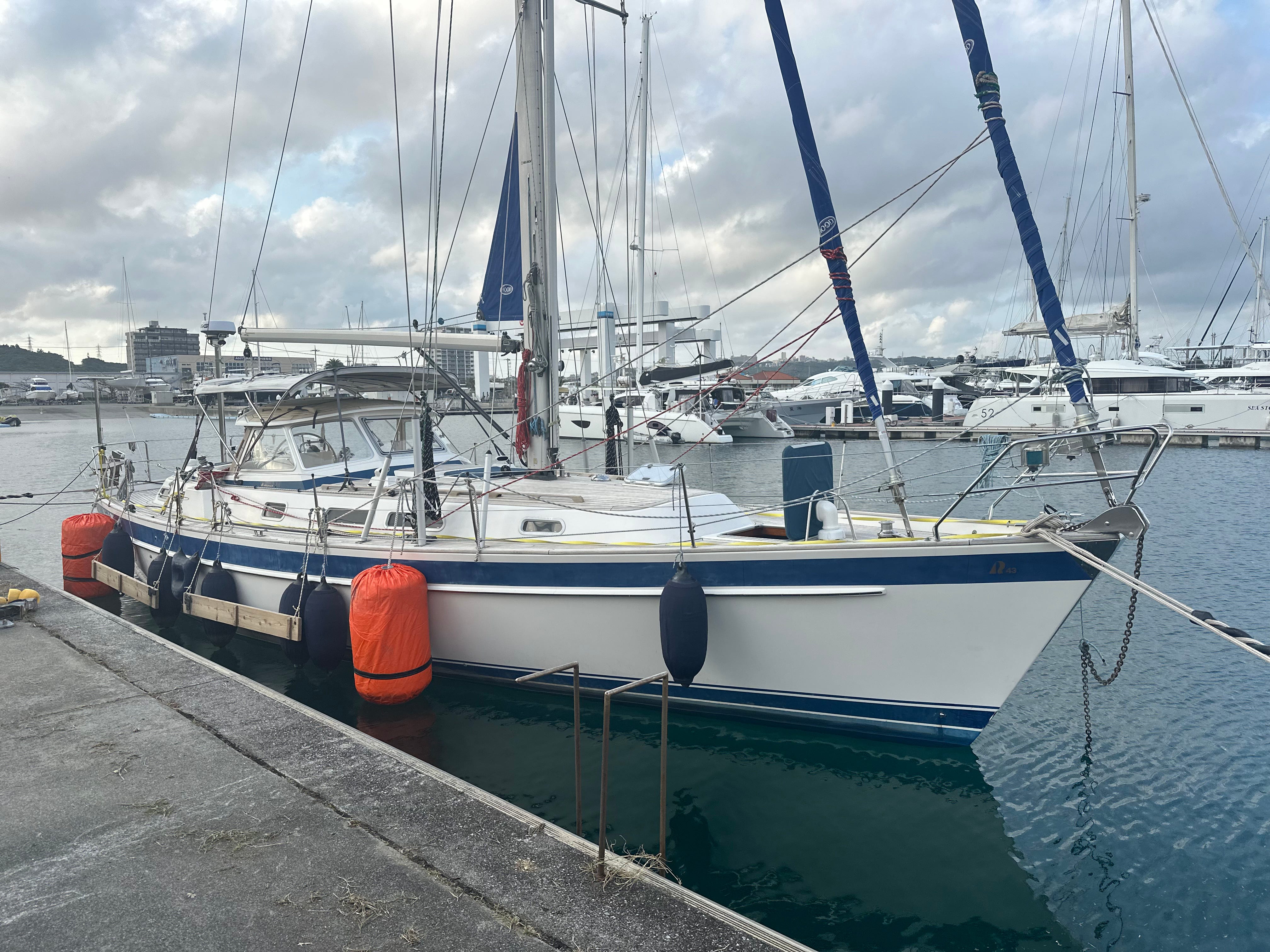
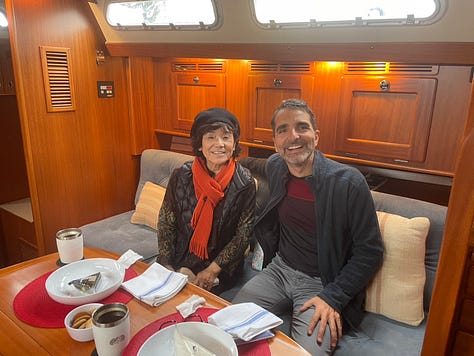
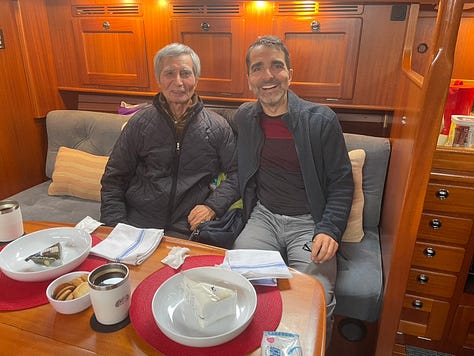
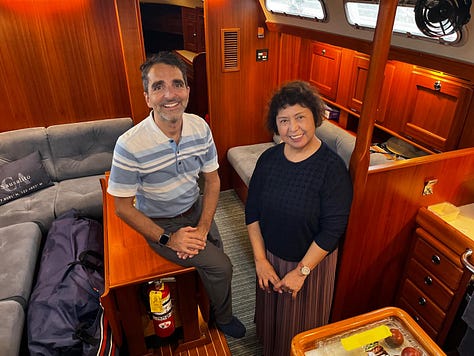
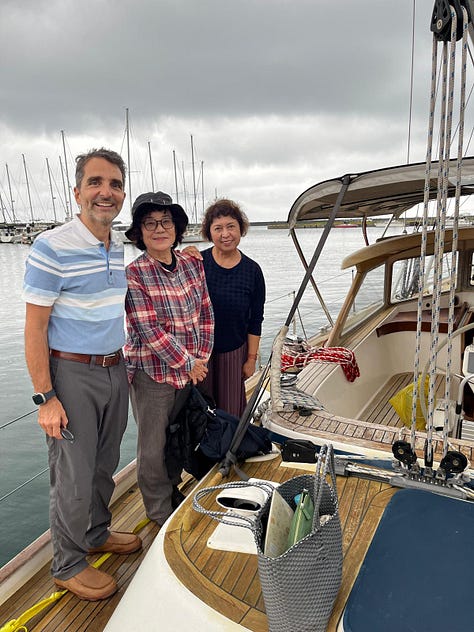
After returning from San Francisco to Okinawa in mid-February, I visited a cafe owned and operated by Mariko-san and her husband. Mariko-san introduced me to her sister, Mayumi-san, who hosts an English language class for Japanese students. I visited with that class twice, formally, and there were several other events that followed.
Yukie-san and her husband took me to dinner one night and organized for an interview at a radio station they are affiliated with. Since the interview was entirely in Japanese, Yukie-san acted as translator. She has since obtained an important English-language certification after a year of preparation; congratulations, Yukie-san!
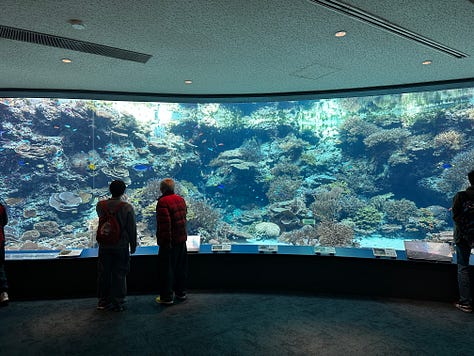
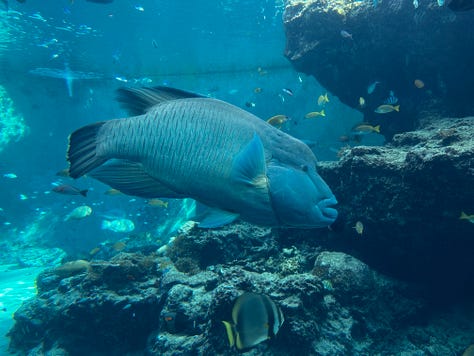
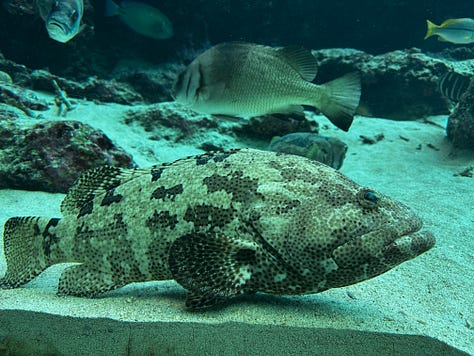
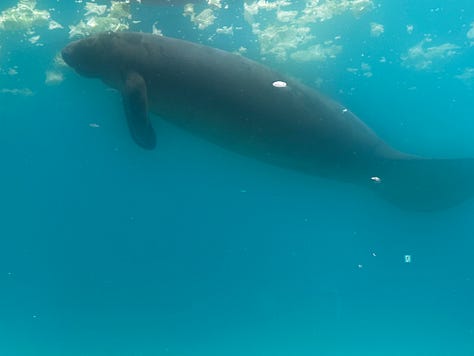
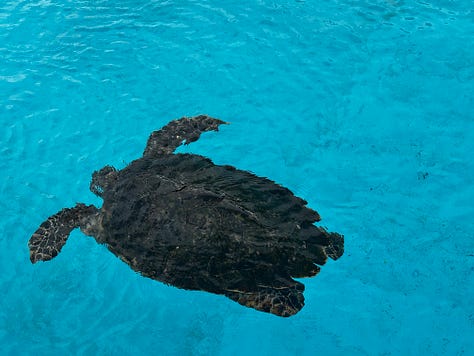
Mr. Sung, Mr. Kim and I went to the Okinawa Churaumi Aquarium, one of the 10 largest in the world.
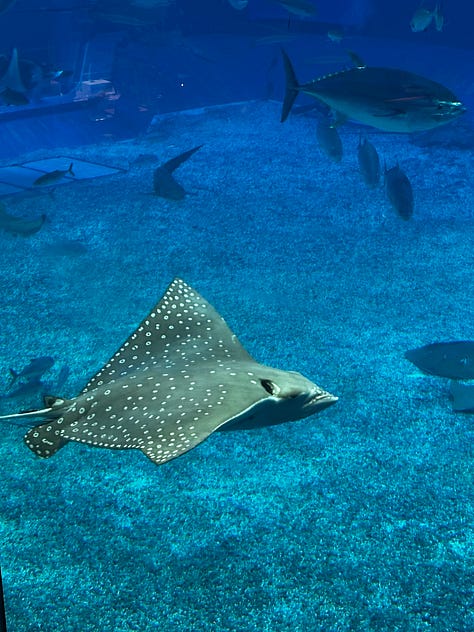
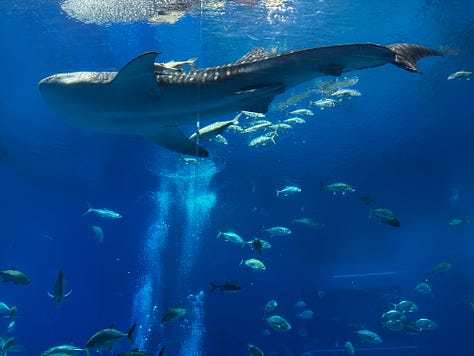
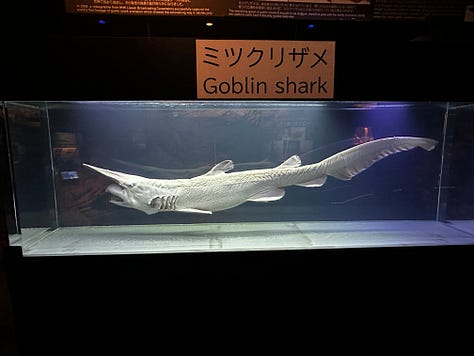
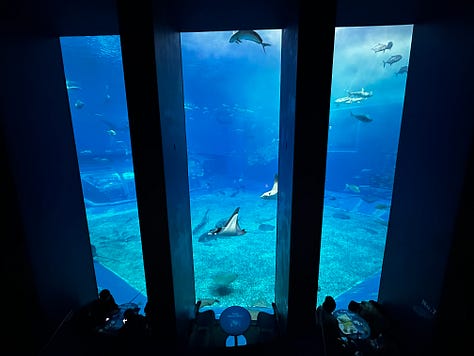
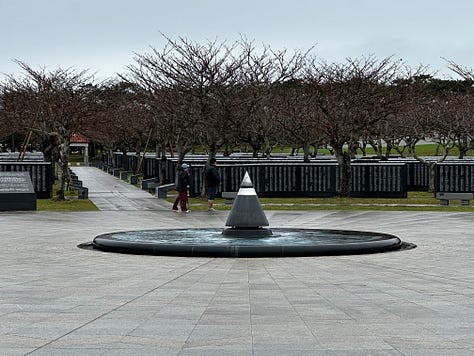
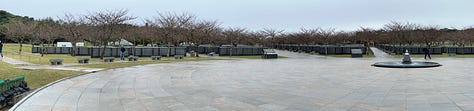
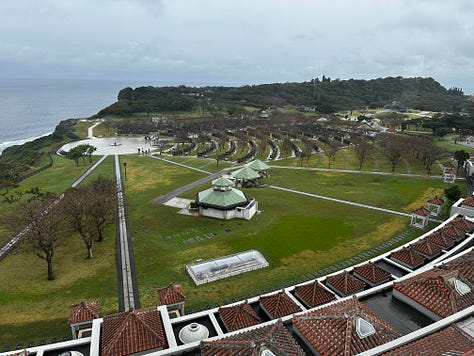
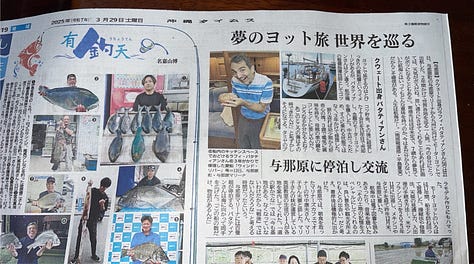
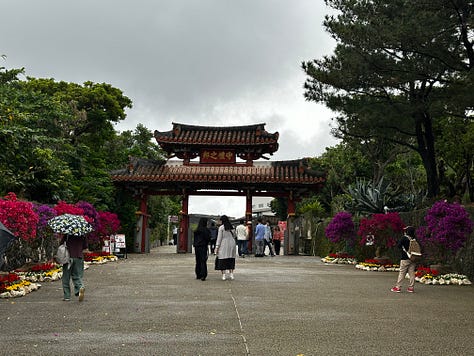
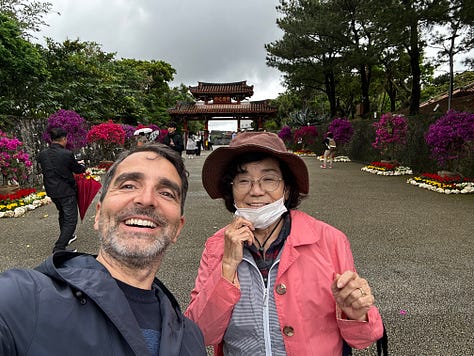
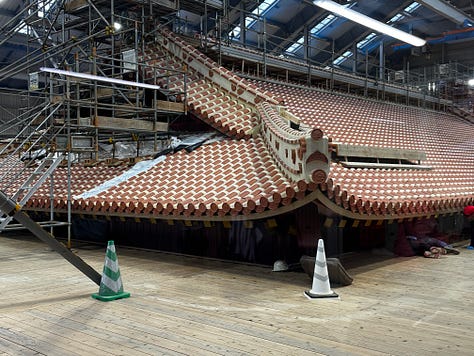
Junko-san drove me to the beautiful campus of the Okinawa Institute of Science and Technology where we had lunch; the Shuri castle grounds of the former Ryukyu kingdom3; and to the very somber memorial for the dead during the Battle of Okinawa (where her own sister’s name is etched in one of the granite blocks). She also took me to the viewing area near Kadena Air Base, which is an instrumental part of the US influence in Asia. Towards the end of my stay in Okinawa, she organized a newspaper interview that Mayumi-san helped to interpret.
I’m way behind in my writing. This two-part post covers the period of December 29, 2024 - March 20, 2025.
In Japan, people greet each other with the suffix “san” added to their names. If it is a first-time introduction, or a formal relationship, you use the person’s last name, followed by “san”. If you have a personal relationship, the individual might ask you to call them by their first name, although you would still add the suffix “san”. And if you are speaking to your own family members, “san” is often replaced with “chan”, although sometimes a wife might call her husband “Otto-san” (husband-san), and a husband his wife “Oku-san” (wife-san). During the next few posts you will see that I refer to Japanese people I met with “san” and foreigners just by their first or last name. But Japanese people will always use “san” with everybody regardless of nationality.
Okinawa was, until 1872, the independent Ryukyu Kingdom more culturally and commercially aligned with China. When the Meiji emperor rose to power in Japan, ushering in a period of closer relations with the west, the government unilaterally declared the Ryukyu Kingdom part of Japan, and in 1879 formally annexed it, in what is known today as the Ryukyu disposition. There remains an Okinawan culture and language, and traditions that are practiced on the islands by some of its citizens. I do not delve into this topic as others are far better informed than me, and those interested should search for books on the “Ryukyu Kingdom” and the “Meiji Restoration”.
Comments
Nothing yet. Say the first thing.
Sign in to join the conversation.