
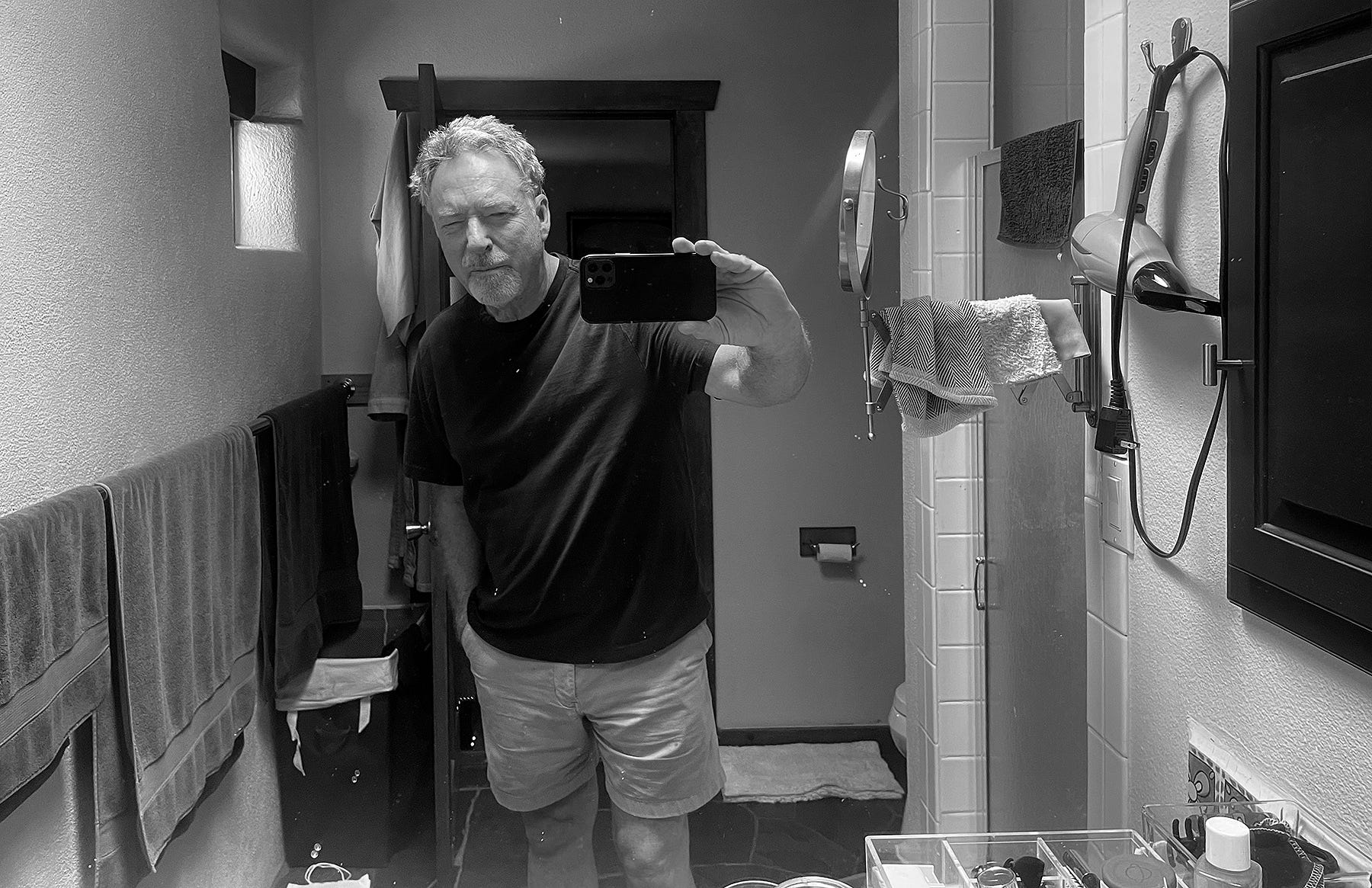
I’ve been putting up these Substack essays about art and the artworld — and about my own life as a painter — for a couple of years now. The earliest ones go back about five years before that to some earlier posts on the Wordpress site, and all my writing here follows a run of essays and articles published in a variety of other periodicals, books and catalogues since about 2006.
But why do I do it?
The first answer is that I enjoy it. For some reason writing comes easily to me. It’s both pleasurable and satisfying to do something challenging, but which one doesn’t have to struggle too hard with, and much of that satisfaction flows from having done it myself without any help. I will say for the record here that I categorically refuse to use Artificial Intelligence for any part of this process because I cannot imagine wanting to surrender its inventions and explorations to anybody or anything else. I can barely tolerate being edited by another human being, so the notion of handing any of this work over to a robot is not just unthinkable, but anathema. Writing is too essential to the ongoing health and functionality of my own brain to forfeit any whit of my autonomy in its making.
Beyond this simple enjoyment, there are also specific motives and objectives embedded in all that I write. It feels worthwhile however, as more and more people have been reading these pieces, to say clearly just what those motives are before committing any more of my admittedly opinionated bloviations to this very public medium.
I turned sixty-six last March, which I find astonishing. I feel eternally twenty-five, at least mentally, but every morning the guy in the bathroom mirror insists on reminding me just how delusional that is. I’m not exactly an old man, but neither am I any longer a young one. That said, the ideas and observations offered here all flow out of my many years of making one sort or another of art, and also of finding ways to get it out in front of an audience and into the hands of collectors.
I started making a variety of things with my hands in childhood and got quite serious about oil painting in my early teens. I’ve been doing it ever since, and I think it fair to say that I am reasonably good at it by now. I’ve also been relatively successful professionally, at least insofar as a large part of my living has come from my painting over the past forty-odd years.
I’m not a famous artist though, and despite having always craved the admiration of peers and colleagues who might be in a position to know the difference between good and bad painting, I’ve never especially wanted to be more generally famous — at least not as a celebrated innovator or buzzy exemplar of the artworld zeitgeist. One does hope to be well enough known to facilitate a dependable livelihood, but that isn’t the same thing as being famous; it’s more akin to the kind of reputation an exceptionally skilled and knowledgeable surgeon or physicist might enjoy. I just happen to have built that sort of skill and expertise around art.
Coming from that realm of practical experience and knowledge, I write for two distinct audiences; one comprised of people like myself who either already have, or who intend in future to dedicate their whole lives to the making of the highest possible quality artistic stuff. My second intended audience are all those other people out in the world who are not themselves artists, but who look at, love, support and collect the things that artists make.
Addressed as my writing is to these two audiences, I am always working to articulate two core ideas that not only feel worthy of communication to people like that, but which are also essential to the life of art itself, and more so now than ever.
The first of these is that the artists and works which the artworld establishment (e.g. the art fair-crawling-consultancy, the big corporate galleries, the academically embedded theorists of aesthetics and the straggling remnants of our critical class) are telling us is the best, most culturally relevant and worthy of investment, will only rarely turn out historically to have been any of those things. A whole lot of it these days just isn’t all that good. So the folks who are telling us that it is must be either fully corrupted by, or otherwise beholden to the market those works were designed to serve, or else they’re just not very smart. It’s not that the work they champion isn’t good at all, or has no value whatsoever, but that it is neither as important nor as valuable as they would have us believe.
The second idea is that there is a rich and variable vein of truly worthy art out there waiting to be found in places where we aren’t necessarily looking: work that is often significantly better — i.e. more intelligently conceived and expertly made — than much of the stuff we are being instructed to revere. This, furthermore, is work we can find on our own without always resorting to the costly interlocutory agency of the commercial or institutional artworld. The people best positioned to guide us to such things, because they are the ones whose material experience is the basis of some actually objective expertise, are the artists themselves. I don’t mean by this that we should go to individual artists to validate or promote their own work, but that we should find those artists whose work we most admire and then find out who they most admire. If we do this consistently, over a long period of time, we stand a chance of developing a personal instrument of discernment that will obviate the need for any other sort of expert advice.
All well and good for me to say, you may argue, but who am I? Well, I’m a person who knows how to make the kinds of things he’s generally talking about and who gained that knowledge in equal parts by actually making artistic things on the one hand, and on the other through decades of direct critical examination a whole lot of the things that other artists have made. Does your art fair consultant have that kind of deeply-absorbed practical skill or knowledge? Highly unlikely. Do the auctioneers, gallerists or the curators have it? Well, a very few do, and some are quite good at seeing real quality when it exists. I have several curator friends who are absolutely exceptional, and not only because they have collected my own work; I even admire them when they don’t. But there are a great many others who don’t know much more than what their customers will buy or what their institutions will support.
That’s not discernment; that’s gatekeeping and marketing.
Perhaps it seems that I think all contemporary art is garbage. Not at all. I find a lot of it to be very good indeed, and even quite wonderful. In many ways we are living in an unusually lush artistic age. There are so many terrific painters working today especially, and I follow and seek them out with gusto. My point is that the top-end, “blue-chip” market on which so much of our attention is commanded by the artworld to be focused relies on the projection of an aura of greatness onto the products it is most interested to peddle to us. But the reality is that there is very little truly great art in play at that level. Yes, there are some very fine things to be found there. But much more of it is mediocre at best and some is just abject junk. The actually great stuff is as rare as the proverbial hen’s teeth. That’s why we call it great, because it’s so damn unusual.
A case in point:
Some years back I traveled from Santa Fe to Denver, Colorado to see an astonishing exhibition of some genuinely great art which drove the rarity of that level of achievement home to me in a way that only a few other similar experiences have been able to do. I’ll get to that in a minute, but some personal background is needed first in order to properly flesh-out the experience I had there.
At about age twelve, I began experimenting with various kinds of printmaking. My dad had somewhere got hold of a cache of extra fine end-grain boxwood blocks for wood engraving. He also had his father’s engraving tools on the workbench in his home studio. Rather than shooing me away from these precious things, he encouraged me to try my hand at them. I made numerous, rather sloppy, early attempts at the medium, then moved on, over the next few years, to etching, whose tools I also had access to in an uncle’s nearby printmaking shop.
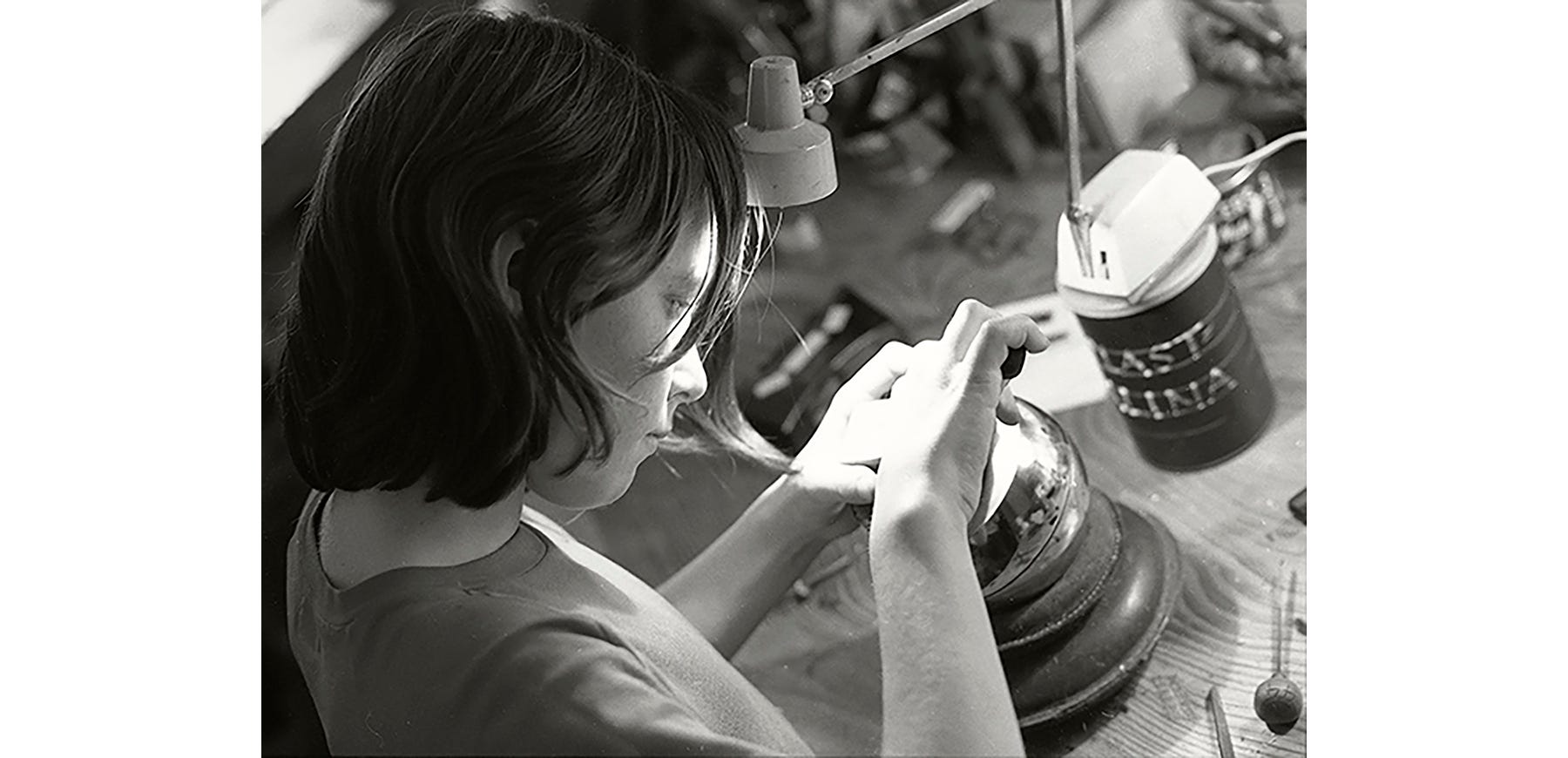
When I began to get into that process, that same uncle handed me a copy of a book titled Rembrandt, Experimental Etcher. I still have it in my studio today, dog-eared and stained with greasy black fingerprints. Those inked and printed drawings were a titanic revelation to me. At the time, I wanted nothing so much as to learn how to make something that good myself. I beavered away at it, off and on, through my late teens and into my first year at art school, but never put in the time it would have taken to really excel, much less master it. Painting soon overtook everything else and the printmaking gradually fell by the wayside.
I need to say here though that one of the assumptions that drove my early experiments with etching was the notion that, were I to apply myself with sufficient determination, I could eventually learn to draw and etch as well as Rembrandt himself. The exhibition at Denver, titled Rembrandt, Painter as Printmaker, finally disabused me, once and for all, of that childhood delusion of grandeur.
Walking through those museum galleries and looking, one by one, at the actual physical things that I had known so well and for so long in reproduction, had a stunning impact on all that I thought I knew, not only about that medium in particular, but also about visual art more generally. To sum it up, what I saw there was that no matter how I might try, there was no way that I could ever make something of that kind anywhere near so well, nor as brilliantly, as Rembrandt had. Furthermore, I am not aware of a single artist working today who exceeds, much less meets that level of artistic achievement. There are some very good ones to be sure. If I had to make a list of those who, for me at least, hover at the edges of that kind of quality it would include a tiny handful of names. Kerry James Marshall is one, Vija Celmins another, Rackstraw Downes, Stanley Lewis, Antonio Lopez Garcia and the Leipzig painters Neo Rauch and Matthias Weischer, among a handful of others would round it out. But the preponderance of celebrated art stars whom we are supposed to accept as members in that firmament today are not even close to being in the running, and the people working so hard to convince us that they are either don’t know enough to know the difference, are too high on their own product to see it, or are intentionally manufacturing an impression of importance in order to drive the market. I suspect that it is a bit of all three.
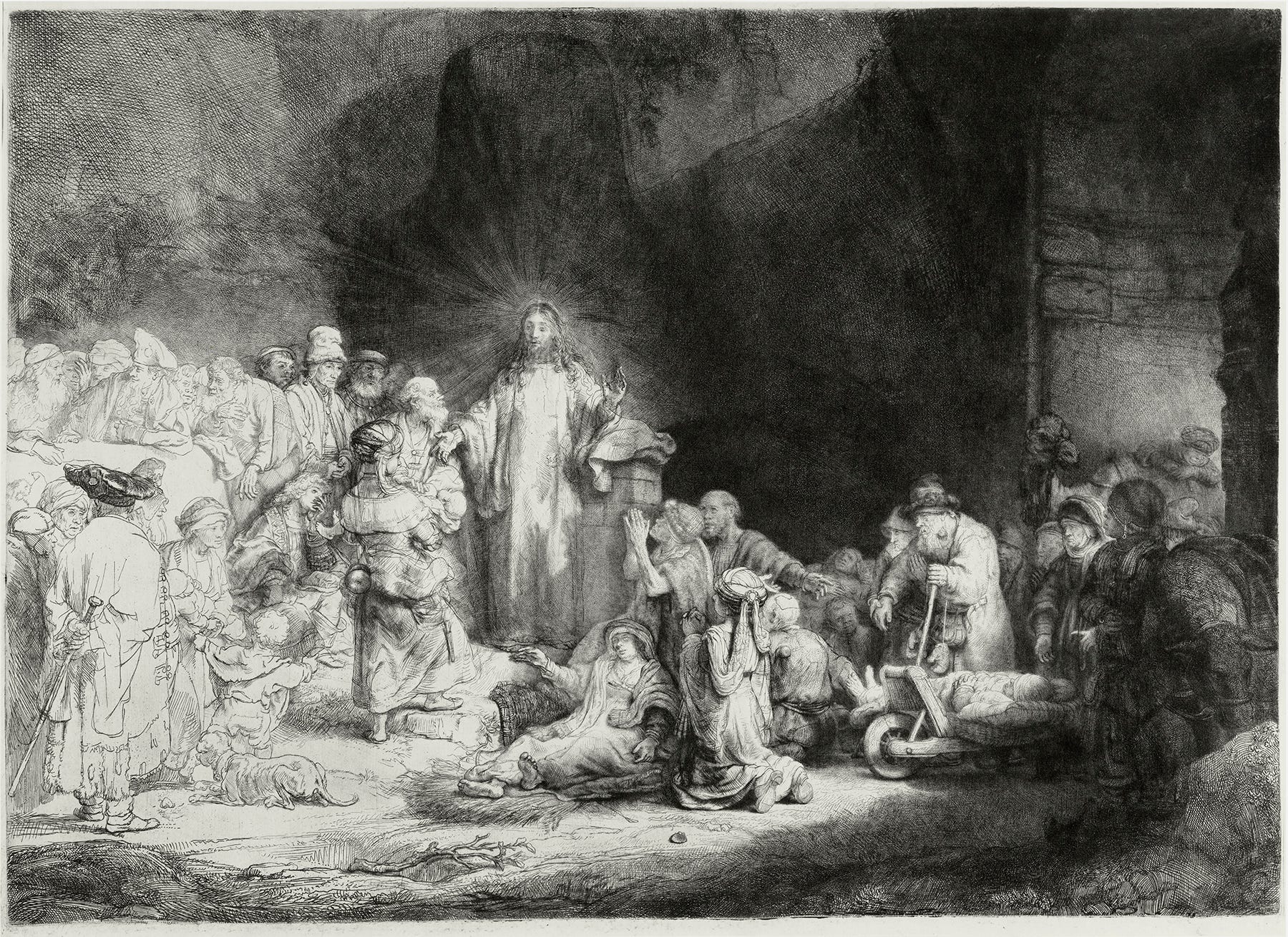
This is nothing new. The intellectual and commercial engines of the artworld have been sloppily pairing diamonds with paste for as long as there has been a critical and market apparatus dedicated to persuading rich people to buy artistic things. I am not only talking here about the more traditionally representational kinds of art into which Rembrandt fits, or whose contemporary descendants I have cited above. This is how the genuine material quality of also great abstract artists such as Mondrian, deKooning, Pollock or Rauschenburg, have been too often and too casually lumped together with a hack like Barnett Newman, or conceptually provocative but materially lesser makers such as Jasper Johns or Gerhardt Richter. And don’t get me started with the likes of Andy Warhol, Damien Hirst or Jeff Koons. Each of those were and are extraordinarily canny at facilitating the manufacture of their branded emanations. But that isn’t remotely the same thing as what we can see when we look carefully at Rembrandt’s Hundred Guilder Print or DeKooning’s Woman, Number One
It turns out to be relatively easy to get good at making a splash in the contemporary artworld; you just have to know how that game is played and be willing to play it. It is much, much harder to become exceptionally good at making art. Sometimes those two aims do coincide, but only rarely.
So, to return to where I started, why do I bother to write such outrageous things? Is it because I want to tear the system down or persuade you that all the stuff at the supposed top is wholesale crap? Not at all. First, I don’t actually believe that that is so. As I say often and have repeated again here, there is some very good art basking right there in the artworld limelight alongside its less worthy brethren. But being in the artworld limelight isn’t what makes it good. What I am saying is that there is actually some other work languishing offstage that is far better than the least worthy examples of the celebrated stuff. You can go out and find it for yourself. Get to know an artist whose work you like and ask them who to look at. You may even be able to buy some really good stuff for a tiny fraction of what the lousier fare at a place like Gagosian fetches. Don’t be so easily led. Learn to see for yourself. Like writing without AI, it’s a lot more fun and you will feel much smarter for doing it.
No posts
Comments
Nothing yet. Say the first thing.
Sign in to join the conversation.