
Substack has become such a rich resource for the sharing of practical experience. I know this has happened in other forums and in other ways in the past, but there is something about the immediacy of this medium that encourages the expressing and working out of ideas extemporaneously, even conversationally, as opposed to the more polished treatises of conventional publishing. But where social media also does this in the too often reactive and even hostile opining of the short Twitter, Facebook or Instagram Threads post, there is a sort of Goldilocks just-rightness to the breadth and style of the Substack article. This allows for an elegant balance of both deliberation and freshness and, at least so far, also in the cordiality and generosity of the exchanges that happen here. I see this in all the different topics tackled on this platform, but especially in our conversations around art.
One of my favorite arts writers on Substack is the UK art dealer and advisor Greg Rook, whose Blackbird Rook page rarely fails to be both surprising and encouraging. Greg writes beautifully (better than I do, but then he’s English and they do teach them to do that over there). He also writes clearly and relatably about the most difficult challenges faced, not only by the collector in understanding and appreciating artistic things, but also by us makers in our working lives. He has written several outstanding essays lately on this very subject. An especially helpful one from this past week is on the problem of how the artist can make a living and continue to practice at full throttle when the means for supporting that work do not come directly from it. As I said in a note while reposting that piece, it should be required reading for every young person in an arts college prior to receiving their degree. As good as it was though, it also made me reflect on my own ways of keeping the lights on through a now fifty-year career as a painter which, while in line with the solutions Greg posed, have also been somewhat different. He spoke of looking for avenues of employment in a variety of professional arts-related fields, organizations and institutions. I responded in a direct email that another useful path to self-support is in the trades, and at his urging I now offer that response more publicly here:
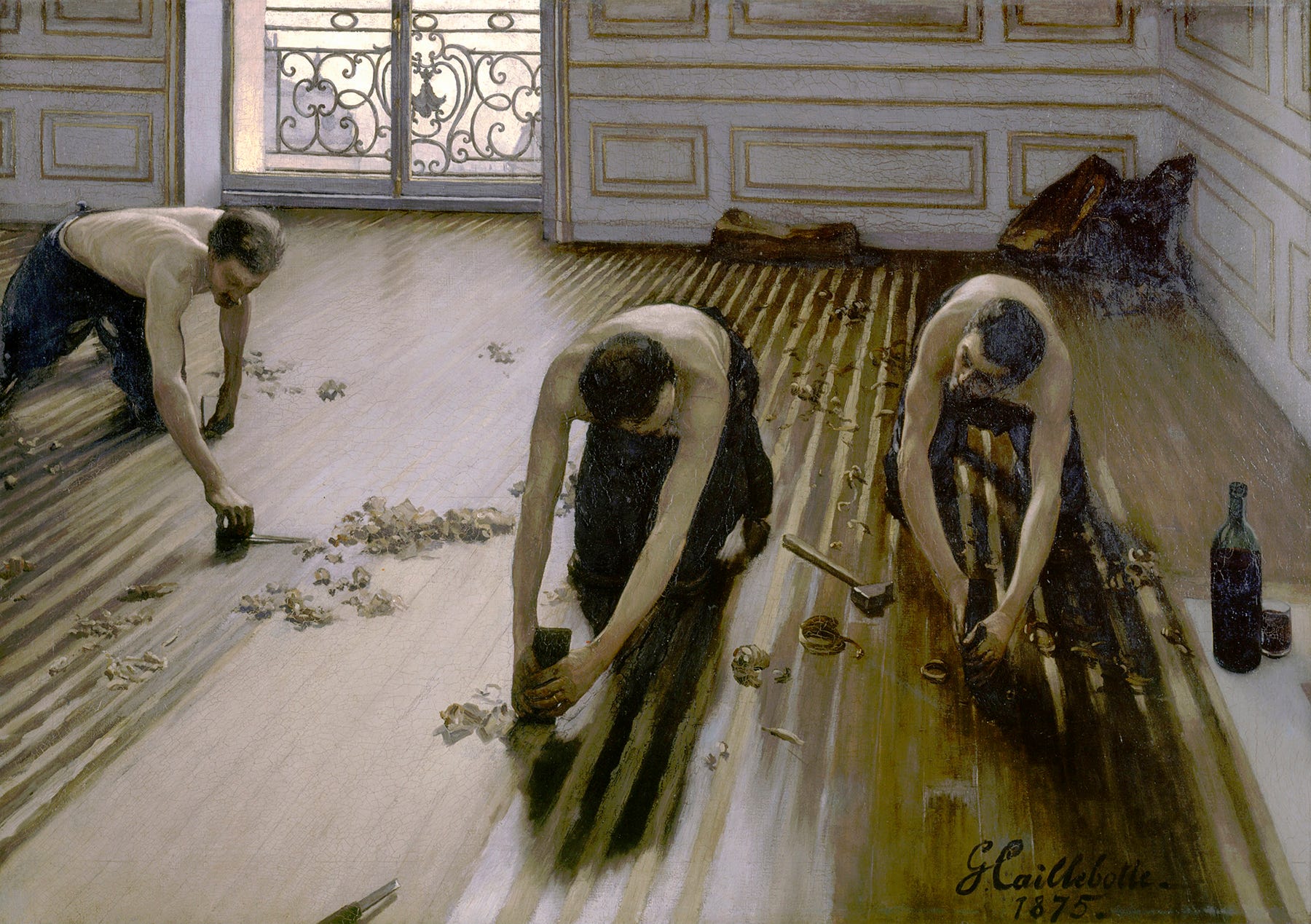
An artist’s living needn’t only be about finding a complimentary paying career path in the credentialed professional world. So many of the artists I’ve known, and some of them very well-known ones at that, have also been tradesmen and women. The trades only require an investment of practice and skill-building to give one a marketable tool for self-support. They don’t generally involve a costly education (or the resulting debt burden) nor a validating degree. And while one does have to navigate a variety of sometimes quite challenging clients, there are also few institutional gatekeepers or hierarchical bureaucracies barring the way to employment.
I started learning marketable trade skills in my early teens, variously as a carpenter’s, a graphic designer’s and a photographic printer’s assistant. I went on to alternately study and apprentice with masters in each of these fields throughout my early twenties and began practicing all three for hire in my late twenties and thirties. I can build a house or a dining table, do graphic, typographic and book design, and I regularly do high-end digital editions printing for older darkroom photographers who never learned those skills. In another traditionally fine arts-centered trade, I also worked for many years as a portrait painter for hire. I’ve become adept enough at all these things that after my late twenties I never had to go, hat in hand, to an employer in order to find work in any of them. I do them well and the people who need them done well tend to find me by word of mouth.
The trades have been looked down upon by the professional university-educated class for quite some time now, so much so that it seems not to occur to higher-educated people that they are a remotely worthy path for the serious or intelligent. In fact, they can be a perfect path for the artist, because so many of the skills required in a trade are so fundamentally creative and even artistic. They are also essentially entrepreneurial callings in precisely the way that an artist needs to be, in that you have to take that skill, go out on the streets, and drum up your own business.
One final advantage of the trades that shouldn’t be underestimated is that they put you in direct contact with a wider and deeper socio-economic spectrum of the populace — from the working class of your fellow tradespeople all the way up to the wealthy clients that hire us to do these sorts of refined work. It makes us more conscious of the experiences, knowledge and actual sensitivity of people to whom the educated classes too often dismiss or condescend, while also able to mix and converse comfortably with all the other tiers of caste, be they overtly acknowledged or more subtly concealed. I suspect that one of the reasons why my paintings have always made me a good bit of my living is that I have always made things that intelligent people from any class or background can understand and relate to. I am not sure I would have been able to do that if I hadn’t spent a lifetime rolling up my sleeves and working right alongside them.
Like Mr. Rook, I too have long felt that our art schools need to make their students aware of the importance of figuring these things out early. A comprehensive acquaintance with the trades would be a useful component of any such program.
No posts
Comments
Nothing yet. Say the first thing.
Sign in to join the conversation.