
This country is big and the rest of the world bigger still. Despite its outsized self-image, New York, and even all that New York influences, is and always has been comparatively small. Even in the heyday of the New York School of Abstract Expressionists (a group of painters, incidentally, whom I admire and like very much), there were differing and equally powerful and valid strains of painting popping up all across this country which were quite different from what those people were doing, yet no less contemporarily conscious, or mindful of the artistic experiences, ideas and explorations happening in other parts of the world.
Since I had made a deliberate decision not to climb aboard the gimmicky trends dominating the downtown galleries in Manhattan in my post-college years, I started to look more intently at the immediate predecessors to, as well as contemporary practitioners of a kind of picture-making that felt more compatible with my own sensibilities and aesthetics. There were many mature artists like that whose work was shown in galleries and museums in New York, and who were therefore incorporated into its world of art, even as the emerging Art World of younger, trendier celebrities and the critical and curatorial scene that supported them was beginning to look down its collective nose at all such things.
I have always had a “painterly” approach, meaning that my drawing with the material is evident through a relatively gestural sort of brushwork. There have been periods when I’ve been diverted into a more formally-rendered realism, but a clearly hand-painted surface is present in all that I do. Beginning in my mid-teens, I naturally gravitated to San Francisco Bay Area figurative painters like David Park and Richard Diebenkorn, who were quite modern but had also comfortably reclaimed representation in a period that was otherwise hostile to it. Some East Coast realists were also getting attention in my immediate post-college years, especially the portraitist Alice Neel, who was “discovered” by the Art World in the 1980s after living and painting in impoverished obscurity right there in New York through most of her long working life. A retrospective at the Whitney museum in 1984 for the New England figurative and landscape painter Fairfield Porter also felt encouraging. Like the work of the Bay Area Painters, both these artists made representational pictures that were couched in abstract gestures and sensibilities. I also liked Neil Welliver and Rackstraw Downes, two accomplished and quite modern landscape painters who were both at work in those years.
Looking further back, all the things I liked flowed directly out of a long line of quietly modern, yet also art-historically sophisticated British and European painting, including the work of Lucian Freud, Stanley Spencer, Balthus, André Derain, Giorgio Morandi and on back to Bonnard and Vuillard before the war. Another triumvirate, who particularly resonated with my own family history in the coastal northeast, were Rockwell Kent, George Bellows and Edward Hopper, all of them born in 1882 and all students together at the Chase School in New York in the early 1900s. Another who was especially influential in my Brooklyn years was Charles Burchfield whose retrospective of darkly comic midwestern Depression-era paintings was held at the Metropolitan museum, also in 1984. That work resonated very much with the already cartoonish cityscapes I was drawing and painting at the time.
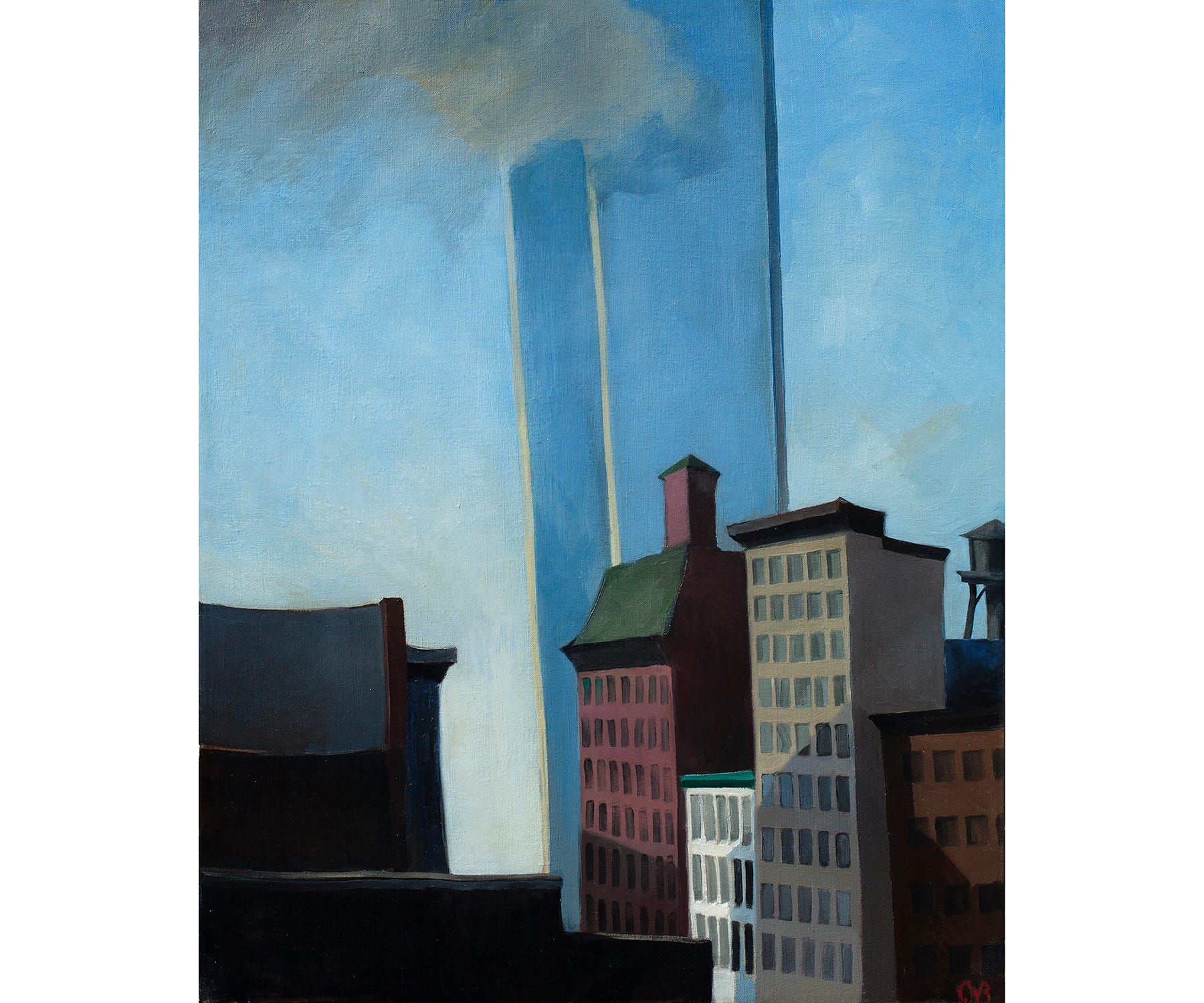
I tried throughout my twenties to find a gallery in New York that would show my pictures, dutifully shopping my sleeves of slides around the town, knocking on all the doors that felt as if they might open up to me, but I had no luck. I was always too much behind the zeitgeist of my own generation — there being no Eric Fischl-like suburban ennui or transgressive irony in my work, nor any of the raw, punky, expressionism then in vogue among painters like Susan Rothenberg, Jean-Michel Basquiat or Julian Schnabel, who were all hot stuff in the downtown galleries at the time. I also wasn’t yet polished enough to show alongside the elders whose work I had more in common with. Besides all that, I had no clearly marketable signature style because rather than engineer a market ready and brand-worthy “look”, I was still in search of a kind of mastery that much of that sort of work lacked (as did mine) but which I stubbornly persisted in believing was worthy of pursuit.
When I was living in Brooklyn after dropping out of art school, I paid the bills as an apprentice cabinetmaker and went on throughout that decade to make part of my living in the building and carpentry trades. But I also managed somehow to spend about a half of my time in the studio painting. Since the work wasn’t selling in galleries, and I wasn’t embarking on a salaried career as a teacher, I had to figure out how to make enough of my living from my art, outside the gallery system, to bankroll the time it took to make it. I got a little bit of financial help in those years from my grandmother and one of her sisters; enough at any rate to fund a month or two of studio time here and there. Family members and friends also frequently bought things from me. Early on, I also began to paint on commission. This could mean making a picture to order for whose production the client felt my style and abilities were fit, or else just finding someone willing to pay me to paint the sorts of pictures I was already predisposed to paint. Since there was no gallery brokering these projects, my initial sales depended on a kind of hustling outreach to create the interest and the relationships from which such transactions might grow. As often as not, I would find somebody who already liked the kinds of pictures I was making and simply propose making one specially for them. In this way, I found commissions for an assortment of coastal scenes, house portraits and one large and ambitious architectural landscape with figures in it for a house my architect studio-mate was designing for his parents in rural Pennsylvania. I also began in my late twenties and early thirties to paint portraits for hire, completing about forty of those across a ten-year span. These were mostly made for private clients, but later also for universities on both coasts, for whom I painted several official portraits of college Deans.
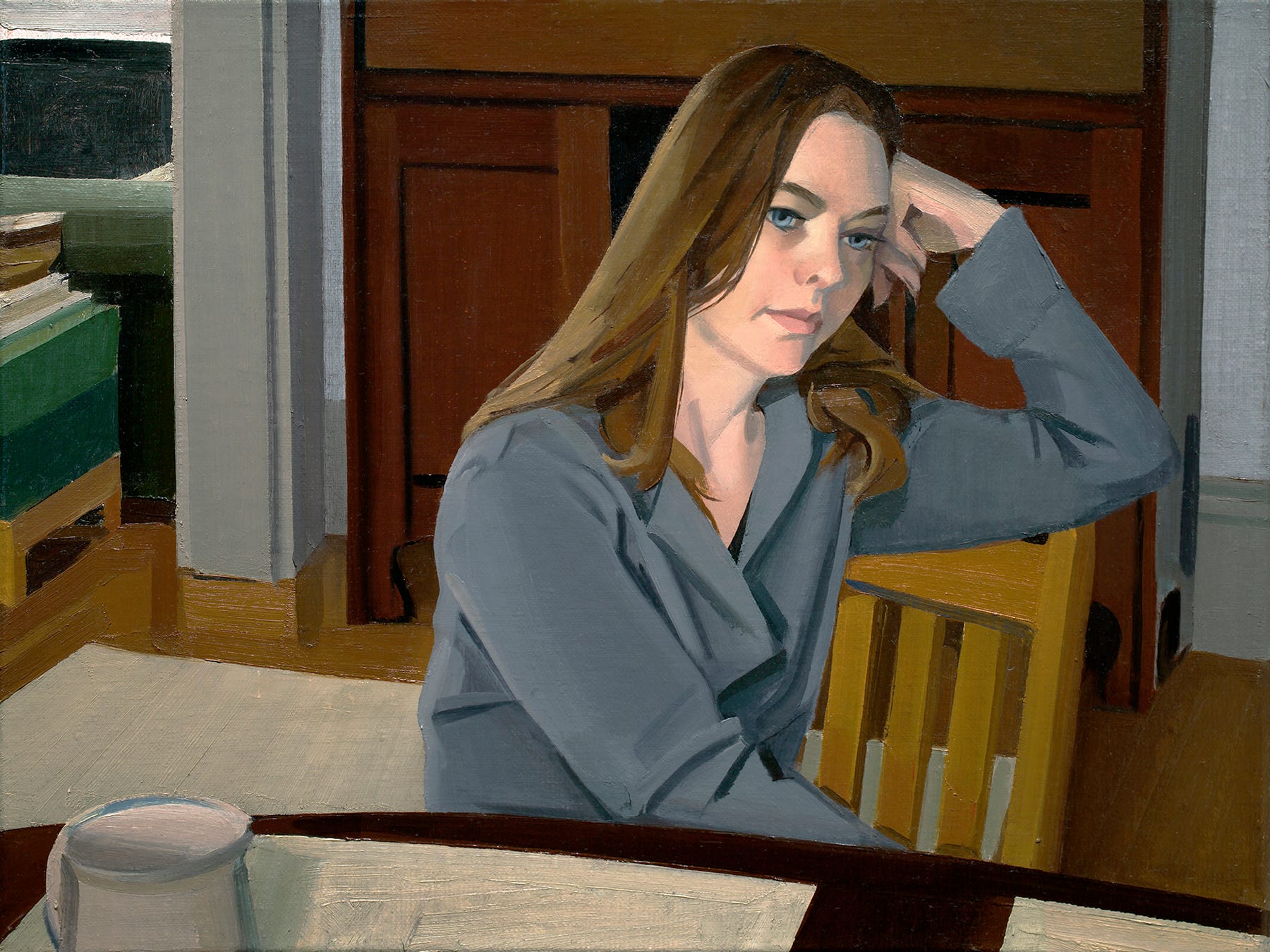
Very gradually, my skills improved and my prices correspondingly rose. I had my first solo gallery show at twenty-six in a beautiful, light-filled room over a frame shop in my hometown of Newport, Rhode Island. A handful of paintings and drawings were purchased there by family members, friends and former commission clients. But I also quickly saw — by the sorts of pictures that sold well, as opposed to those that didn’t — that the Northeast wasn’t going to be conducive to building a career that could support me financially while also allowing the mental space to make meaningful, and not merely decoratively appeasing (i.e. the boats and seagulls market) contemporary paintings. A year later, I filled a van with tools and paints and moved, sight-unseen, to the bustling art market city of Santa Fe, New Mexico.
Santa Fe was then, and still remains, a lively outpost of what I referred to earlier as the world of art. Its trade has long revolved around the exhibition and sale of Native and Hispanic arts, both historical and contemporary, and of the works of renowned Modernists like Georgia O’Keeffe and Agnes Martin. There were a handful of strong, mid-century Southwestern realists there too, like the married couple of Peter Hurd and Henriette Wyeth, who lived and worked in a rural area southeast of Roswell. There were also masterful early twentieth-century regionalists such as W. Herbert “Buck” Dunton, Victor Higgins and the printmaker Gustave Baumann. From that top end, the market spiraled down into a morass of rankly commercial tourist art (the cowboys and coyotes market) running the gamut from skillfully made things to outright ineptitude, but all of it decoratively derivative of the higher quality original forms noted above. When I arrived in 1988, Santa Fe also had a small but growing camp of contemporary galleries and exhibition spaces looking to inject some more urban, international and avant-garde blood into its regional scene.
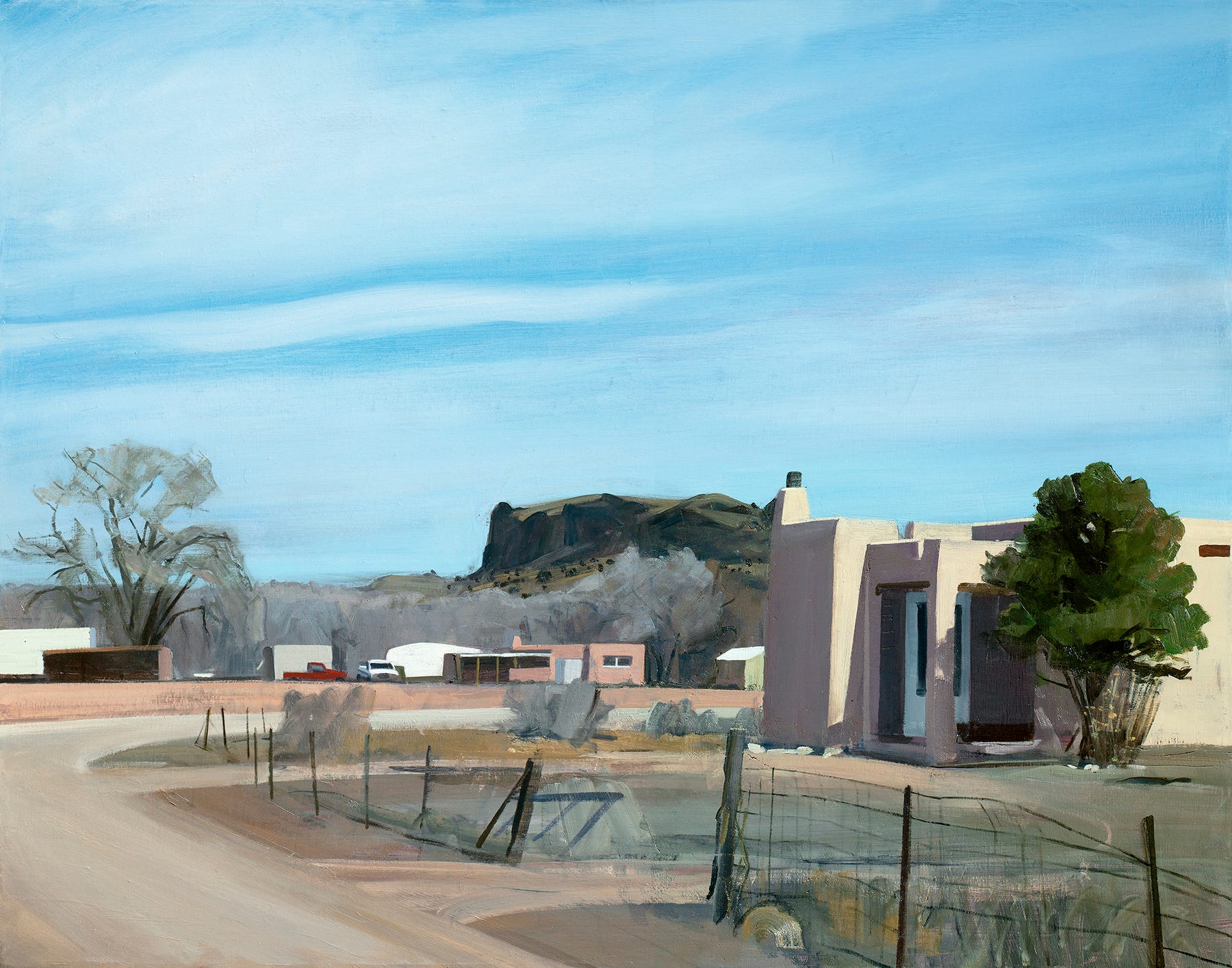
Scanning the whole complicated environment on my arrival, I staked out a place somewhere in the middle of everything by making paintings that looked superficially like traditional southwestern scenes but which, rather than mistily romanticizing the place, attempted to reflect the actual grittiness of the hardscrabble economy that proliferated just outside the carefully curated plazas of the tourist and interior decorator fantasy of the “Santa Fe Style”. In reality, New Mexico is a tough, edgy, impoverished and also whimsically irreverent place, with a sardonic native and working class insouciance that felt a lot like that of the industrial and fishing communities of coastal New England in which I had grown up and worked for years as a tradesman. It was therefore familiar and alien all at once and offered up both an interesting physical reality and a quirky cultural personality to try and capture.
Within a year of landing in Santa Fe, I began showing with one of its newer contemporary dealers. That started a trend which lasted off and on for the next thirty-five years, even as I drifted from one part of the country to another, spreading my work and imagery out into new and different markets and worlds on both coasts, as well as in a growing list of engagements in both urban and regional museums all over the US. Throughout that time I continued to make pictures that were relatively quiet and conventional, but in which I was always trying, in an anti-gratuitous way, to reflect some aspect of the modern realities I inhabited wherever I went. Because these pictures are relatable to most anyone who lives in the same I world do, they have tended to sell reasonably well, but even in those periods when we have done a brisk trade together, it has always been an uneasy alliance between myself and the galleries.
I’ve had a couple of dealers who became dear and longtime friends and collaborators, one in Rhode Island who I still work with, and another in San Francisco who died way too young about fourteen years ago. There have been others with whom I did well for a time, but later fell out of favor with for one reason or another. The main obstacles for me in this relationship have always been the twofold stumbling blocks of the entrepreneurial independence with which my career began (and which I have continued to insist on throughout) and also with my tendency to shift gears whenever a particular style or subject begins to feel too formulaic, or else when I feel that I have learned as much from it as I can. I have never yet become, nor do I expect to be an Art World artist, however much I’ve found welcome venues and collectors in places connected directly to it. My pictures will never appear in Art Forum nor will my persona be profiled in the pages of The New Yorker. I have no doubt that it must be satisfying to find that sort of acclaim, but there is also something about it that I can’t help suspecting might be challenging to live with. But that’s ok because despite having now stuck a wider arsenal of artisanal trades under my belt to help pay the mortgage and keep the lights on in the lean times, I have, since those first years on the Brooklyn waterfront, also made the majority, and sometimes even the whole of my living from selling my oil paintings.
As the mentor I quoted in an earlier essay once said, “I’m just a painter.” That to me is a pretty satisfying thing to be. And judging by the fact that I own very few of the many pictures I’ve made over the course of this journey, those things must also be satisfying enough to the people who bought them that they felt ready to live with them then and continue to do so today.
And how can you beat that?
No posts
Comments
Nothing yet. Say the first thing.
Sign in to join the conversation.