
A little over a year ago, I had the good fortune to meet Victor Perton, a “radical optimist.” He found me as I view myself, and hopefully others, as a “fearless optimist.” Over the course of a year or so, I learned about his worldview and the power of optimism, which led to an invitation to speak on wicked problems and catalytic communities at this year’s VicWater annual event.
Victor Perton’s work with The Centre for Optimism frames optimism not as blind cheerfulness but as a leadership habit that asks, “What makes you optimistic?” and then acts on the answers.
Victor Perton’s core argument is that optimism is not a “nice to have”. It is highly relevant for the work we do in sustainability and for me in water strategy, innovation, and investing. Victor makes the case that it is a practical leadership discipline that enables better decisions, bolder investments, and more resilient communities. “Optimism as rigorous realism, not denial.”
Victor stresses that optimism in water policy begins with seeing reality clearly—droughts, pollution, infrastructure gaps—while still believing that improvement is possible and taking action is worthwhile. He warns against the “fog of pessimism” that can paralyze institutions, arguing that leaders must instead ask, “What makes you optimistic?” to surface assets, ideas, and successes that can be scaled.
My work on who solves wicked problems and catalytic communities is an outcome of my “fearless optimism” and Victor’s “radical optimism.”
For years, corporate water discourse has been dominated by scarcity, risk, and fear—drying rivers, stranded assets, and reputational crises. Yet, as Victor emphasizes, sustained progress demands leaders who can “see reality clearly and remain constructively hopeful,” using optimism as a discipline rather than a mood. In water, this means acknowledging sobering basin risks while deliberately looking for technologies, partnerships, and governance models that turn constraints into catalysts for innovation and value creation.
As we close out 2025 and launch into 2026, I am doubling down on fearless optimism and leave you with a couple of quotes.
“I’m optimistic about the future. I’ve come to the conclusion that hope has to be a strategy.”
“You have to use hope as a motivator to keep going, because if you give up, if I give up, if all of the other scientists give up, if all of the other advocates and people that care give up, then we are lost. We can’t afford to give up. Therefore, we have to keep hopeful.”
“Optimism equals hope plus realism. Strategy equals intent plus optimism.”
And I will close with a photo of Jane Goodall. She believed in hope, and her impact was immeasurable.
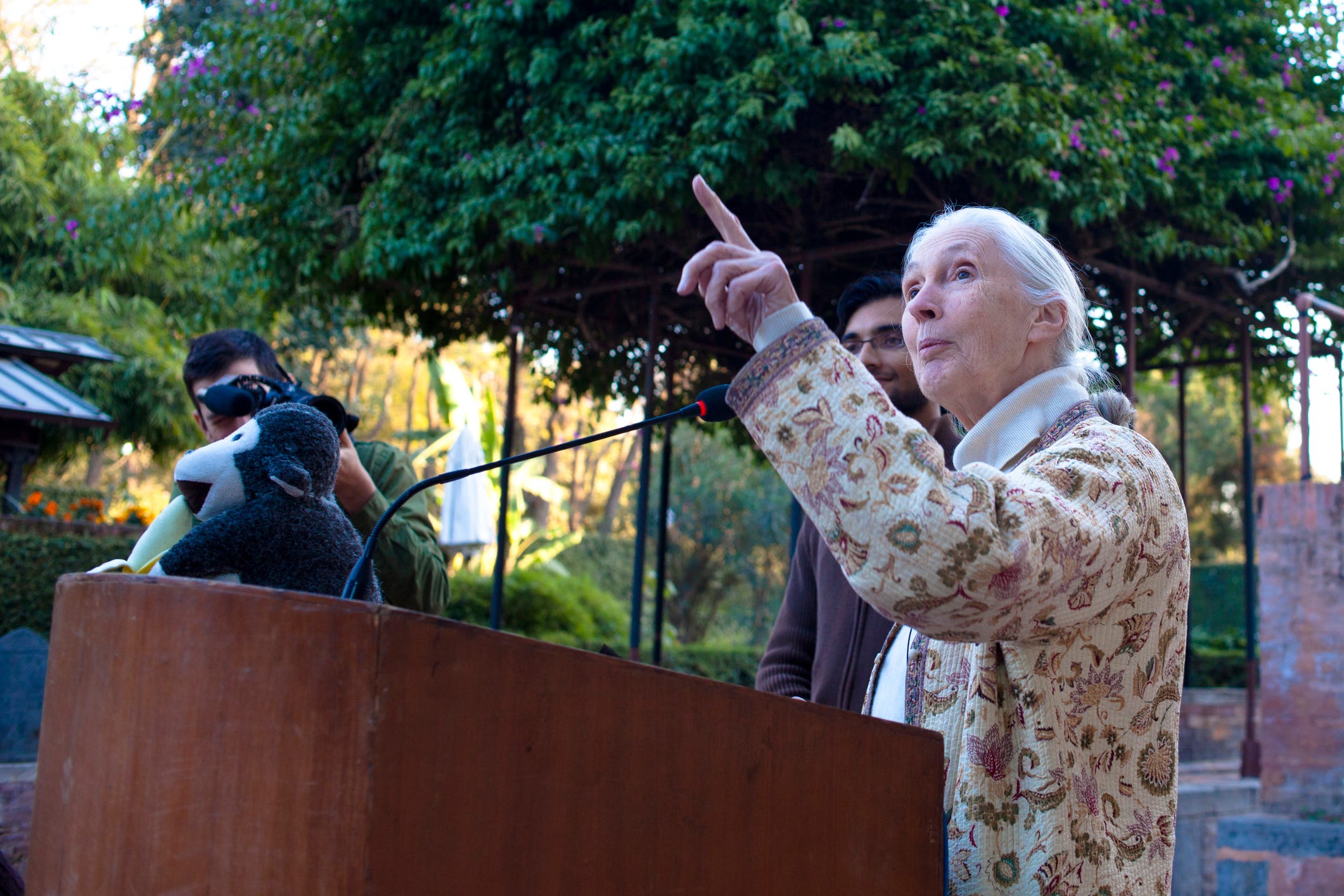
Best wishes for a peaceful holiday season and an optimistic New Year.
Onward!
Comments
Nothing yet. Say the first thing.
Sign in to join the conversation.