
Behind the Brand is written by the team over at Defiant. We bring together big agency brains with Effie winning writers, comedians & creators with millions of followers. We help brands define razor-sharp strategy & develop creative ideas that win the war on attention.
You can spend a career building a brand and never once control the thing people actually came for.
That’s the sentence that stuck with me after an hour talking to Charlotte Ullathorne, Head of Marketing at ODEON. Not the stat about UK cinema admissions clawing back to pre-pandemic levels. Not the bit about £5 tickets on a Monday. This one. Because most of us in this industry operate under a quiet assumption: if the product’s bad, that’s not our problem, that’s Product’s problem. ODEON doesn’t get that luxury. The thing people are actually there for, the film, is made by someone else, marketed by someone else first, and can bomb on opening night no matter how good the popcorn is.
I’ve spent twenty years doing brand strategy and I couldn’t think of many parallels. A shopping centre gets closest, except even a shopping centre controls its signage and its shop mix. ODEON doesn’t get to choose whether Tuesday’s release is any good. It just has to sell you a seat for it anyway.
That’s a strange job. And talking to Charlotte, three things came out of it that really stuck with me.
Every previous marketing role Charlotte has had at the like of Powerleague &, Center Parcs, retail she had influence over the product. ODEON is the first time she hasn’t.
“In every single previous marketing role I’ve had, we controlled the product. Whereas film, you could do the best marketing campaign in the world and target everyone with a great product, but if the film gets bad reviews… it’s not actually our product.” Charlotte Ullathorne, Head of Marketing, ODEON Cinemas.
Sit with that for a second. You can nail the creative, buy the right media, get the timing perfect, and the outcome is still, in large part, out of your hands. Most brand strategy assumes you’re the one steering the ship. ODEON’s job is closer to being an extremely good captain of a ferry, you don’t choose the passengers, you don’t choose the weather, but you’d better get everyone across in one piece.
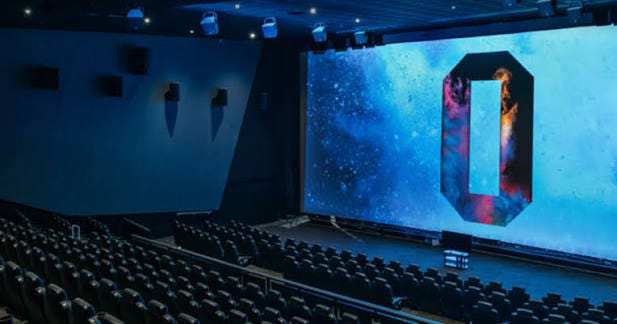
What that means in practice is that ODEON’s actual product, the thing it can control, isn’t the film at all. It’s the seat, the screen, the sound, the thirty seconds before the trailers when your phone’s still in your pocket. Which is probably why the brand line that’s outlasted every campaign in Charlotte’s time there is deliberately not about the films:
“The one that’s consistent and has always been consistent is ‘we make movies better.’ That’s been our longstanding strap line… that’s the one I think it sticks with us and will be with us.” Charlotte Ullathorne, Head of Marketing, ODEON Cinemas.
Of course, they do talk about making films great, and they do a fantastic job of building excitement around them. But ultimately, how well a film is reviewed or received is outside their control. That’s why “We Make Movies Better” is so important as a strapline. It sits above the success or failure of any individual film and focuses on something ODEON can always control: making the experience of watching a movie better.
Not “watch great films.” We make movies better. It’s a brand built to sit underneath whatever the studios throw at it, good or bad, and still mean something on its own.
I asked Charlotte, fairly directly, whether ODEON thinks of itself as the antidote to scrolling, to Netflix, to being permanently switched on. What I got instead was a brand that’s clearly thought hard about this and has decided not to say any of it out loud.
“We don’t really do the whole Netflix versus cinema, because you could argue there’s a place for both. It’s not really our strategy... we’re don’t need to put other brands down, to make us look good” Charlotte Ullathorne, Head of Marketing, ODEON Cinemas.
No comparison ads. No “remember what you’re missing.” Instead, a campaign built entirely around loneliness at Christmas, the idea that going to the cinema alone still isn’t going alone, because you’re in a room full of people having the same experience as you.
“We did a big campaign at Christmas around loneliness, reminding people that one of the amazing things about the cinema is you’re never alone. Even if you go alone, you are not alone, because you’re in a shared experience.” Charlotte Ullathorne, Head of Marketing, ODEON Cinemas.
That’s the whole positioning, and it never mentions a phone, an app, or a rival once. It just makes the case for the room you’re already in. I think there’s something in that for anyone building a brand against a cultural villain, the temptation is always to name it, and the more disciplined move is usually to just be the better thing and let people draw the line themselves.
It also explains something that surprised me: Gen Z, a generation that grew up with everything on demand in their pocket, is one of the strongest audiences coming back through ODEON’s doors right now. Not despite the phones. Alongside them.
“That generation are very mindful of health and well-being, more so than we were. Going to the cinema, looking after yourself, that’s solo dating and they’re filming their experience, aren’t they, so it’s that social media movement that’s shifted it.” Charlotte Ullathorne, Head of Marketing, ODEON Cinemas.
Which is a strange loop when you think about it. The same platform that trained a generation to want everything instantly is also the platform now selling them on going somewhere slow, dark, and phone-free, because it’s content. Cinema didn’t fight the scroll. It became something worth scrolling about.
The bit that surprised me most, because I hadn’t thought about it before this conversation, is that ODEON can’t always run one national message. Not because of budget or bureaucracy. Because the estate itself isn’t one thing.
“...not one size fits all, because our cinemas are so different. We have brand new ODEON Luxes that are gorgeous and can compete with the most luxurious cinemas in the market. Then we have equally brilliant ones that have been there eighty-plus years, in the hearts of communities...”Charlotte Ullathorne, Head of Marketing, ODEON Cinemas
So the brand splits itself by site, on purpose. Recliner seats in one postcode, free parking as the entire pitch in another.
“It might be that our cinema in a certain area has the best recliner seats, so we’ll lean into that. It might be in other areas where we’ve got free parking, and it could be something as simple and functional as that. If it’s raining, you can park right outside and run in.” Charlotte Ullathorne, Head of Marketing, ODEON Cinemas
That local layer sits underneath a national one, not instead of it. The big, film-led brand campaigns do the awareness work; the recliners-here, parking-there messaging is where the actual conversion happens, town by town.
“We still have to combine our marketing with tactical campaigns, those conversion campaigns I’ve just spoken about, but also reinforcing the brand. It’s always going to be surrounded in the traditional ODEON brand that is really recognisable.” Charlotte Ullathorne, Head of Marketing, ODEON Cinemas
So it’s not really inconsistency, it’s a brand running two jobs at once: a single recognisable identity at the top, and a hundred slightly different local arguments underneath it. What holds the whole thing together isn’t the messaging, though. It’s something you can’t manufacture with a campaign at all:
“I think it’s driven a lot by heritage and legacy. Everybody knows ODEON. If you think about the last hundred years, everyone will have been to an ODEON at some point in their life.” Charlotte Ullathorne, Head of Marketing, ODEON Cinemas
Nearly a hundred years of being the place someone had their first date, or took their kids, or hid from the heat, does something a strapline can’t. You can’t put that in a campaign brief. It’s just true, repeated enough times across enough lives that the brand doesn’t need to argue for itself anymore.
ODEON’s story proves brand strength and product control aren’t the same thing. Charlotte Ullathorne doesn’t own the film customers walk in for, so she built the brand around what she does own: the seat, the room, the shared dark. “We make movies better” survives every flop because it was never a bet on the films.
That same discipline shows in how ODEON handles Netflix, never named, never compared against. Instead, a campaign about loneliness makes the case for the room itself and lets the contrast draw itself. It’s why a generation raised on-demand now chooses to sit still, phones away, and films it for the story after.
And underneath the national brand sit a hundred local arguments, recliners here, parking there, held together not by a tagline but by a century of first dates and rainy Tuesdays.
Comments
Nothing yet. Say the first thing.
Sign in to join the conversation.