
I went to see Christopher Nolan’s Odyssey this weekend. Beyond the visual delights, and the IMAX spectacle, i couldn’t but help think of the themes Nolan is trying to land.
I ended up reading a genuinely sharp essay on the film this week, and the detail that stuck with me was the theme of the trickster. In the film Odysseus is played by Matt Damon. A man who by all accounts wakes early and rarely finishes a second glass of wine, is no “man of many wiles.” He’s not a trickster. And that, the essay argues, was Nolan’s first trick: he didn’t cast Odysseus as a trickster at all. He cast him as a man surveying the wreckage tricksters leave behind.
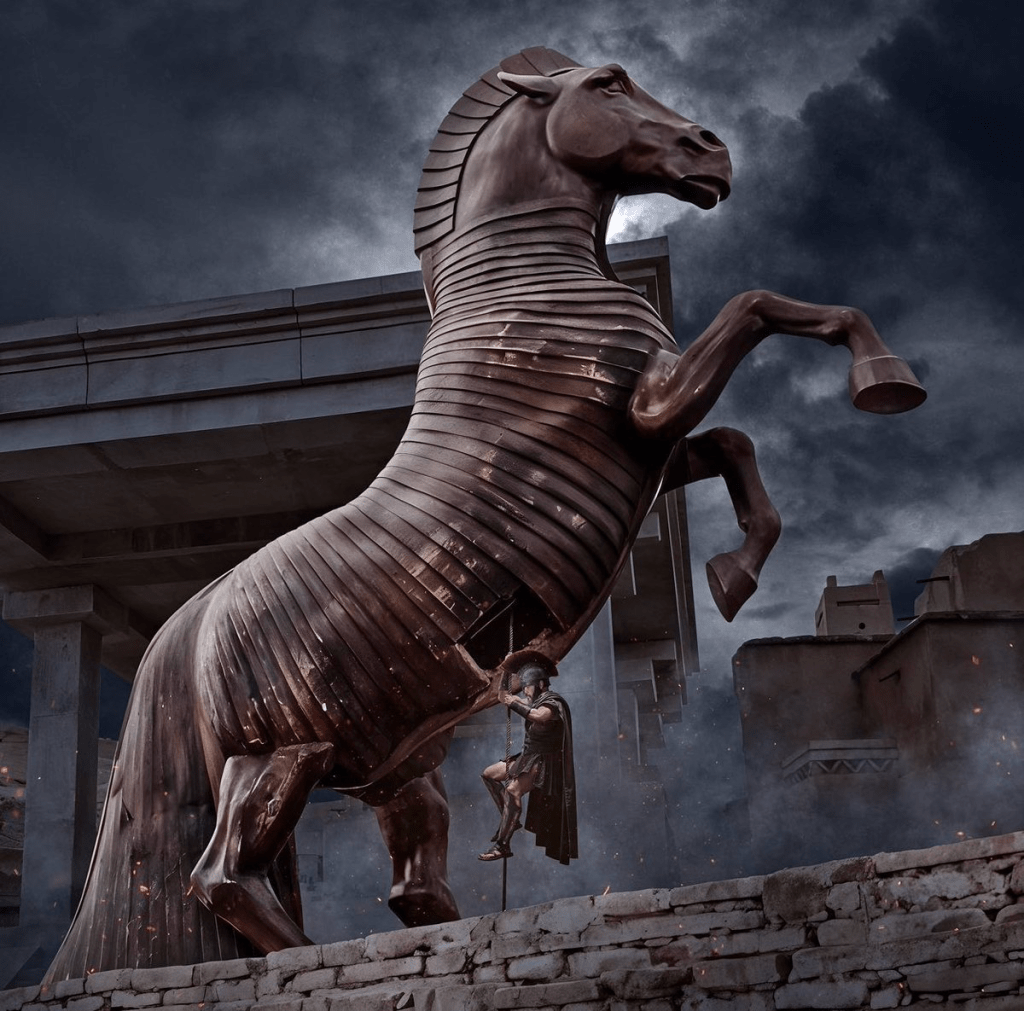
I then went onto read Lewis Hyde’s Trickster Makes This World. Hyde’s trickster (Loki, Coyote, Raven, Hermes, Eshu) exists to disrupt the things a culture depends on: he “dances across customs and taboos, says what cannot be said, does what should not have been done.” This is necessary, because a culture that can’t meet disruption with creativity doesn’t survive change. It is also dangerous, because a culture that can’t protect its core values gets eaten by a trickster’s corruption instead. In Native American traditions, Coyote is a vital trickster figure who steals fire from greedy beings or spirits to save freezing human. In Norse mythology Loki does not bring Armageddon (or Ragnarok) by himself, but he plays a major part in starting it. Same archetype, opposite ending, depending on which way it tips.
Now let’s look to modern day tricksters likeTrump, Musk, Tucker Carlson, Andrew Tate. What do they do? And what do really care about? Well none of them are really interested in solving a crisis. All of there real interest lies in perpetuating chaotic conditions of confusion & profiting from it .Whether in terms of monetarily or attention or both.
And whats most interesting is i really don’t think this is a political moment. I think we’re in a mythological one, and i believe its now coming for brands.
Tricksters only show up once the conditions already exist and right now the conditions are almost perfect.
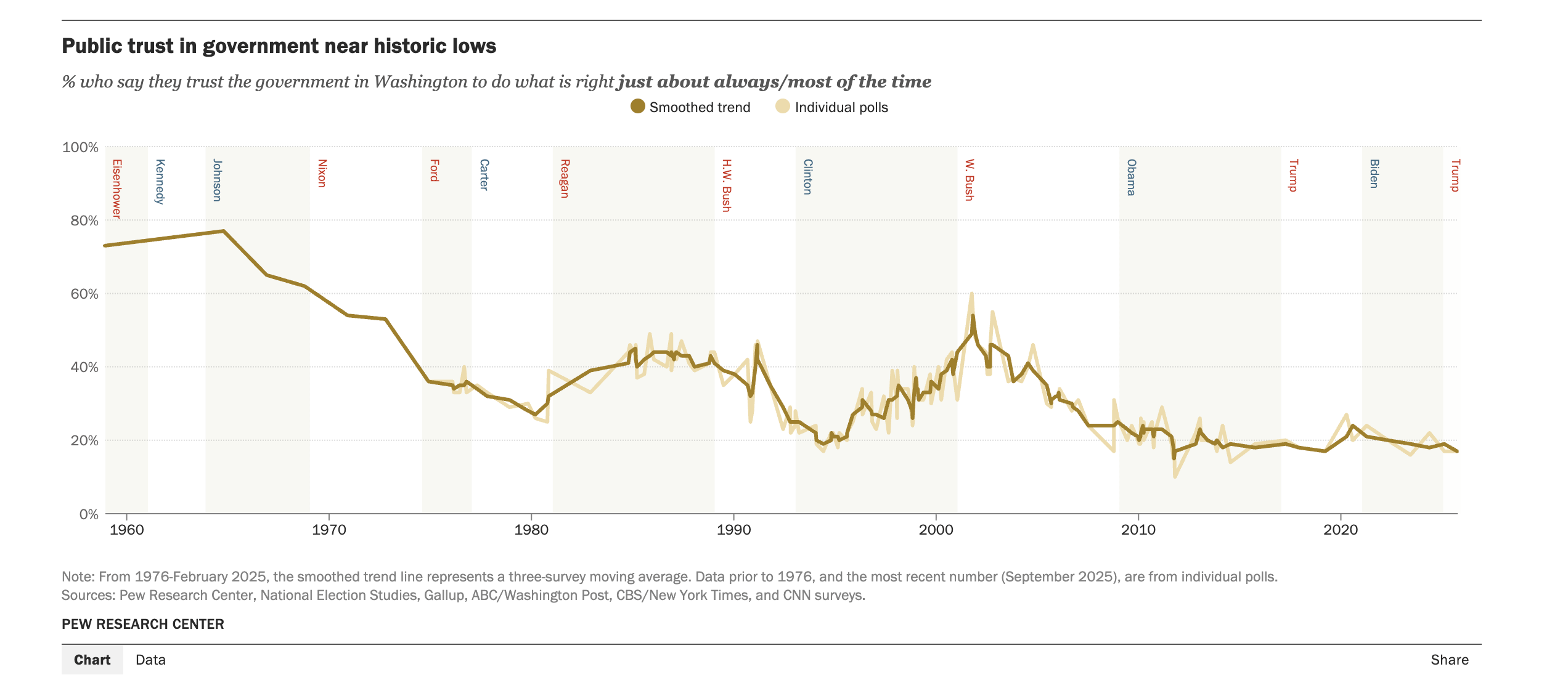
Trust in institutions is somewhere near rock bottom. Pew has US trust in federal government sitting around 17%, one of the lowest readings in seven decades, and The Guardian has spent years describing British politics as simply broken. Add a financial crisis nobody quite recovered from, a decade of stagnant wages and a pandemic that exposed how fragile the whole arrangement was, and you get an audience that’s stopped expecting competence and started rewarding confidence instead.
That’s the opening a trickster needs.
Layer the attention economy on top and it gets even worse. Platforms reward reaction and outrage. Infact MIT found that false political stories travel six times faster on Twitter than true ones, mostly because real people share them, not bots. And tricksters love these conditions, because they don’t need to win the argument. They just need to be the loudest thing in the feed before the fact-check loads.
Put those two things together, broken trust, an algorithm that rewards noise, and you’ve built the perfect stage for Tricksters.
Alastair Campbell put it better than I can: we’re not just in a post-truth world, he said, but a post-shame world, where broken promises no longer carry a cost. That’s the real shift. It’s not that the tricksters lie more than politicians always have. It’s that getting caught stopped mattering.
So what are the implications of all this for brands, let’s dive in…
Not all tricksters look alike, but they’re running the same play.
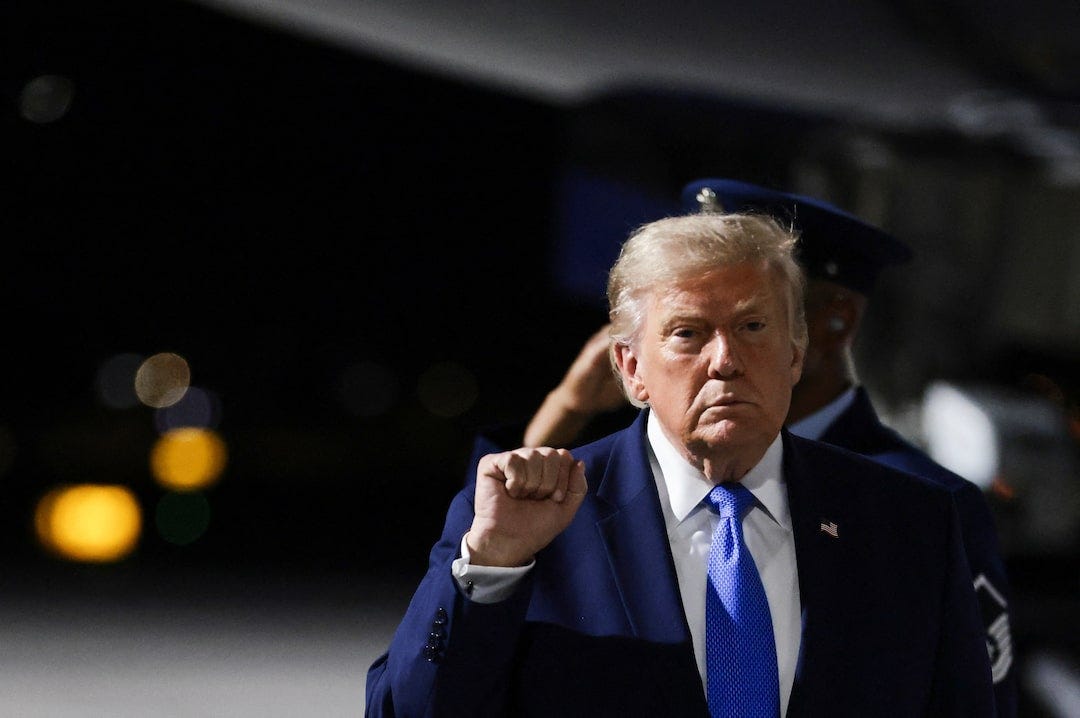
Tricksters win with clarity, not depth. Trump’s language analysis reads almost childlike: short words, constant repetition, “I” and his own name doing most of the heavy lifting. Farage’s rallies aren’t policy briefings, they’re call and response. Underneath it is basic psychology, not laziness. Repeated claims start to feel true whether or not they are, the illusory truth effect, and a message that’s easy to process beats one that’s merely accurate, especially in a feed nobody’s reading closely.
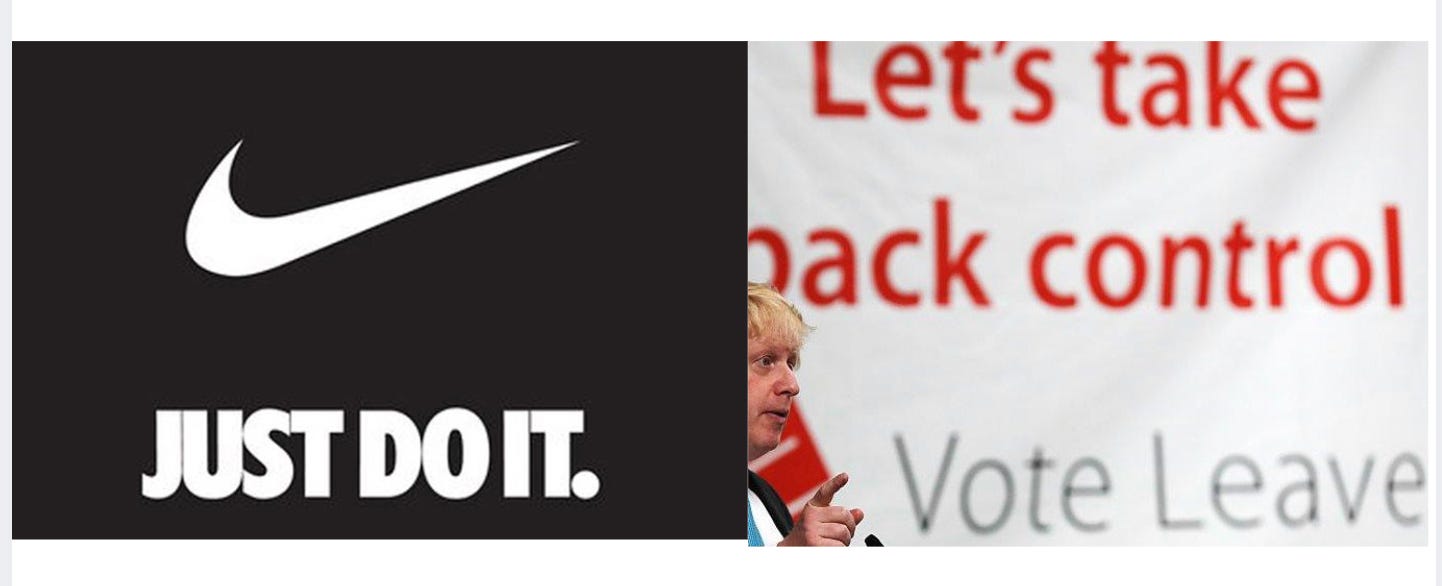
Byron Sharp would recognise the mechanism even if he’d hate the application. Distinctive, repeated, simple cues are exactly how brands build mental availability. Whether you like it or not “Just Do It” and “Take Back Control” are closer cousins than anyone would like to admit, in terms of how they operate.
Comments
Nothing yet. Say the first thing.
Sign in to join the conversation.