
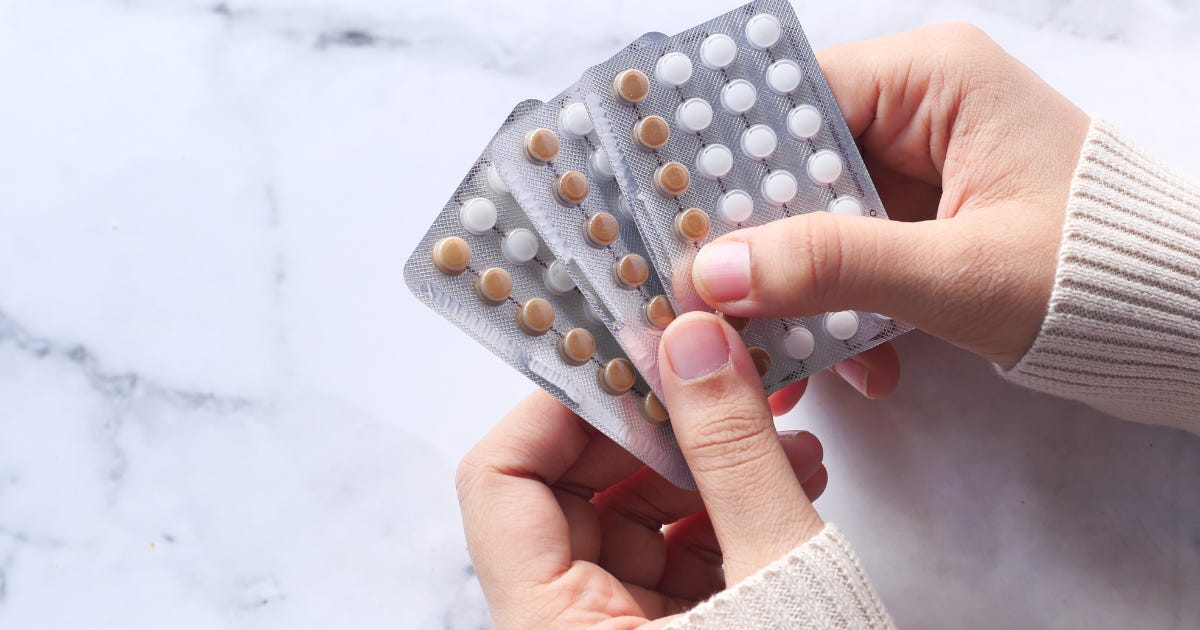
Before we get started with today’s essay, a continuation from an essay earlier this month about why hormonal birth control shouldn’t be the first response to cycle problems, I want to remind everyone about why most of the information I share below, and the linked studies in the footnotes, are not conclusive and established fact:
“Women’s health research is newer and more sparse than it should be. For a long time, the female body was treated as too complicated to study, partly because our hormones are cyclical.
We move through menstruation, the follicular phase, ovulation, the luteal phase, pregnancy, postpartum, perimenopause, menopause, and, for many women, years spent on hormonal contraception.
That means two women may respond differently to the same stressor, medication, supplement, food, workout, sleepless night, or life event depending on where they are in their cycle, or whether they are cycling at all.”
So please take what I’ve written below into consideration. Start asking questions, and paying attention to how you feel if you’re using hormonal birth control, but don’t take these as absolute, established scientific fact. More research needs to be done into the effects of hormonal contraceptives on women’s health and body systems.
Some shorthand vocabulary for you for the research quoted below:
OC = Oral Contraceptive
COC = Combined Oral Contraceptive
HC = Hormonal Contraceptive
CHC = Combined Hormonal Contraceptive
IUD = Intrauterine Device (for the purposes of this essay, these will be hormonal IUDs not copper.

This is one of the main areas with mixed evidence in the research.
With our natural cycles, women respond differently to different hormone fluctuations. Some of us feel weepy, others irritated (or downright murderous), and others completely hopeless and depressed or anxious, all depending on the time of the month. This isn’t something we can consciously control. It is driven by the hormonal changes we go through each and every cycle.
When women are on the pill or using other forms of hormonal birth control, they also have individual responses, leading to mixed results in studies. As one review states it:
“A variety of factors may increase the likelihood of negative psychiatric side effects, including younger age, previous experience of side effects from OCs, and preexisting psychiatric disorders. Progestin-only pills may confer a higher psychiatric risk than combination pills.”1 (emphasis mine)
Different formulations and dosages of hormonal contraceptives affect women differently as well.
For example, an IUD that uses levonorgestral increases the risk of depression in women by 40% but in young women ages 15 - 19, it increases the risk of depression by 220%. An ethinyl estradiol pill with 30-40mg dose Norgestimate, has a 0% increased risk for women, but 80% increased risk for young women, ages 15-19.2
We discussed the stress response, cortisol regulation and the effects of the HPA axis at length in recent articles here, here, and here. Being on hormonal contraceptives has an effect on stress response as well. Our sympathetic nervous system still responds to stress, making us feel stressed out, but researchers have found that women on the pill have blunted cortisol responses, or even no cortisol response.
Women using hormonal birth control seem to lack an HPA-axis response to stress. Researchers have also found that they tend to have a different daily cortisol rhythm, with less morning cortisol and a flattened cortisol daily curve.
This is not to say that women on hormonal birth control are less stressed out. In fact, the research seems to point more towards the HPA axis being overloaded and shutting itself down, much like someone experiencing serious chronic stress3.
The conclusion of a study in 2025 puts it very succinctly:
“IUD and OC use distinctly affect stress response, possibly because of their diverging metabolic pathways and hormone levels. IUD users showed higher emotional reactivity to stress in both lab and daily life, while OCs influenced physiological correlates. These findings highlight that exogenous hormone administration, previously thought to have limited systemic effects, affects women’s psychological well-being, underscoring the need for further research into stress-related disorders among women using hormonal contraceptives.”4
Some research suggests that combined hormonal contraception can shift inflammatory and metabolic markers. This does not automatically mean chronic disease, but it does remind us that reproductive hormones are also immune, metabolic, and vascular messengers. It also highlights the effects of chronic stress: downstream from the chronically activated HPA axis, is chronic inflammation.
“Women using HCs exhibit numerous signs of chronic inflammation, including elevated C-reactive protein levels and greater risk of developing mood and autoimmune disorders.”5
An interesting 2025 study6 found that physical activity and a low-inflammatory diet lowered C-reactive protein among naturally cycling women but did not lower it among oral contraceptive taking women. Again, this is emerging research and is worth considering, but not drawing absolute conclusions from.
One of the side effects of any long-term medication is its effect on your gut microbiome, and the birth control pill is no exception. Research has shown that the pill can inflame the digestive tract and potentially cause enough immune dysregulation that it increases the risk for autoimmune disease of the gut.7
And since everything is interconnected in the body, new research is also pointing towards this impacting rates of depression and anxiety in pill-taking women:
“In conclusion, the introduction of the exogenous sex hormones contained in COCs into the body may have the potential to contribute to the disruption of an individual’s normal endogenous environment and, in turn, the normal bacterial composition within the gut. Alterations to the makeup of the gut microbiome can lead to various health issues, including the development of mood disorders and anxiety.”8
Bone health is one area where both the age of the woman and method of birth control used each make a big difference. We’re accustomed to thinking of bone density loss as something that affects women around menopause age. However when it comes to combined hormonal contraceptives and Depo-provera, there is clear evidence of bone mineral density effects, especially in adolescents.
“Current evidence indicates that the use of CHCs in postmenarchal adolescent girls reduces bone accrual compared with non-users. The negative impact on bone accrual is likely related to the estrogen dose in the CHC preparation, the regimen used, and the duration of use.”9
“While there is a clear association between bone mineral density loss and depot medroxyprogesterone acetate injectable use, treatment during contraceptive use and bone health restoration following discontinuation are not adequately researched.”10
Libido is not frivolous. It is part of health, attachment, embodiment, and quality of life. The research does not show one universal effect, but it does support what many women have said for years: some women notice changes in desire, arousal, lubrication, or sexual comfort on hormonal contraception.
As Dr Sarah Hill puts it in her book This is Your Brain on Birth Control:
“I want to remind you that the birth control pill is made of artificial sex hormones and that sex hormones flip billions of switches on and off in cells throughout your body, influencing the version of yourself that you are. This means that —of course—the pill will mess with all our love and sex related brain circuitry. It would be impossible for it not to.”
But this kind of research — in spite of the lived experience of many, many women — is still in its infancy and most studies done on libido, desire, and attraction are inconclusive.
In a 2024 study coauthored by Sarah E. Hill, women who had recently stopped hormonal contraception reported, on average, increases in sexual desire and partner attraction over the following three months. This does not mean every woman loses libido on birth control, but it does suggest that sexual desire and attraction may change for some women when hormonal contraception is started or stopped.11

Every woman’s cycle needs to be understood, respected, and supported.
The menstrual cycle is not merely a monthly inconvenience. It is a window into endocrine, metabolic, nervous system, inflammatory, and reproductive health. Hormonal birth control may be the right choice for some women. It may bring relief, prevent pregnancy, and make life manageable. My intention is not to belittle that.
However, this doesn’t meant there aren’t real costs to routinely suppressing the cycle without asking why there are problems. Not only physical costs, but also the cost of disconnection, the cost of teaching girls and women that their cycle is simply a nuisance, and the cost of giving them a prescription when what they first needed was curiosity, testing, explanation, and care.
We need to take women seriously, ask better questions before offering simple answers, and make sure that when a woman chooses hormonal birth control, she is choosing it with knowledge and understanding, not simply being dismissed.
Our cycle is not an enemy to conquer, it is a rhythm to understand and support.
Comments
Nothing yet. Say the first thing.
Sign in to join the conversation.