
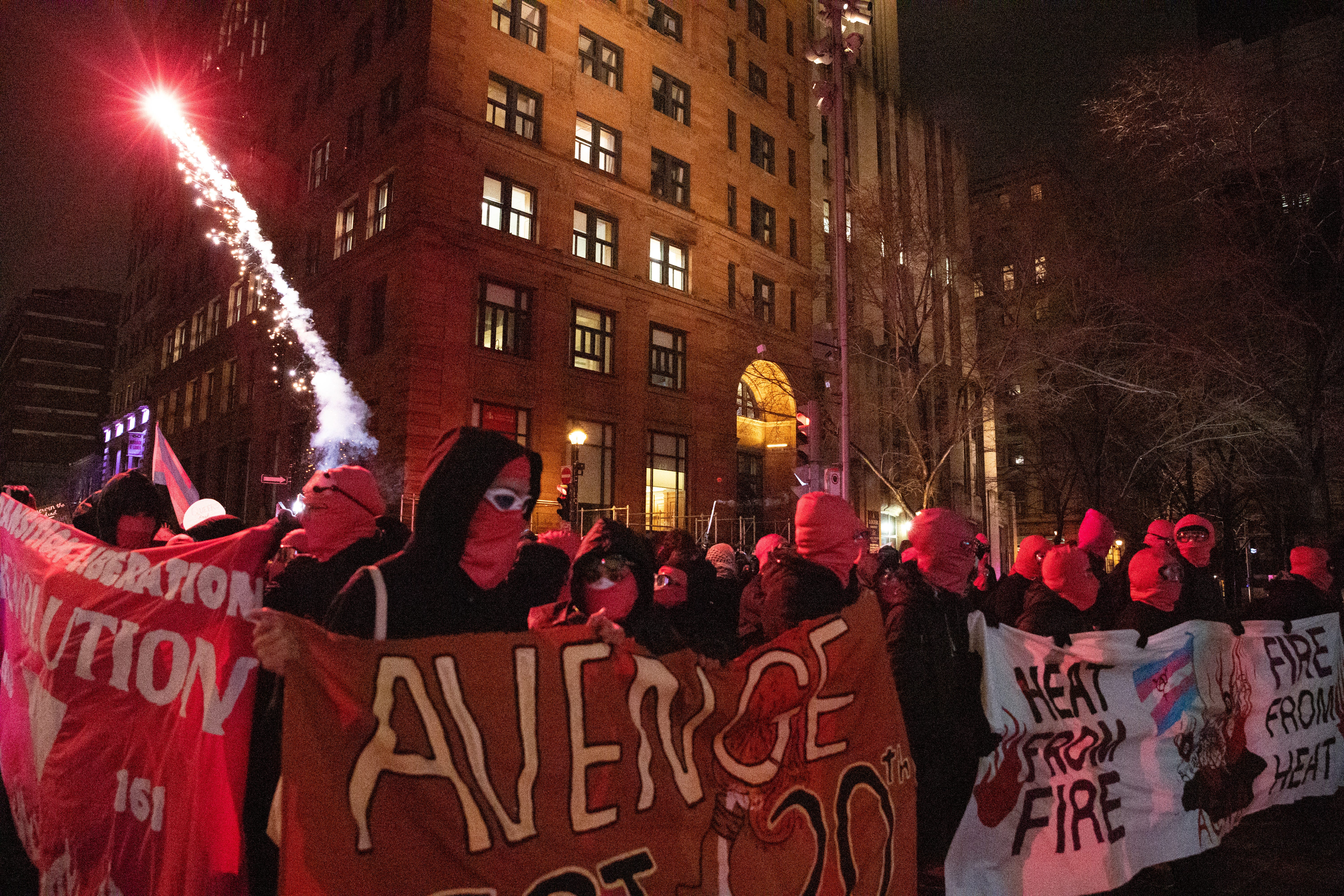
The explosions of the fireworks rock my nerves.
Red streaks of light rise from the tight formation of masked demonstrators into the cold night sky before detonating in a booming climax, echoing between the stone structures of Montreal’s Old Port. The SPVM riot police, flanking either side of the large demonstration, shine flashlights into the crowd in a flaccid attempt to locate the pyrotechnical culprit.
The tension is overwhelming. Everyone knows a brawl between riot police and activists marching in the Trans Day of Vengeance is imminent and inevitable—the only question is who will set it off.
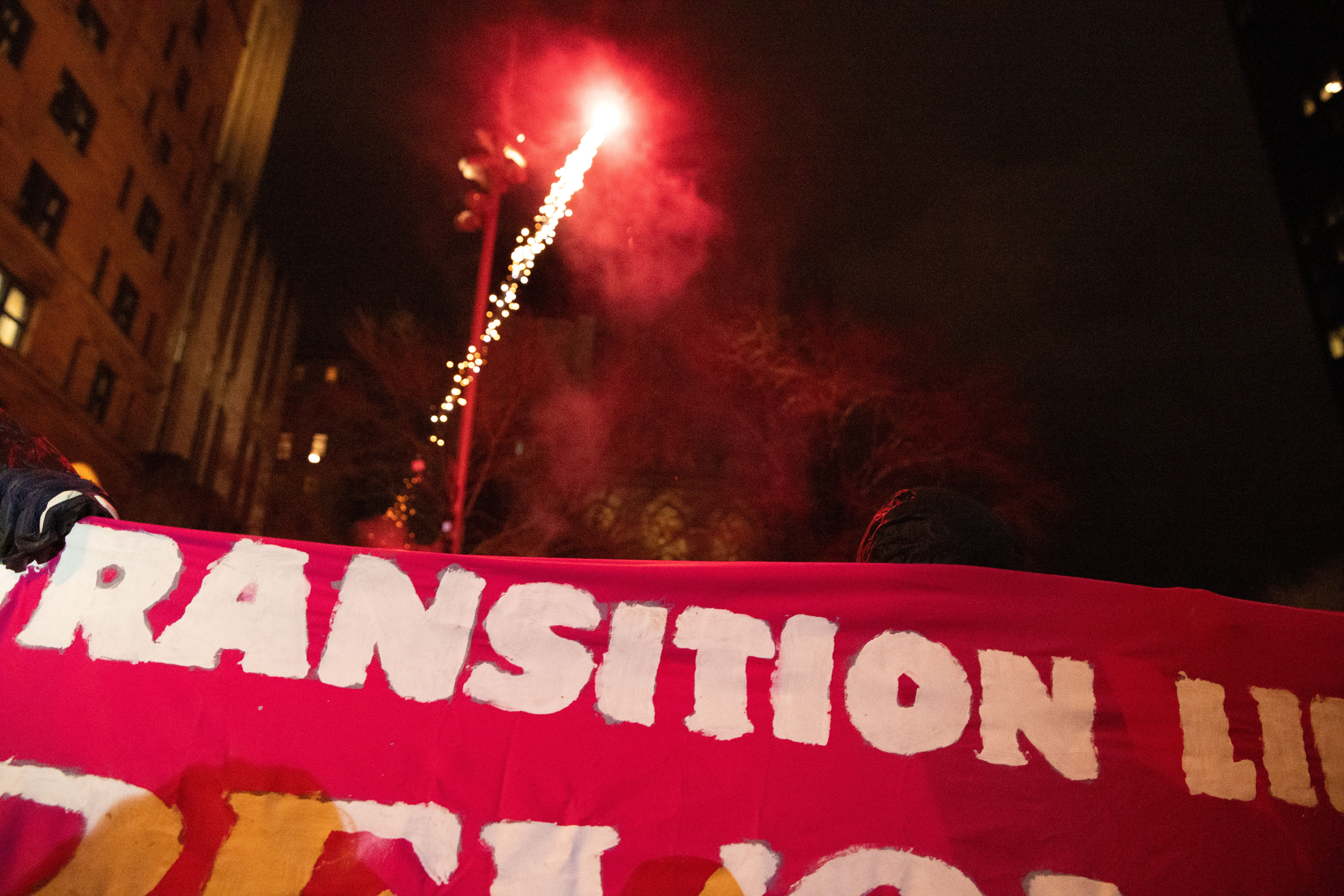
The SPVM enthusiastically assume the part.
Riot police are ordered to draw closer to the protest’s flanks, against the body of the demonstration. Immediately, they begin tussling with those holding side banners.
One officer extends a small GoPro camera on a stick above the crowd, lens pointed at the throng of anonymous demonstrators.
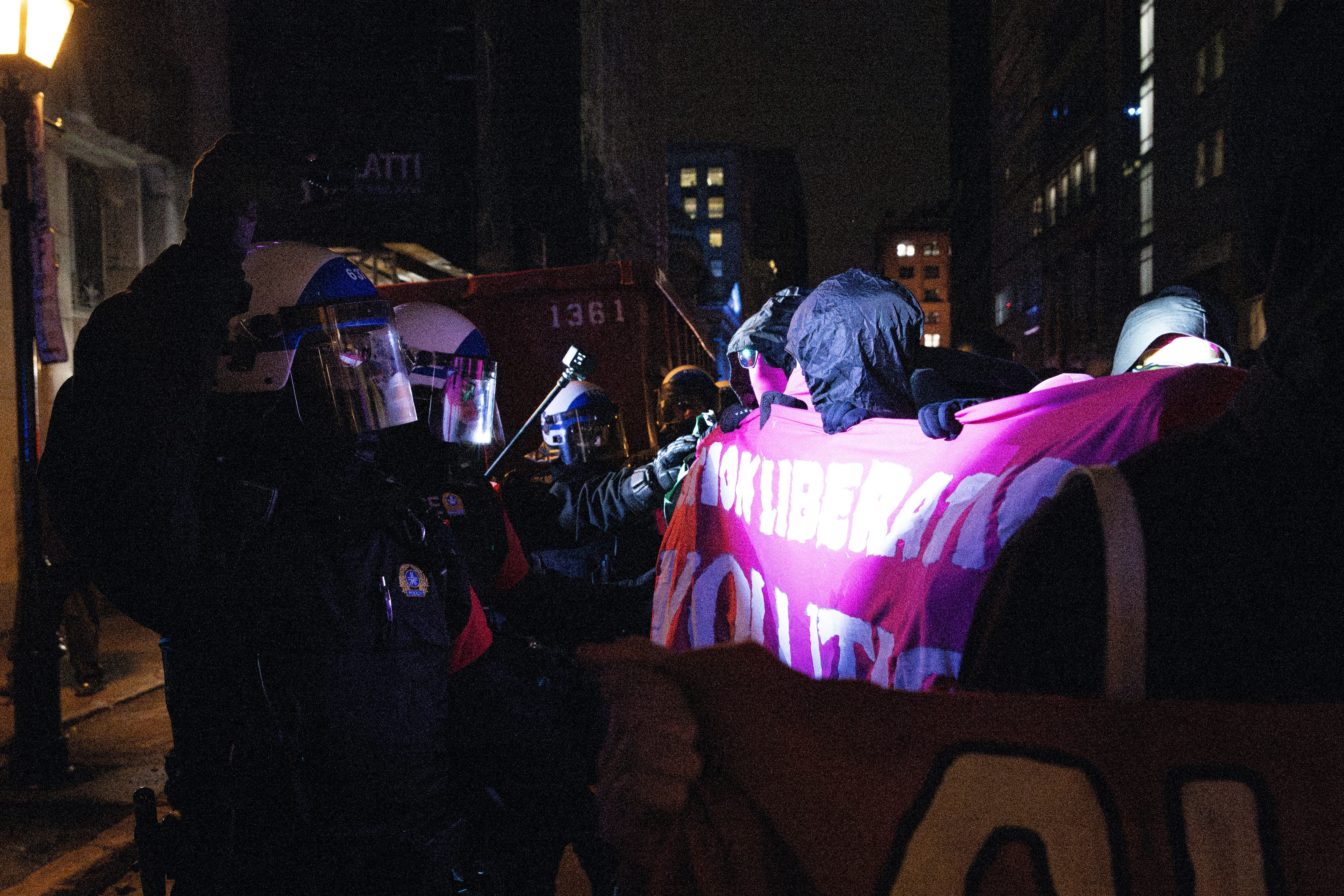
Amid the fervent chants of “tout le monde déteste la police,” the meek jostling intensifies into robust punches.
The limit is breached.
A sudden wall of tear gas, pepper spray, and the swinging of batons erupts from the SPVM towards the crowd. Despite the bursts of chemical weapons, activists remain disciplined, in formation, and poised to respond.
Unlike the last event, this time, activists are prepared.
Two elongated streams of pink paint shoot out of the crowd towards the police lines, fully dousing some officers and taking them out of action.
The riot police briefly retreat several feet, before launching a new offensive.
This is the story of two demonstrations led by queer activists in Montreal, — how they were met with extreme repression by the SPVM and how they spurred a resurgence of LGBTQ+ militancy.
It is also an investigation of two new anti-LGBTQ+ organizations and how their rhetoric is rooted in a historic tradition of dehumanization.
Additional context to modern events is provided with a brief history of LGBTQ+ repression by the Service de police de la Communauté urbaine de Montréal (SPCUM) and its modern iteration, the Service de police de la Ville de Montréal (SPVM).
This is a four part series:
Part 1 : A History of the “Protection of Children” by LGBTQ+ Opponents and the Rise of HOOK and EPPNE
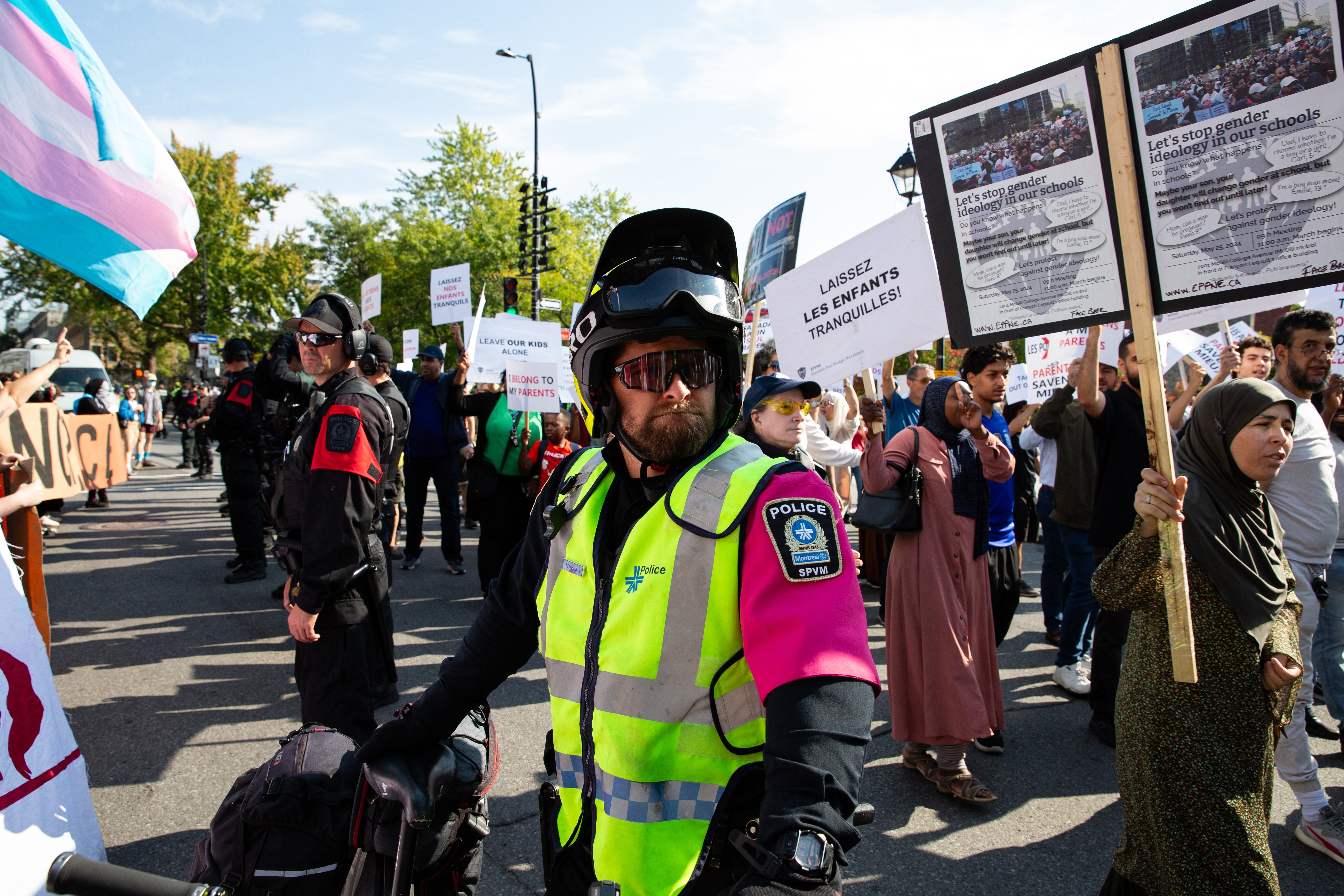
Opponents of the LGBTQ+ community have long used the tropes of “protection of children” as a rhetorical front to counter the acceptance, advancement, and legal protections of LGBTQ+ communities. The modern origins of this language extend decades to politicians in Canada, the United States and the United Kingdom. The public promotion of homophobic tropes such as the erosion of youthful innocence by anti-LGBTQ+ figures and organizations has contributed not only to the social and cultural ostracization of LGBTQ+ people, but more substantively in the affairs of policy and legislation.
Two new organizations, Hands Off Our Kids (HOOK) and its French-language sister organization, Ensemble Pour Proteger Nos Enfants [Together to Protect our Children] (EPPNE) are at the forefront of the so called “parental rights” movement in Canada. Both organizations employ the same linguistic themes historically used by LGBTQ+ opponents generations prior. These groups attempt to alter public policy for LGBTQ+ communities across the country, most notably in education. Their efforts have had varying levels of success.
Part 2 : A Brief History of SPCUM and SPVM Violence Against Montreal’s LGBTQ+ Community
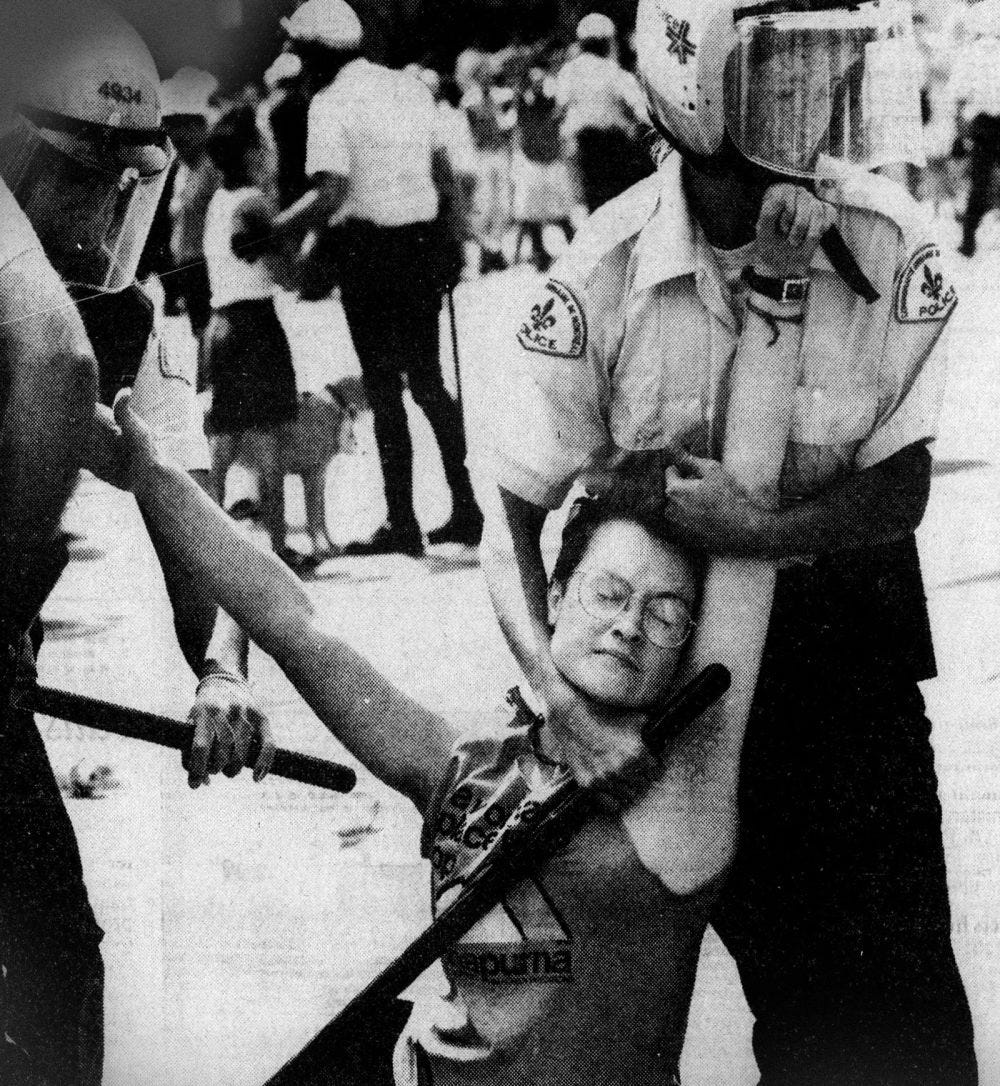
Montreal’s history of policing the LGBTQ+ community has been historically violent, homophobic and discriminatory. Several infamous events across generational divides have led to deep antagonisms towards the police and exposed deeper systemic injustices within the state and its institutions. The Truxx Raid (1977) and the Sex Garage Raid (1990) demonstrated to the LGBTQ+ community in Montreal that the metropolitan police (SPCUM) could not be trusted, sentiments that have lingered to this day. In a persistent historical pattern of blowback, these incidents of intense violence spurred new forms of queer activism, as freshly radicalized community members established new political organizations mobilizing for their rights.
Part 3 : The 1 Million March 4 Children and SPVM Repression of Queer Counter-Demonstrators
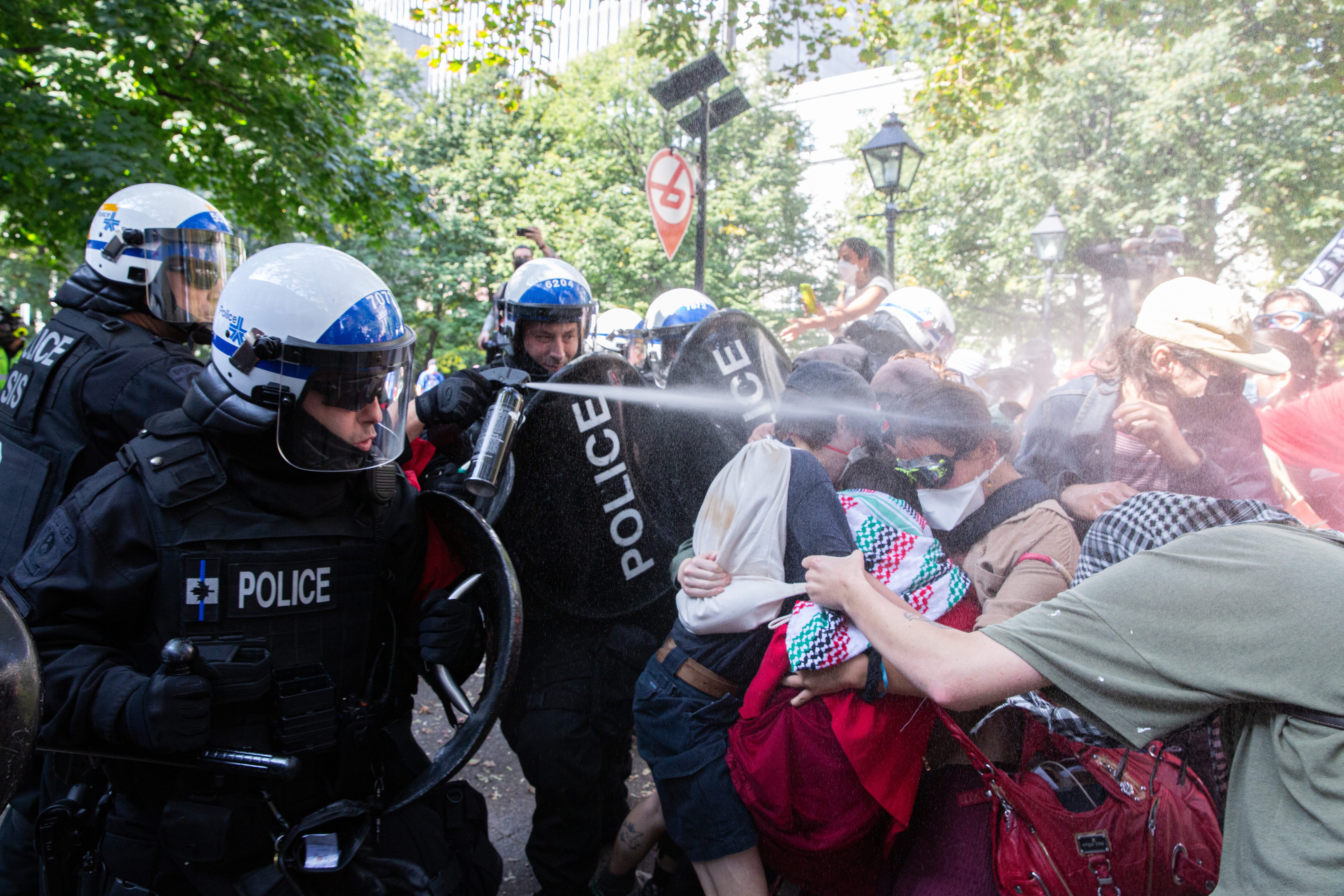
The 1 Million Mach 4 Children (1MM4C), a series of demonstrations organized by HOOK and EPPNE nationwide, was held for the second time on September 20th, 2024. Across the country, counter-protests were mobilized by countless LGBTQ+ organizations to resist what they perceived as a threat to their very identities and vulnerable young people in their community. In Montreal, the counter-protest significantly outnumbered the main EPPNE demonstration. Despite the peaceful and non-confrontational nature of the counter-protest, the SPVM riot police squad attacked the demonstration without warning, using tear gas, pepper spray and beatings towards demonstrators, hospitalizing several people. The EPPNE march however, continued unabated through the streets of Old Port with police protection.
Part 3 is an exhaustive, deep dive into the events of that morning. I interviewed dozens of participants of the demonstration. We discussed the timeline of the event itself, how it led to a resurgence of queer activism in Montreal and how the police violence of the 1970’s don’t seem so far in the past.
Part 4 : The Trans Day of Vengeance and the Resurgence of Queer Militancy
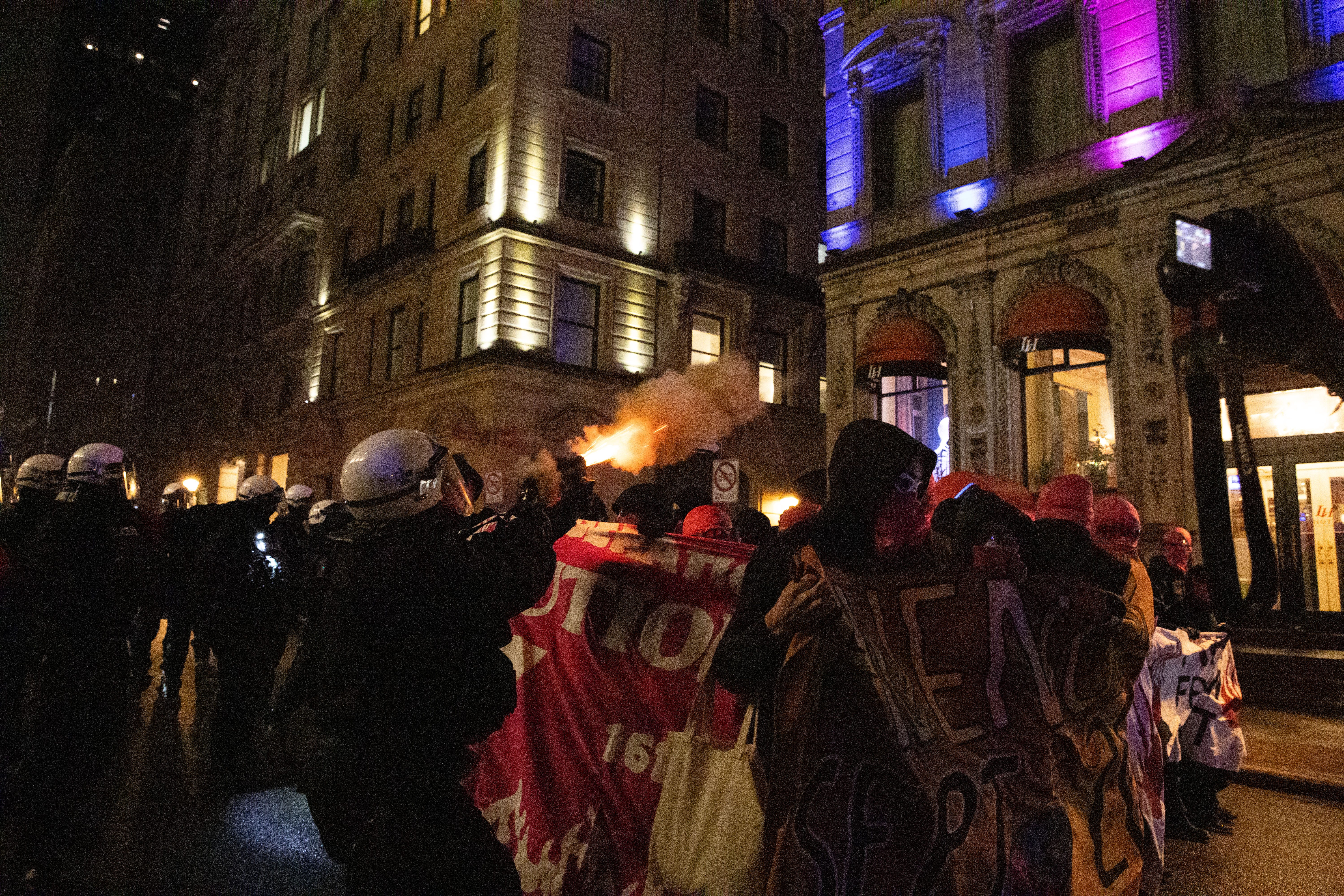
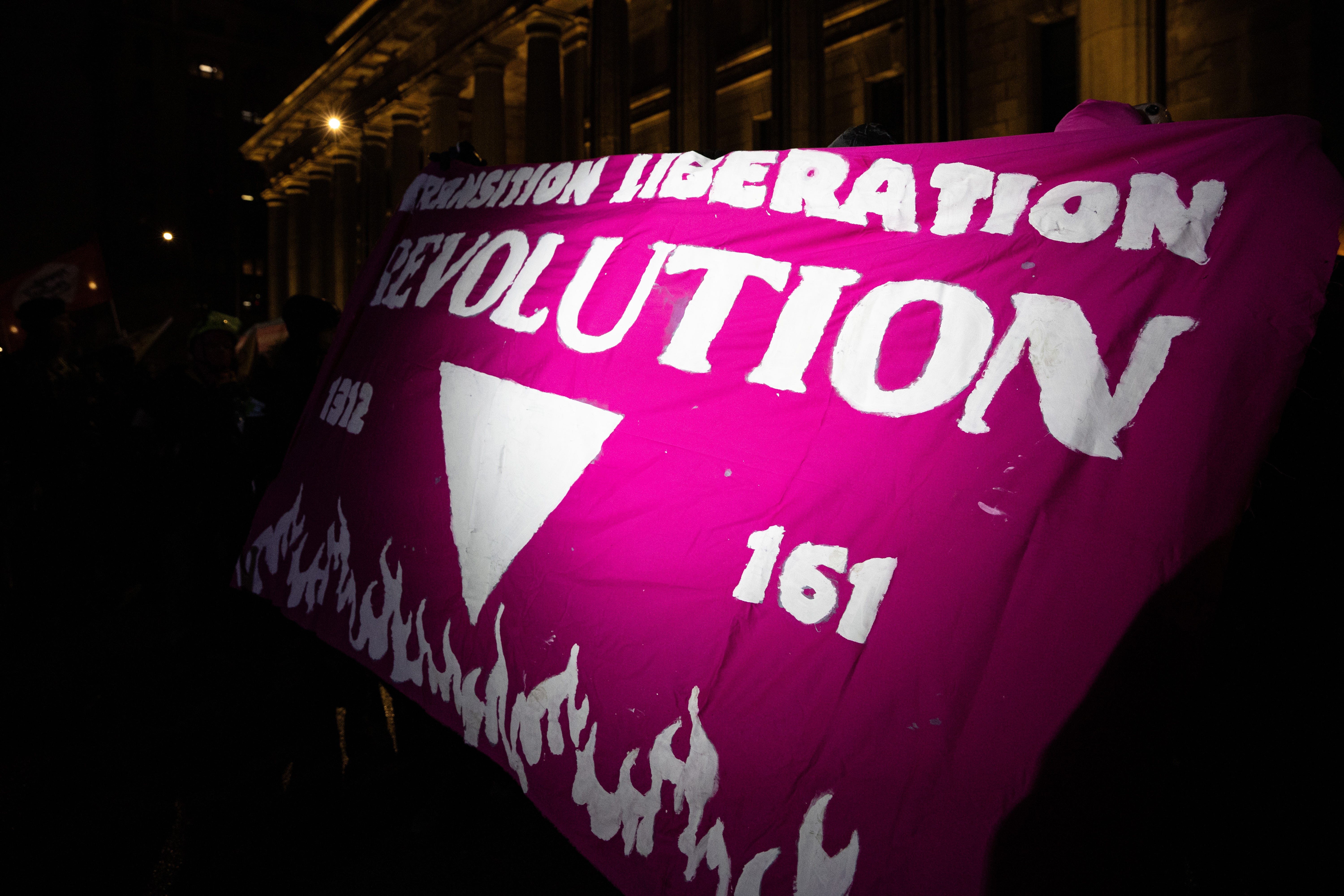
The Trans Day of Vengeance (TDoV) demonstration was organized largely as an indignant response to the police brutality enacted by the SPVM six months earlier at the 1MM4C event. The TDoV took place on March 31, 2025, the International Trans Day of Visibility. Public messaging in the run-up to the event was militant and combative. Symbolically, the protest would gather at the same location that the 1 Million March 4 Children counter-demonstration had been held. As the demonstration took the streets, shoving matches initiated by closely flanking SPVM riot police and demonstrators holding side banners took place. The SPVM then abruptly attacked the demonstration with tear gas, pepper spray and beatings. This time, however, in contrast to the September 20th demonstration, militant activists, emboldened by a renewed sense of rage in the face of persistent police violence, were prepared to respond.
The series will be released in four articles, Part 1 will be published this week on September 17. Subscribe to sign up and get it directly to your inbox.
A brief additional content warning; this series will depict instances of extreme statements and incidents of bigotry (every conceivable ___phobia) and graphic details of - predominantly police - violence.
No posts
Comments
Nothing yet. Say the first thing.
Sign in to join the conversation.