
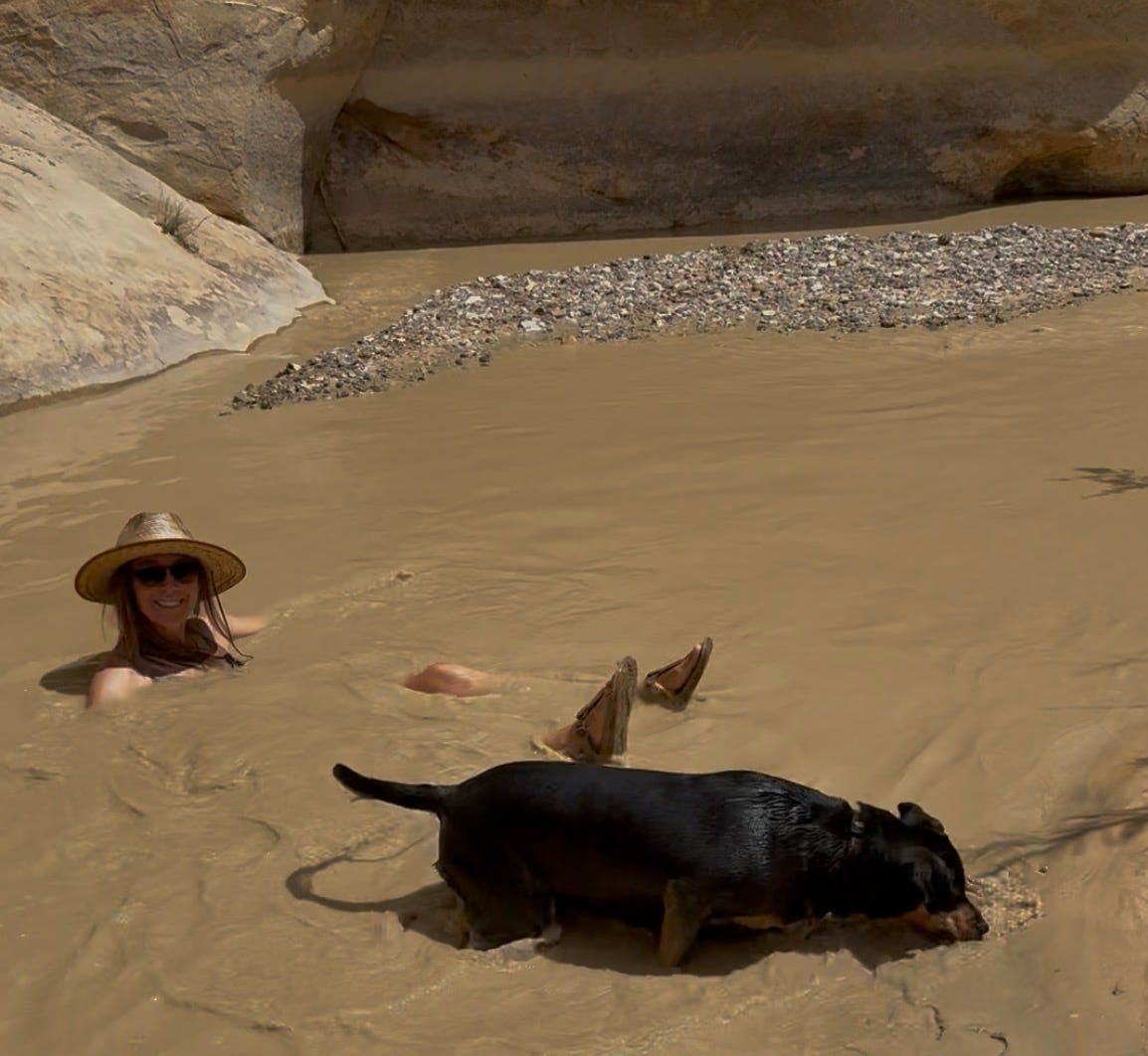
The skies are impassioned. Clouds billow high in the atmosphere until they darken and break open. Afternoon is announced with thunderclaps. A few hours later, I race down to the river and join the floods. (From a safe distance). The repetitive pulses will flush the river of debris and muck, and bring nutrients to riparian plants and aquatic species. As the torrents thin, I hop in and ask the river to edit me. To help me carry on despite the deplorable environmental news du jour. The news cycle seems timed with the monsoons.1
Each day I set aside time to update my book manuscript, due to my publisher in a mere fifteen days. The continual need for reporting edits assures me I have covered a wide-range of very timely topics. It’s also terribly daunting and disheartening. None of it is good news.
The flood cycles help keep my rage flowing. From the quickly shifting banks, I remind myself to think like a historian, to take in the larger themes, and let the detritus pass on by. Nothing lasts forever. Rivers are adept documentarians––they do not cling to the past, but they always record it.
Yesterday, with a cup of coffee in hand, I checked my email. Nothing new. Finally, relief! A minute later, another storm cloud popped up:

How kind of Reclamation to finally reach out to us––the forty million citizens of the watershed who can receive email. The river, riparian habitat, and wildlife will find out during the next water year’s flow regime changes. Lower Basin States are mandated to make cuts, which can be as much as 40% of their total deliveries. Upper Basin reductions are voluntary, up to 200,000 acre feet. (The exact size of cuts will be announced in the coming weeks.)
There’s more to it, but let’s take a step back in time.
In 1922, the Colorado River Compact divvied up the Colorado River into two basins. The Upper Basin includes Wyoming, Colorado, Utah, and New Mexico, and the Lower Basin includes Arizona, California, and Nevada. They decided to ignore available scientific data and apportion more water than the river carried. So, seven and a half MAF of water goes to each basin annually. And 1.5 MAF goes to Mexico over the same period.
The year 2000 launched the Southwest into a severe multidecadal drought. Longer-term studies reveal that ardification is more accurate, dropping Colorado River flows by 20% since the Compact. So, in 2007 and 2019, water managers created a series of drought-management plans. The later expire October 1 this year. A NEPA process to create a plan began in June 2023. Representatives from the seven basin states were tasked with coming up with a new plan by February 14 of this year. They blew past the deadline.
The need for a new plan exceeds expiration dates. In 2026, the basin’s hydrology has only deteriorated. A March heat-dome signed an already meager snowpack in the Rocky Mountains. Runoff into the Colorado River neared its all-time worst, set in 2002. Lake Powell reservoir plunged toward its record low as well. Between 2020 and 2026, Colorado River flows have dropped 35% from twentieth century averages. This was explained to me earlier this year on a call with Brad Udall, Senior Water and Climate Research Scientist at Colorado State University’s Colorado Water Center.
Throughout the spring and early summer, the states remained locked in indecision and unable to reach a consensus about cutting back. There is a historic precedent for this, explained in great detail by Norris Hundley, Jr. in Water and the West. Tensions were high between Upper and Lower Basin states. The Compact took seven years to be ratified, and Arizona would not join the pool party for twenty-two years.
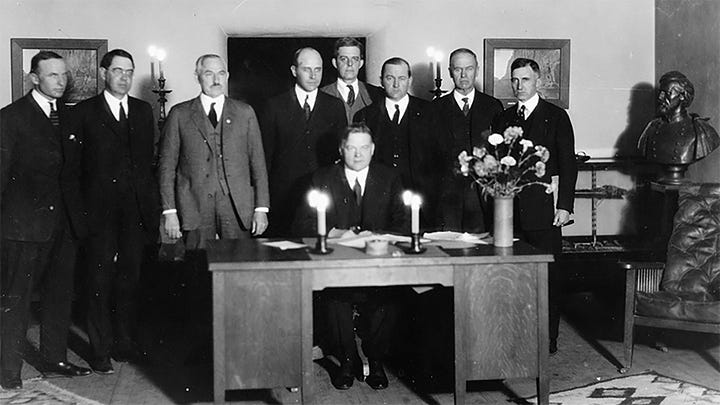
In April, Interior Secretary Doug Burgum announced the federal government would step in with a plan. This counters the spirit of the Compact. The Compact signing in Santa Fe over a century ago left out a lot of important decision-makers: tribes, Mexico, farmers, and everyone who drinks the water. That aside, the collaborative process with seven representatives was to ensure that the water was managed by the states, rather than a centralized water czar. While federal intervention was written into the compact if states could not agree, the hope was that this would scare the representatives into agreeing. (Fail.)2

In the years leading up to this, Tribes, environmental groups, and water rights holders hoped for a more transparent and collaborative decision-making process. Instead, the opposite happened. There is a great new episode of Native America Calling that discusses this.
At a time when some Western states (cough, Utah cough) are crying foul about federal overreach in managing public lands, they are simultaneously relinquishing responsibility for water conservation to a central authority. Let’s not forget, the Utah delegates turned to el presidente to force their vision to reduce two national monuments, and ignore local constituents, in another example of conceding “local” determinism for federal mandates.
Earlier this year, Burgum stated, “We’ll be balancing water rights, power generation, and water supply.” This directly refers to limping both Powell and Mead reservoirs just barely above their dam’s hydropower-producing abilities. Last month, the total combined storage of both reservoirs dropped to an all-time low since 1963, the year Powell began filling.3 Glen Canyon Dam’s infrastructure can only sustain meaningful releases at 3,490 feet. Lake Powell is sitting at 3,522 feet, just above the record low of 3,519 set in 2023.
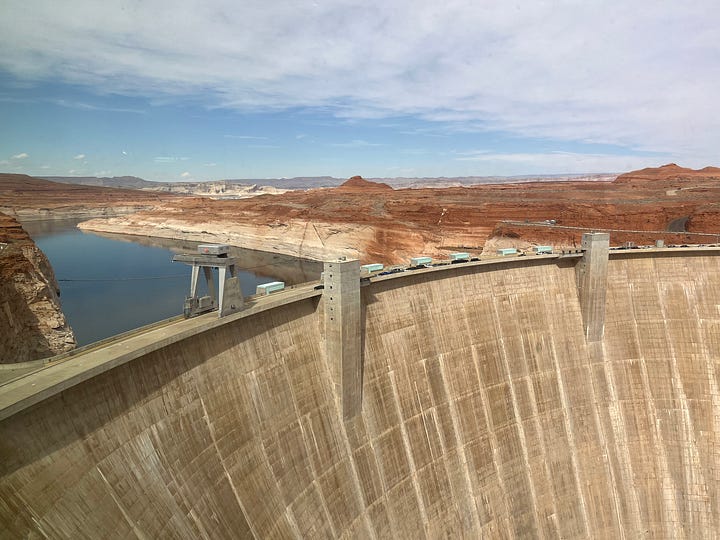
It’s no surprise that this “energy emergency” administration cares about hydropower, and the loss of power at either dam has consequences for rate payers. But managing the river to protect hydropower counters the Law of the River, which states in article IV (b) that hydropower, “shall be subservient to the use and consumption of such water for agricultural and domestic purposes and shall not interfere with or prevent use for such dominant purposes.”4 For now, the options are limited since the power pool elevation is the de facto dead pool line. The overall theme here, beyond water cuts, is letting the current administration take charge and ignore the law.
Most notable in the new federal plan is a ten-year framework, with the option to renegotiate terms every two years. Secretary Burgum said, “This framework provides the flexibility to respond to changing hydrologic conditions while preserving the opportunity for the Basin States to continue working toward durable, consensus-based solutions.”
This week, I spoke to two major lower basin water stakeholders. Our conversations were sweeping, to cover a broad range of topics for my forthcoming book, Riverside.5 The feds plan, of course, came up in discussion. There is much to gripe about the new plan, including how difficult it is to plan long-term conservation through two-year negotiating cycles. One glimmer is that it still leaves the door open for the states to get their shit together and create a shared plan.
An example of what is possible may be found among the state-level water users themselves. MWD’s response to the new plan states:
Building a sustainable river will require conservation efforts from all seven states and all water users. Today’s framework highlights reduced deliveries to Nevada, Arizona and California, and Metropolitan is prepared to work with other California water users to make necessary reductions. But Lower Basin reductions alone are not enough to produce lasting sustainability for everyone who relies on the river.
There are, of course, many other perspectives that will emerge in the coming days and weeks. I am focusing on MWD here because:
a) I interviewed the Manager of Colorado River Resources this week.
b) I want to shake things up and consider the environment while staying informed from other perspectives.
c) People are nature, and we all need to drink. MWD provided my drinking water as a kid in Riverside, California. This is in part the inspiration for titling my book, Riverside.
d) MWD is the largest wholesale municipal water provider in the United States. When a stat says 40 million people rely on the Colorado River, 19 million of them receive it via MWD distribution.6
Greater effects will be felt by the Central Arizona Project (CAP), which has junior rights and will be among those forced to bear the brunt of cuts. CAP supplies 80% of Arizona’s water.7 Nevada Governor Joe Lombardo called the cuts unrealistic, and that ower Basin states also want to see mandatory Upper Basin water cuts.8
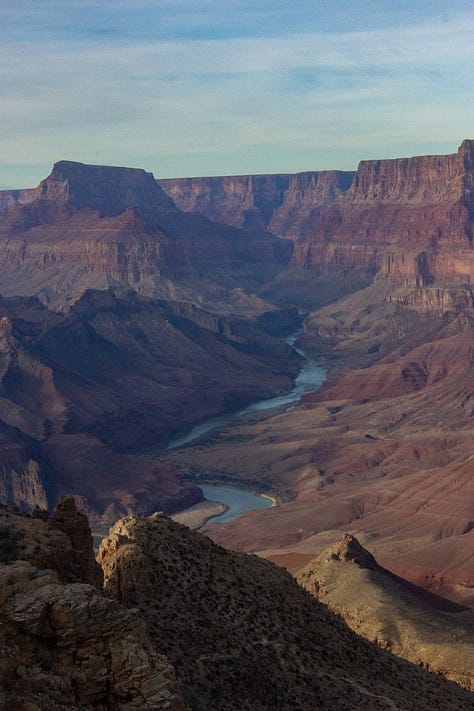
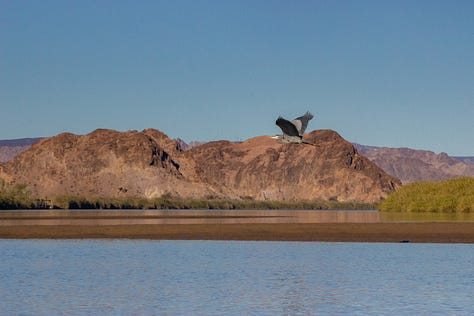
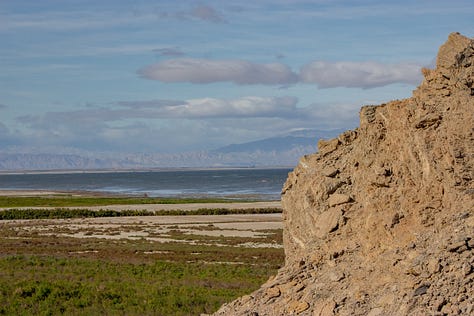
The final environmental impact statement is incredibly lengthy and written in complex water jargon that takes both policy experts and water nerds effort to decode. One outcome is clear: the forced lower basin cuts will starve the lower Colorado River of flows. This affects wildlife habitat (and boating) in the Grand Canyon, Wildlife Refuges in the Colorado Desert, and the Salton Sea. It will also disproportionately affect some Tribal Nations more than others. And for what? To try and protect a reservoir that might crash anyway?
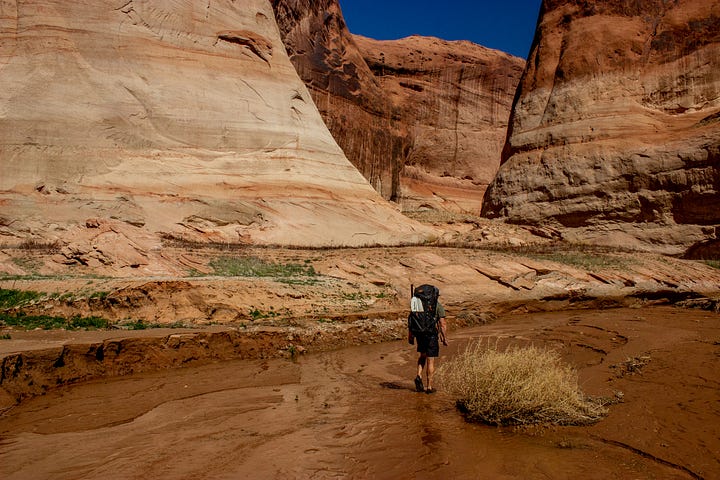
Glen Canyon Dam infrastructure was never an official part of this planning, although Lower Basin states have been critical of that. Reclamation is quietly studying options for dam modification. But the states and the public at large are not yet a part of that process, so there is good reason to keep pressing for meaningful long-term change. Allowing a full bypass of Glen Canyon Dam will ultimately provide the water management flexibility the entire Colorado River Basin needs to live with a drier climate. Most importantly, it will help the Colorado River still flow, with great manipulation, as a river. Lake Powell sits at 3,522 feet today. Defacto dead pool awaits 32 feet below.
My anticipation of the post-2026 plan is not only out of eager interest. I also have a book deadline. And I promised myself that writing about the new Colorado River plan would be my final Substack before taking a book and backpacking sabbatical in August. Thank you all for joining me here, especially paid subscribers who make all of this (and writing a book for an Independent non-profit publisher) possible.
It might be hard for me to stay away. Writing to readers in the near-term can be much more encouraging than tucking a story into a lengthy manuscript draft that won’t be published until next year. But I now know from experience that retreat, in one form or another, is requisite to writing a book, and a benefit to my well-being.
See you in a few weeks!
🤎
Morgan
Have you ever dreamt about writing while drifting through Glen Canyon?
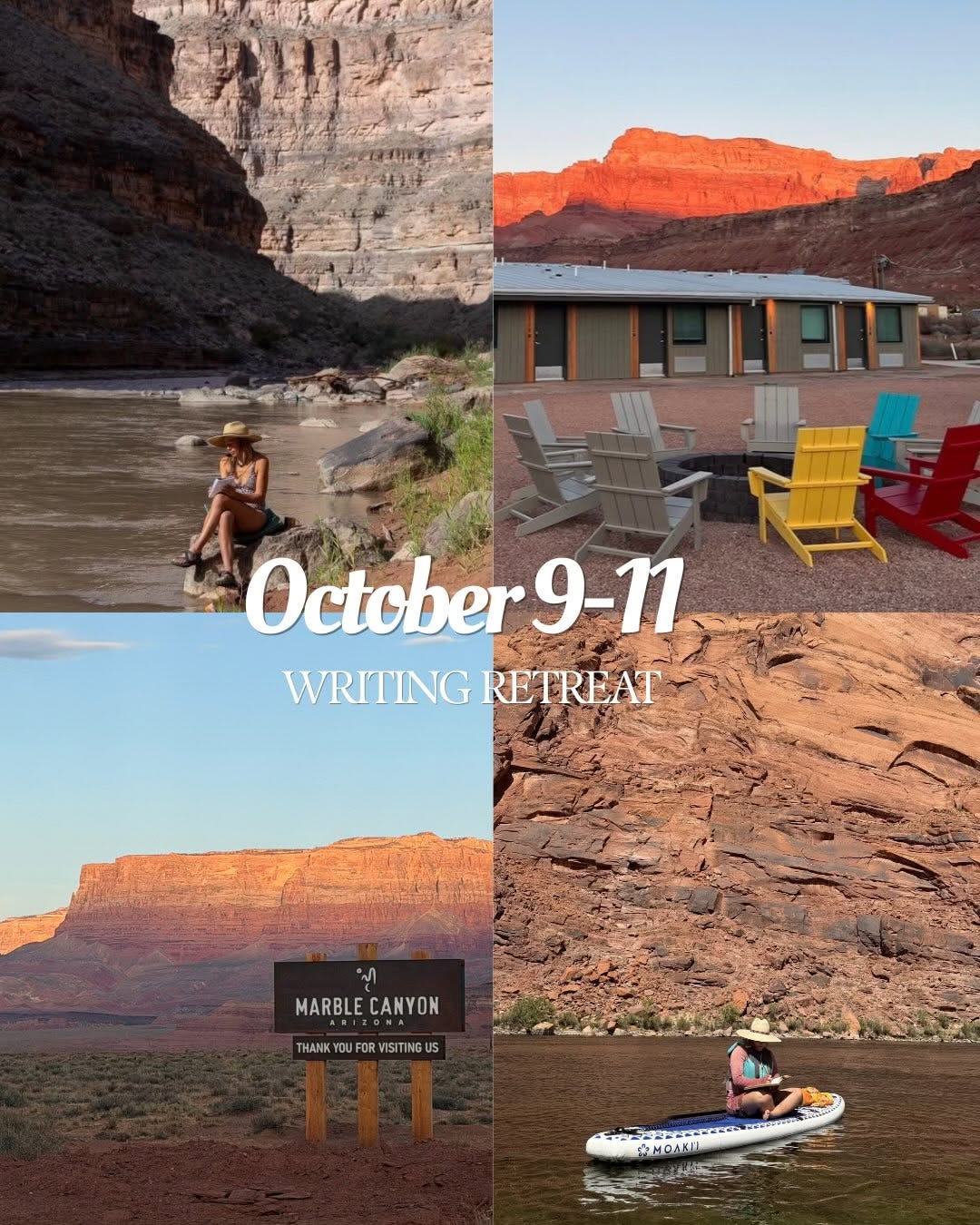
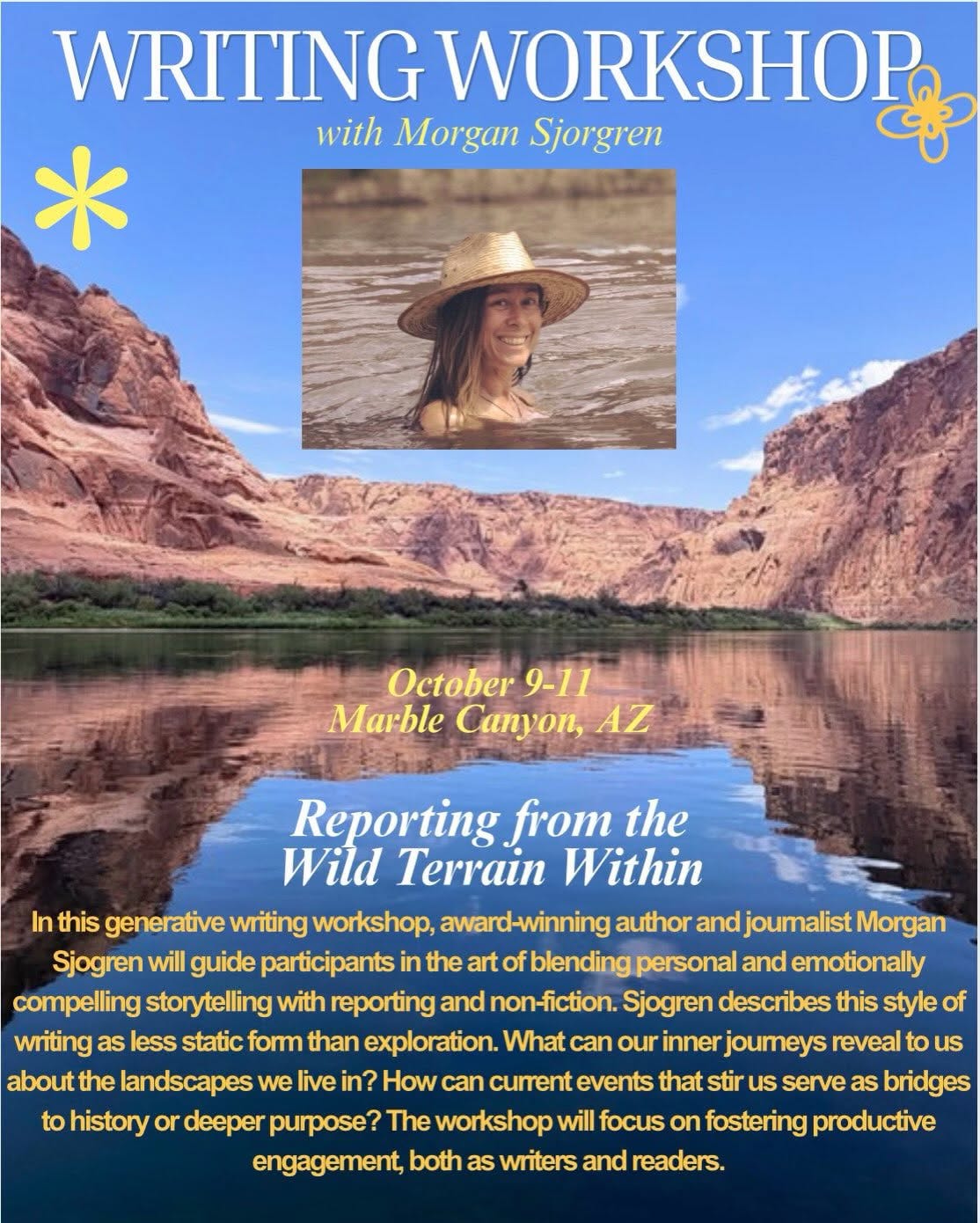
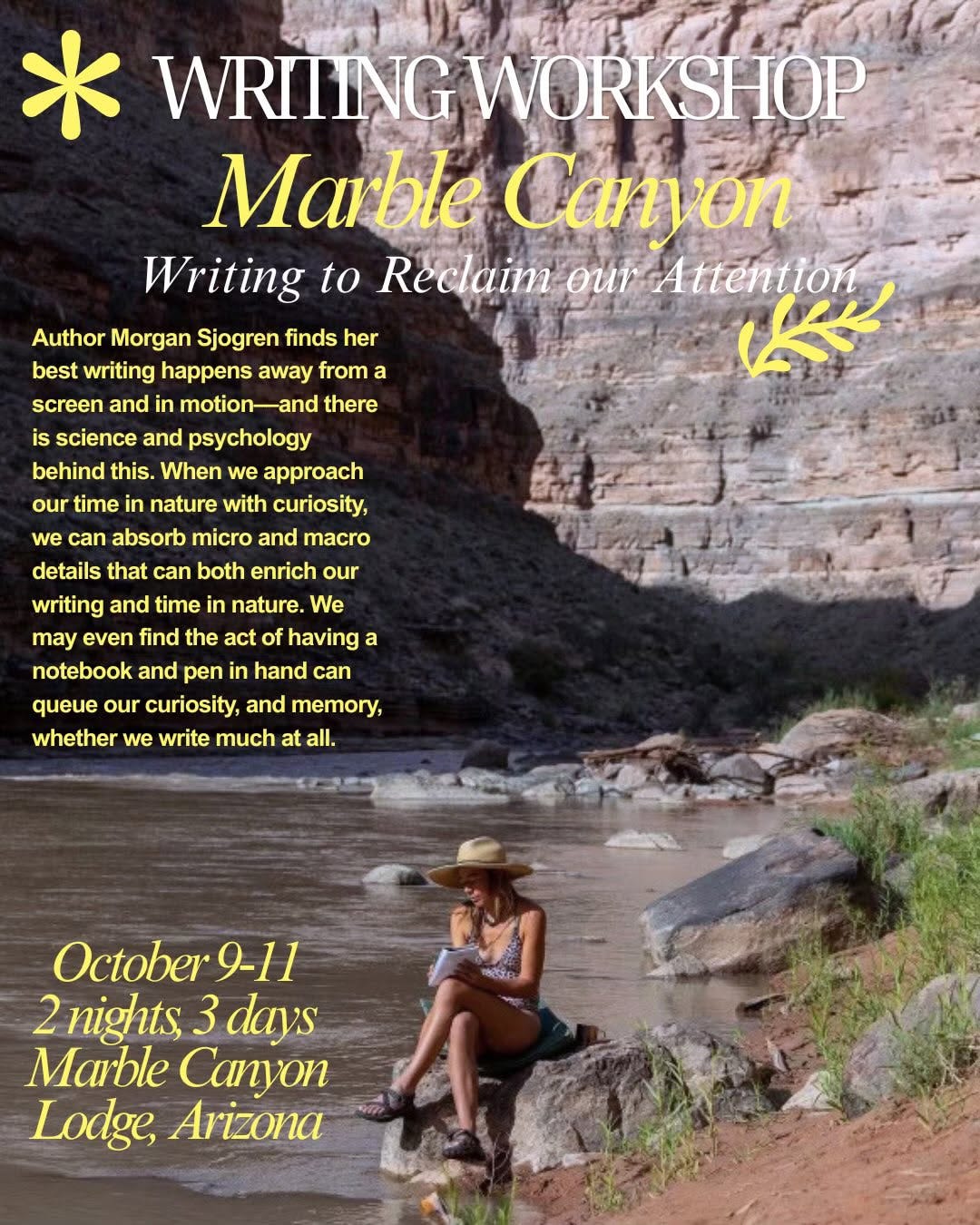
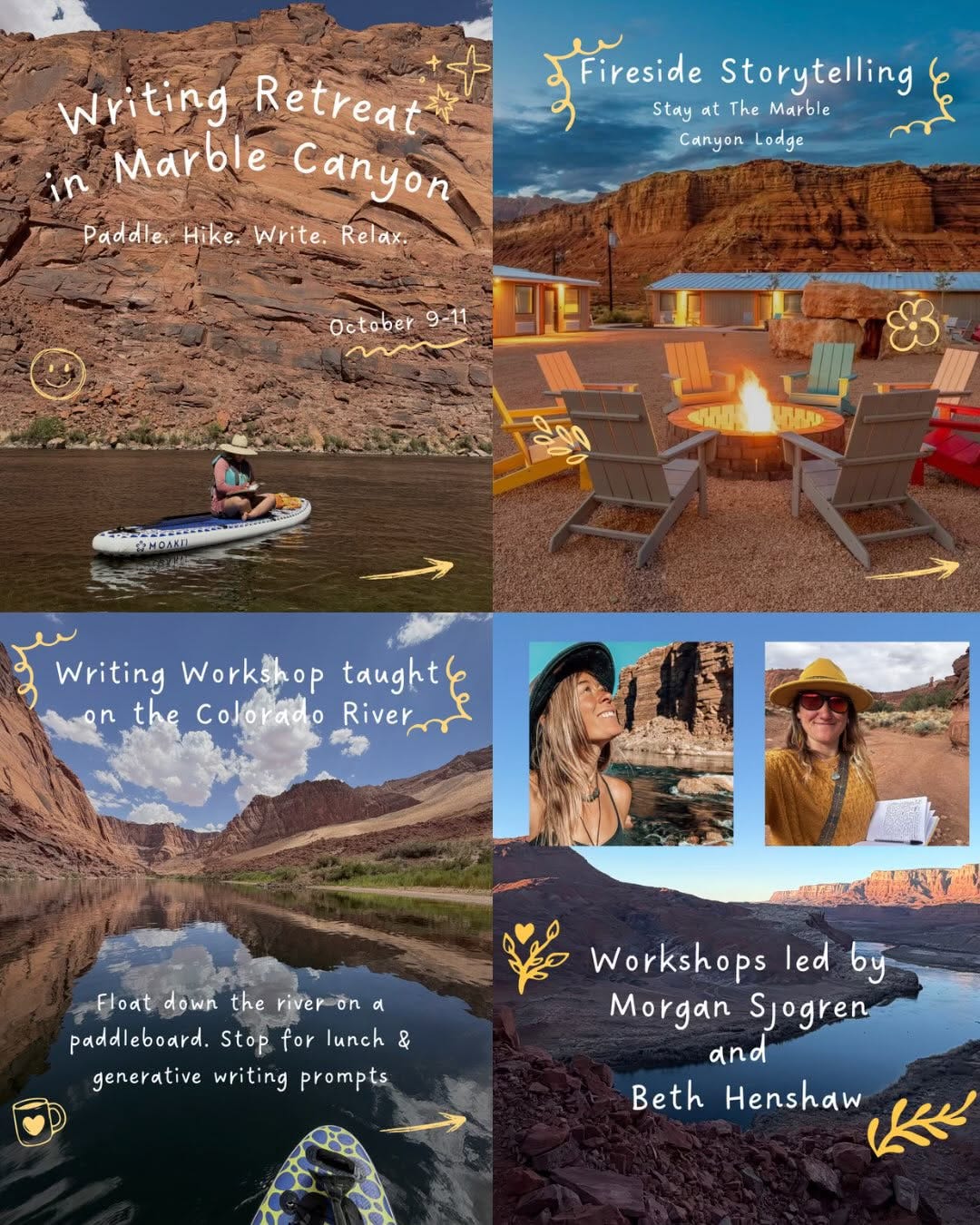
Join me at the Marble Canyon Writing Retreat, October 9-11, hosted by Pronghorn Expeditions Hiking & Vehicle Tours & Beth Henshaw. The workshops are designed for published/emerging writers to sharpen their craft, journalers looking to deepen their practice, and anyone interested in dipping their toes into something new.
Workshops will be held outside, while we float the Colorado River below Glen Canyon Dam and hike along the Paria River. Cozy lodging and catered meals are provided.
The best part of writing retreats is the buzz of inspiration from spending time in community, while taking a pause from everyday stresses. I hope you will join us.
Email pronghornexpeditions@gmail.com or call 928-640-2420 or visit pronghornexpeditions.com/retreats to learn more.
Are you concerned about the reductions in Grand Staircase-Escalante National Monument? Do you want to immerse yourself in a threatened landscape that needs more lovers? Lace up your shoes and let’s go hiking!
Our Fall bookings for Glen Canyon Backcountry Club day hikes and multi-day trips are filling up! We still have availability in September and early October. More details here and email contact (at) GlenCanyonBackcountryClub (dot com) for more info or to reserve your trip!
I’ve reached the point in my manuscript where paying attention to typos is just a distraction to the bigger storytelling and themes. If you receive Wild Words by email, consider it a glimpse of the raw work that must fall onto the page. In time, the river will edit.
To read more in-depth about this, take on Water and the West by Norris Hundley, Jr.
https://www.doi.gov/pressreleases/reclamation-publishes-final-environmental-impact-statement-future-colorado-river
https://www.usbr.gov/lc/region/g1000/pdfiles/crcompct.pdf
To find out who I talked to, you’ll have to wait for the book!
About 20% of MWD’s water comes from the Colorado River. They also distribute water from other sources, including the San Joaquin River, groundwater, and conservation-focused sources like desalination and water recycling. https://www.mwdh2o.com/building-local-supplies/
https://ktar.com/arizona-water-news/central-arizona-project-president-says-feds-bought-the-lies-on-colorado-river-plan
https://www.gov.nv.gov/press-releases/governor-joe-lombardo-releases-statement-on-colorado-river-final-environmental-impact-statement/
No posts
Comments
Nothing yet. Say the first thing.
Sign in to join the conversation.