
Update, Arpil 16, 2026, 18:45 CEST:
Andrew Tate has disappeared from the New Bestseller box.
Yesterday, he was still there.
The shift doesn’t resolve the question this essay raises. It clarifies it. What appears can also be removed. What gets placed there follows decisions — and those decisions carry consequences beyond a single name.
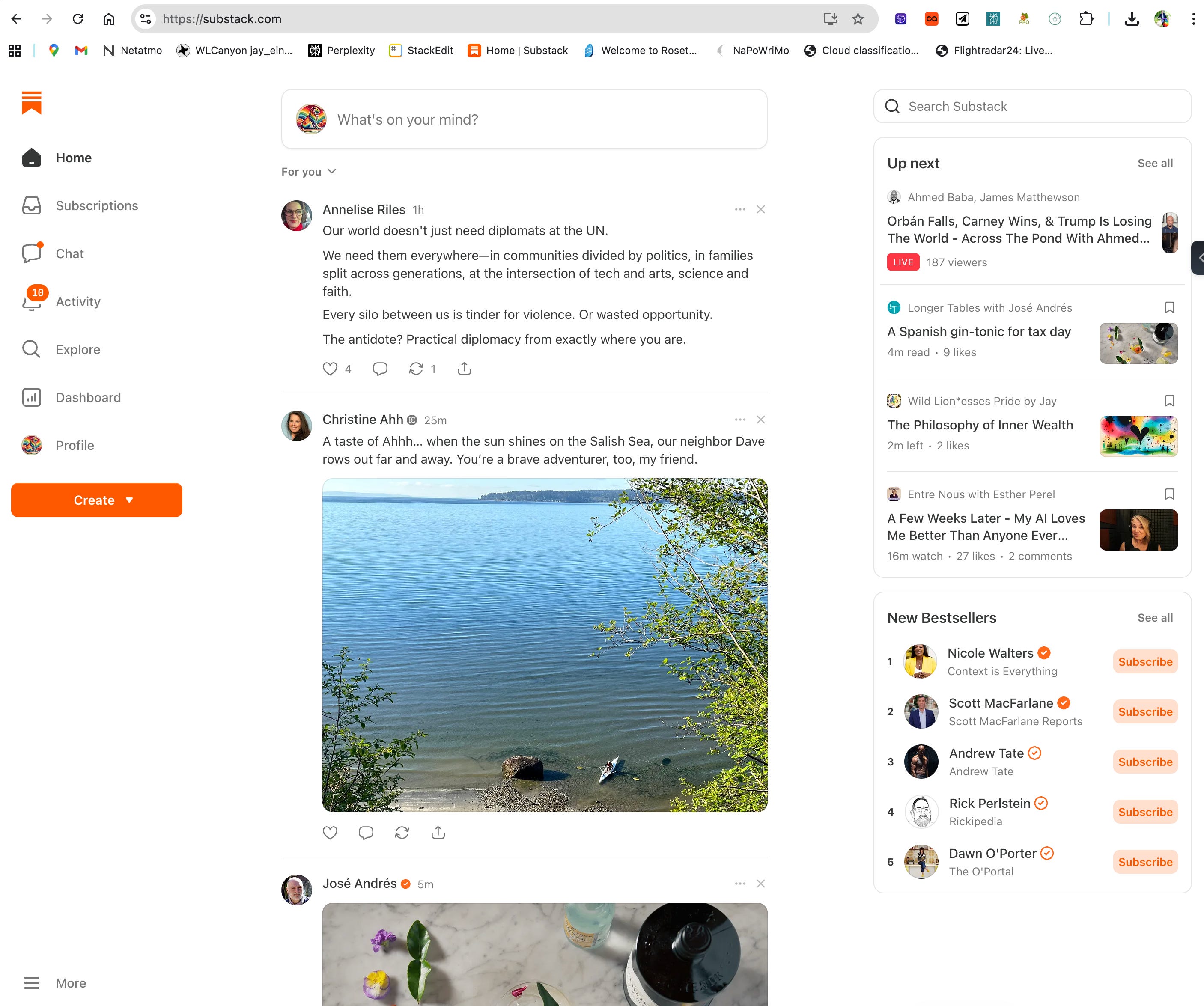
I press block. Andrew Tate stays in my Bestseller box.
That’s it. That’s the whole story. Except it isn’t, because what just happened on my screen carries legal weight I intend to use.
I live in Germany. I write on Substack. I’m a lesbian, non-binary, neurodivergent person with a mental health diagnosis, and Andrew Tate’s content targets every single one of those things about me — calls for my subordination, my silence, my reduction to a function. When Substack’s algorithm serves him into my feed after I’ve already blocked and reported him, they don’t inconvenience me. They move into territory where European law applies. Mine. The law of the country where I open my laptop and read words designed to erase me.
That’s what gets me. A handful of people in San Francisco acting as if international agreements, international law, and my individual rights don’t bind their system — and wrapping the whole operation in free speech. Excuse me. Free speech ends where my personhood begins. I’ve stood for that line my entire life and I’m standing for it now with everything I have.
Hamish McKenzie and Chris Best built something I use and value. I’ll say that clearly, and Gloria Horton-Young’s meticulous account of exactly how Substack’s profit machine operates — the real math behind the 90% promise, the investor conflicts, the founding story — tells that part better than I can and deserves your full attention. The direct relationship between writer and reader, the inbox as a space for serious work — that matters to me. I left every other social media platform years ago because I refused to perform in that theater of purchased likes and manufactured identity, that American export of external validation as the measure of human worth. I have friends. I know what friendship requires: actual exchange, actual presence, actual dialogue. The rest is theater.
Substack felt different. Then I pressed block and watched the Bestseller box ignore me.
McKenzie’s argument runs like this: suppress speech and it goes underground, past anyone’s reach. The platform stays neutral. The reader decides. He made this argument in December 2023 when The Atlantic documented sixteen newsletters carrying swastikas and Holocaust denial in their logos — monetized, with Substack collecting 10% from every paid subscriber. More than 200 writers signed an open letter. McKenzie’s response: he removed five accounts with zero paid subscribers — meaning the entire monetized Nazi network stayed intact — changed nothing in the content policy, and declared the matter addressed.
The monetized accounts stayed and grew. The recommendation system kept connecting new readers to them.
In February 2026, The Guardian investigated and found the same architecture running: “NatSocToday,” swastika as profile picture, $80 annual subscription, recent posts praising Hitler as “one of the greatest men of all time” and blaming Jewish people for World War II — active, paid, Substack collecting its percentage. Within two hours of subscribing, Substack’s algorithm served up 21 more similar profiles. The network McKenzie called addressed in 2024 had flourished for sixteen months while he grinned at the pennies landing.
Promoting National Socialism — the symbols, the propaganda, the Holocaust denial — constitutes a criminal offense under German law. Substack collects revenue from it and its recommendation system connects users to it. He made this choice while already moderating other categories of content — already making editorial decisions, applying them selectively. His neutrality lands specifically on content targeting people like me.
And it costs me. Readers I want — people serious about writing, serious about thought — tell me they avoid Substack because the platform promotes Nazis and men facing charges for sexual trafficking. Substack’s editorial choices harm my reach. Their neutrality carries a direct price and I pay it.
Andrew Tate posted on Substack for eighteen months to audiences of two, five, ten hearts per post. Then April 2026: #1 New Bestseller, #2 Rising in News. His content changed nothing. Substack moved its algorithm. The move generates revenue.
The platforms that removed him did so because European law required it. Meta removed him from Facebook and Instagram in August 2022 — 4.7 million followers — for violating policies on dangerous organizations and individuals. TikTok banned him permanently for content “otherwise dehumanizing an individual or a group.” YouTube terminated every channel for “multiple violations including our hate speech policy.” Those companies wanted access to 450 million European users. European law set the price of entry. They paid it.
Substack actively recruits their way into European markets. They hired a Head of Partnerships, France working alongside a Head of Europe. They advertise a UK Support Specialist. They’re expanding into Japan. A company that accidentally stumbled into European jurisdiction doesn’t build a continental management structure. Substack decided to reach for those 450 million European users — and simultaneously decided European law governing those users doesn’t apply to them.
I want to pause on something. The pattern of who Substack hosts — people ejected from every platform that assessed its European legal exposure and complied — starts to resemble a market strategy. Whether Substack actively courts the European ultra-right and figures like Tate as a growth sector, or whether they simply remain the last major platform willing to carry them, the outcome lands identically: Substack gives reach to people European law worked specifically to contain. I notice the pattern. I’ll let you draw your own conclusion.
Substack calculates they sit below the enforcement threshold. They looked at those ejections and decided they’re small enough to carry the same audience without paying the same price of compliance. So I open my feed and find a man who wrote, in July 2022, that a woman who doesn’t obey you deserves the same accountability as a disobedient dog. Who published on Substack in December 2024 that “women are sex workers” whose only job is finding one man to fund their existence. Who told reporters he chose Romania specifically because its authorities were less likely to investigate sex crimes — and who currently faces indictment in Romania for rape and human trafficking and 21 criminal charges in the UK including rape, actual bodily harm, and human trafficking. He denies every charge. Every proceeding stays active.
Substack places him in my Bestseller box and takes its 10%.
I need to tell you why this particular fight belongs to me in a way that goes past the political.
I had a cousin. She had a mental disability. She died in the Third Reich because the Nazi state classified her — as it classified Jews, Sinti and Roma, gay and trans people, political dissidents, religious minorities — as a category of person the state reserved the right to remove. Germany’s Basic Law, Article 1 opens with Die Würde des Menschen ist unantastbar — human dignity remains inviolable — because an entire generation of legislators wrote that sentence with the dead in front of them. The EU Charter of Fundamental Rights, Article 1 carries the same weight across 27 countries for the same reason.
These laws name specific groups — by sexuality, disability, ethnicity, religion, political belief — because the Nazi state named those groups first, as targets. When I read the list of protected categories in European law I read the list of people the Third Reich classified for degradation and death. That’s the document’s origin. Every word of it paid for.
Andrew Tate’s vision of women maps directly onto the Third Reich’s vision of women: property, defined by what they owe men, punishable for autonomy. The platform now hosts figures whose conduct triggered criminal proceedings across multiple jurisdictions. These men fall into the same category under European law as the people European law specifically developed to contain — and Substack opens their reach, algorithmically, for 10%.
§ 86 StGB criminalizes disseminating propaganda material of unconstitutional organizations. § 86a StGB prohibits displaying Nazi symbols — the swastika “NatSocToday” runs as its profile image. § 130 StGB — Volksverhetzung — carries up to five years for Holocaust denial and incitement to hatred against a population group. These violations run on Substack’s servers right now, served into German feeds by an algorithm collecting revenue from each click.
The European Digital Services Act, in force since February 2024, reaches every platform serving European users regardless of where the platform incorporated. Substack’s size shields it from the DSA’s heaviest obligations. From nothing else.
The Nuremberg trials established the legal architecture that led directly to the Universal Declaration of Human Rights in 1948 — the document from which European human dignity law flows and which the United States, at this point in its history, ignores on most counts. Between 2021 and 2024, Germany committed over one billion euros to fighting racism and right-wing extremism — funding prevention programs, deradicalization infrastructure, legal enforcement, civil society support. One billion euros to dismantle exactly what Substack rebuilds for 10% of a subscription fee.
I notice where these men come from.
McKenzie grew up in Alexandra, Central Otago, New Zealand — a country that after the Christchurch massacre in 2019 became one of the world’s leading voices for platform accountability, co-authoring the Christchurch Call that 55 governments and major platforms signed, committing to eliminate terrorist and violent extremist content online. A New Zealand journalist wrote him an open letter invoking exactly that history. He lives in San Francisco. Elon Musk grew up in apartheid South Africa — a country whose entire political history demonstrates what organized racial dehumanization produces at scale — and runs the platform that reinstated Tate. He lives in Texas. Peter Thiel was born in Frankfurt, Germany — the city whose constitutional order exists because of what happens when dehumanizing speech scales through a population unchecked — funds platforms and politicians running on exactly that fuel, and holds New Zealand citizenship while living in the United States. These men grew up inside legal and historical frameworks built to contain precisely this kind of harm. Today, they operate in a jurisdiction where monetizing it faces fewer constraints.
Substack’s leadership looks, to me, like more of the same pattern: a company whose founders speak the language of writer dignity and reader trust while their platform opens reach for men whose content the rest of the legal world worked to contain. Human dignity and ethical behavior carry considerably less weight in their calculations than the 10% does.
They know the law. They know the record.
They looked at what every legally-accountable platform concluded about Andrew Tate and they put him in the Bestseller box.
I pressed block. European law stands behind that action. Substack’s algorithm ignores both.
The gap between what these founders say they value and what they demonstrate they value closes in one place: the Bestseller box. My cousin’s name deserves a different calculation than the one they’re running.
Sources: German Basic Law, Article 1; EU Charter of Fundamental Rights, Article 1; § 86 StGB; § 86a StGB; § 130 StGB; Digital Services Act; EU Charter Article 1; Guardian investigation, February 7, 2026; NBC News, platform bans, August 2022; TikTok ban, Dexerto; NPR, DIICOT indictment, June 2023; NPR, UK charges, May 2025; The Week, Tate statements
Thank you Gloria Horton-Young for your wonderful essay about the money machine behind Substack
As always, Thank you for reading and following.
xo Jay
Support My Work: Subscribe and Contribute
If this reading resonates with you, great! And if not, no worries. Take whatever may be helpful and leave the rest.
If my writing, art, and recipes resonate with you, I would be incredibly grateful if you would consider supporting my work with a paid subscription to Wild Lion*esses Pride.
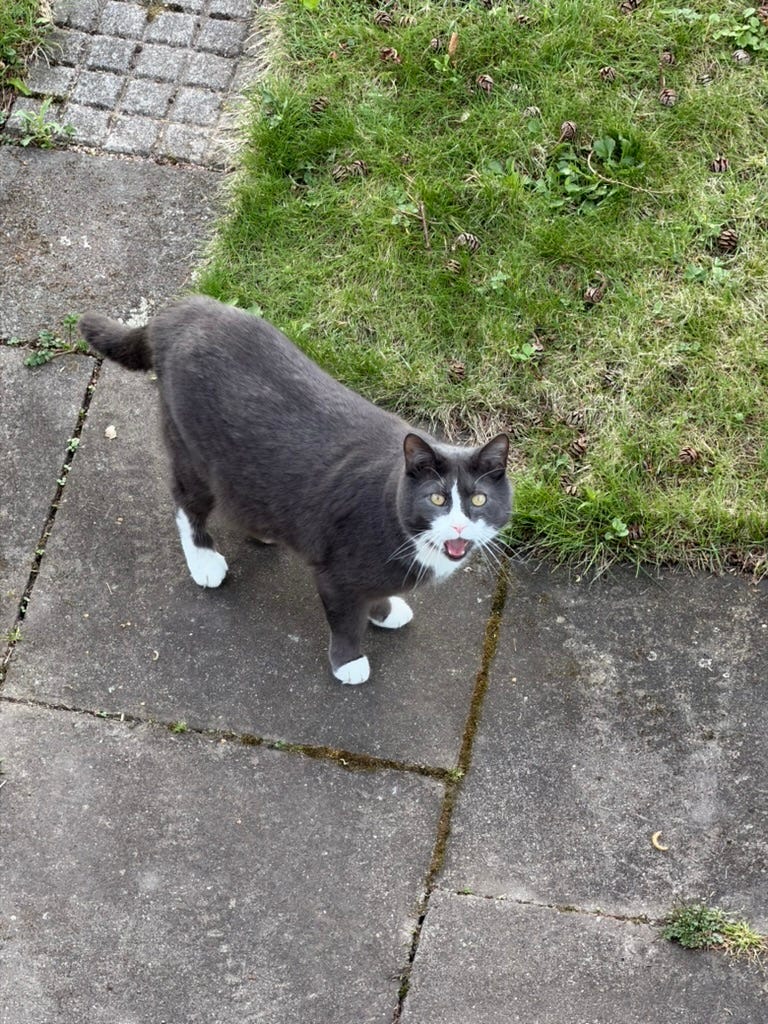
If a monthly or annual subscription isn’t feasible for you right now, you can also show your support with a one-time tip via my Tip Jar here. Maybe consider supporting Monty.
Buy Monty Treats… Yes purrleaze…
Thank you for your kindness and generosity—it truly makes a difference. Together, we’re creating a space of reflection, creativity, and connection, and I’m so grateful you’re part of this journey.
Comments
Nothing yet. Say the first thing.
Sign in to join the conversation.