
The red-winged blackbird is described as a common back-garden bird here in the Pacific Northwest, yet I hadn’t heard one until last week. There’s a magical spot I’ve located in between The Bluff and the marsh below, where I linger early in the morning, hand raised to the sky holding my phone, Merlin app open and ready to receive tweets. At 6am, before the sun has heated up the air to the point every living thing is forced to retreat into shade, the birds practice their call and response repertoire, entertaining me with trills and warbles, setting off new ‘life list’ alerts on the app.
I heard the male red-winged blackbird before I spotted it; flash of red atop the wing as if a painter had flicked a brush laden with cadmium red light across the feathers. Its unusual, gurgling call - a low trill followed by a whistle - cemented its place on my birds heard today list and I excitedly trotted back home to tell G of my find.
Now, dear reader, you may think I’m somewhat of a birding ‘expert’ with all my fancy descriptions of our avian friends, but the truth is that even after almost three years of opening up the Merlin app pretty much daily, I still can’t reliably identify anything other than a crow or a bushtit. In fact, just this weekend, I was waving my phone around at a bush from which a clear chirping sound was being broadcast but the Merlin app was telling me there was no bird. Had Merlin lost its magic? After shaking the phone, closing and opening the app several times, swearing about how useless the app was, a tiny fluffy chipmunk scuttled out from the undergrowth. There you go, I can’t even tell the difference between a bird and a chipmunk. Some brilliant birder I am!
I’m not sure identifying birds accurately is the point of my birding, just as I’m not hung up on identifying flowers or plants when I draw them. I’m more interested in the shape of objects, the patterns created when there are multiples, the negative space around them, the colours. It’s amazing how few lines or marks the eye requires in order to decipher a picture or symbol as a flower or bird. The more I draw, the more I realise that recognition and identification are not the same thing.
A scientist might look at a bird and ask: what species is it? What family does it belong to? What are its migratory patterns? These are important questions and in these times of diminishing bird populations we need this level of attention. I, meanwhile, am over here asking whether four scribbles and a triangle still read as "crow." I'm fascinated by how little I can scribble on a page to reduce the bird to its essence. A couple of wings, a head, beak: that's a bird. A few petals around a centre point are a flower. The symbols are so deeply embedded in us that we recognise them almost instantly. Recognition operates on a different level to identification. It bypasses the part of the brain that wants to categorise and label and instead taps into something older, more intuitive, although me mistaking a chirping chipmunk for a bird suggests that whatever that older part of my brain is doing, it isn't always doing it well.
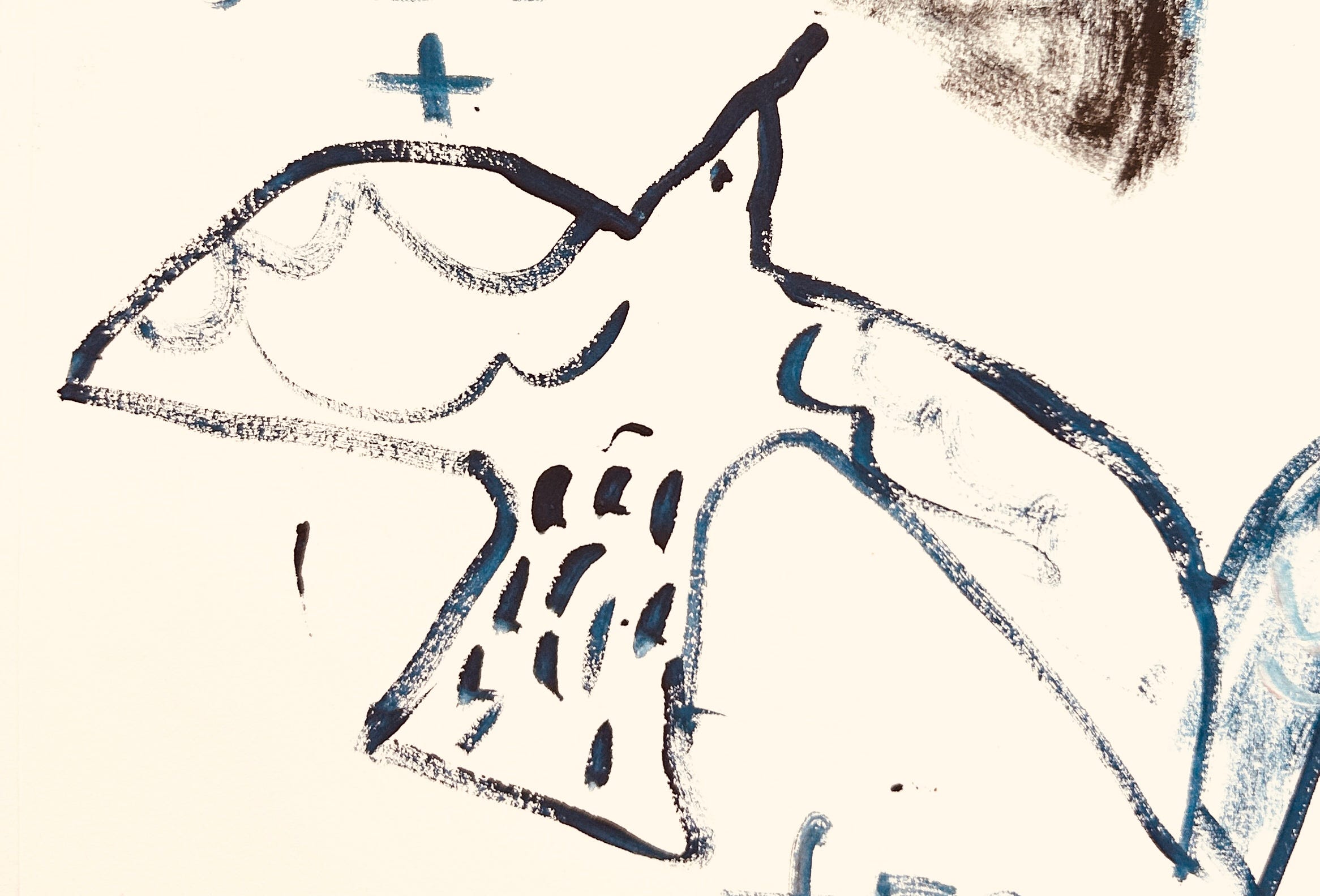
Long before most people read and write, they recognise, and similar symbols appear across cultures: a crescent moon, a cat, a tree, a bird, a vessel. Certain shapes carry meaning wherever they go, travelling through stories, religions, songs and artworks, gathering associations as they pass from one generation to the next. A blackbird is never just a blackbird. It flies in carrying centuries of anecdotes as messenger and omen and whether we believe those stories or not is almost beside the point. The stories have attached themselves to the shape.
Attaching stories to shapes is the way many artists build their visual vocabulary, myself included. I often draw wonky bowls, cups, baskets. On one level they’re simply objects I have on hand to draw as part of a still life. On another level they contain much larger ideas around nourishment and hospitality; transformation sometimes; even the body itself. The same thing happens with birds, rabbits and women - they arrive on my canvas carrying their own histories. A swan glides into a painting and brings centuries of myth with it. A rabbit appears at the edge of a garden. An angry woman takes a seat at the table.
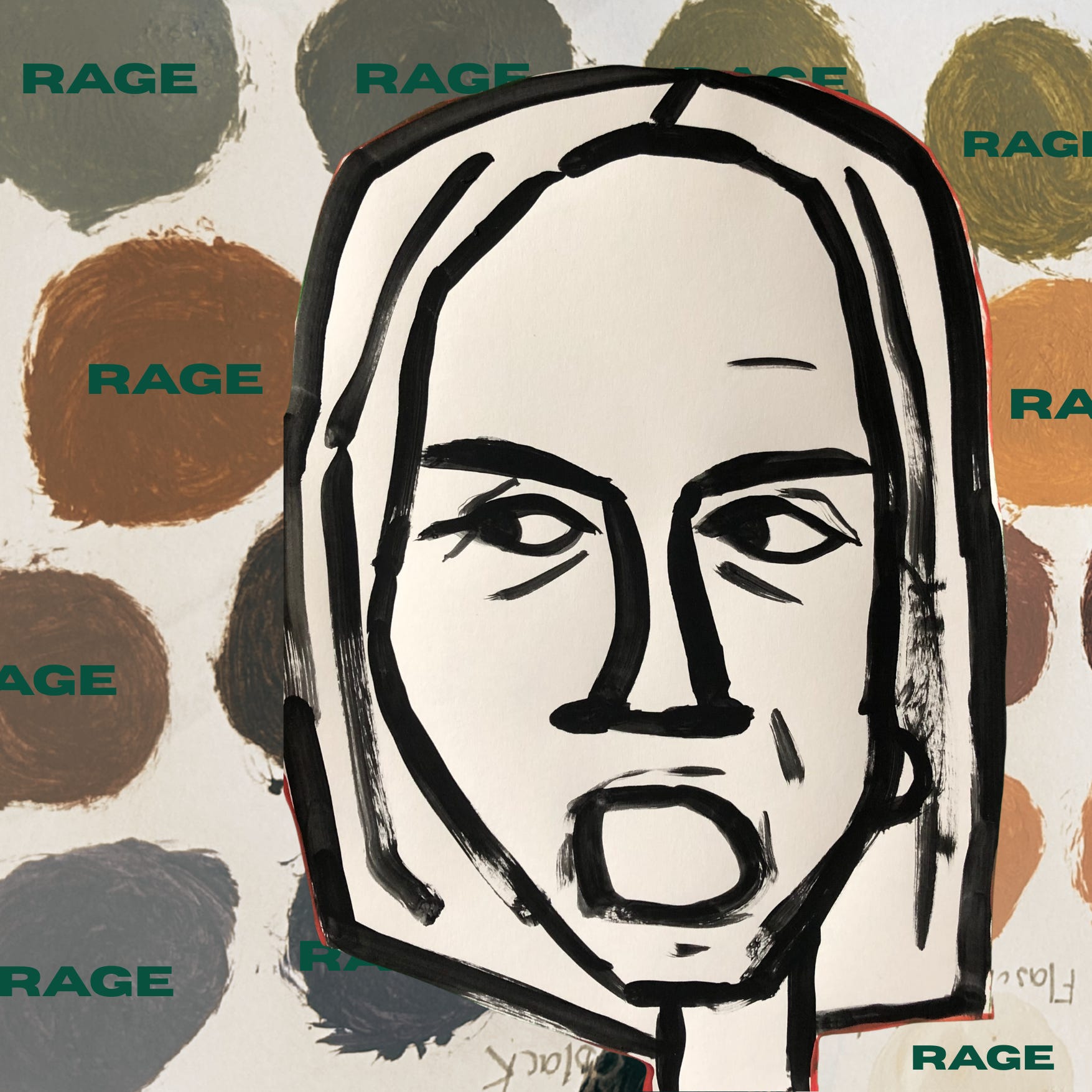
I’m drawn to myths and folk lore because they communicate something about the way humans make meaning from their ordinary lives. Myths recognise that we don’t experience the world as a collection of facts (G would argue with me about that), we experience it through relationships, stories and symbols. A bird can be a bird and a messenger. A tree can be a tree and a doorway. A bowl can be a bowl and a source of Awen.
Standing at the edge of the marsh in the early morning, phone held aloft waiting for Merlin to tell me what I’m listening to, I often feel caught between these two ways of knowing. Part of me wants the correct name and the satisfying tick on the life list: the certainty of identification. Another part is perfectly happy not knowing. Happy to sit with the silhouette, the call drifting across the cattails, the flash of red on a wing. Happy to let the bird remain, for a moment at least, a symbol waiting to reveal its story, and to remain, myself, exactly what I am: a woman standing in the marsh at dawn, holding a small glowing rectangle up to the sky, waiting for the universe to tell her what she's already hearing.
J x
Comments
Nothing yet. Say the first thing.
Sign in to join the conversation.