
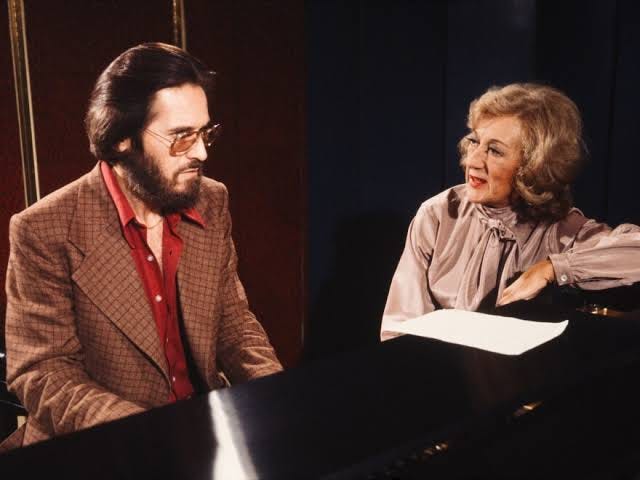
When Bill Evans sat down across from Marian McPartland in November 1978 for her Piano Jazz radio show, it was far from a formal Q&A session. The premise was simple: place two musicians at two grand pianos and let them talk through their instruments. The result remains one of the clearest windows into how a jazz mind actually works. For anyone outside the jazz world, the most striking part of their conversation is how Evans quietly dismantles the myth of pure, spontaneous magic. Behind every note, he explains, lies a deliberate and logical choice.
When McPartland asked how his playing had changed since his early days on classics like Waltz for Debby, Evans gave a surprisingly direct answer. He hadn’t changed his style to chase new trends; instead, he preferred to dig deeper into the same foundational elements he had used from the start. To him, true musical maturity was never about adding complex tricks, but about understanding core principles more profoundly.
That philosophy becomes immediately clear when Evans demonstrates his approach to harmony. In jazz, a standard tune is rarely played as written on the page. At the keyboard, Evans showed how he replaces standard chord notes with alternate tones to alter the overall harmonic color without destroying the original melody. To prove his point, he played the exact same musical phrase twice: first in its simplest, bare-bones form, and then with his signature modifications.
The conversation then shifted naturally to the physical mechanics of playing solo versus leading a trio. On his own, Evans noted, the pianist carries the entire weight of the performance—the left hand must anchor the rhythm and sketch the basslines while the right handles the melody. In a trio setting, however, having a bassist and drummer grounding the tempo frees up the pianist’s hands, allowing for lighter, far more reactive playing.
Throughout the broadcast, theory constantly gave way to practice. McPartland freely admitted to borrowing some of Evans’s accompaniment techniques, and the two frequently drifted into four-handed improvisations, stepping in and out of songs with natural ease. In the end, that remains the true value of this recording: it proves that before jazz becomes a complex art form, it is simply a shared language spoken by people who know the rules by heart.
Comments
Nothing yet. Say the first thing.
Sign in to join the conversation.