
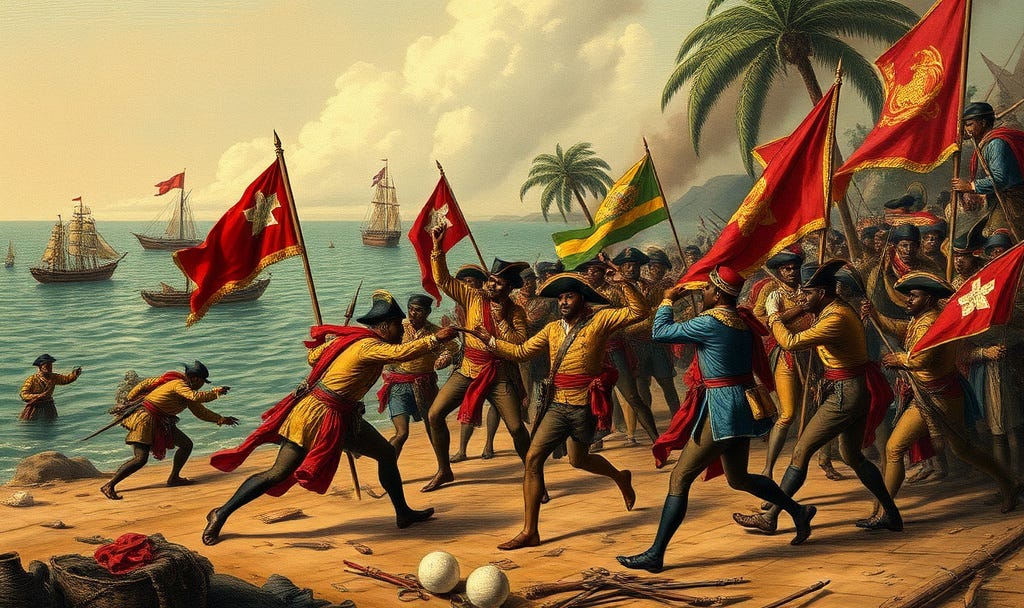
The struggle for independence in the Caribbean was shaped by centuries of colonial exploitation, slavery, and later economic marginalization. While emancipation in the 19th century ended slavery, true sovereignty came much later through organized political movements, labor unrest, and constitutional reforms.
Early Independence
Haiti (1804): The Haitian Revolution (1791–1804) was the first successful slave revolt in the Western Hemisphere, leading to Haiti becoming the first independent Black republic and the first Caribbean nation to break from European rule. Leaders like Toussaint Louverture and Jean-Jacques Dessalines were central to this movement.
Dominican Republic (1844): Declared independence from Haiti after 22 years of Haitian rule. Final sovereignty was achieved in 1865 after briefly reverting to Spanish control.
Cuba (1898): Independence from Spain followed two wars of independence and U.S. intervention in the Spanish-American War. Formal independence from U.S. oversight came in 1902, though U.S. influence persisted until 1934.
20th Century Decolonization
Labor Unrest and Nationalism: Widespread strikes in the 1930s across British territories (Jamaica, Trinidad, Barbados) highlighted poor living conditions and fueled nationalist movements. The Moyne Commission (1938) investigated these conditions, accelerating constitutional reforms.
West Indies Federation (1958–1962): A short-lived attempt to create a unified state among British Caribbean colonies. It collapsed due to internal disagreements, paving the way for individual independence.
Key Independence Dates
Jamaica: August 6, 1962 – First English-speaking Caribbean nation to gain independence from Britain. Leaders: Norman Manley and Alexander Bustamante.
Trinidad and Tobago: August 31, 1962.
Barbados: November 30, 1966.
Guyana: May 26, 1966.
Bahamas: July 10, 1973.
Grenada: February 7, 1974.
Saint Lucia: February 22, 1979.
St. Vincent and the Grenadines: October 27, 1979.
Belize: September 21, 1981.
Antigua and Barbuda: November 1, 1981.
Saint Kitts and Nevis: September 19, 1983.
French and Dutch Territories
Many French islands (e.g., Martinique, Guadeloupe) opted for integration with France rather than independence, becoming overseas departments. Dutch territories like Aruba and Curaçao pursued autonomy within the Kingdom of the Netherlands.
Conclusion
The independence movements in the West Indies were not isolated events but part of a broader struggle against centuries of colonial domination, economic exploitation, and social inequality. From Haiti’s groundbreaking revolution in 1804 to the wave of decolonization in the mid-20th century, these efforts reflected the resilience and determination of Caribbean peoples to achieve self-governance and national identity. While some territories chose integration with former colonial powers, most pursued sovereignty, shaping diverse political and cultural landscapes across the region. Ultimately, these movements laid the foundation for modern Caribbean nations and their ongoing quest for economic stability and global recognition.
Comments
Nothing yet. Say the first thing.
Sign in to join the conversation.