
Hello hello!
Welcome to another edition of Why Join.
The market is a grading machine. It grades you on what you are, not what you were. Allbirds made a comfortable shoe. The market gave it a $4B grade in 2021. Then it gave it a $21M grade in 2026. Revenue dropped from $298M to $152M in three years. Same shoe. Fewer people wanted it.
Like. Come on.
This wasn’t a pivot. Pivots require a product. A fire sale followed by a press release followed by retail traders doing what retail traders do. There’s no AI. There’s no product. There’s a ticker symbol that learned the password.
Which, okay, actually tells you something real. There’s this concept in economics called a signaling game. Markets run on imperfect information, so sometimes the signal becomes worth more than the thing it’s supposed to represent. A Rolex signals wealth whether or not the person wearing it has any. An “AI company” press release signals growth whether or not any growth exists. Signals work because they’re hard to fake long term. Short term though? Embarrassingly cheap. Allbirds up 800% is what the short term looks like.
It happens every cycle. Blockchain in 2017. Metaverse in 2021. A dying company finds the magic word, says it loudly, collects the pop, and we all move on when reality catches up. The word right now is AI. Some companies are borrowing it. A few are actually earning it. Worth knowing the difference.
On to who raised this week.

You control budgets, manage pipelines, and make decisions, but you still have trouble keeping up with everything going on in AI. If that sounds like you, don’t worry, you’re not alone - and The Deep View is here to help.
This free, 5-minute-long daily newsletter covers everything you need to know about AI. The biggest developments, the most pressing issues, and how companies from Google and Meta to the hottest startups are using it to reshape their businesses… it’s all broken down for you each and every morning into easy-to-digest snippets.
If you want to up your AI knowledge and stay on the forefront of the industry, you can subscribe to The Deep View right here (it’s free!).
If you’re interested in sponsoring this newsletter, please reach out here.
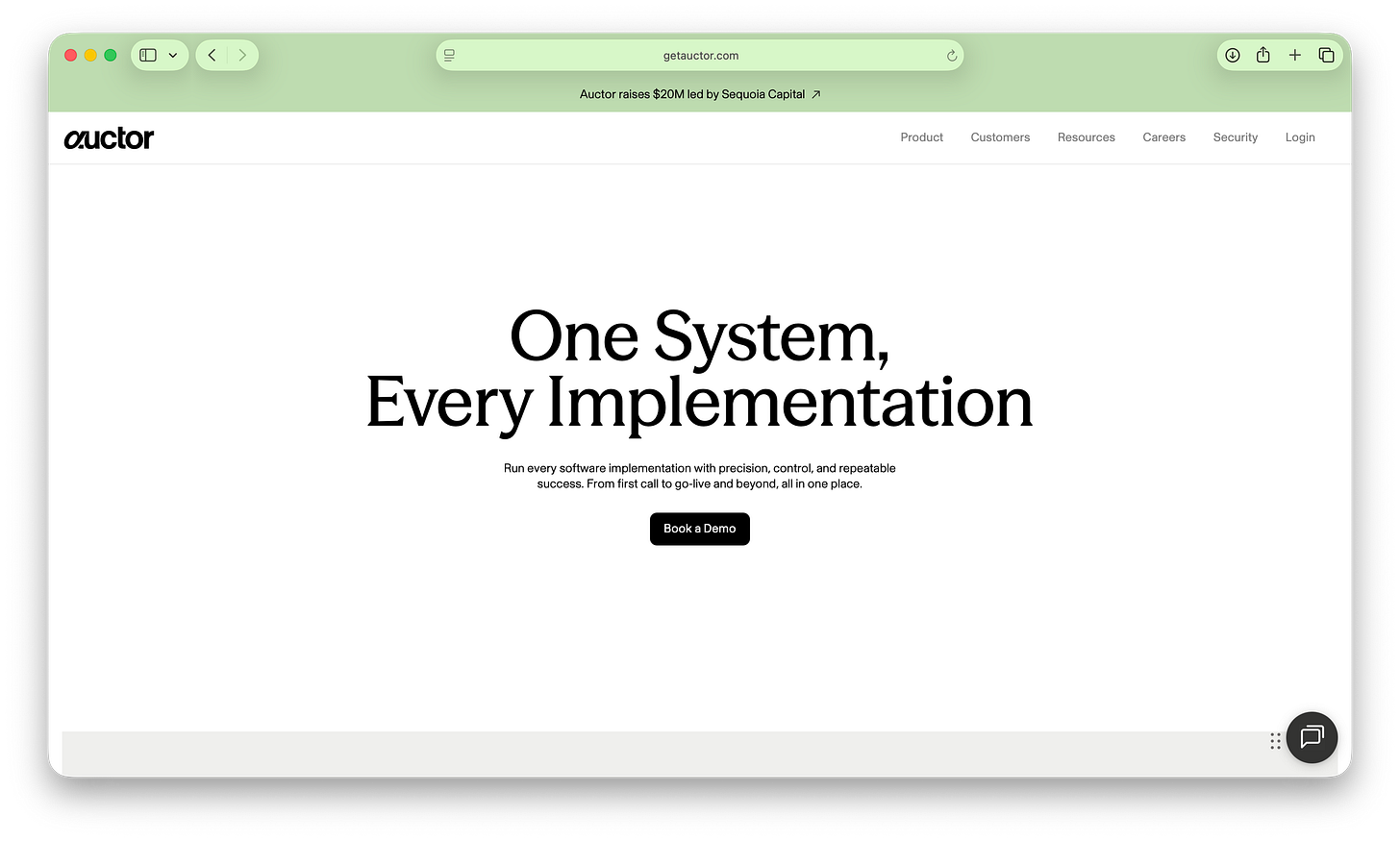
💵 Raised: $20M (including Series A), led by Sequoia. Microsoft’s M12, HubSpot Ventures, Workday Ventures, OneStream, YC, Dig Ventures, and Tercera also in.
One-liner: AI platform that fixes enterprise software implementations before they go sideways.
Why it’s a fave: Here’s a stat that should make every CTO uncomfortable: more than two-thirds of large-scale technology programs at large companies aren’t delivered on time, on budget, or within scope. The cost of these failures often runs into tens of millions per year per company. And it’s getting worse as enterprises take on more ambitious deployments, especially AI.
The dirty secret is that most failures happen early. Not in the coding or the rollout, but in the discovery phase, when the enterprise is trying to figure out what it actually needs, how the new software integrates with existing systems, and how delivery should work. Get that wrong and everything downstream is expensive garbage. Consultants and integrators charge enormous fees to do this work manually, and it still goes wrong constantly.
Auctor automates that early-stage context building. It helps enterprises and integrators understand needs, map existing systems, and build a clear plan that links decision-making to execution.
Hiring: Software Engineer, Software Engineer, Applied AI, Founding Account Executive, Strategy & Operations - New York
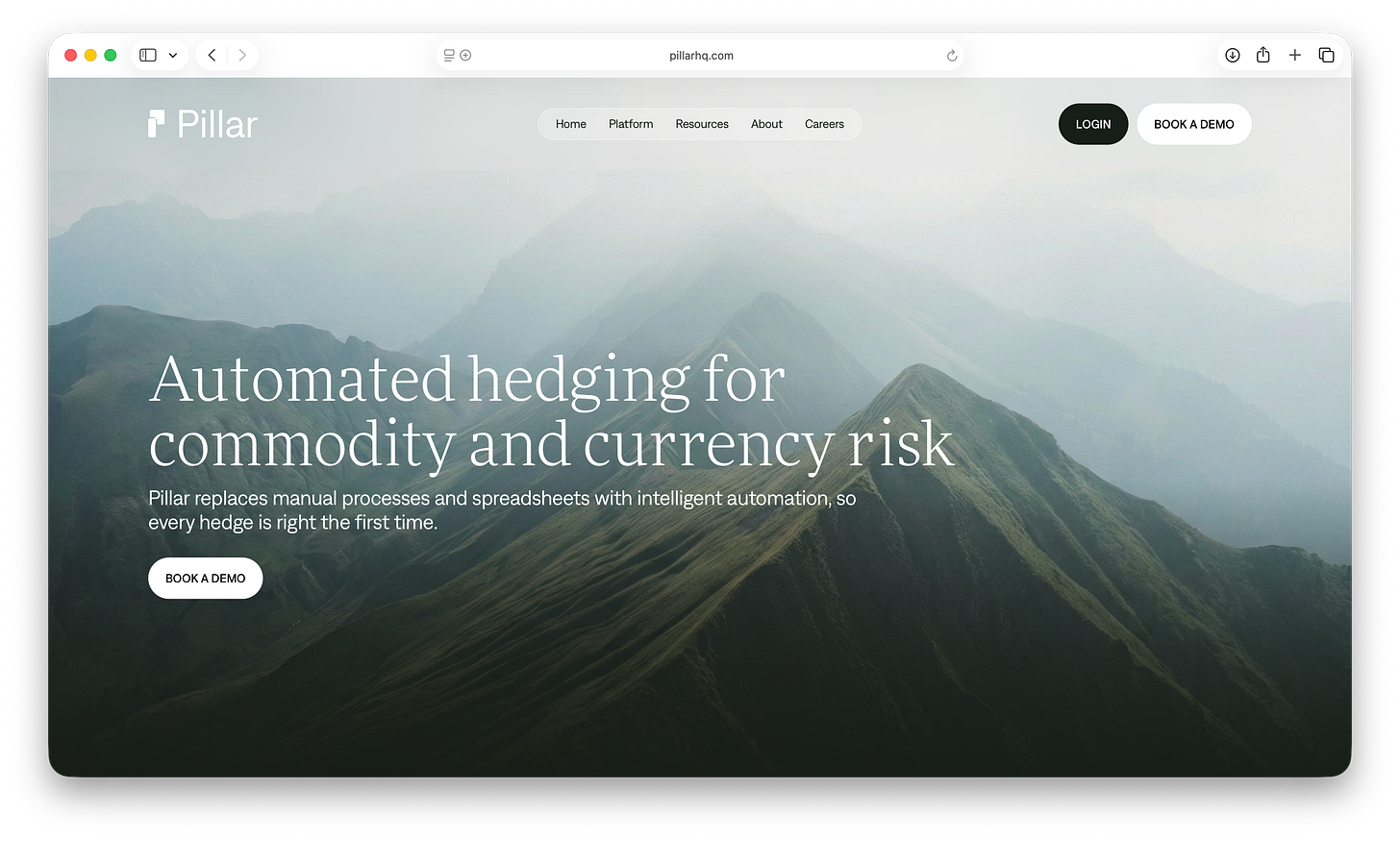
💵 Raised: $20M seed, led by a16z. Crucible Capital, Gallery Ventures, and Uber CEO Dara Khosrowshahi also in. $23M raised to date.
One-liner: Automated hedging platform for commodity-driven businesses that can’t afford a Goldman Sachs trading desk.
Why it’s a fave: If you’re a metals recycler or a food importer, commodity price swings can wreck your margins overnight. Geopolitics has made this worse, not better. The problem is that sophisticated hedging tools have always been a big bank luxury. Goldman has the infrastructure, the talent, the derivative trading desks. A mid-sized metal recycler in Ohio does not. Risk management has been treated as a luxury despite being essential for the businesses that actually produce and move physical goods around the world.
Pillar uses AI to ingest data from client contracts, cash flows, inventories, ERP systems, spreadsheets, even WhatsApp messages (because that’s how global trade actually works), and continuously analyzes exposure across commodities, FX, and freight. It builds and manages a hedge portfolio, adjusts positions automatically based on market conditions, volatility, and risk tolerance, and executes trades. Turns hedging from a periodic manual decision into a continuous autonomous system.1
Hiring: Staff Software Engineer - Full stack, Quantitative Software Engineer Lead, GTM Associate, Business Development Representative, Customer Success Manager - New York; General Manager, Singapore - SG
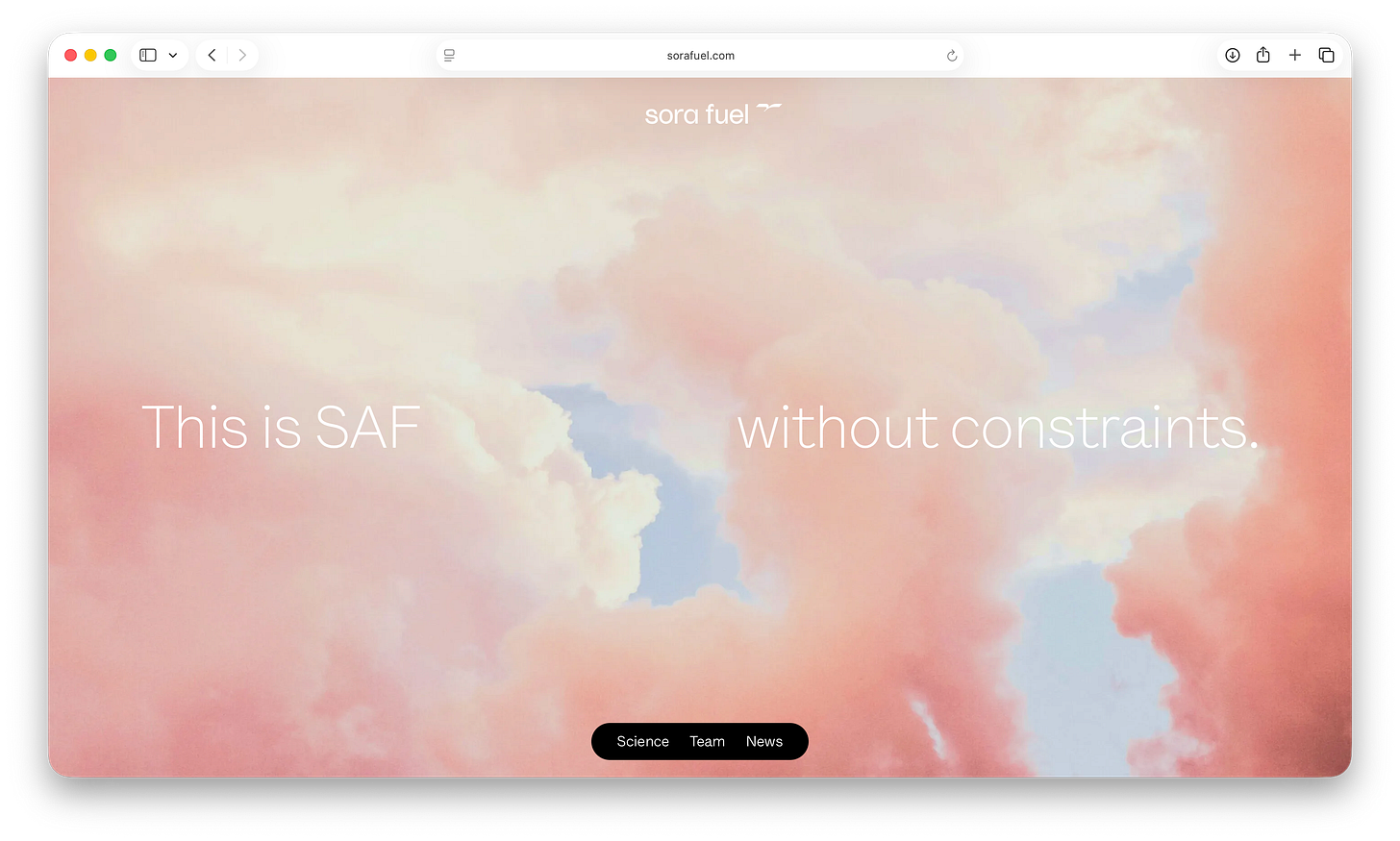
💵 Raised: $14.6M, co-led by Spero Ventures and Inspired Capital. Engine Ventures and Wireframe Ventures also in.
One-liner: Makes jet fuel from air, water, and clean energy.
Why it’s a fave: Aviation is roughly 3% of global carbon emissions and growing. Everyone agrees sustainable aviation fuel (SAF) is the answer. The problem is nobody can make it cheaply enough. The bottleneck is carbon feedstocks, green hydrogen, and clean power. Traditional direct air capture alone costs $500+ per ton of CO₂. That math doesn’t work for fuel that needs to compete with $3 kerosene.
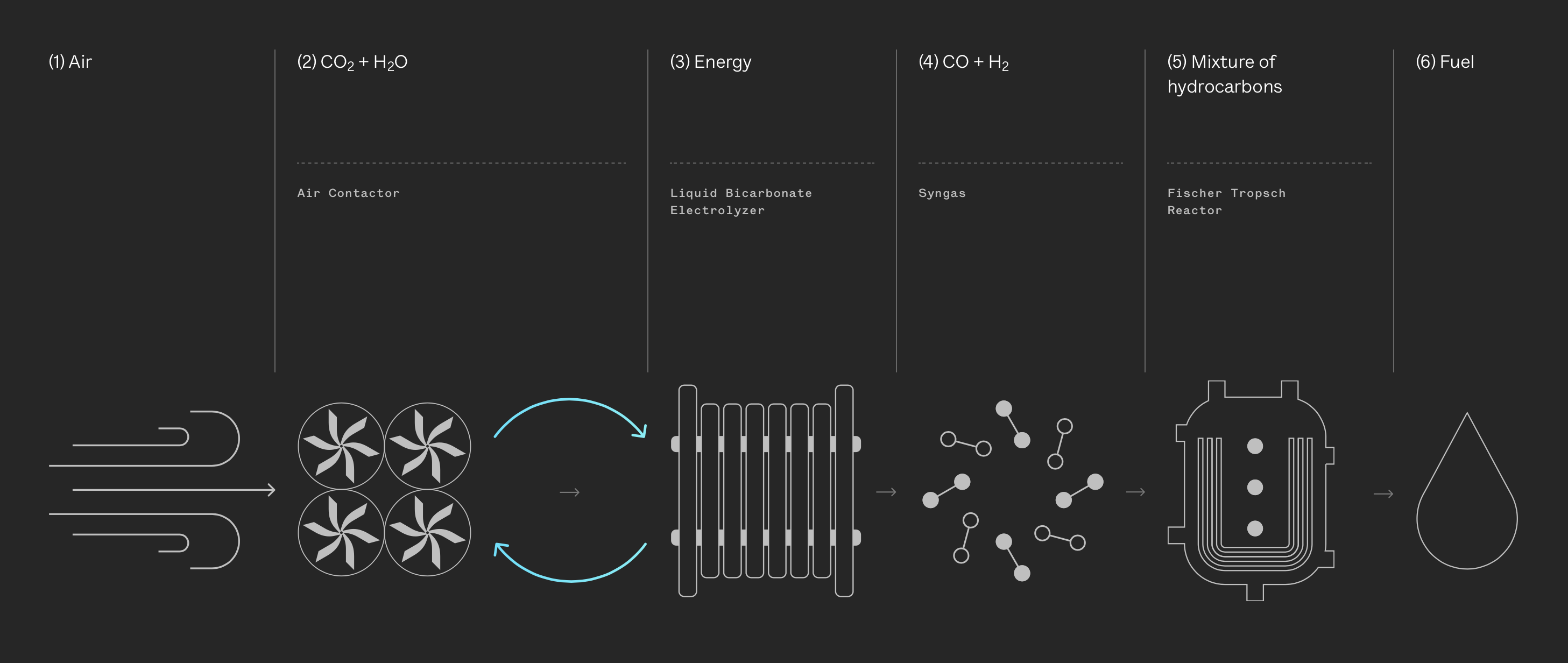
Sora built technology that captures CO₂ from ambient air and converts it into syngas in a single integrated step, co-producing hydrogen while skipping the sorbent regeneration step that accounts for over 90% of the cost in conventional DAC. They claim carbon capture at under $50 per ton, roughly one-tenth the cost of existing approaches. If that holds at scale, it could enable SAF production below $5 per gallon, which starts to approach unsubsidized cost parity with fossil fuel. That’s the number that matters. Subsidized cost parity is interesting. Unsubsidized cost parity changes the industry.2

💵 Raised: $20M Series A, led by NEA. Northzone, Seedcamp, and PSV Tech also in. ~$26M total raised.
One-liner: AI agents that actually do compliance work, not just manage it.
Why it’s a fave: Financial compliance is one of those areas where the labor is rule-based, repetitive, and absurdly expensive. Analysts spend their days cross-referencing documents, mapping ownership structures, researching registries, manually assessing risk. It’s exactly the kind of work modern AI should be eating, but most “compliance tech” still just helps you organize the workflow rather than doing the actual work inside it. Moody’s, Fenergo, Pegasystems... they manage cases and data. Someone still has to make the determinations.
Spektr’s distinction is small but meaningful: their AI agents perform the analysis end-to-end. Document reviews, ownership mapping, risk analysis, sanctions monitoring. The human stays in the loop for the final decision but doesn’t have to do the underlying grunt work to get there. They sit one layer below the workflow tools and execute.3
Hiring: SDR, Growth associate, Product Manager, Compliance Specialist, Partnership Manager - London; AI Engineer, DevOps Engineer, Implementation Specialist, Customer Growth Manager, Product Designer - Copenhagen
OpenAI acqui-hires personal finance startup Hiro: Hiro offered AI-powered financial planning for consumers. Founded by Ethan Bloch, who previously sold neobank Digit for ~$230M. Backed by Ribbit, General Catalyst, Restive. App is shutting down and data gets deleted, so this is purely a talent grab. Not OpenAI's first fintech acquisition either. Interesting fact: Bloch also built his own autotrading OpenClaw agent called RoboBuffett.
Snap cuts 16% of staff, blames AI: CEO Evan Spiegel announced ~1,000 layoffs, citing AI improvements that let employees “move more quickly.” Also closing 300+ open roles. Cuts will reduce annualized costs by $500M+ by H2. Q1 revenue ~$1.53B (up 12%), adjusted EBITDA ~$233M. Stock down 31% YTD. AI is the convenient scapegoat of 2026. The reality: just last month activist investor Irenic Capital took a stake and demanded layoffs, telling Spiegel “Like many of your peers, you over-hired. Unlike your peers, you haven’t course corrected.” Snap also cut 20% in 2022 and 10% in 2024. Not exactly out of character.
Google launches Gemini app on Mac: Option + Space pulls up a floating chat bubble. Can share your active window so Gemini can see what you’re looking at and answer questions about it. Also handles file uploads, image/video/music generation. Looks a lot like Apple’s upgraded Spotlight. But Anthropic’s Claude and ChatGPT for Mac already go further with Computer Use features that let the AI take actions on your behalf. Google playing catch-up on the desktop AI assistant race.
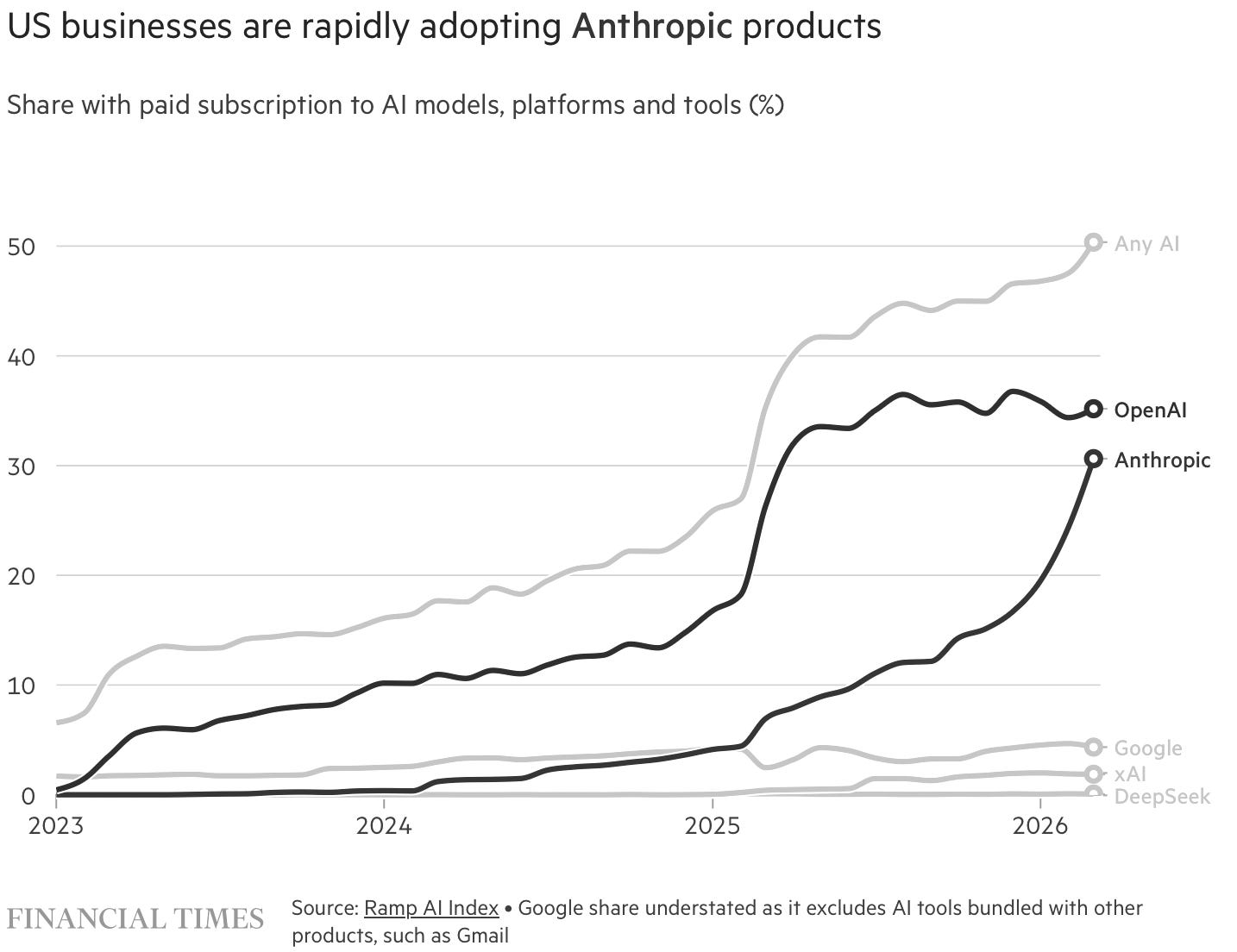
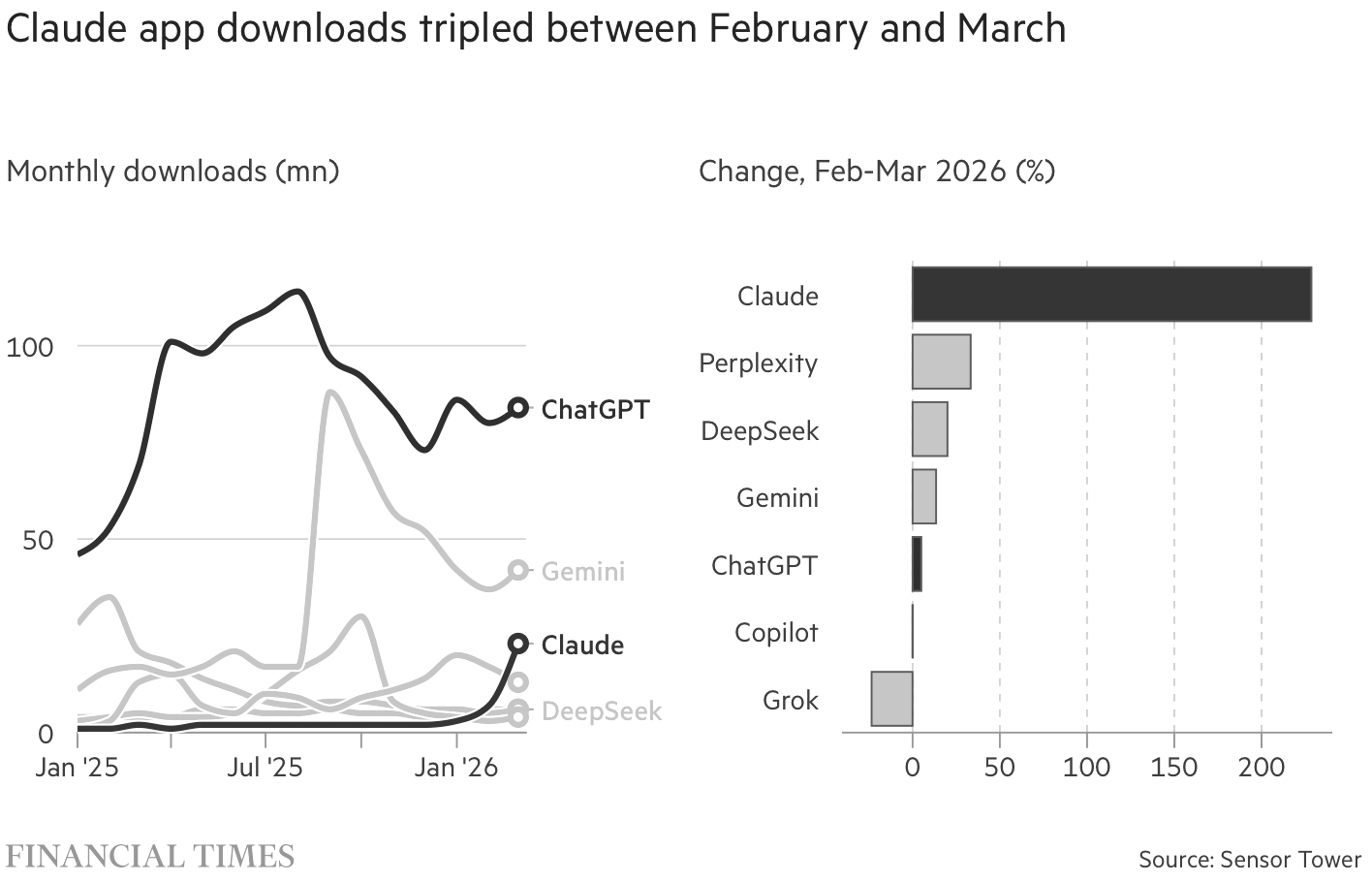
Anthropic closing in on OpenAI with US businesses: Per Ramp data ($100B in annual spend, 50K+ customers), nearly 1 in 3 US businesses paid for Anthropic tools in March, up 6+ points MoM. OpenAI flat at 35%. Claude downloads tripled to 21M in March while ChatGPT downloads grew just 5%. ChatGPT weekly active users fell MoM in the US for the first time since early 2024. Anthropic says it hit $30B annualized revenue, up from $9B at end of 2025. Claude is now more widely adopted than OpenAI in US info, financial, and professional services.
Anthropic shrugs off $800B+ valuation offers: VCs pitching preemptive rounds that would value Anthropic at $800B+, potentially matching or passing OpenAI ($852B post-money). Anthropic isn’t biting, for now. Revenue is at $30B annualized (up from $9B end of 2025), so investors are saying “worth it.” The company has massive capex commitments though: $50B for its own data centers, $30B on Microsoft’s cloud, plus billions/year on AWS. Secondary market demand for Anthropic shares is reportedly “nearly insatiable.”
SpaceX eyeing $1.75T IPO: Starlink hit $11.4B revenue in 2025 (up 50% YoY) at a 63% EBITDA margin, the only profitable SpaceX segment. Users doubled to 10M by Feb 2026. Aviation revenue up nearly 10x, maritime projected at $1.9B in 2026. The other businesses are a different story: xAI burned $9.5B through Q3 2025 on just $210M in revenue, and rocket launch growth has slowed. SpaceX's $1.75T target works out to a 109x price-to-sales multiple. Quilty Space projects Starlink hitting $20B revenue in 2026. (Amazon's Kuiper is racing to meet its FCC deadline of 1,618 satellites by July to keep its spectrum.)
AWS launches Amazon Bio Discovery: New AI tool that helps scientists design and test new drug molecules without writing code. Comes with pre-built AI models that generate drug candidates and an AI agent that walks researchers through the process. Early users: Bayer, Broad Institute, Voyager Therapeutics. (19 of top 20 global pharma cos already use AWS.) In a Memorial Sloan Kettering pilot, it generated ~300K possible antibody molecules and narrowed them to 100K worth lab-testing. Months of work done in weeks.
Amazon buys Globalstar for $10.8B to take on Starlink: Stock and cash deal. Amazon will use Globalstar’s satellites to offer voice, data, and messaging services starting 2028. Also announced an Apple partnership so Amazon’s satellites connect to iPhones and Apple Watches for emergency texting (Globalstar was already doing this with Apple). Comes on top of Amazon’s own Project Kuiper, recently renamed Leo, which launched its first 27 satellites last April. Starlink is still way ahead with thousands of satellites and millions of customers, plus a $1T+ IPO filing this month.
The Wayback Machine is in trouble: Major news outlets are blocking the Internet Archive from preserving their content. Per Originality AI, 23 major news sites are blocking ia_archiverbot, including the New York Times. USA Today (which owns 200+ outlets) is also blocking. Reddit too. The Guardian doesn’t block but excludes content from the Internet Archive API. Publishers’ stated reason: fear that AI companies will use the archive to train models. The irony is thick. USA Today just used the Wayback Machine in a major ICE accountability story, even while blocking the tool from archiving its own work. Over 100 journalists (Rachel Maddow, Taylor Lorenz, etc.) signed an EFF/Fight for the Future letter supporting the Archive. The Internet Archive has preserved over a trillion web pages in 30 years. No comparable public tool exists.
Outlander VC: Junior Partner or Partner - San Francisco, Los Angeles, or New York City
[untitled]: Software Engineer (iOS/MacOS), Software Engineer (Full stack), Software Engineer (Android), Product Designer - New York
Roamr: Head of Marketing - Remote Europe or US
Protege: Business Development Representative, GM, New Vertical, Product Manager, Platform, Product Manager - Privacy, Rights & Trust, Solutions Engineer (Media), Partnerships Operations Lead (Healthcare) - Remote
maintouch: Engineer (Full stack + AI), Founding Growth Lead - New York
Plume: Software Engineer, Founding Engineer, Founding Deployment Strategist - Paris, France
AfterQuery: Software Engineering Intern, Software Engineer - Platform/Applied AI (Full stack), Marketing Lead, Strategic Projects Intern - Coding, Strategic Projects Associate - Coding, Growth Associate, Growth Intern - San Francisco
Fly.io: Support Engineer - Remote (UTC-7 to UTC-4, UTC+7 to UTC+13)
Peec AI: Brand Designer, Community Manager, Customer Experience Associate, Financial Analyst - FP&A, Founding SDR, Senior Full stack Engineer, Data Scientist, Internship (Product, GTM, Talent, HR, or Operations) - Berlin, Germany
Stacks: Growth Marketer, Founding Product Marketing Manager, Senior Full stack Engineer, Accounting Engineer, Account Executive - Mid Market, BDR - Mid Market & Enterprise - Amsterdam; London
Wordware: Senior Frontend Engineer, Ex-YC Founder, Product Designer - San Francisco
Retell AI: Research Scientist - LLM, GTM Recruiting Lead, Founding GTM Engineer - San Francisco
Superset: Former Founder - San Francisco
Superblocks: Software Engineer - AI Platform, Infrastructure Engineer / SRE, Sales Engineer, Product Manager - AI Agent - New York
If you haven’t yet, please subscribe, like, leave a comment, and share it! It helps us continue to bring you the most interesting news + nuance in tech and business every week.
See you Saturday, Ryan
Sponsorships: We are now accepting sponsors for Q2 ‘26. If you are interested in reaching my audience of founders, investors, and tech executives, send me an email at chief@whyjoin.xyz.
CEO Harsha Ramesh was a macro trader who managed large derivative books and worked with the biggest companies in the world on FX and interest rate hedging. Then he spent time at a medium-sized import-export business and saw the gap firsthand. Competitors are legacy bank desks and commodity risk platforms like Topaz and RadarRadar, but those aren’t built for SMEs.
Founded in 2024, based in Boston. The new capital funds a pilot production facility to scale from gallons to barrels of daily output, with the demonstration milestone expected within 18 to 24 months. Marc Tarpenning (Tesla co-founder, now at Spero Ventures and on Sora’s board) called it “the first that makes an economically viable air-to-fuels pathway genuinely credible.” Big claim. But the underlying physics question, whether you can do DAC at $50/ton reliably and repeatedly, is the whole ballgame here.
Skarnager and CTO Ciprian Florescu previously built HelloFlow, a digital onboarding startup that they sold to Trulioo in under two years for $50M+ on just 1.5M EUR raised. They brought back two senior team members from that company to build Spektr.
Comments
Nothing yet. Say the first thing.
Sign in to join the conversation.