
Much has been made about the age—or rather, the lack thereof—of Curry Barker, the director of Obsession, the horror film that has captivated audiences since its release in May.
Barker was just 25 when he made his theatrical debut after building a faithful audience through YouTube shorts. His new film is a predatory tale in which a woman’s mind becomes the object of manipulation by a lonely young man.
Another filmmaker currently dominating the box office also directed his breakthrough at 25. Steven Spielberg directed the made-for-television thriller Duel. More than five decades and many films later, he has returned with Disclosure Day, another story in which women’s minds become a central object to inhabit—this time manipulated by government forces intent on concealing the truth about possible alien life.
Barker and Spielberg are filmmakers at opposite ends of their careers with unmistakably different artistic sensibilities. Yet both arrive at the same fixation: female consciousness as something to be entered and controlled. For all of their cinematic style, neither film offers much curiosity or depth about the women at the center of its own story.
Spielberg's career can be divided into three acts, the first being films tethered to terror in the everyday spaces (beaches, highways, the home), his second being films that push his ideas around mythical scale (the Indiana Jones and Jurassic Park films), and now his third act has become hyperfocused on whether the institutions around us—the media, government, technology, even marriage—actually have our best interests at heart. It's no wonder this latest entry in Spielberg's third act feels strangely disjointed, as though it's chasing the memory of a classic Spielberg film rather than discovering something new.
Spielberg opens the film with an in-your-face professional wrestling match that is followed by an obvious setup for a chase sequence. Almost immediately the screenplay begins explaining itself, with every character carrying exposition, and the villains and their henchmen announcing themselves in broad strokes. Josh O’Connor stars as the tech whistleblower Daniel Kellner alongside Eve Hewson as his devoutly Catholic girlfriend, Jane, and Colin Firth as the dastardly Noah Scanlon, the CEO of Wardex, the government agency attempting to suppress critical information regarding alien life. All of them, and many other secondary and tertiary characters, are introduced in this fast paced, yet overstuffed opening sequence. Beginning in the middle of the action should create momentum, but here it merely jostles our understanding of key information that we as the audience should know or care about. Spielberg directs with his reliable flair, but even his command of movement and staging can't disguise a David Koepp screenplay (his fifth script collaboration with Spielberg) that insists on literalism and tropes we’ve seen before.
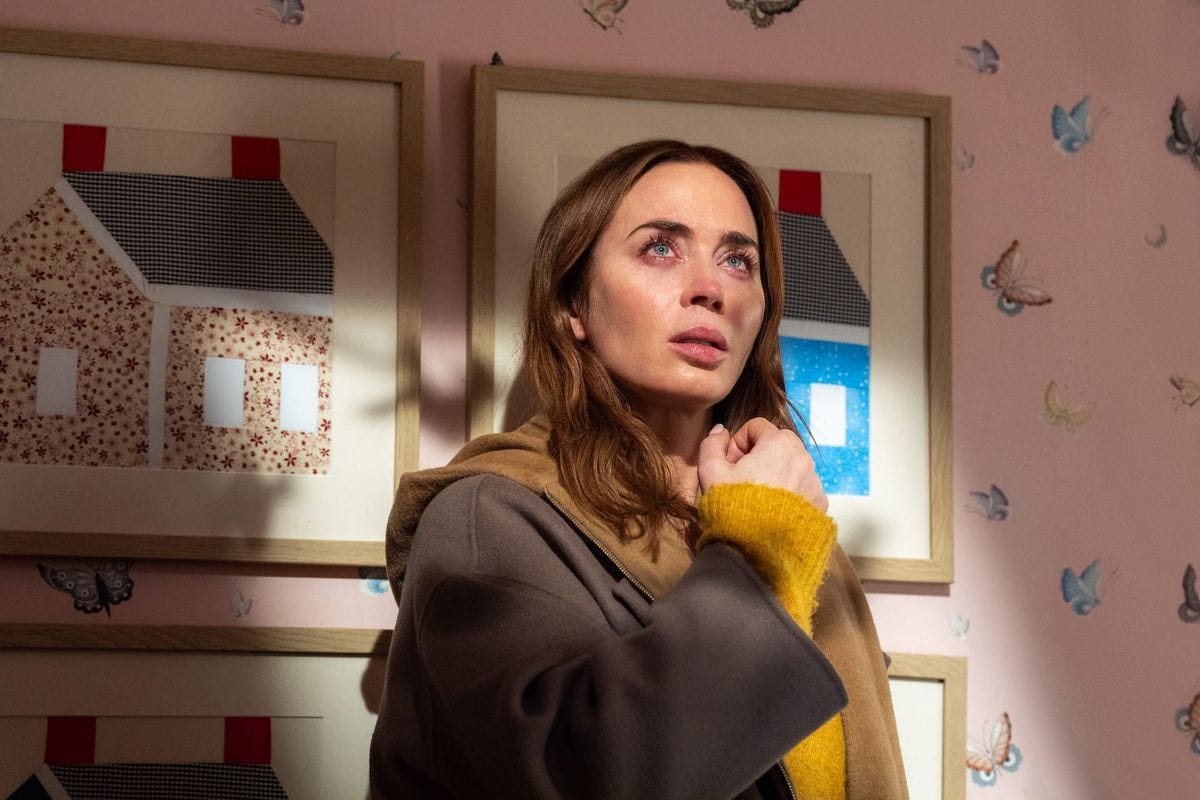
Parallel to Kellner, Kansas City meteorologist Margaret Fairchild (Emily Blunt) starts her day with her musician boyfriend Jackson (Wyatt Russell). During breakfast, Margaret seems off. She randomly speaks fluent Russian, she’s drawn to a cardinal that flies into their apartment, and she pauses as if her mind is briefly no longer her own. Blunt would seem the ideal actress to play a woman who experiences a full range of emotions from panic to possession. She’s put through the ringer in this film, and yet this is another odd choice for such an expansive, gifted actress. Whether by design or circumstance, over the last decade she seems to live mostly in ensembles or films where she is the foil for the male co-lead, but I’d love to see her as the total center of a movie. I yearn for her to return to films like Sicario, My Summer of Love, or Sunshine Cleaning. Few actors can balance flat out comedy, vulnerability, and stealth action as effortlessly as Blunt. Her character's mind and connection to alien life are the important plot points in this film, not who she is when she isn't joyfully singing Gwen Stefani's "The Sweet Escape" on the way to work in one memorable scene.
When Margaret has her big emotional breakthrough towards the film’s climax, the moment doesn’t belong entirely to Margaret. A literal replica of her childhood home has been set up so that her memories can be mined as the connective tissue to unexplained extraterrestrial life. Spielberg externalizes trauma as a physical set, turning Margaret's interior life into one piece of a much larger puzzle on the way to exposing government secrets. Childhood bedrooms are a reoccurring place for characters in Spielberg’s work, think E.T. or The Fabelmans. Blunt throws herself into the sequence, but even her revelatory moment ultimately serves the plot's search for answers rather than her character's search for self-understanding.
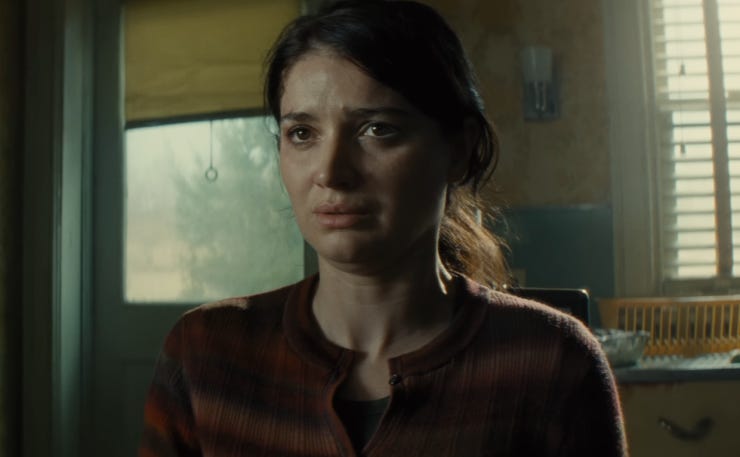
By contrast, Jane is etched more as a device that is meant to bring Noah closer to Daniel. Hewson is a fine actress as well, I’ve particularly enjoyed her work in television on the series Bad Sisters and The Knick. Here her piercing blue eyes that are pools for emotion are zapped of life when Noah inhabits her mind to trick her into killing Daniel. Jane’s back story of living at a convent is given some weight, but it feels like it’s only in service of stoking at religious themes that are expected in Spielberg’s work, it’s not a dimensional look at a woman experiencing a crisis in faith at the discovery that aliens are very real and we as humans have done very bad things to them since first contact decades ago.
In the end, Margaret and Jane might appear to be the film's most important characters. Margaret delivers the televised message that humanity is not alone, while Jane provides the literal final jolt of energy needed to expose the truth. Yet their importance is largely functional. Margaret's final plea is simply to "listen”, though the men around her have spent the entire film listening only for answers that never really arrive.
If a young man of today had his choice of an ideal woman, would she be picture perfect for TV like Margaret or the supportive presence with a surprising past like Jane? According to Barker, she’s somewhere in between in the form of a cool girl co-worker whom his protagonist, Bear (Michael Johnston), has a serious crush on, but feels too intimidated to act on his feelings. Instead, he happens upon a magical object that grants him one wish, which, much to his eventual dismay, is to have Nikki (Inde Navarrette), the co-worker, love him more than anyone in the world, including himself.
Arguably one of the breakout box office successes of the year so far, Obsession arrives at a moment when conversations about male loneliness, declining rates of dating, and uncertainty around traditional masculine roles have become part of our culture. Bear is a stunted character, which makes him immediately relatable. His desire to place Nikki under his spell eliminates the possibility of rejection altogether. The film transforms the fantasy of unconditional love into a horror story about the erasure of another person's will.
Bear is intentionally weak. Johnston rarely projects confidence or charisma, which makes the character actually work, even if I found him grating to watch. The problem isn’t that Bear is awkward; it’s that the screenplay rarely asks him to do anything else. His emotional paralysis is established early and then repeated until the horror mechanics take over.
What makes Obsession unsettling isn't simply Bear's wish, but the perspective through which Barker asks us to experience it. Bear isn't introduced as a monster. He's shy, emotionally immature, and terrified of rejection. The film initially encourages us to sympathize with his desire for certainty before exposing the terrifying cost of eliminating another person's ability to choose. Yet even as Nikki's agency disappears, the film remains primarily invested in Bear's guilt and predicament rather than what it feels like for Nikki to lose ownership of her own mind.
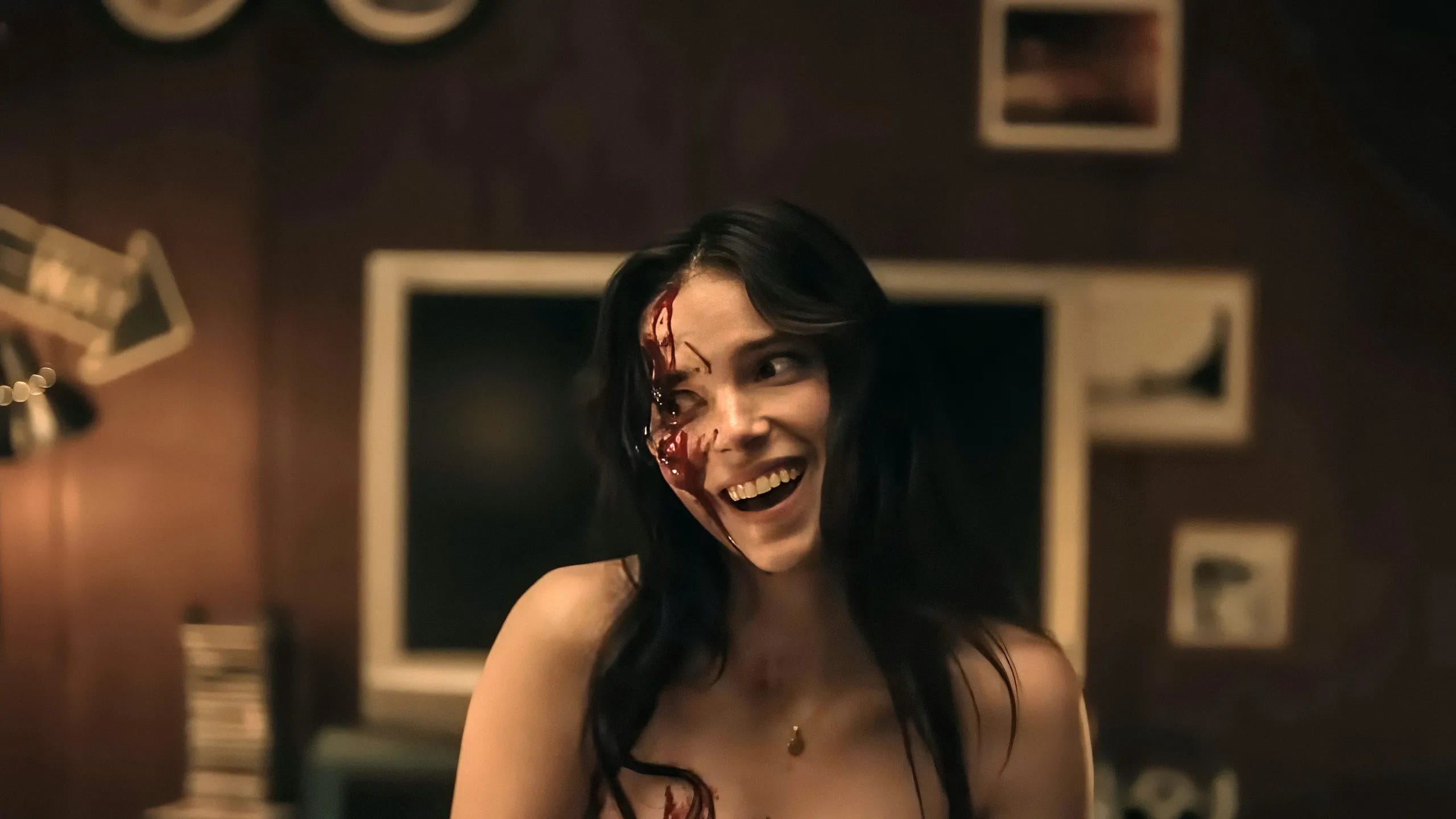
Nikki as a character can be hard to properly assess because we only see her through Bear’s eyes. Before her transformation into being possessed with a terrifying love for Bear, Nikki seems warm, easy to chat with, and orders a round of shots at the bar for friends. By all definitions she’s a catch. She even offers a chance for Bear to tell her if he’s interested in her when he drops her off at her home, but he fumbles the moment and doesn’t clearly communicate what he thinks he wants.
Navarrette gives a memorable turn here because she’s asked to act in a high register and do things that can easily make audiences squirm in their seat. As the action ratchets up, she is unflinching in her obsession and goes so far as gruesomely murdering the only other important female character in the film, her other co-worker Sarah (Megan Lawless).
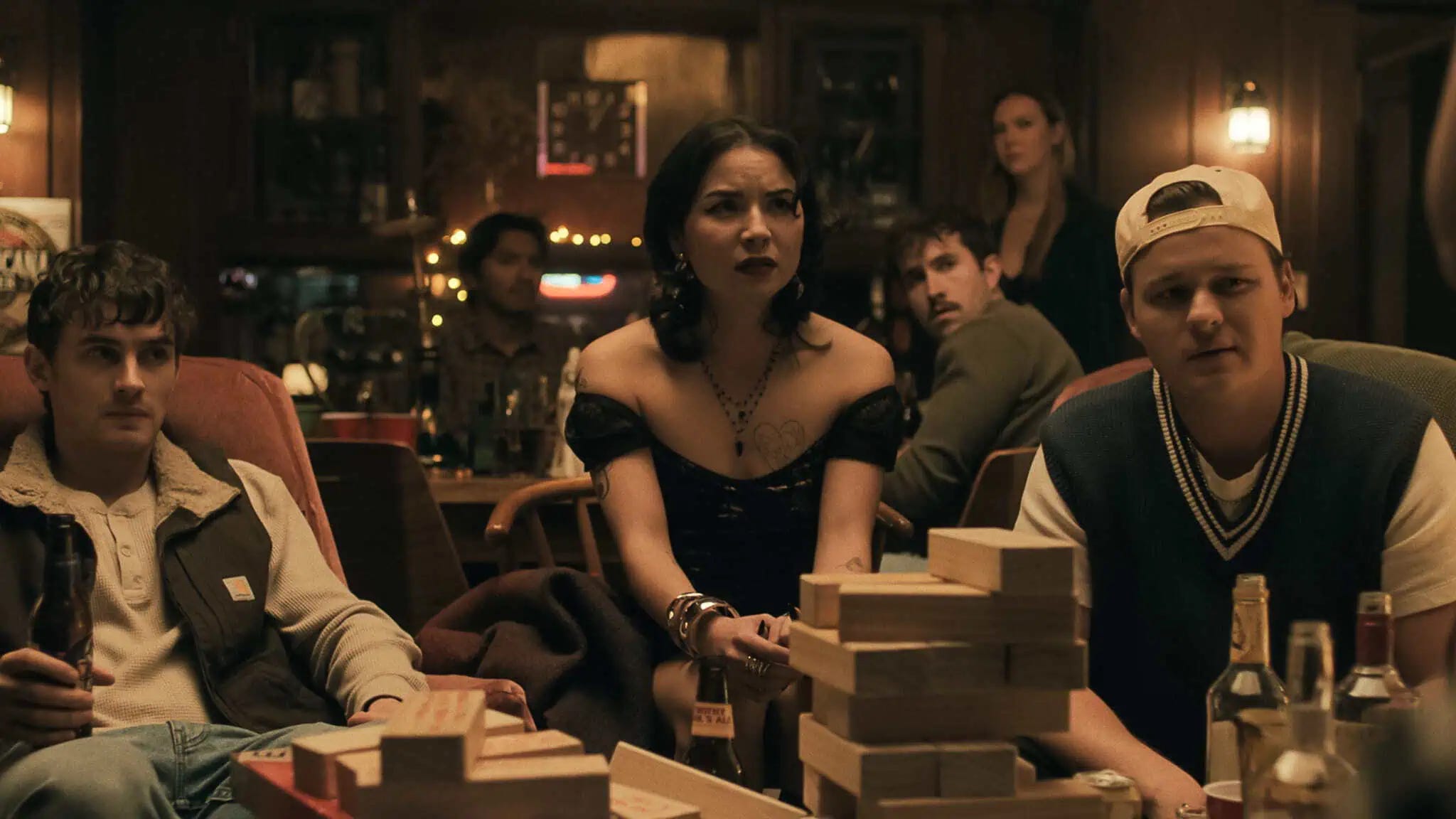
By comparison, Sarah occupies much the same position as Jane in Disclosure Day. She exists largely in relation to Bear's journey, carrying the final pieces of information that move the narrative toward its conclusion. Even her death functions less as the loss of a person than as another escalation in Bear and Nikki's story. Like Jane, Sarah is granted just enough narrative space to become useful before the film moves on.
The audience I saw the film with laughed at the right parts and jumped in their seats in the other right parts. I was curious to know how they responded when at one point the real Nikki snaps out of her trance and asks Bear to kill her because without her agency, what’s left to live for? It’s perhaps the film’s darkest moment, not the bloody and extravagantly violent ending in Bear’s living room.
Obsession and Disclosure Day grapple with enormous ideas—memory, belief, gender imbalance, alien life, loneliness—but in both cases, women are ultimately asked to carry those ideas rather than fully inhabit lives of their own. The missed opportunity in these films is fully understanding there is a difference between entering a woman's mind and being curious about the depths of her inner life.
A free subscription includes:
✓ Weekly essays delivered to your inbox
✓ Access to Notes and community discussions
✓ Occasional interviews and special features
A paid subscription gets you:
✓ Subscriber-only essays and series
✓ Select archive access to earlier pieces
✓ Recommendations, lists, and cultural deep dives
If you’ve been reading for a while, subscribing is the most direct way to support the work—and stay close to it.
Comments
Nothing yet. Say the first thing.
Sign in to join the conversation.