
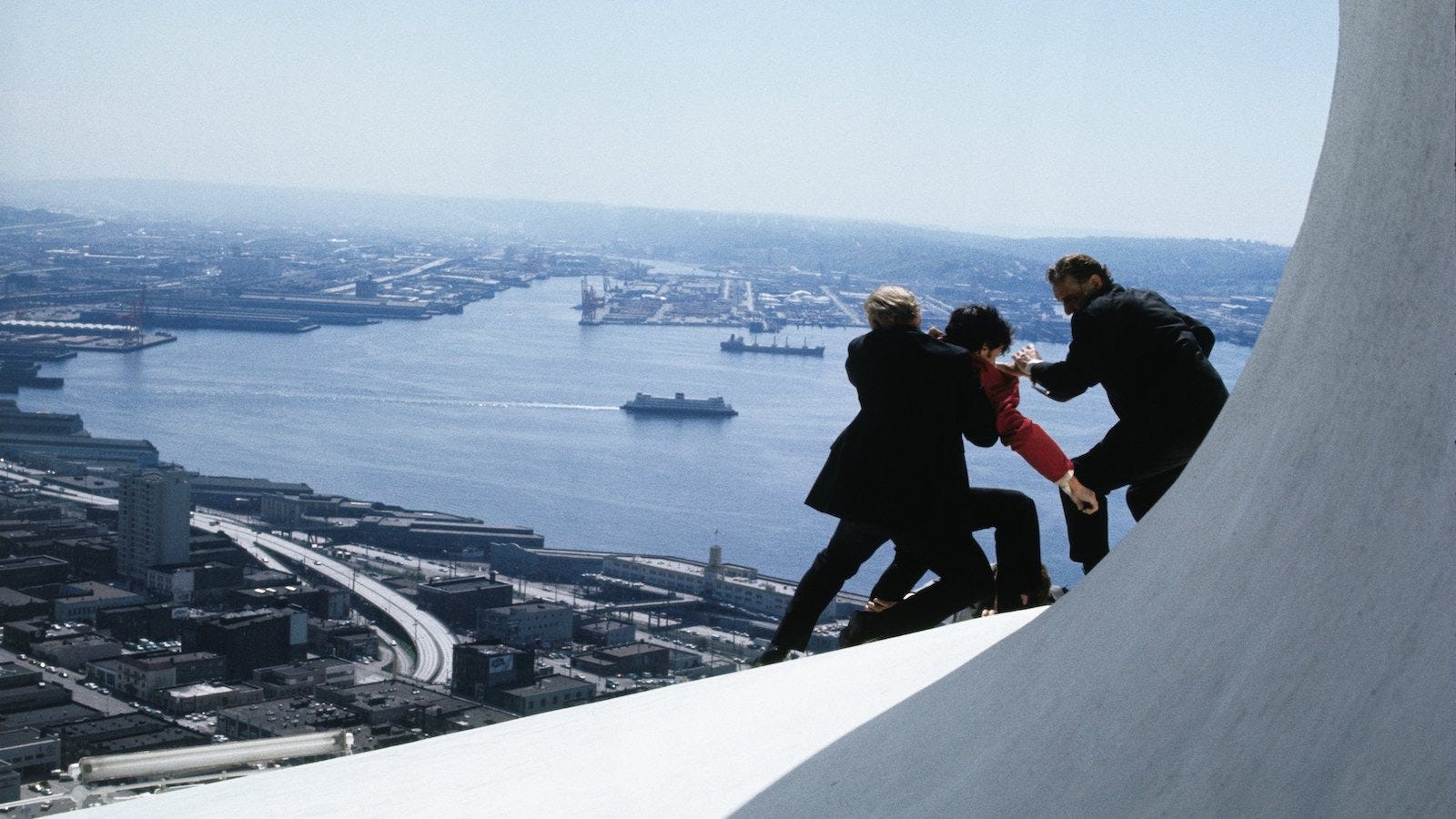
The Parallax View, 1974
Warren Beatty plays a journalist investigating the assassination of a presidential hopeful. A stylish entry into the canon from Alan J. Pakula who later directed All the President’s Men and previously Klute. (In her too-brief screen time, Paula Prentiss’s pixie crop even rivals Jane Fonda’s shag.) Off-kilter angles, telephoto lenses, and signal-mashing in a brainwashing recruitment sequence intensify the disorienting dread. Žižek named a book after the movie, using it to expound on Lacan’s concept of the Real.1
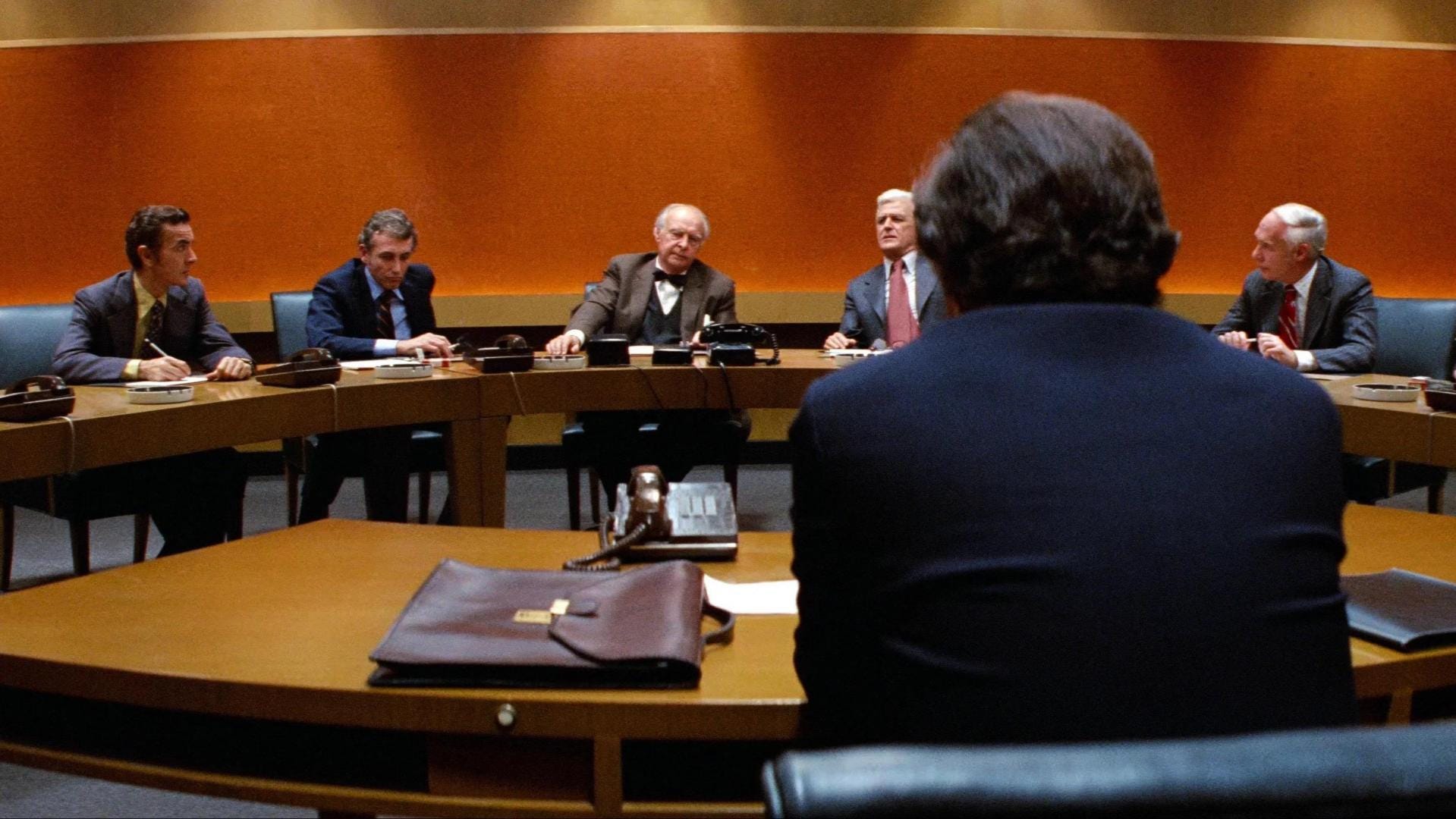
Three Days of the Condor, 1975
A classic directed by Sidney Pollack: Robert Redford plays a bookish baddie, who thanks to his Russian PhD has a boring CIA desk job, scanning documents for possible secret codes. He leaves for lunch one day and everyone on the floor is massacred. Suddenly a fugitive, he kidnaps a beautiful loner, Faye Dunaway at her most overtly Dietrich, and forces her to shelter him. The hostage situation turns disquietingly erotic. While moral rot within government intelligence agencies scaffolds the story, the film ripens as a cat-and-mouse noir.
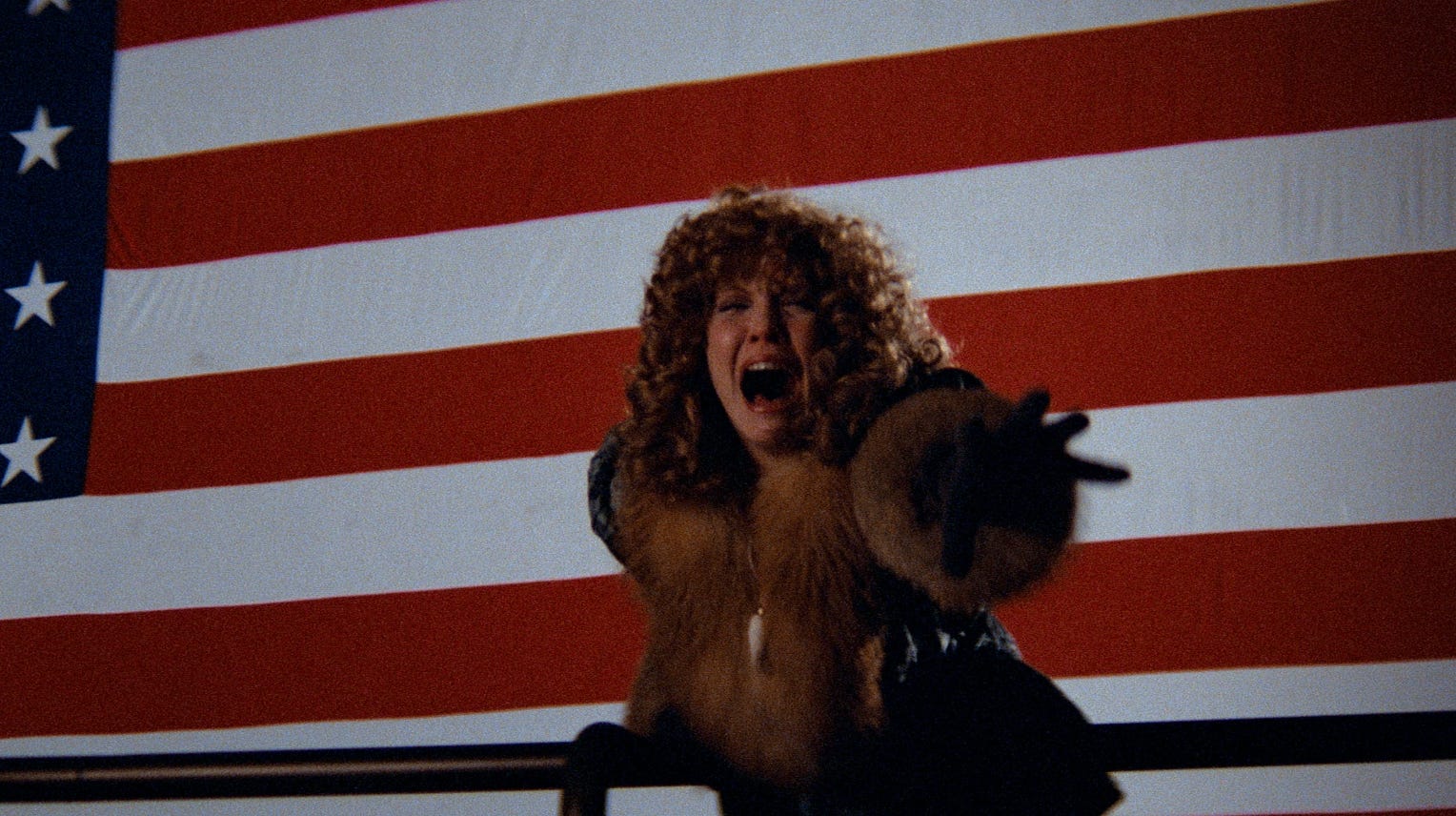
Blow Out, 1981
In this under-appreciated Brian De Palma production, a misty-eyed John Travolta channels an audiophile who stumbles into a government coverup. Out capturing the ambient night atmosphere for the sound mix of a low-budget slasher, his mic picks up evidence of a political assassination. De Palma borrows The Conversation’s logic of audio surveillance and Parallax View’s paranoid montage style but refracts it all through his sudsy soft-focus sensibility.
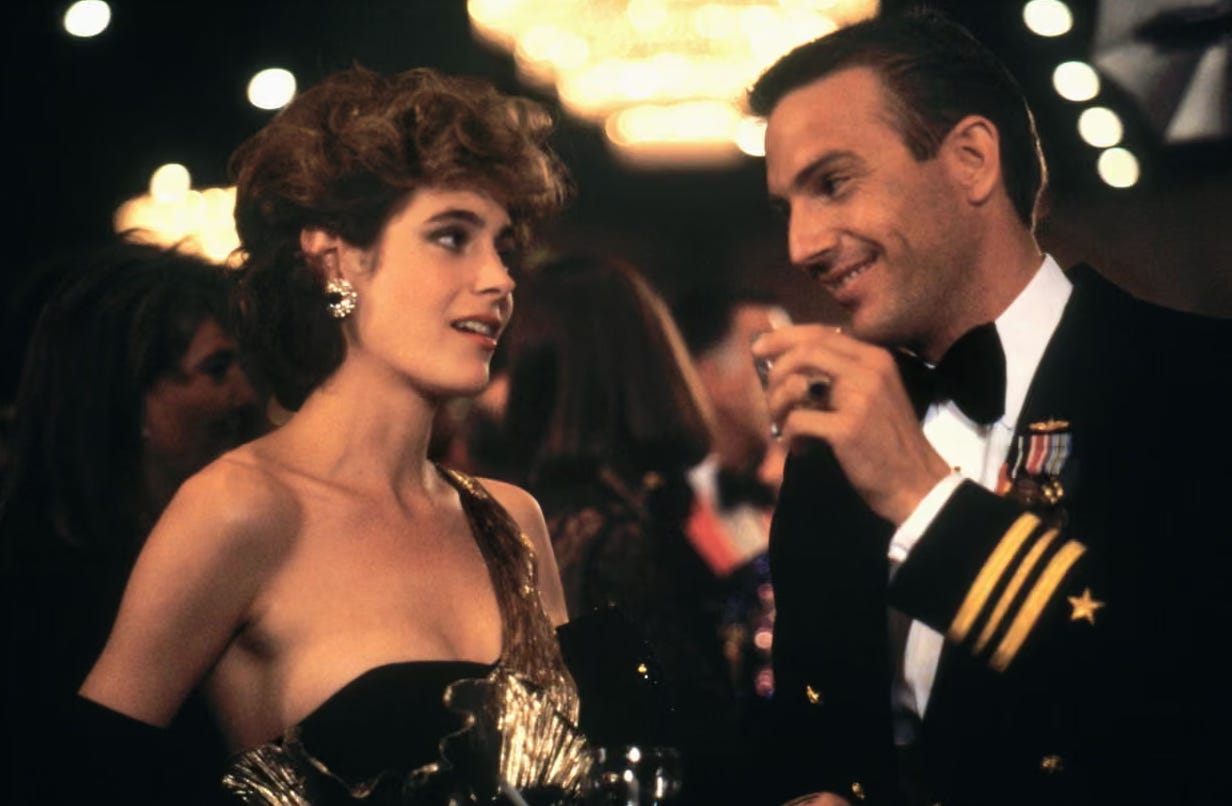
No Way Out, 1987
Kevin Costner five years before The Bodyguard, Gene Hackman then infamous for his heel turn as Lex Luthor, and Sean Young five years after Blade Runner. The three are entangled respectively as a young naval officer, a corrupt Secretary of Defense, and a socialite involved with both men. The Washington-set noir totally submits to genre machinery and that’s the appeal. Abuse of power as entertainment fodder. It’s the same director, Roger Donaldson, who made Cocktail, also a notably agnostic film.
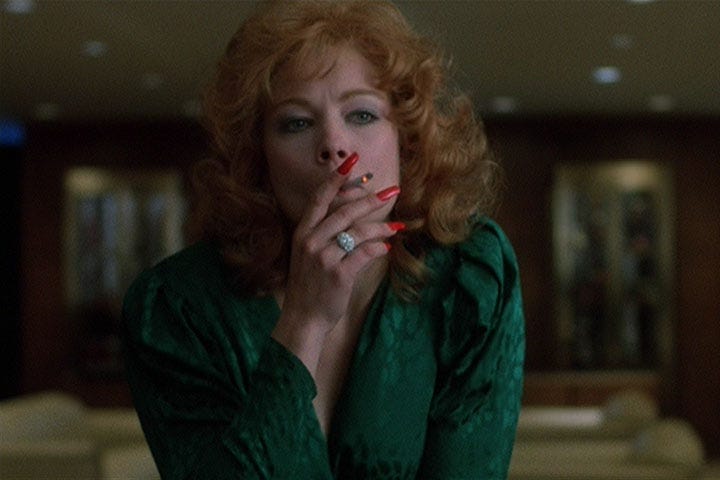
Black Widow, 1987
This one isn’t a political conspiracy, it’s a psychological detective noir. But so many of these movies are full of men, so it’s a nice change of pace. Debra Winger plays a federal investigator who infiltrates the high society circles of a serial killer, marrying and murdering wealthy men from Texas to Hawaii to California. Theresa Russell is the icy femme fatale. The federal agent has to fight her dismissive male superiors to take the case seriously, but ultimately she redeems Washington as dense and procedural but not evil. (Bob Rafelson is the same director as Five Easy Pieces.)
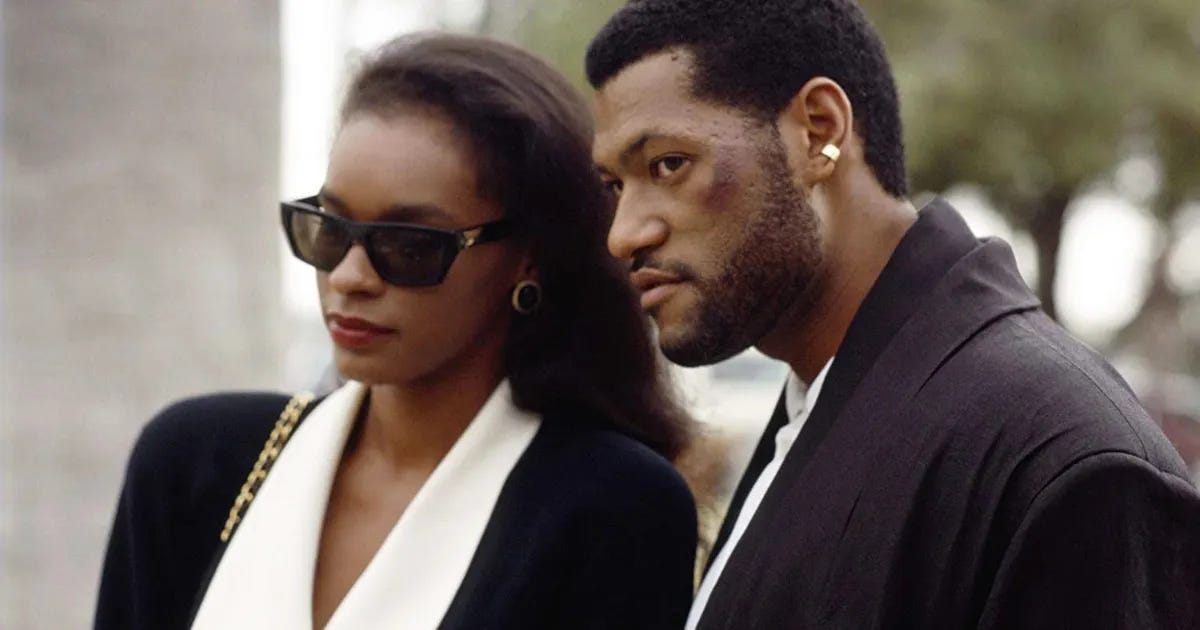
Deep Cover, 1992
Laurence Fishburne plays an undercover DEA agent posing as a Los Angeles drug kingpin. Directed by Bill Duke (who’s also the gay pimp in American Gigolo) the film has a strong POV that moral erosion is no aberration but a product of the system. Stylish and brooding, Deep Cover is absolutely a fashion film. The lacquered menace is built brick by brick, like the antihero’s drug empire, each scene seducing through clothes, cars, and interiors.
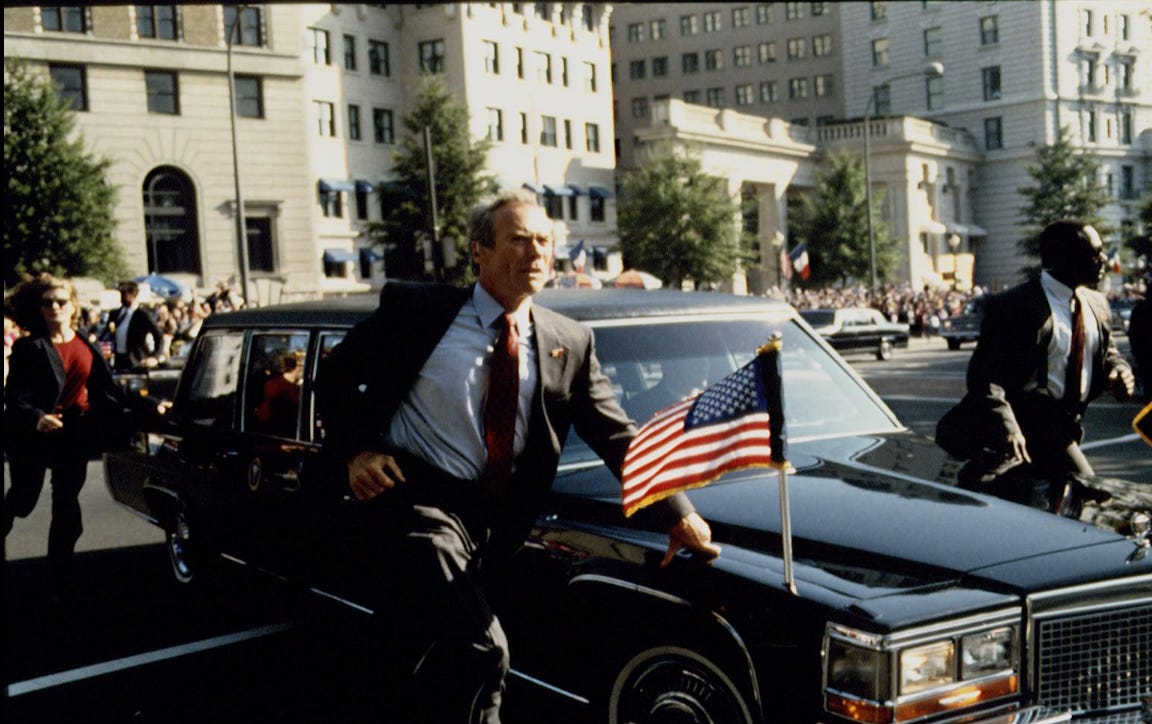
In the Line of Fire, 1993
Clint Eastwood is a raspy-voiced Secret Service agent, a world-weary gunslinger haunted by not saving JFK. Without spoiling it, I’ll say there’s some suggestion of institutional critique. It’s worth watching, though, most of all for the architecture. The John Portman-designed Westin Bonaventure Hotel and its glass elevators are the set piece for an action-packed final act. Also for Renee Russo’s power dressing and blow out. (Wolfgang Petersen directed Outbreak and Air Force One.)
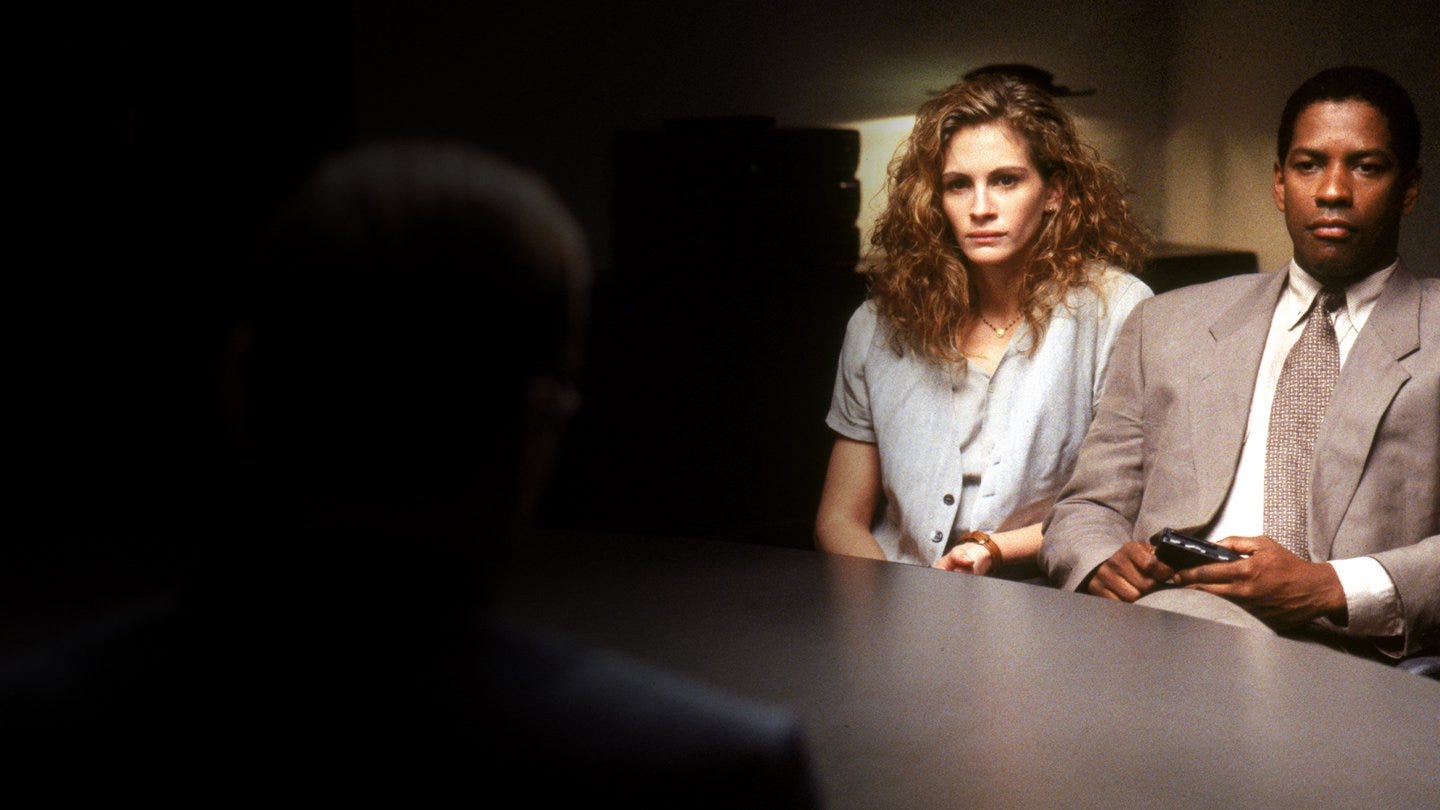
The Pelican Brief, 1993
This film sits at a sweet spot between where conspiracy cinema had come from and where it was going. The sexual tension between Denzel Washington and Julia Roberts threatens to overtake the critique of the White House’s corrosion from corporate influence. At the same time, the interracial dimension means the romantic subplot can’t be explicit. They never kiss. It’s adapted from a John Grisham novel and the same director as Parallax View, Pakula, but beat-for-beat a much easier watch. You can pinpoint in Pelican Brief conspiracy thriller tension between ideological message and entertainment product. Today what passes for a political “thriller” is like The Report with Adam Driver, which, however admirable for its representation of real corruption, is no fun and without pulp or suspense.
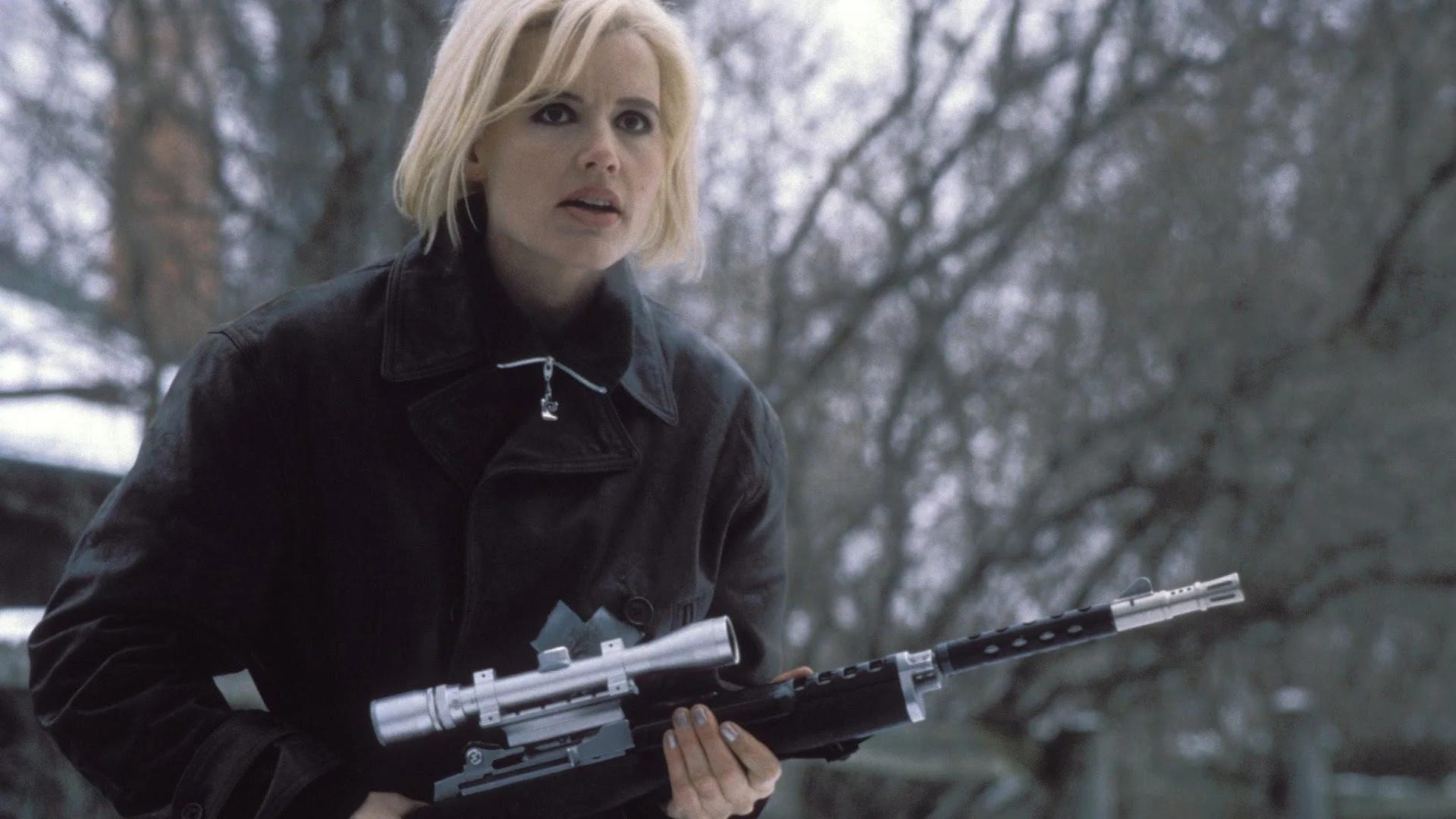
The Long Kiss Goodnight, 1996
This is a much sillier film, but one also defined by the chemistry between another interracial pairing, Samuel L. Jackson and Geena Davis as a buddy-cop duo. Davis plays an elite CIA assassin who was erased and reprogrammed. The bad guys are a rogue CIA cell, i.e. the state apparatus in its covert, deniable form. Fun if you want a lot of ridiculous car chases and explosions. (Renny Harlin also directed Cliffhanger.)
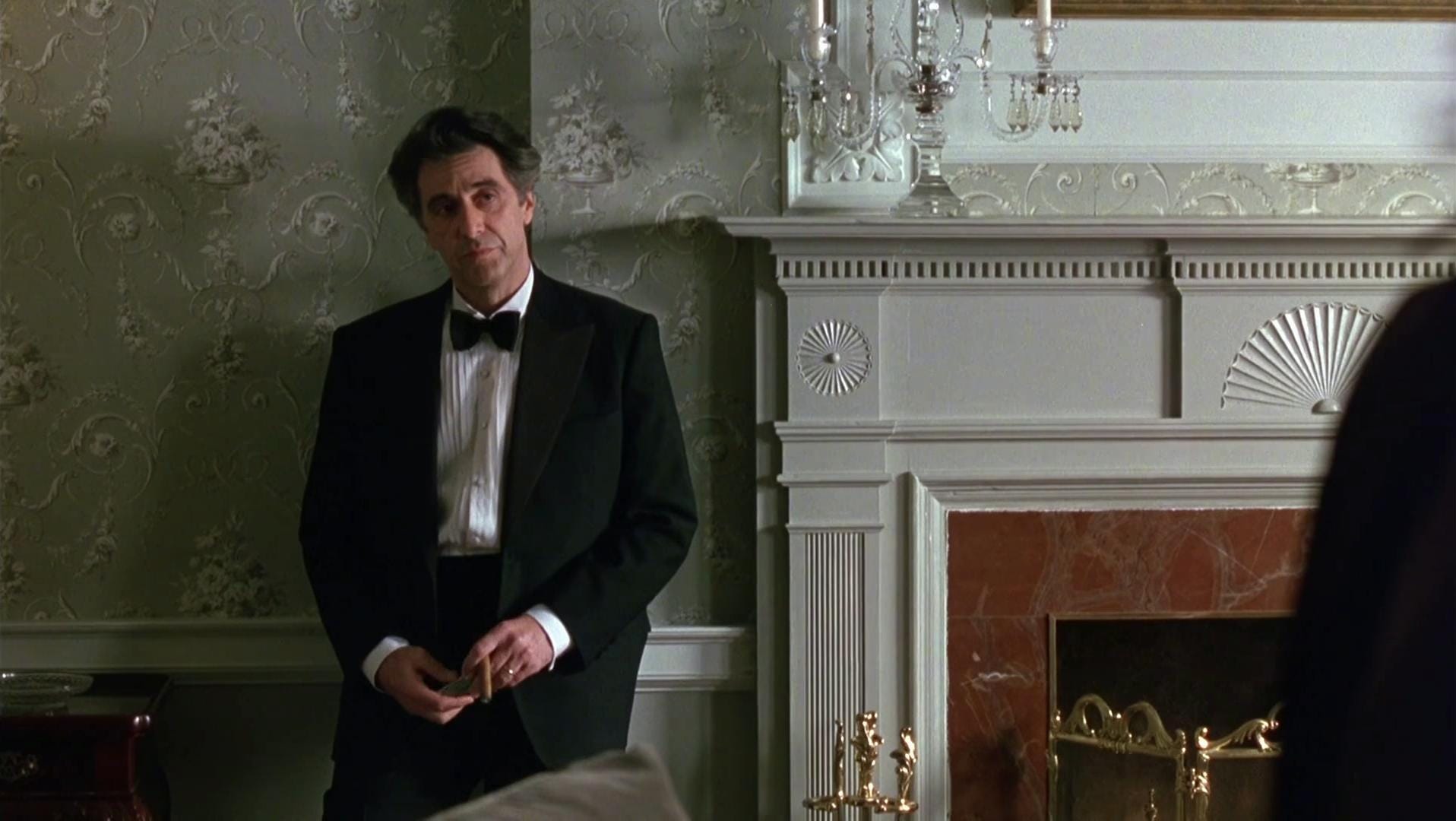
City Hall, 1996
Maybe this is evil of me to suggest while a rare beacon of hope right now is the righteousness of New York’s city hall. Al Pacino plays a mayor whose charisma approaches Mamdani’s; however, this politician’s moral compass is less than forthright. Harold Becker is behind it, the same director as Sea of Love (1989) and The Boost (1988). I think he’s due for a reappraisal, a lot of his films are really underrated.
For Lacan, the Real is that which resists symbolization. For Žižek, the Real operates right inside this parallax gap—it is the underlying antagonism, trauma, or structural imbalance that prevents our symbolic realities from ever harmonizing. https://en.wikipedia.org/wiki/The_Parallax_View_(book)
No posts
Comments
Nothing yet. Say the first thing.
Sign in to join the conversation.