
Dear Friends, before I resume my usual biopolitical transmissions, a quick update: I’ve recently shuffled my life deck, jumped dimensions again, and have been deep in the process of landing and settling in (as quickly as possible). Please forgive the dearth of posts over the past six weeks). <3
⇆ recalibrating coordinates /// dislocation→ alignment
/// ⧉ initializing jump ⧉ \
[☽✶↠⧉↞✶☾] threshold leap
⧖ timeline up-coil ⇡
⪼ aerial pattern anomaly overhead ⪼
And here we are in Coast Salish territory,1 in a landscape of the future-now.
The first night I arrived at my new roost, I stood on my balcony facing the deep blue ridges of the North Shore Mountains. My favourite of these are known as The Lions (or Twin Sisters, the original Squamish name), two little cat ear-shaped peaks sitting close together.2 I immediately adopted them as the guardians of my new life—reconfigured in my mind as mountain lions, or cougar sisters, if you will, versus the Trafalgar Square lions that some guy named them for.3
To my left, the west coast sun was setting over the city, and from its dazzling orange, an inky airstream of corvid traffic spilled toward me. This dusky Vancouver phenomenon4 cawed over my body en masse, bestowing a fly-by blessing. I spoke a greeting to the crows as they grazed past, and a single black feather found its way down to my balcony pave stones.
My move to Vancouver is both a major geographic relocation and existential shift. After a very long period of sequential dislocations, along my own migratory flight path (twenty-ish different addresses on four different continents and island chains in the past six years), this city resonates as ‘home.’ My childhood selves have begun to converge with my now and future selves, as I revisit places I haven’t seen since I was a kid. I lived in Western Canada during my elementary school years and then again on the cusp of twenty, two of my most formative periods. And now, when I bike the perimeter of Stanley Park, for example, I feel like I’m slipping into a 1980s postcard of my own life. This kind of identity-bridging reintegration, or self-retrieval, is something I’ve never experienced quite this intensely. It feels both strange and a relief.
This beginning of my two-year postdoc at Simon Fraser University bumps against the end of a frantically-paced phase of art production and exhibition experiences in the month preceding my move. So, I welcome this adjustment to a more grounded time-stretch. Welcome to Frantic Panties: Pacific (Calm) Edition. I’ll need this pacific coast for my next big project, which I’ll get to at the end of this post.
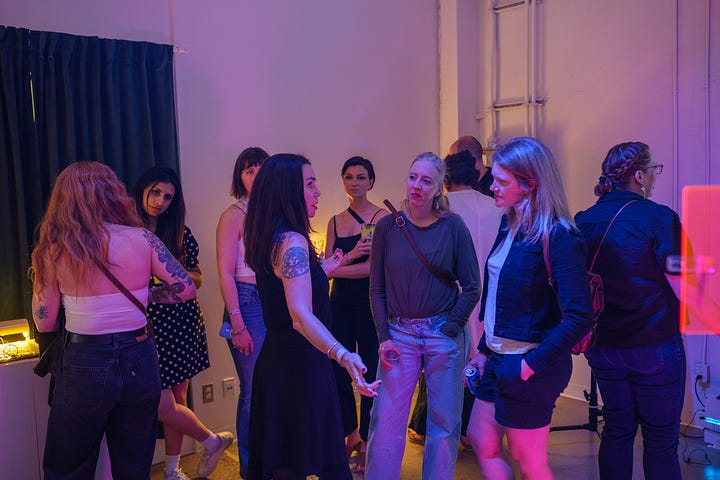
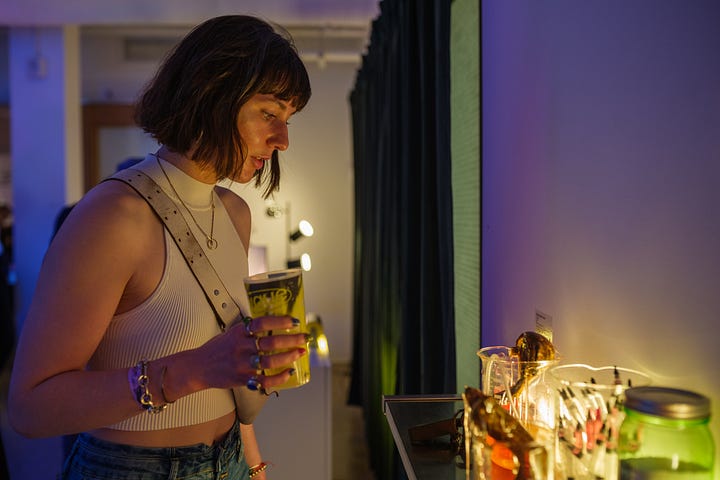
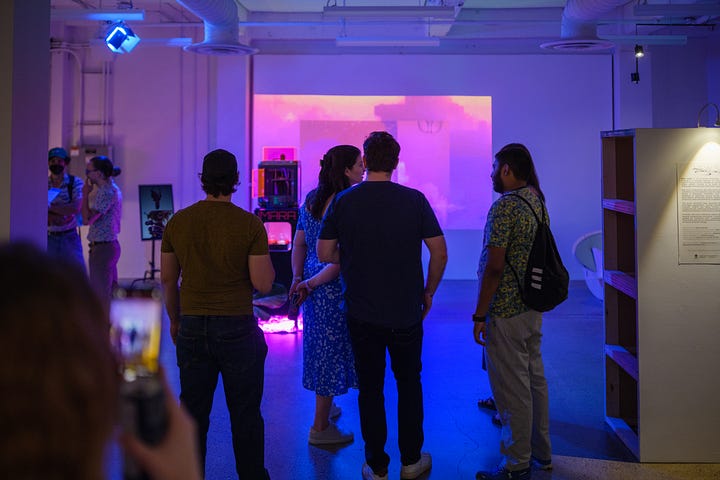
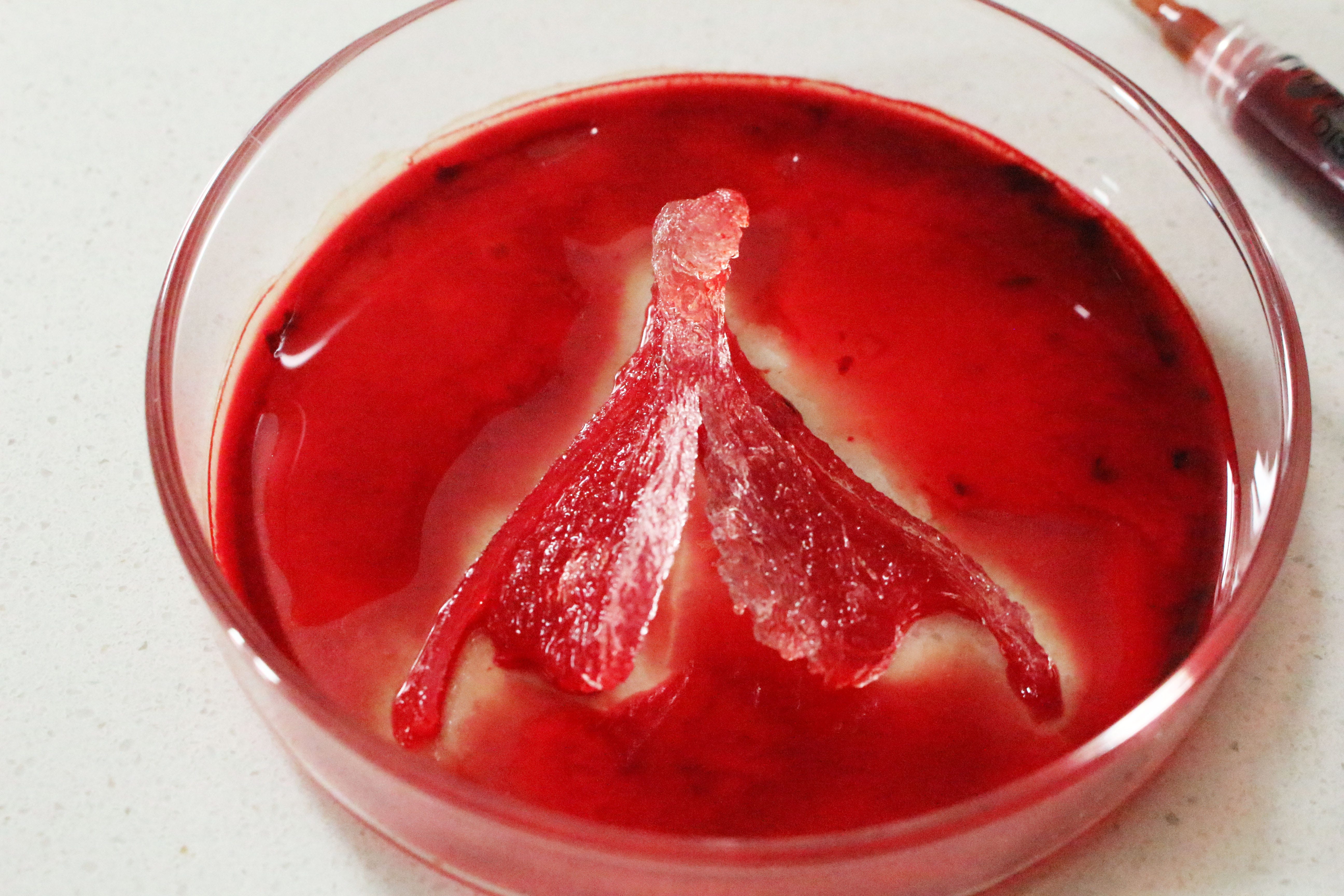
The same day I left Ottawa for good, NEW SUNS came down at Artengine. The NEW SUNS exhibition, launched as part of Pique Festival, was the finale for our collective worldbuilding lab, and was the first exhibition of my newly-built (hacked) 3D bioprinter. I printed multiple clitorises of course, including as live performances during the events. These kinds of performative gestures specifically serve to trigger conversations with my visitors. By using both the visual aspects of the work and my presence together as a sort of catalytic interface, I can facilitate deeper understanding of the culturally complex territory of my work. It’s one way to put my research into action versus just publishing for a niche academic audience. Plus, I prefer the informality of socialized speech for conveying and illustrating technical terms, to make them more widely accessible. Also, I like being a feminine-presenting woman demonstrably knowledgeable in my tech field, just to mix up any gender-based presumptions.
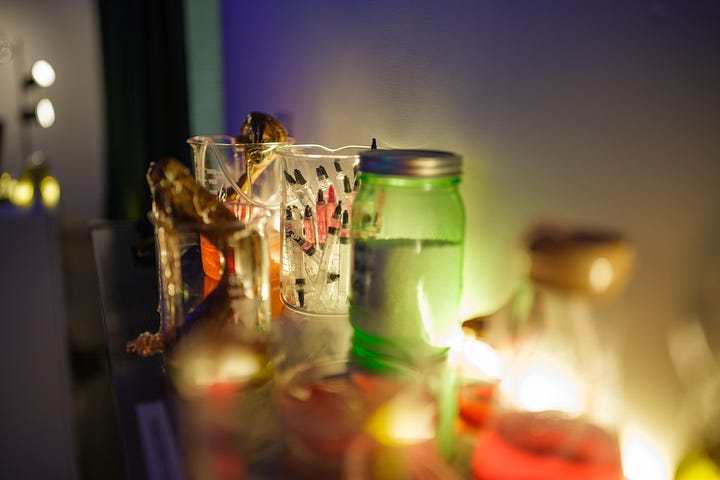
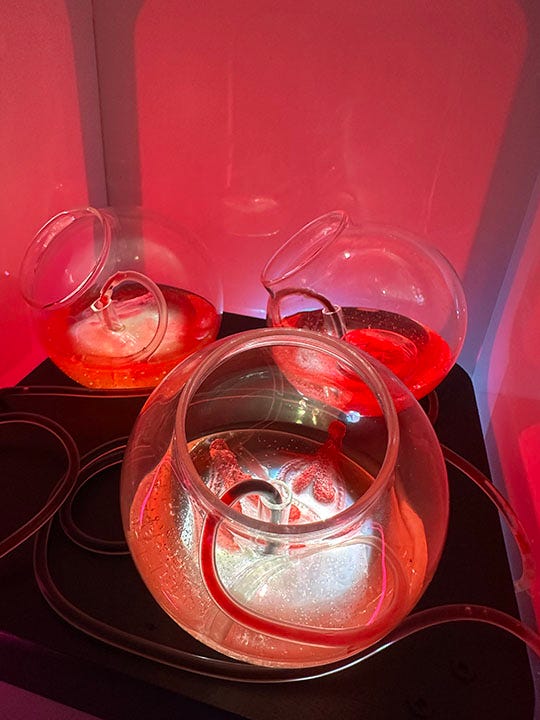
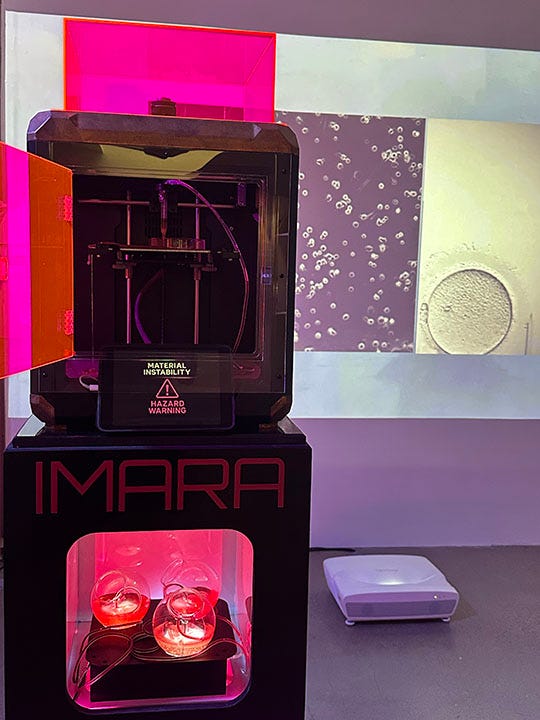
Clitoris was the first bioprint file I developed for my own use, from a 3D render I found on Thingiverse: an angular, gently sloping, stylized anatomical model.5 I had test-printed prototypes of every single clitoris model I could find on the internet, and the stylized one seemed like it would best support the structural integrity of the gels I’d be using for my bioprints; it is both elegant and stable, with slightly flattened bulbs.6 With so much prototyping, the only other anatomical model I’d managed to slice7 for the bioprinter was a bat ear. It didn’t print out as sexy as the clitoris but I still learned important structural lessons from it.
The same week I installed work for NEW SUNS, I had just returned from Portugal where I’d installed another new work for another show. After giving a bioprinting workshop and artist talk at Biolab Lisboa, I travelled south to the Alentejo region for a few days.8 There, I installed Z-stack, a new pair of non-traditional books including a tunnel book and its incidental flip-book companion, at Cultivamos Cultura for the Barely 50 exhibition curated by Marta de Menezes. Z-stack emerged from my concept of developing a ‘cell vocabulary’ as part of my laboratory practice—a vocabulary built through coming to recognize a lexicon of cellular responsiveness and gesture, shifting morphologies and behaviours over time. The two books are both serious and playful, sculptural anatomical portals that extend an invitation to look inside and through, as well as to touch (the flip book, anyway).
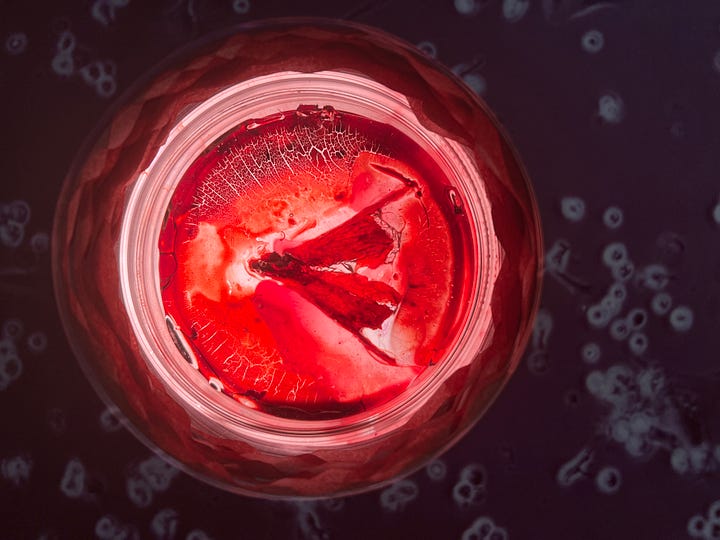
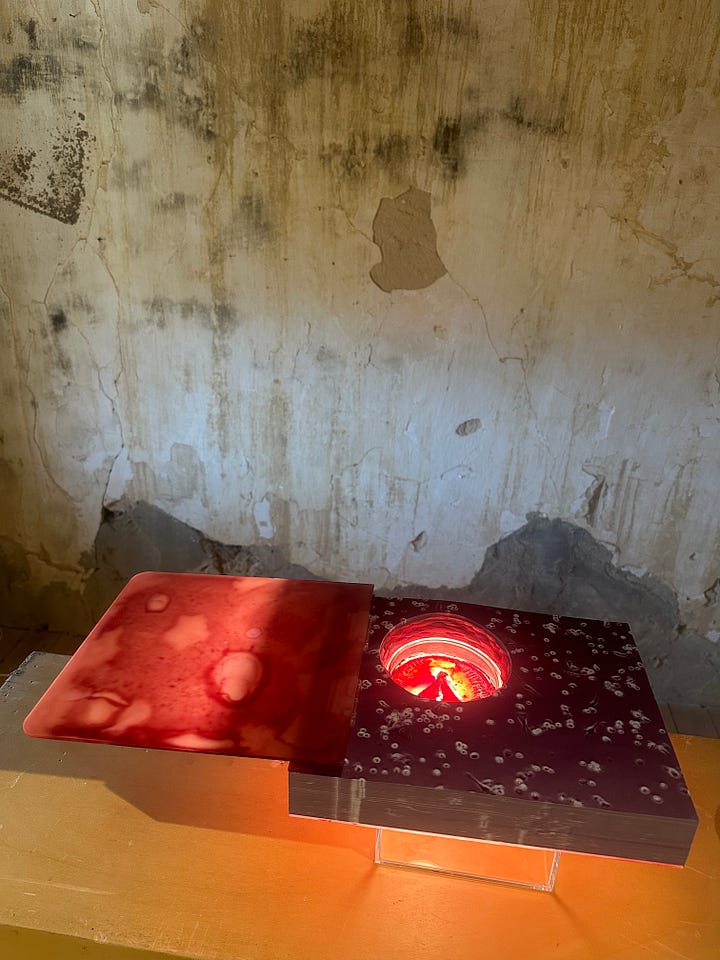
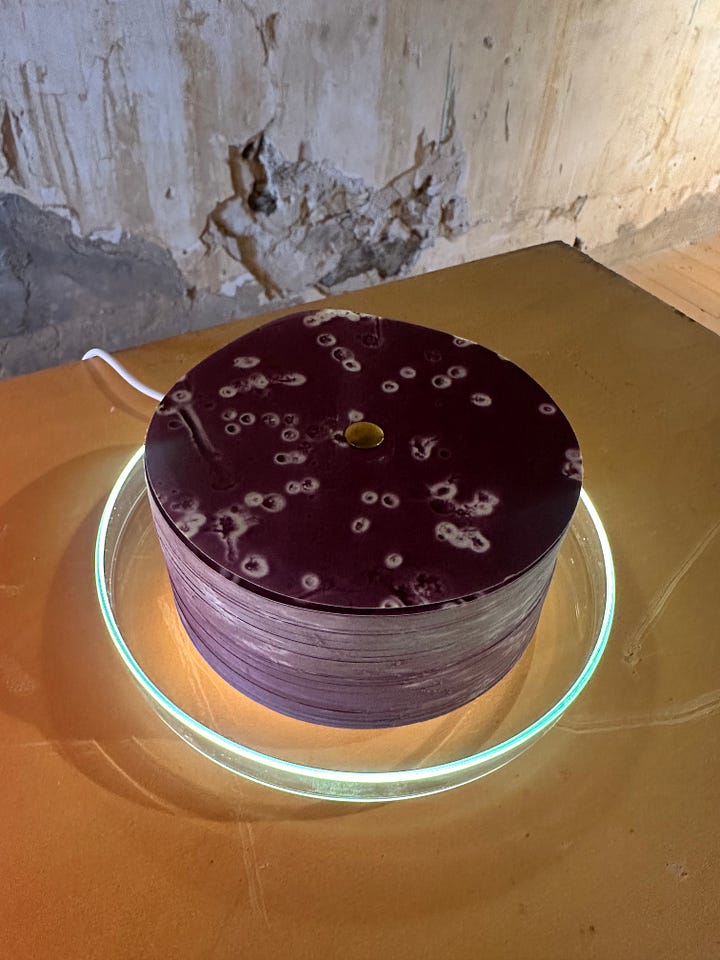
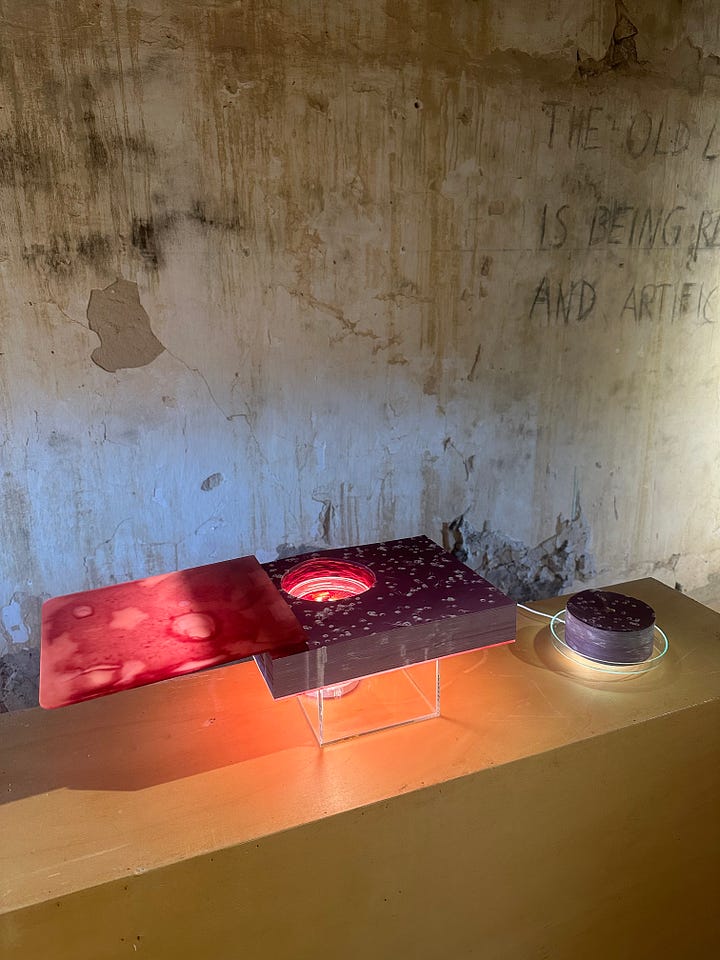
The pages are printed on fine vellum, each page portraying a unique time point in live cell imaging of menstrual stem cells differentiating to neuronal types.9 To explain this more simply, the Z-stack is the vertical (Z axis) layering (stack) of images captured from the same region in my petri dish, each image acquired every two minutes over a 44-hour period. This way, the Z-stack shows the cells forming beautiful dendritic structures in response to being fed growth factors specific to the induction of neurons, including BDNF (Brain-Derived Neurotrophic Factor). It was a fascinating transformation to watch unfold. And, one that exhibition visitors get to watch unfold again and again through the actions of the flip book in their hands, becoming participants in a new kind of cellular temporality.
Nestled into the larger tunnel book’s layered pages is a glass petri dish containing my first-ever, DIY 3D-bioprinted clitoris, tucked behind interspersed hand-cut hymen layers stained with reddish-brown ink, embedded as a blood-encrusted in vitro relic. The die-cut tunnel measures just slightly larger than my 100mm glass petri dish, and is meant to of course reference the canal from which human life most often emerges, as does the source of my biomaterials (the menstrual fluid containing stem cells). In this instance, the petri dish becomes the womb-like space wherein the pleasure organ is contained.
Here’s my big news, speaking of books… Just last week, I signed the contract for my first academic book, a project that I’ve been manifesting for years, and which is another homecoming of sorts, another act of self-retrieval.10 The book will be published as part of the Palgrave BioArt series, and will be my own technofeminist manifesto materialized through my artistic identity and practice, along with my rogue lab protocols. The manuscript will distill my doctoral research and 25-year witchy (bio)art practice into a raw and personal, ritualistic tome, deeply situated in sex, memory, and method. I cannot wait to get started, and eventually share more as it comes to life. I have some other major projects in the works as well, so stay tuned for more on those.
[☽✶↠⧉↞✶☾]
Vancouver sits within the unceded lands of the xʷməθkʷəy̓əm (Musqueam), Sḵwx̱wú7mesh (Squamish), and səl̓ilwətaɬ (Tsleil-Waututh) Nations. I’m really looking forward to connecting with my native friends and artist colleagues here whom I haven’t seen in many years, as well as attending some powwows and taking the time to get up to date about the sociopolitical realities on the ground.
I’m certainly not the only one to be awed by these two curious peaks—other than being an indigenous sacred site of peace between the Haida and Squamish, everything in Vancouver is named after or refers to The Lions. There are lion cafés, Lions Bay, Lions Gate Bridge, the BC Lions (football team), and so forth. Lions everywhere! And, I write this post during Leo season.
The print file I developed of this model is different than the one used for the Sentient Clit project. I think my new iteration, developed independently, works better than the first iteration used by my bioengineering collaborators in Montreal. I’m sure it will continue to improve, and that I will never get tired of playing with clitorises.
‘Slicing’ is the term for preparing a 3D digital model with programmed print layers, adjusting height/ density, infill, speed, temperature, etc. and spitting that info out into the proper file format (gcode) for 3D (bio)printing.
I also spent many hours frolicking in Vila Nova de Milfontes. The ocean was very cold, and the light a blistering gold that bleeds into an eternal dusk. My dear friend Laura informed me that the lingering golden hour, when the light matches the wild fennel blooms on the dunes, is called lusco-fusco in Portuguese. Lusco and fusco mean “dim” (as in, seeing with only one eye), and “dark,” like split perception. I love this expression because it’s in this space of shifting thresholds where my work and I most often live.
Disclaimer: the cells appear to be neuronal types, but scientifically verifying this would require an expensive and time-consuming cell characterization method using antibodies (which I have done in the past to characterize them, but didn’t this time). Again, this is part of an exercise of building cell vocabulary, as I come to know the cell types through multiple experiments.
I began my creative career as a poet and independent book publisher, establishing my own in-house publishing company called Goddess Bless Press (in 1998) specifically to publish feminist poetry emerging within my local community. I was also co-founder of a longstanding poetry collective called the BlackTop Motorcycle Gang, of which one member (and former studio mate) was recently lost in a tragic canoeing accident. RIP Biff Mitchell. Your commitment to your craft, and your amazing Yorkshire pudding dinners will be forever remembered.
Comments
Nothing yet. Say the first thing.
Sign in to join the conversation.