
Whispers of Her Soul is a reader-supported publication, and my attempt to build a human space away from the noise of the world.
This work exists because paid subs decided it was worth preserving. Their support allows me to continue writing with honesty and depth, while building greater stability, independence, and freedom without compromising the values that shaped this publication in the first place.
Thank you for being here.
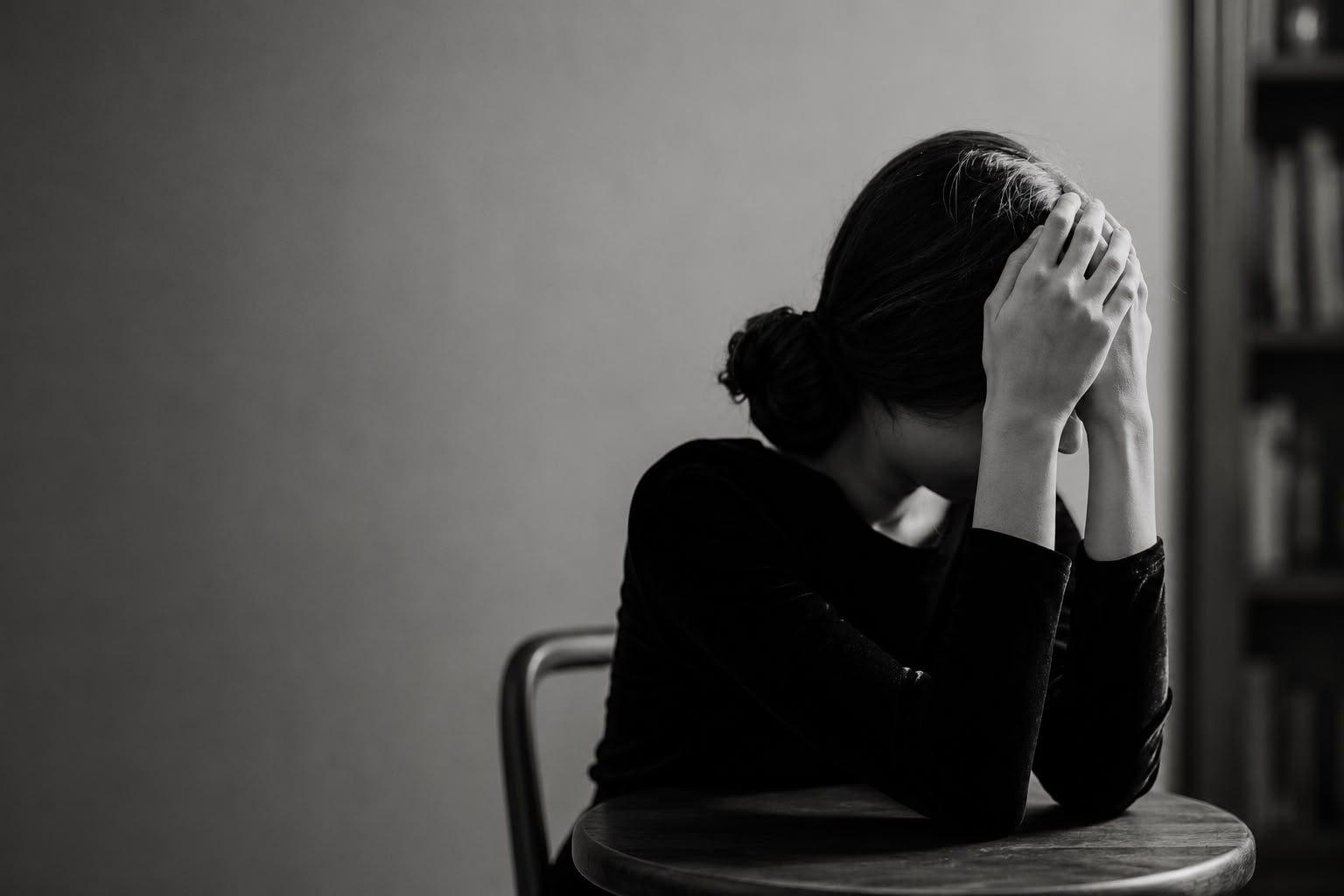
There is a kind of terror that convinces you that you are about to die while the rest of the world carries on as though nothing has changed.
Your heart races. Your chest tightens. The room no longer feels real. Every instinct tells you that you are dying, losing your mind, or that something catastrophic is about to happen.
Other people call it anxiety.
You experience catastrophe.
When you live with severe anxiety, chronic distress, or panic, standard advice can feel like a cold, closed door. We have all heard people say to take a deep breath, that nothing is going to happen, or that we are worrying too much.
But when your nervous system feels as though it is under constant threat, those words offer little comfort. They ignore the reality of what is happening within you and reduce an exhausting psychological battle to a simple case of nerves.
There was a period in my life when I experienced up to five full-blown panic attacks every day.
I remember repeatedly checking my watch for my heart rate, convinced that something was about to happen to me and that I was going to die.
The most unsettling part is not only the fear. It is watching the world become unfamiliar while everyone else carries on as though nothing has changed.
You want to escape reality. You want to escape the moment, but you have no control. Your mind is screaming, and everything around you feels distorted.
I remember looking at my family while they were trying to calm me down. They were standing close enough to touch, but it felt as though I had fallen somewhere they could not follow.
We were no longer standing in the same place.
Everything inside you is screaming to run, even though there is nowhere to run to.
They tell you to calm down, breathe, drink some water, and relax. You know they are trying to help. But nothing they say can reach you.
After the panic attack passes, embarrassment often takes its place. You begin wondering what other people saw. Whether they think you are weak, overreacting, or unable to cope.
The fear does not always end when the panic attack ends. A fast heartbeat or a moment of dizziness no longer feels like a normal physical sensation. It feels like the beginning of another attack.
The room was not dangerous. The restaurant was not dangerous. Your body panicked there once, and somehow the place ended up carrying the blame instead of the fear.
We may avoid crowded places, long journeys, unfamiliar rooms, difficult conversations, or anywhere we fear we will not be able to escape. We begin arranging our lives around the possibility of another attack.
The world becomes smaller, not because we stop wanting to live, but because we no longer feel safe inside ourselves.
Avoidance often feels like relief.
But the mind never gets the chance to discover that we may have been able to remain there and survive the fear.
Panic quietly changes the way we see ourselves. We stop thinking of ourselves as capable, adventurous, dependable, or strong. We become the person who might panic.
Every invitation, journey, meeting, or unfamiliar place is first filtered through that possibility. Life slowly becomes organised around preventing fear instead of pursuing meaning.
That may be the greatest theft of all. Panic does not only interrupt moments. Left unaddressed, it begins deciding which moments we allow ourselves to have.
Eventually, the panic attack is no longer the only problem.
The panic attack eventually ends. The waiting for the next one does not.
Anxiety does not only make you afraid of dying. It makes you afraid of yourself.
The deepest wound panic leaves behind is not the memory of the attacks. It is the invisible fracture in your relationship with yourself. Suddenly, the place you always assumed would protect you becomes the place you fear most. There is nowhere else to go when your own body no longer feels safe.
Perhaps that is the hidden grief people do not talk about. The loss of the effortless trust you once had in your own body without ever realising it was there.
Healing is not only about feeling less afraid. It is about learning to feel at home inside yourself again.
Why Your Body Does Not Believe You Are Safe
It came after more than twenty-five years of severe childhood trauma, abuse, betrayal, and living in a constant state of fear.
I had spent years pushing emotions aside because there was always something else to survive. There were responsibilities to carry, crises to handle, and other people depending on me.
My body had forgotten that not every day was an emergency.
Few things are more confusing than surviving years of hardship only to become terrified of your own heartbeat.
Survival does not always end when the danger does.
It can be what happens when the body can no longer carry what the mind has forced itself to survive.
Sometimes the body is already carrying more than it can hold. One more sleepless night, one illness, one frightening thought, or one reminder of the past can be enough for the alarm to begin ringing again.
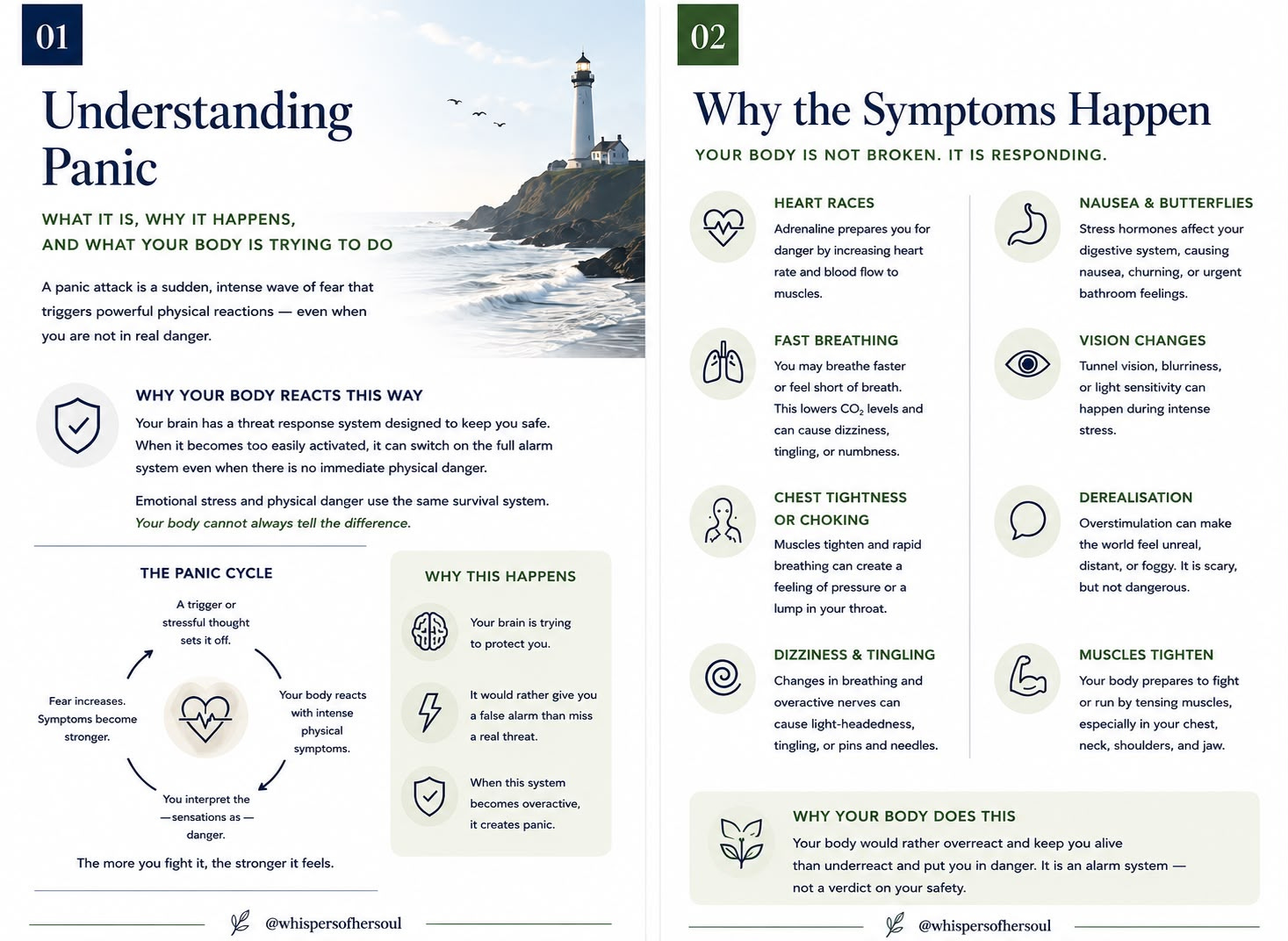
A disagreement, a reminder of trauma, an unfamiliar physical sensation, or a frightening thought can release a flood of adrenaline.
The body responds before we have had time to understand what is happening.
When Fear Becomes Physical
During panic, the body stops feeling like somewhere we live and starts feeling like somewhere we have to monitor.
Every sensation becomes suspicious. Every heartbeat becomes evidence. Instead of inhabiting our body, we begin investigating it.
One of the most frightening parts of panic is that reality itself suddenly feels foreign.
A familiar room may suddenly look unfamiliar. Voices sound far away. Everything feels artificial or separated from us by an invisible barrier.
You stop trusting your own mind to tell you what is real.
We may also feel an overwhelming urge to shut out our surroundings, leave the room, or run.
You can leave the room.
You cannot leave yourself.
When Fear Feeds Fear
The mind hates not knowing. During panic, it would rather believe the worst than believe it does not understand what is happening.
A racing heart becomes a heart attack. Dizziness becomes the beginning of unconsciousness. A feeling of unreality becomes proof that we are losing our mind.
What terrifies us is often not the sensation itself, but what we become convinced it means.
The heart beats faster. The breathing changes further. The dizziness increases.
Eventually, your body stops asking whether you are in danger. It starts assuming you are.
None of this is our fault. Fear has simply become part of the panic itself.
The most frightening question eventually changed. It was no longer, “Am I going to die?”
It became, “What if I never get my life back?”
That question stayed with me long after every panic attack had ended.
How I Slowly Took My Life Back
Recovery began when I stopped asking how to silence my body and started wondering why it had become so loud.
That single question changed the direction of my healing more than anything else I ever tried.
Until then, the first physical change in my body immediately became evidence that something terrible was about to happen. My mind went straight to the worst possible conclusion.
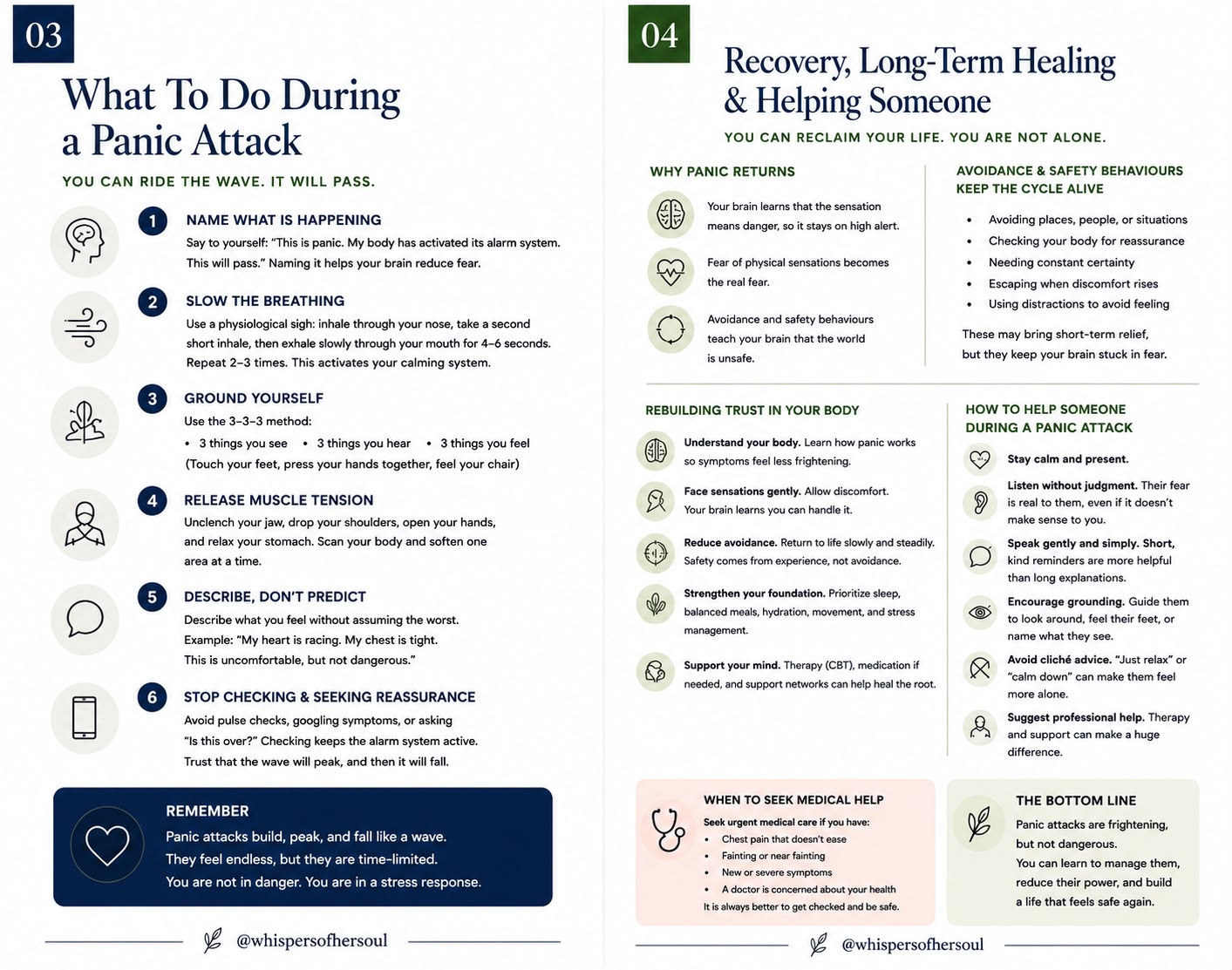
When panic started, I reminded myself that the sensation was frightening, but it was not going to kill me. I had felt it before. It had passed before.
Every panic attack ended the same way.
I survived it.
Slowly, the evidence in front of me became stronger than the fear inside me.
I began paying attention to my patterns. I noticed how quickly my thoughts turned a physical sensation into a catastrophe.
For years, I had repeatedly checked my heartbeat, my breathing, and every unfamiliar change in my body. I believed I was protecting myself.
So I began reducing it.
Each time I resisted the urge to investigate every sensation, I gave my mind a different message: this feeling is frightening, but it is not an emergency.
I also stopped demanding that the panic end immediately. Instead of asking myself how to make it disappear, I began asking whether I could remain where I was until it passed.
Every time I stayed, my body learned that fear could exist without something terrible happening next.
The greatest shift came when I understood that my body was not trying to destroy me. It was trying to protect me with an alarm that had learned to ring far too easily.
The alarm was real.
The danger was not.
The sensations did not disappear immediately. They slowly lost their power as I recognised the pattern and checked myself less.
The purpose of recovery was not to convince myself that fear would never return.
It was to teach myself that fear could be survived.
I had survived by pushing forward, but much of what I had lived through had never been fully understood, grieved, or placed in the past.
Healing changed when I stopped asking what was wrong with me and started asking what had happened to me.
Looking back, I do not think panic was the moment my body stopped protecting me. I think it was the moment it no longer knew any other way to ask me to stop.
For years, I believed my body had turned against me. The hardest part of healing was discovering that it had been standing on my side all along.
Living Instead of Waiting
When we become afraid of another episode, the mind rarely stays where we are. It keeps searching for the next threat instead.
The next heartbeat. The next sensation. The nearest way out.
Our attention rarely leaves them. We may be physically present while our mind is already preparing for a catastrophe that has not happened.
My recovery changed when I began giving myself the same compassion and patience I had always shown other people.
I stopped treating fear as proof that I had failed.
I stopped turning every frightened moment into another reason to punish myself.
That was how ordinary moments slowly became ordinary again.
What I Hope You Remember
I am writing this because I know how lonely this kind of fear can become.
I know what it feels like to go to sleep wondering whether another panic attack will wake you during the night.
I know the shame that follows an episode, the exhaustion of watching your own body, and the fear that you may never feel like yourself again.
Looking back, I did not need an explanation.
I needed someone who understood the terror.
I did not need someone to convince me that nothing was wrong. I needed someone to stay with me inside the reality I was living, look me in the eyes, hold my hand, and remind me that I did not have to face it alone.
Sometimes the greatest relief is not being rescued.
It is being understood.
If you are living in that fear right now, I hope these words remind you of what I had to learn myself.
Your body is not your enemy.
For years, I believed mine was betraying me. In truth, it had been carrying everything I had not yet been able to heal.
I could not change what had happened to me.
But I could stop mistaking survival for brokenness.
In truth, my body had been trying to save me long after the danger had passed.
Your support will help me and my son to have a better life.
I write to help people feel seen, understand what they have lived through, and find words for pain they may have carried alone. A paid subscription gives me the time and stability to continue this work and reach more people who may need it.
And if a paid subscription is not possible, I am deeply grateful you are here. Reading, sharing, commenting, and restacking helps this work find someone who may need these words today.

Your support helps me keep writing and keep building. Come be part of this journey with me. With love, Aaliya ❤️🌹


I am Aaliya, the woman behind Whispers of Her Soul.
After more than 25 years of trauma, I chose to write.
Not because writing erased the pain, but because it gave me back my voice.
I write so someone else might feel less alone, and remember that even after pain, life can still become their own.
Comments
Nothing yet. Say the first thing.
Sign in to join the conversation.