
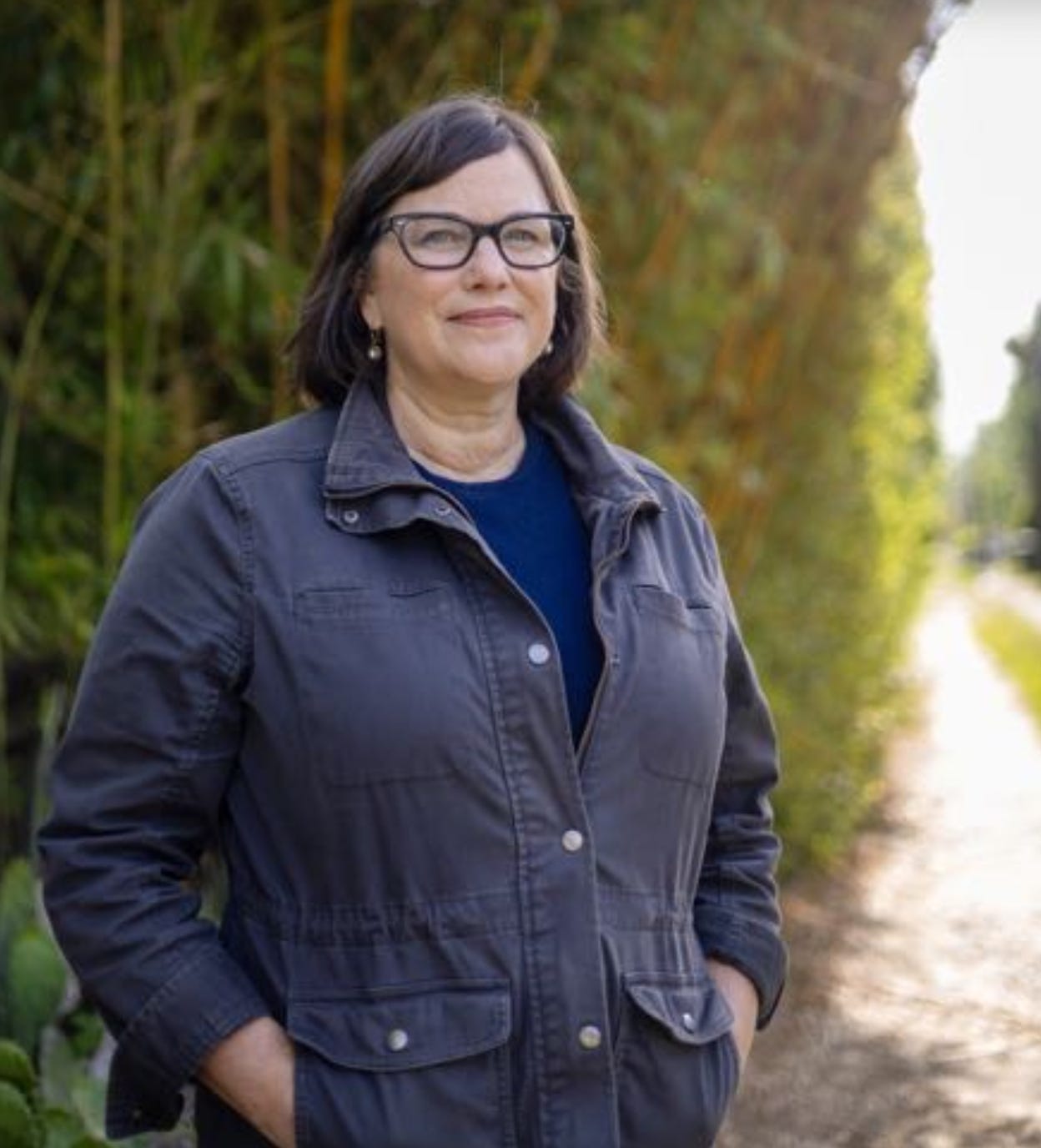
I met Margaret on a work trip to Savannah this spring, and was immediately taken by her passion for local journalism and her passion for Savannah. Margaret spent years as a foreign correspondent for major outlets like The New York Times, but ultimately decided she wanted to be telling stories about and for the people in her backyard of coastal Georgia. Margaret and I chatted about how the decimation of local news outlets has led to a thriving nonprofit journalism landscape. Margaret shares examples of how her outlet, The Current, has effected change in Georgia, and tells people how they can support local journalism beyond just paying for subscriptions. We also talked about why Margaret loves Savannah, the hometown she always wished she had growing up.
Kathleen: Margaret, I would love if you could tell me a little bit about your career and how you came to found The Current.
Margaret: I was a journalist for about two decades. I spent most of that time overseas as a foreign correspondent, largely for The Wall Street Journal and The New York Times. When I started my career, it was prestigious to work for those big organizations, and they had the depth of resources to be able to tell Americans about global events. I came to journalism because of a sense of public service. I grew up in a family of military officers and believe that the best kind of American journalism is public service journalism. As a younger adult, I thought that Americans really needed to know what was going on overseas in their name. That was my life and I loved it for a very long time. But the law of diminishing returns started happening. I had made it in my career in terms of the kind of outlets I was working for, but really the people that I wanted to be telling stories about were the people in my own backyard.
My husband and I had wanted to live in Savannah full time since we’d gotten married. We bought our house here, but nobody in coastal Georgia was investing in high-quality journalism, so there was a big gap between the idea and the plan of making Savannah a full-time home. The reality was that I needed to earn a paycheck. The work I was doing at the New York Times helped me get a book deal, which made it financially feasible to leave my big city journalism behind and move to Savannah in 2019. And I wrote my book from here. Then all these things started happening serendipitously. My manuscript was done. My publisher had accepted it. That was January 2020. Then down the road from us, in a town called Brunswick, a 25-year-old Black man named Ahmaud Arbery went out for a jog on February 23rd, 2020, and was shot and murdered by three white vigilantes.
That started to crystallize what me and so many of my neighbors knew to be true, which was that the vacuum of in-depth local accountability journalism is a matter of life and death. For 80 days, nobody knew what had happened to him. Nobody knew who was responsible, and no one had been arrested. Out of that trauma and community outrage came the value proposition for rebuilding a funnel of in-depth local news. That became the goal and the mission. In the fall of 2020, we launched The Current in order to fill that vacuum and revive these withered muscles of accountability among our leaders and local government here in my part of the state.
Kathleen: That’s a powerful framing of local journalism being a matter of life and death. What was it like to build that newsroom?
Margaret: It’s important for everyone to understand the vacuum of local news and the destruction of the business model that sustains local news. We all know that it’s a pillar of a healthy democracy. We live in a citizen-led republic. And if people don’t know what’s happening in their own backyard, they can’t be educated voters, let alone form coalitions to solve the problems that we all share. Here in coastal Georgia, our traditional paper is called the Savannah Morning News. In about 2010, there was money for a staff budget of about 75 people. And by 2020, the staff was down to seven.
Kathleen: Wow.
Margaret: That’s a literal decimation. What can’t get covered when there are no more reporters left are things like holding institutions accountable and having people understand how we get bad health outcomes when climate change happens. We very intentionally decided we were going to fill this funnel. We’re not going to cover sports. We’re not going to cover entertainment. Accountability journalism is the model. In the summer of 2020, we were trying to fundraise to get a runway to launch. We ended up with five major donors who said they want to be part of this change.
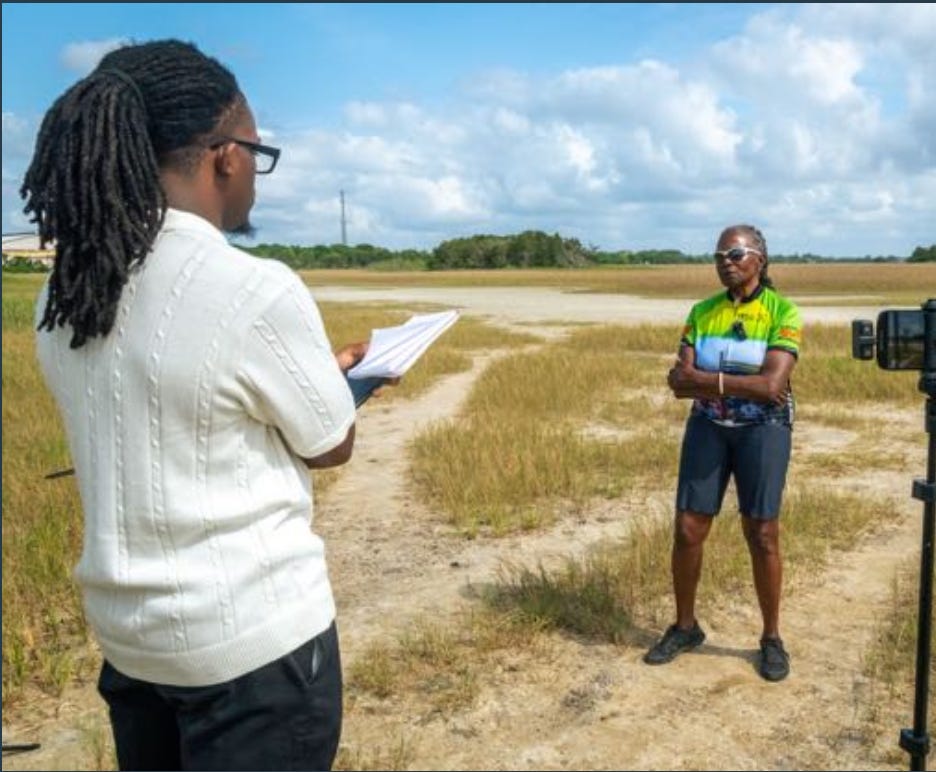
We started hiring staff, and very quickly, these same donors who were influential in coastal Georgia business decided that they were going to try and shut us down. They demanded that we start killing stories that they didn’t like and were antithetical to their business interests. We learned our lesson very quickly, which is that emotions don’t change society for the better—good business plans do, and mission-driven staff do as well. In very short order, we lost our runway. We lost our donors. My managing editor who runs the paper with me, another woman, we decided that we weren’t going to let them sink us. We worked without salary for the next year as we rebuilt our revenues. And we’ve been growing since. We went from being a scrappy month-by-month news organization to five years later, having nine full-time staff, four contract freelancers, and a budget of revenue of $1 million a year.
Kathleen: That’s incredible. Congratulations.
Margaret: What we know is that Georgians needed better, trustworthy information. They needed it delivered to them on platforms and through publishing strategies that respect them and honor them. Having a local journalist who lives with them and eats dinner with them and goes to the same churches as them. All that is a way to build trust again in a shared sense of facts about the place and the times that we live in.
Kathleen: Can you give an example of a recent piece that you published at The Current that you’re especially proud of? One that really fills that gap that was there before.
Margaret: Content is king, so the impact that we measure isn’t just that we feel good about the work that we do. We’ve helped change state law. We’ve helped get corrupt police officers kicked off the force. We’ve helped change policing practices in the communities that we serve, which is especially powerful given that Ahmaud’s murder was one of the main reasons why we kicked this off the ground. Last year, for example, we did an investigation about the child welfare agency in the state of Georgia. The agency was using a controversial and disproved test to test parents who were suspected of using drugs and using that as a baseline to take children away from parents.
Kathleen: That’s awful.
Margaret: It turns out that this testing regime had been shown to be absolutely unreliable. And other states have taken the manufacturer of the test to court because it was so unreliable. They were suing the company but Georgia had not joined any of those lawsuits and kept using this disproved test and taking children away from parents as a result. We wrote a story uncovering why the state was contracting with this company. We wrote about mothers whose children had been taken away. As a result of revealing all of this, the mother who we featured in one of our stories got her daughter back. Court-appointed special advocates (CASAs) in Georgia are using our stories now as part of training so that advocates for keeping families together can go before judges and say, you need to discount these lab results and keep families together. That’s pretty powerful stuff.
Kathleen: Other than the most obvious—paying to subscribe—how else can people support local journalism?
Margaret: I think it’s worthwhile to say that we’re in a revival of nonprofit journalism. It’s not a red state or a blue state thing. It’s an every state thing. There are about 500 nonprofit news organizations that have sprouted up around the U.S. and each of us have a specific audience or community that we’re trying to serve. Americans need to realize that local news is actually sexy. If we are feeling frustrated and disempowered, it is the place where all of us can actually make a difference. It’s the kind of local democracy in action where people can actually make a change on an immediate level instead of wringing our hands every four years about presidential elections.
We can help keep our local rivers safe. We can kick the bums out of city council. We can fight back against terrible development and zoning practices, whether by reading local news and getting activated or by actually running for office yourself. By reading and understanding your local communities, you are becoming civically engaged. That’s the stepping stone that every democracy needs.
In the hard-nosed world of business and philanthropy, there are a lot of donors out there that want to see scale. They want to know that the work that we do as nonprofit journalists is actually reaching a target audience and helping improve lives in our communities. Even if you can’t afford to give $5 a month or $10 a year, sign up subscribe to local news newsletters. Those news outlets can then go to other donors and say, look, we have another reader. The more readers we have, that is a measurement of impact that helps raise money.
Kathleen: Pivoting a bit, you are also very passionate about Savannah. I would love for you to share what you like most about Savannah.
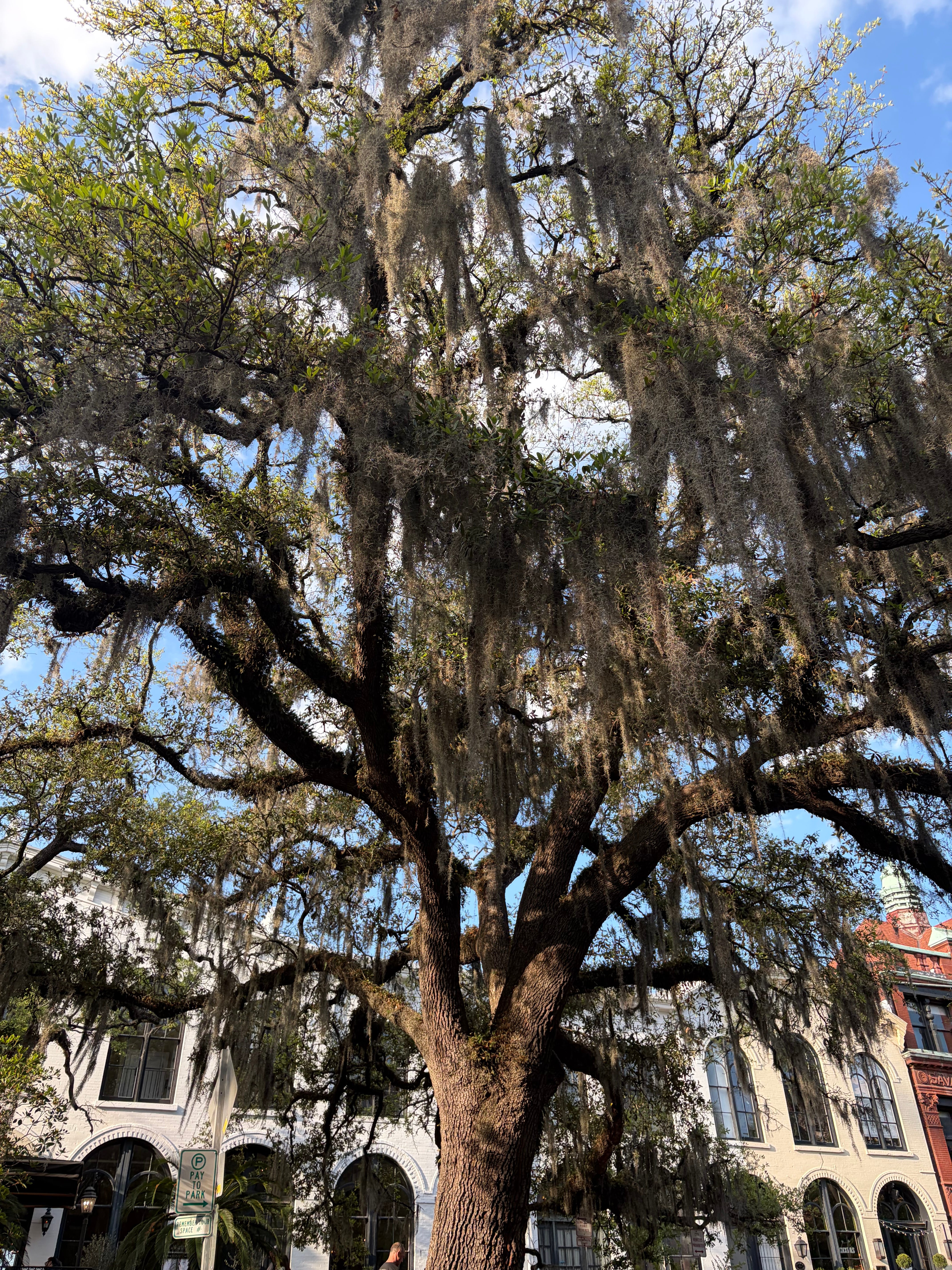
Margaret: Yes. I grew up in a Southern military family, so we moved around a lot. I don’t have a natural hometown, but Savannah was the kind of Southern town I always wished I was from. Part of its charm for me is that it is a small enough town to get to know your neighbors, but a big enough town to have lots of big city attributes. It’s also a port city, so there are people who are from here, and there are people who come here, and everyone’s accepted. It’s diverse in the kind of people who live here. It’s a majority Black town and there’s really space for everybody. Those are the kind of things that I love, in addition to the weather and the lovely architecture and the fact that we are 15 miles away from the beach. Beautiful tree canopies, interesting people. It’s a place where it’s hard to be bored. It’s also a place that has a very liberal alcohol policy. We have a to-go cup culture so you can sit in a public park, have a drink, talk about life, see the world go by.
Kathleen: Margaret, my last question for you is what brings you joy on a regular basis?
Margaret: As I’m talking, I am walking my two delightful dogs. They always bring me joy. They help me with my step count, but they also help me stay kind of grounded in terms of what are the small things in life that you should be focused on instead of the big picture. They chase a squirrel and are happy for the rest of the day. I watch them chase a squirrel, and I’m also reminded to be happy. I am also a big reader, and I love the fact that there are people in the world who have time to create fantasy worlds and characters inside their heads that can help us learn more about the places that we live. And I’m a huge foodie. When you can enjoy the bounty that God provides us by sitting around the table and breaking bread together, I think those are the best kind of conversations and keep us grounded in what we share in common instead of what divides us.
Comments
Nothing yet. Say the first thing.
Sign in to join the conversation.