
A balloon, kicked into the air, lingers around the ceiling, and various family members lean over with an elbow or a fingertip, to nudge it back up, up. Back and forward, back and forward. But if the balloon drifts to a quiet corner of the room, out of immediate touch, without an enthusiastic child to run over and keep the game going it’ll fall to floor and over the course of a week or two, gradually deflate.
In that spirit, five books which I read in this last year, which I either recommend, or nudge with my elbow.
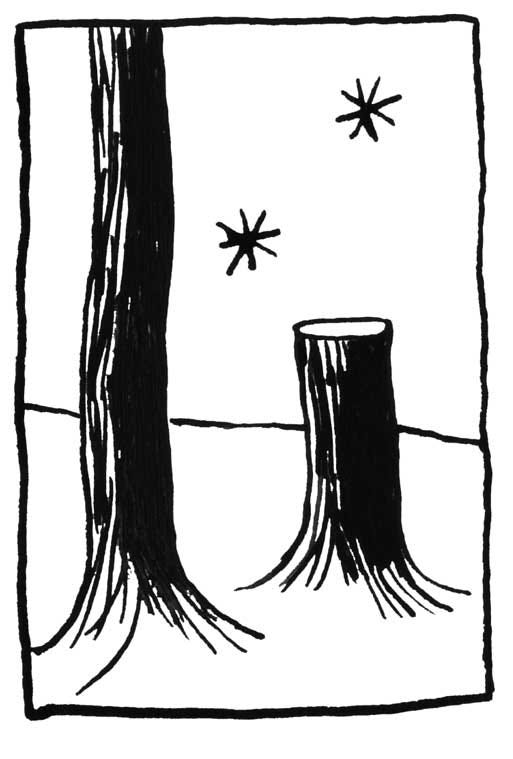
Felled Oaks – Andre Malraux
An account of a two-day conversation conducted with Charles de Gaulle toward the end of his life. Malraux talks double, sometimes triple as much as the General, and often lapses into atmospheric descriptions of the falling snow, the décor, the arrangements for dinner. Reminiscences of Churchill and Stalin, meditations on the destiny of France (France will yet astonish the world!), Europe (Good luck to this Federation without a Federator!) democracy (They are obsessed by democracy now that it no longer exists!)
Sentences like ‘Women are capable of the best and the worst. Therefore they should never be shot,’ lie alongside ‘They were for me as long as they saw me as Tintin. They adore Tintin.’ Knowing nothing about Malraux and nothing much about De Gaulle or subsequent Gaullism of the left or right variety, the quips and anecdotes of Felled Oaks are best enjoyed unmoored from any troublesome historical baggage.

Lucky Per – Henrik Pontoppidan
When your stern and overbearing family, your brilliant education, your triumph over your peers, your strenuous sex life, the grand aspirations you hold for your nation and eventually, your a stern and overbearing family of your own all come to nothing. When even your ground breaking canal designs prove meaningless, maybe you should go and live in the woods. Maybe that’s better for everyone.
1985 – Anthony Burgess
More books of criticism should be made up of mock interviews and two page essays with no conclusion, before suddenly starting up a novella of their own, riffing on the themes of the book that was supposedly under review.
Taking Orwell’s 1984 as ‘nothing more than a comic transcription of the London of the end of the Second World War,’ Burgess writes his own comic transcription of the London of 1978. Bev Jones struggles through Tucland (as in the Trades Unions Congress), a country circling around the conclusion of the infamous wage-price spiral. His wife burns to death in an IRA attack on a hospital, she would have been fine, but the bloody Firemen were on strike! And even though the army was called in to replace the Firemen, the bloody army was on strike as well! Bev burns his union card and falls out of society, allying himself with the local hoodlums by agreeing to teach them ancient Greek. Eventually, he finds himself working for the Free Briton, a newspaper aligned with the only extant rebel, an old army officer attempting to organize armed resistance to the Full Syndicalisation of society. Eventually, the poor Colonel gives up and converts to Islam. We even get an appearance from the merry Monarch, King Charles III.
From what I remember of a documentary about A Clockwork Orange, Burgess was a grammar school boy who fled the working class only to find that the upper classes didn’t care about the elite culture he had been forcefully immersing himself in. Angered and alienated by England, he writes and files his cheques from a house in Monaco.
Luckily for Burgess, the solution to his fears of syndicalism was just around the corner. Unluckily for him, Thatcherism didn’t herald a return to the ‘instinctual masterpiece’ of Britain’s unwritten constitution, but further destroyed both Bev and Burgess’s vision of the good life …
‘Life is more than a dwindling selection of ill-made useless consumer goods. Life is beauty, truth, spiritual endeavor, ideals, eccentricity—’
Although his book contains very little beauty or truth, it is happily overflowing with eccentricity.
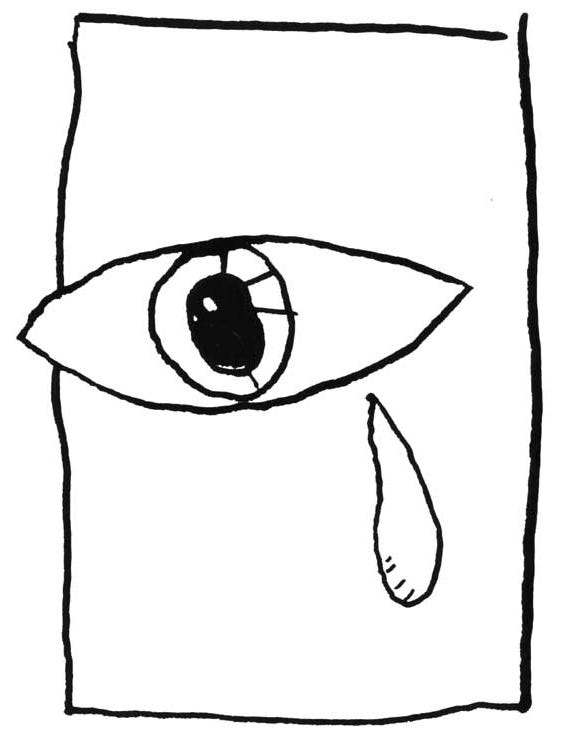
Dostoevsky Reads Hegel In Siberia And Bursts Into Tears – László F. Földényi
Sometimes you dread being asked what you’re reading, standing in the works kitchen, trotting out Földényi’s title, going on to explain that the essays it contains are sort of poetic meditations on the failure of the enlightenment, casts a strange pallor across your person. Still, here is the crux of the title essay …
‘“The whole character of Siberia rules it out as a setting for historical culture and prevents it from attaining a distinct form in the world-historical process.” We can well imagine Dostoevsky’s consternation as he came upon these lines while sitting next to the tallow candle. And we can easily imagine his despair as well, as he was obliged to confront the fact that “over there,” in Europe — for whose ideals he had been sentenced to death but then sent into exile — no significance whatsoever was attributed to his many sufferings.’
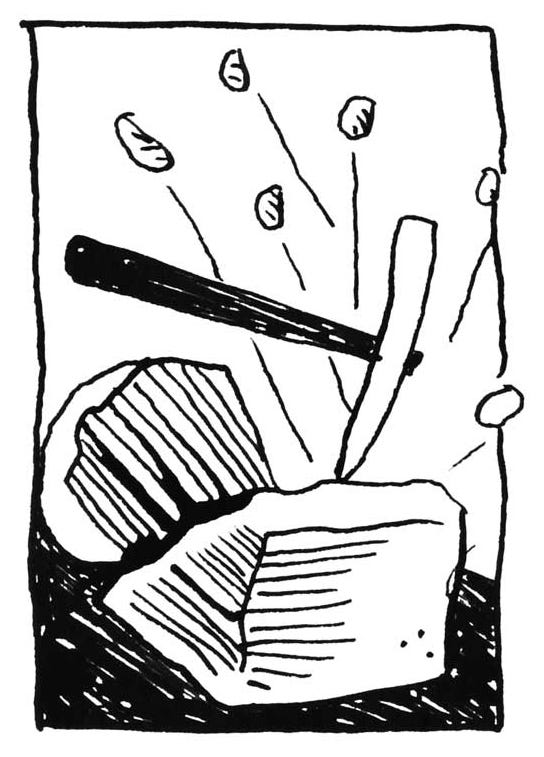
Underlands: A Journey Through Britain’s Lost Landscapes – Ted Nield
A blend of deep time and personal history that joins Inferior Oolite, quarried from the heart of England, to Aberdeen Granite and Welsh Coal, sourcing the stones which housed, and then capped the graves of the authors ancestors.
The contradictory heart of the book lies in both a reverence for the heroism of the industrial age and a sober accounting of the suffering and death it entailed, alongside the tragic weakness along which the twenty-first century will undoubtedly break, that ‘everything needful that we cannot grow has to be dug up’, but ‘our erosive power has reached such a pitch that we currently erode and transport enough rock to fill the Grand Canyon to the brim every fifty years.’
As the author restores the tomb of his great-grandfather, who went down the pit at eleven and patiently transformed himself into a qualified engineer, setting a foundation for the life and work of the authors father and the author himself and the book we are reading and by implication, us. The author, and the reader brood together over what legacy we leave to our own children.
I read the last few pages between Christmas and New Year, and in the background, an advert on the telly tells me that the electricity company in question is doing its part for the reshoring of production. Unspoken, the war in Ukraine. In Cumbria, the government will be opening a new coal mine. On the one hand, the author describes over and over the necessity of the stone, mineral and metal below our feet, on the other, a quote which heads chapter three, from Richard Llewllyn’s How Green Was My Valley …
‘But it will roll down on top of us,’ I said. ‘In time to come, I suppose,’ he said, but not taking much notice. ‘Years, yet.’
No posts
Comments
Nothing yet. Say the first thing.
Sign in to join the conversation.