
New here?
A quick note: if you found me through my writing on Israel or antisemitism, that’s still a core part of this publication. Echoes is the more personal lane, where those public themes meet memory, family, identity, and the book I’m writing.
The sharper commentary is still on the main feed, and it remains free.
He taught me how to shake hands the way fathers did back then.
Stand up straight. Look them in the eye. Firm grip. Not too hard. A couple of pumps. Let go clean.
He made me practice on him. I was eight, maybe nine. My hand disappeared inside his. His grip was warm and certain. The kind of handshake that tells you everything you need to know about a man before he says a word. A twinkle of pride in his eyes as I rehearsed adulthood I only pretended to understand.
He was proud of his hands.
He had reason to be. They could do anything. in his twenties, he once rode his bike from the north of Israel to Eilat. Seven hours. When the bike broke down on the side of the road, he pulled a small blanket from inside the seat, laid the bike on its side, took it apart, fixed it, put it back together, and kept going.
He built me a room one summer. Sheet rock, plaster, electrical wiring. All of it. By himself.
He was an engineer. Brilliant with anything mechanical. We never had a technician at the house. Not once. Whatever broke, his hands could fix.
Sixty-five tons of steel came down on his right hand in a plastics factory on a February morning in 1990.
The machine was jammed. Protocol said shut everything down. Verify the safety was on. It was. He saw the obstruction, reached in, and the press dropped. Bone, tendon, everything his hands had ever built, destroyed in a millisecond.
He wrapped what was left in a towel and told the man next to him to call an ambulance. He did not yell. Later he said he did not want to scare his employees.
Was it adrenaline rushing through his veins that kept him focused, or was it pure shock. I will never know. All I know is that he was matter of fact about it, as he recounted the story to me once, and only once.
He was rushed to emergency surgery immediately. His middle finger trailed him there by a couple of hours, on ice. By the time it made it to the surgeons, it was too damaged and not worth reattaching anymore.
That was the first of seven surgeries.
I never saw the hand before the first surgery, as he was rushed to the hospital. I was eleven. I came home from school. Latchkey kid. The phone was ringing.
My mother’s voice sounded distant. Controlled but distant.
“Ido, I am going to tell you something but I don’t want you to worry.”
“What?” I said, almost annoyed. I did not know yet.
“Your father had an accident, but he’s ok.”
“What happened? Is he ok? Where are you? Where is he?”
“He had an accident with his hand.”
“What do you mean?”
“We’re at the hospital and he’s in surgery. I need to go talk to the doctor. There’s food in the fridge.”
There was always food in the fridge. No matter what.
I sat down in the silence and could hear my own heartbeat.
They saved the hand. Most of it. The middle finger was gone. All the way down to the knuckle. What was left was a small bump covered in tight, shiny skin that did not belong there. Grafted from somewhere else on his body. It was thinner than normal skin. Stretched. A little waxy. It did not feel like his hand. It felt like something constructed to look like a hand by someone who had been given a description of one.
Seven surgeries over the years that followed. Nerve damage. Tissue loss. Structural collapse. He never regained full use of it. Not even close.
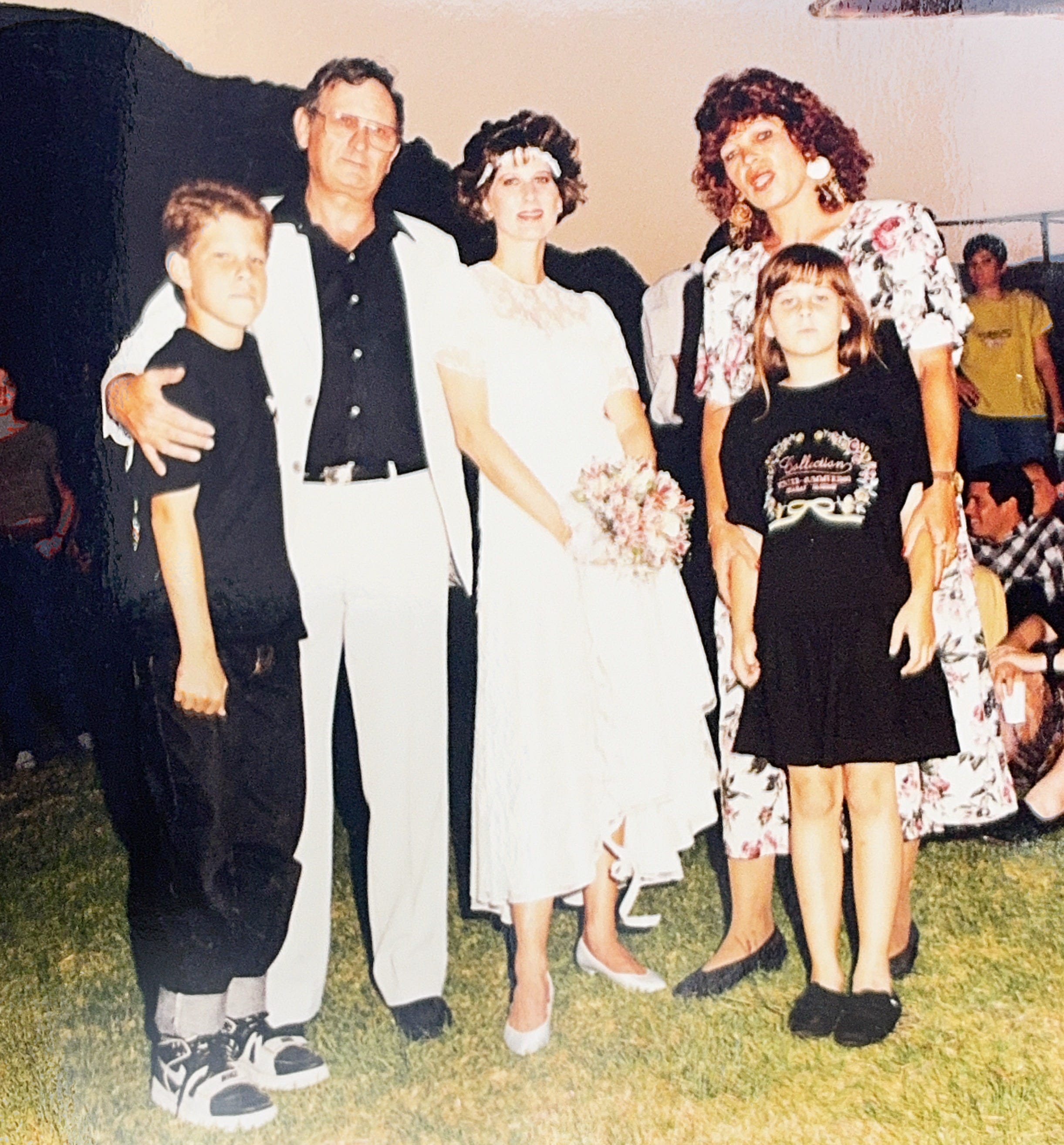
When you shook his hand after it healed, the first thing you noticed was that it gave.
The index finger and the ring finger had nothing between them anymore. No middle finger to hold the structure. So when you squeezed, even gently, the hand would collapse inward on itself a little. Fold where it should not fold. The grip had no center. It could not hold.
It did not feel like a handshake. It felt like shaking the hand of a different man.
And in a way, it was.
He would not let me hold his hand for the longest time after the surgery, as if he had anything to be ashamed of. As if he chose to be this way. He felt that he had disappointed us, or that he was no longer good enough, or whatever might have gone through the head of someone who had just gone through severe trauma.
He left a big piece of him back in Poland. A childhood I wouldn’t wish on anyone. Now, another piece was gone. One that he could not easily bury inside.
It was out there, for all to see.
The man who had taught me to grip firm and look them in the eye could no longer do it himself. Not the way he used to. Not the way it mattered to him. Every new person he met, every introduction, every extended hand required him to offer something that announced his damage before he could say a word.
He hated explaining. He hated the looks. The slight pause on the other person’s face before they recovered and pretended they had not noticed.
He noticed them noticing. Every time.
It started grating on him. Over months. Over years. The frustration layered on top of the sadness, which layered on top of the depression, which layered on top of a man who had already been broken once before by a friend who stole his savings and vanished.
The hand was the last thing he had left that worked. And then it did not.
He had a dark sense of humor. Always did.
He used to take that knuckle, that little bump where his middle finger used to be, and bring it right up to his nostril. Pretended he had stuck the whole finger in there.
The setup was always the same. He would wait for someone to notice the hand, or for the conversation to arrive at what happened to it, and just before the weight settled in, he would bring the knuckle up to his nose with this look on his face. Like a kid pulling a coin from behind your ear.
A stupid joke. He knew it was a stupid joke. But he performed it like a party trick. A pity party nobody ever wanted to be invited to.
It was the only way he knew how to deal with loss. Laugh it off. I do the same.
That was his move. Turn the loss into a trick. Make the room laugh before it had time to pity him. Control the moment before the moment controlled him.
It worked. It always worked.
Until it did not. Until the joke wore thin and the hand was still there and the finger was still gone and the next stranger’s handshake was just another chance to feel it all over again.
I think about that hand more than almost anything else he left me.
Not the accident. Not the surgeries. The handshake.
The handshake he taught me. And the handshake he could no longer give.
He taught me how to meet the world with a hand that could no longer meet it itself. That is the kind of thing a father passes down without meaning to. The lesson survives. The man who gave it carries the cost.
Firm grip. Eye contact. A couple of pumps.
I still shake hands exactly the way he taught me.
Every time I do, I feel the ghost of two fingers that had nothing between them. And a man who performed a magic trick so no one would see what it cost him to extend his hand at all.
This is one of many Echoes from the book I’m writing.
Fragments of a larger story about survival, inheritance, and identity.
If you want to be among the first to know when it’s ready, you can join the early reader list.
If you want to simply follow along it as it comes together, you can subscribe.
Everything I’m writing lives on the feed.
Most readers find me through my Notes.
This is where the Notes find their roots.
No posts
Comments
Nothing yet. Say the first thing.
Sign in to join the conversation.