
New here?
A quick note: if you found me through my writing on Israel or antisemitism, that’s still a core part of this publication. Echoes is the more personal lane, where those public themes meet memory, family, identity, and the book I’m writing.
The sharper commentary is still on the main feed, and it remains free.
The manuscript has an entire chapter about my father’s hand.
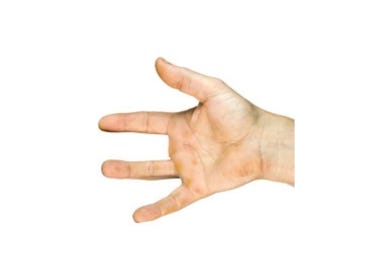
It covers the accident. The machine. The sixty-five tons. The towel. The seven surgeries. The disability. The depression. The financial collapse. The odd jobs. The anger that followed him through the house for years. It is one of the longest chapters in the book, and it earns every word.
The Echo uses almost none of it.
That was the decision I had to make this week. What belongs in the chapter and what belongs in the Echo. They are different instruments playing the same note. The chapter tells you what happened. The Echo tells you what it felt like every time he shook someone’s hand after.
My first instinct was to start with the accident. The factory. The machine shuddering. The sound of his own scream. That is dramatic material. It pulls a reader in. It announces itself.
But it is also the wrong door into this piece.
If I open with the accident, the reader arrives at the handshake already knowing the full story. They have the context. They have the sympathy. They understand why the hand is damaged, and every detail about the grip and the graft skin and the missing finger becomes confirmation of something they already feel.
I did not want confirmation. I wanted the reader to feel the hand first.
So I opened with the lesson. A father teaching a boy how to shake hands. Warm grip. Certain. The kind of handshake that tells you everything about a man before he speaks. I wanted the reader to feel that hand working. To trust it.
Then I took it away.
The accident gets four paragraphs. Enough to know what happened. Not enough to sit in it. Because the piece is not about what the machine did to the hand. It is about what the hand did to my father every day after.
That is a craft principle I keep learning the hard way. The dramatic event is almost never the story. The story is what the event leaves behind. A war is not a story. Coming home from one is. A factory accident is not a story. Shaking hands with graft skin for the rest of your life is.
The nostril joke is the best example. It does not appear in the manuscript. I have never written it down before this week. It lived in my memory as a small, strange, almost embarrassing detail. The kind of thing you are not sure belongs in a serious piece about loss.
It belongs more than almost anything else.
Because the joke is where you see the man. Not the injury. Not the depression. Not the anger. The man. A father with a dark sense of humor who decided he would rather make a room laugh than let it pity him. That is not a detail about a hand. That is a detail about a person. And the person is always the story.
I pulled the phone call with my mother directly from the manuscript. Word for word. I did not change it. There is a version of this piece where that scene is cut entirely. The Echo would still work without it. But I kept it because of one line.
“There’s food in the fridge.”
That line has nothing to do with the hand. It has everything to do with my mother. And in a piece about my father’s loss, that single line tells you who was holding the rest of us together while we learned to live with what came home from the factory.
The chapter tells the whole story. The Echo tells the handshake. They do not compete. They do not overlap. One is the record. The other is the feeling.
The feeling is always shorter. It is also always what the reader carries home.
This is one of many Echoes from the book I’m writing.
Fragments of a larger story about survival, inheritance, and identity.
If you want to be among the first to know when it’s ready, you can join the early reader list.
If you want to simply follow along it as it comes together, you can subscribe.
Everything I’m writing lives on the feed.
Most readers find me through my Notes.
This is where the Notes find their roots.
No posts
Comments
Nothing yet. Say the first thing.
Sign in to join the conversation.