
The Wheel is a conservative options approach built around stocks you’re comfortable owning. This approach is among the most widely used options strategies in the U.S. market.
→ Sell a cash-secured put on a stock you are genuinely fine owning.
→ If assigned, switch to a covered call and let premium work down your cost basis over time.

This strategy allows you to generate consistent monthly income by systematically collecting premium, with many disciplined traders targeting 1–3% per month on deployed capital, depending on market conditions and risk tolerance.
The 15 strongest Wheel candidates for this week
A cash-secured put entry with a defined downside cushion
A covered call plan if assigned
Clean numbers: cushion, breakeven, upside-to-strike, collateral
Roll candidates with specific strikes, dates, and expected credits
Scenario guidance for if the stock drops 3–5%, drops 5%+, or rallies
The actual plan for managing the trade from open to close
1. You start with the cash-secured put. If the stock stays above your strike at expiration, the put expires worthless. You keep the premium. No further action needed.
2. If the stock falls and you are assigned shares, then you sell the covered call. Not earlier. Not because it looks attractive. Only after assignment.
This matters because most Wheel mistakes come from forcing both legs when the market only gives you one.
Each setup has two phases. Phase 1 is the put you sell now.
Phase 2 is the covered call, and it comes in two forms. When the analysis pairs a specific call with the put, Phase 2 shows that full contract: premium, break-even, delta, and yield.
When it doesn’t, Phase 2 shows the target strike and delta only. You sell that call in the next cycle, after assignment, and you’ll see its real numbers then, once you own the shares.
The Phase 2 header tells you which one you’re looking at. “If Assigned” means a specific contract. “If Assigned (Next Cycle)” means a forward target.
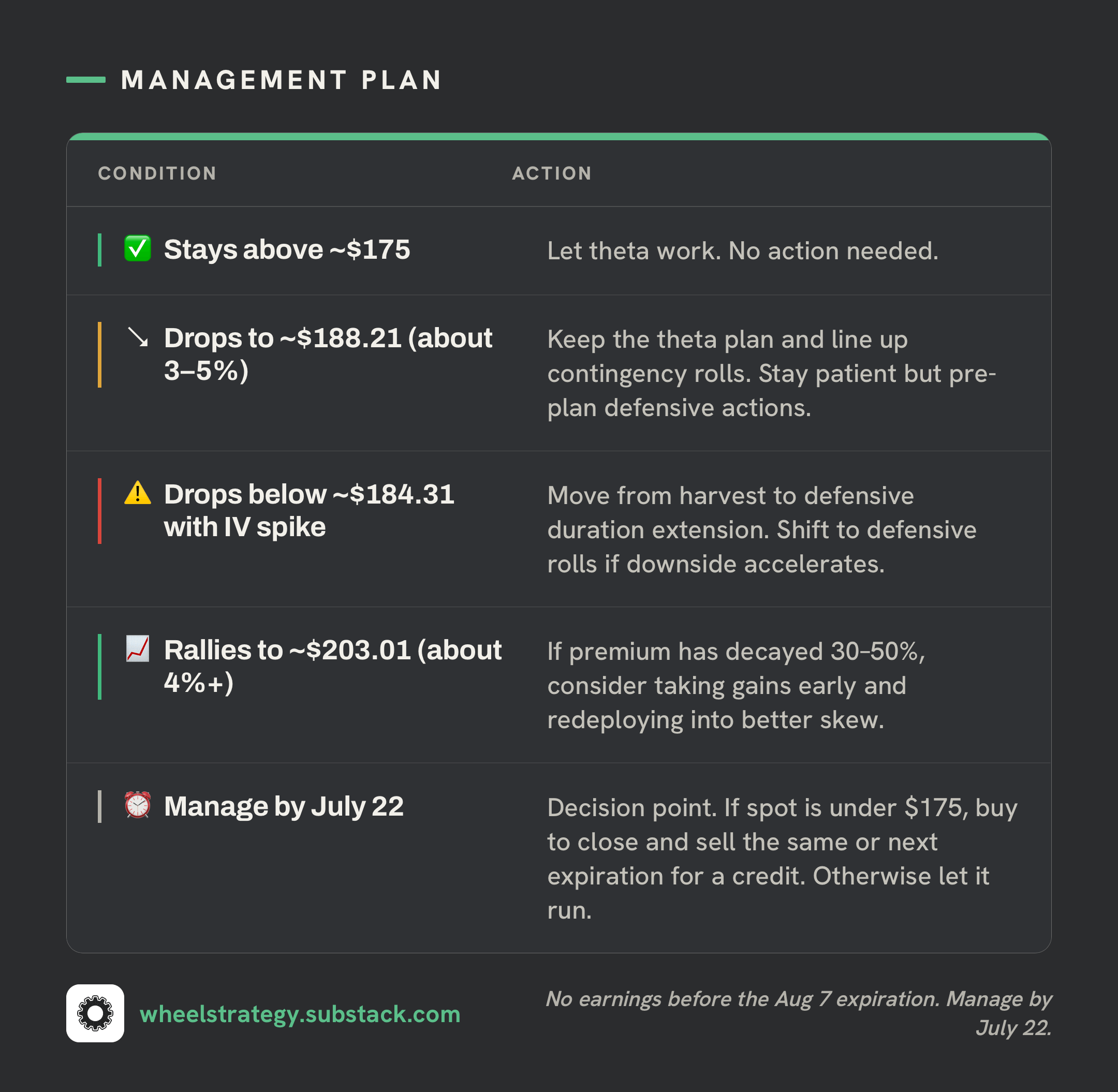
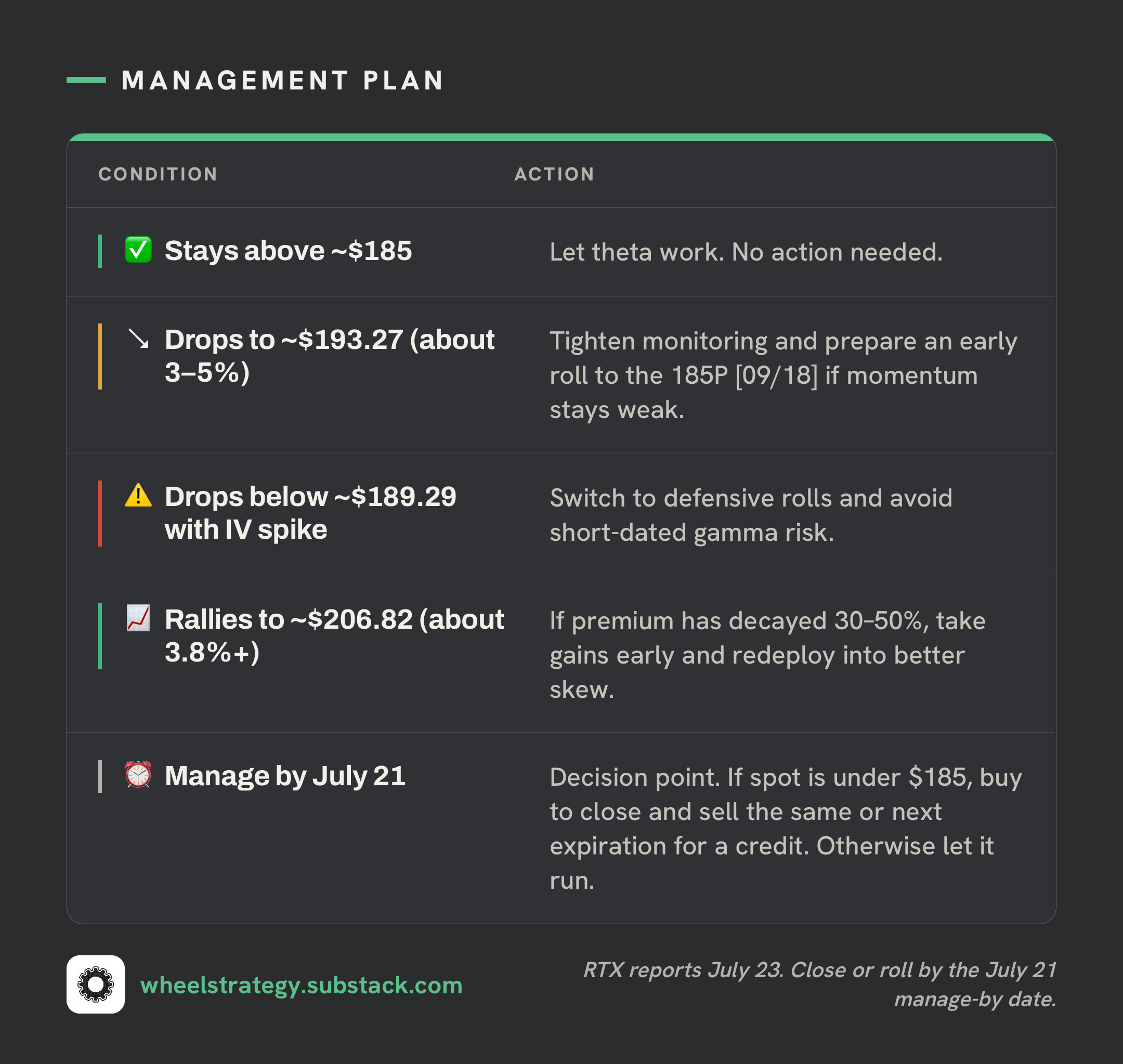
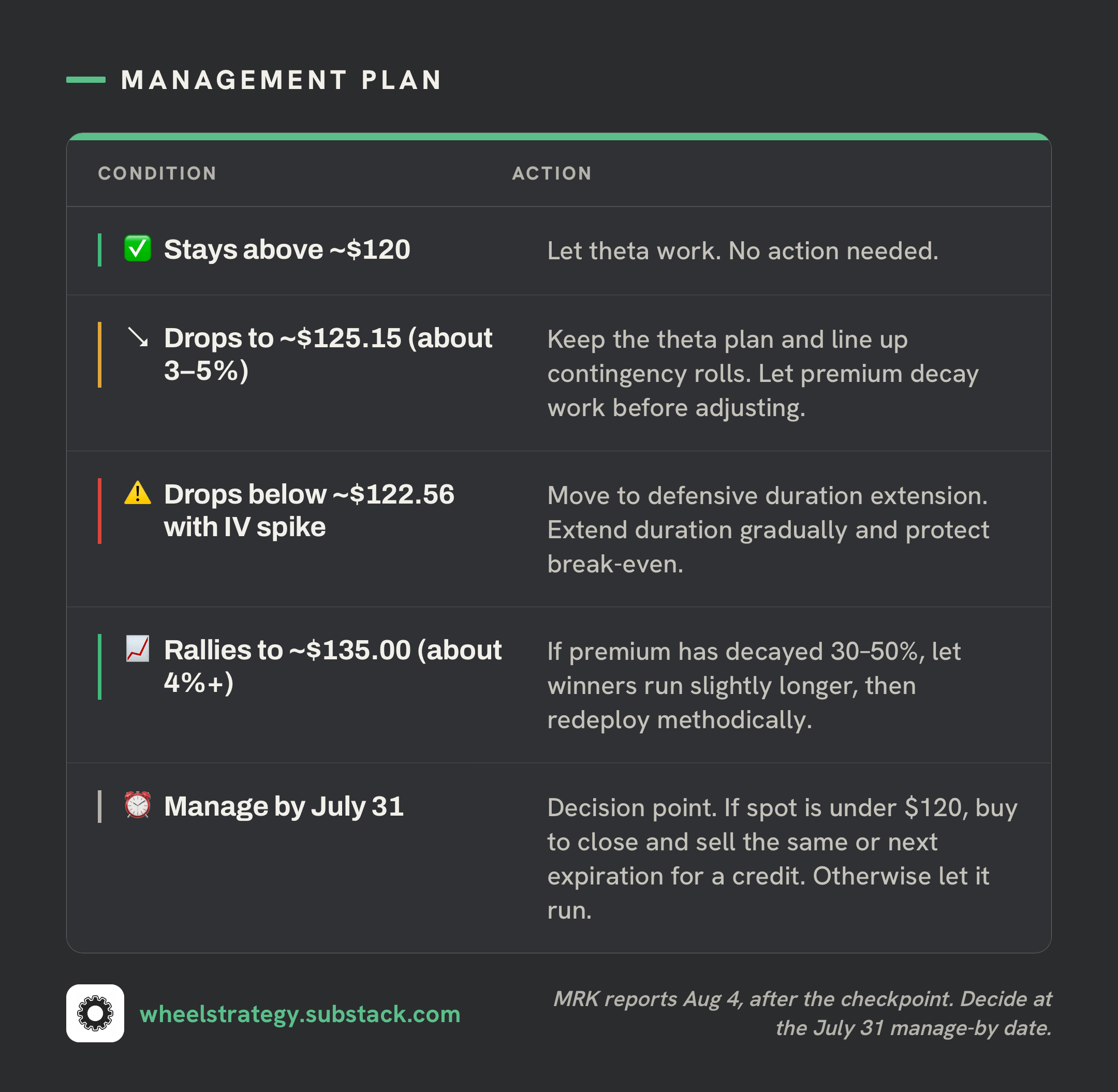
Every setup shows a manage-by date. It is the day to check the position and decide whether to let the put run, close it, or roll it.
When a company reports earnings before the option expires, the manage-by date falls before that report, and the setup’s note says so. Treat the manage-by date as part of the trade.
Manage-by dates are set from scheduled earnings dates at the time of analysis. Companies sometimes move their report dates. Verify the earnings date at your broker before entering, and again as the manage-by date approaches.
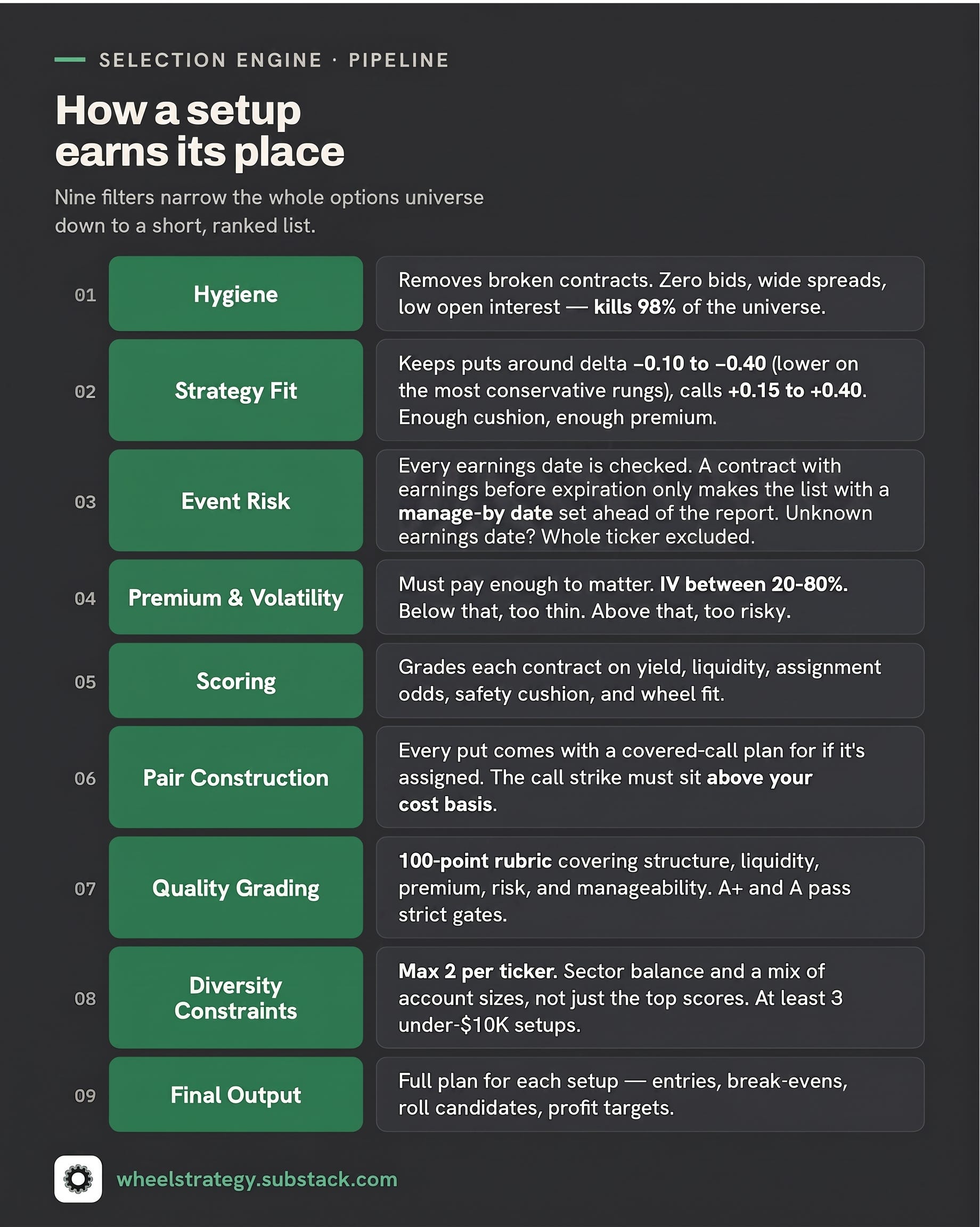
Every setup in this report passed all of these criteria before making the list. This is strict filtering designed to eliminate low-quality setups before they waste your capital.
Disclaimer. These setups are educational content, not personal investment advice. The analysis is real, the reasoning is thorough, and the numbers reflect market conditions at the time of analysis — but markets move, and the bid/ask you see at your broker when you go to execute will not match the numbers shown here exactly. Always pull up the current option chain in your own brokerage account and verify the live bid before placing any order. Use limit orders, not market orders. Nothing here is a recommendation to buy, sell, or hold any security. Every setup is designed to show how the Wheel Strategy works in practice so readers can make their own informed decisions. Options trading involves substantial risk and is not suitable for all investors. The author may hold positions in securities discussed. Always do your own research and size positions to your own risk tolerance.
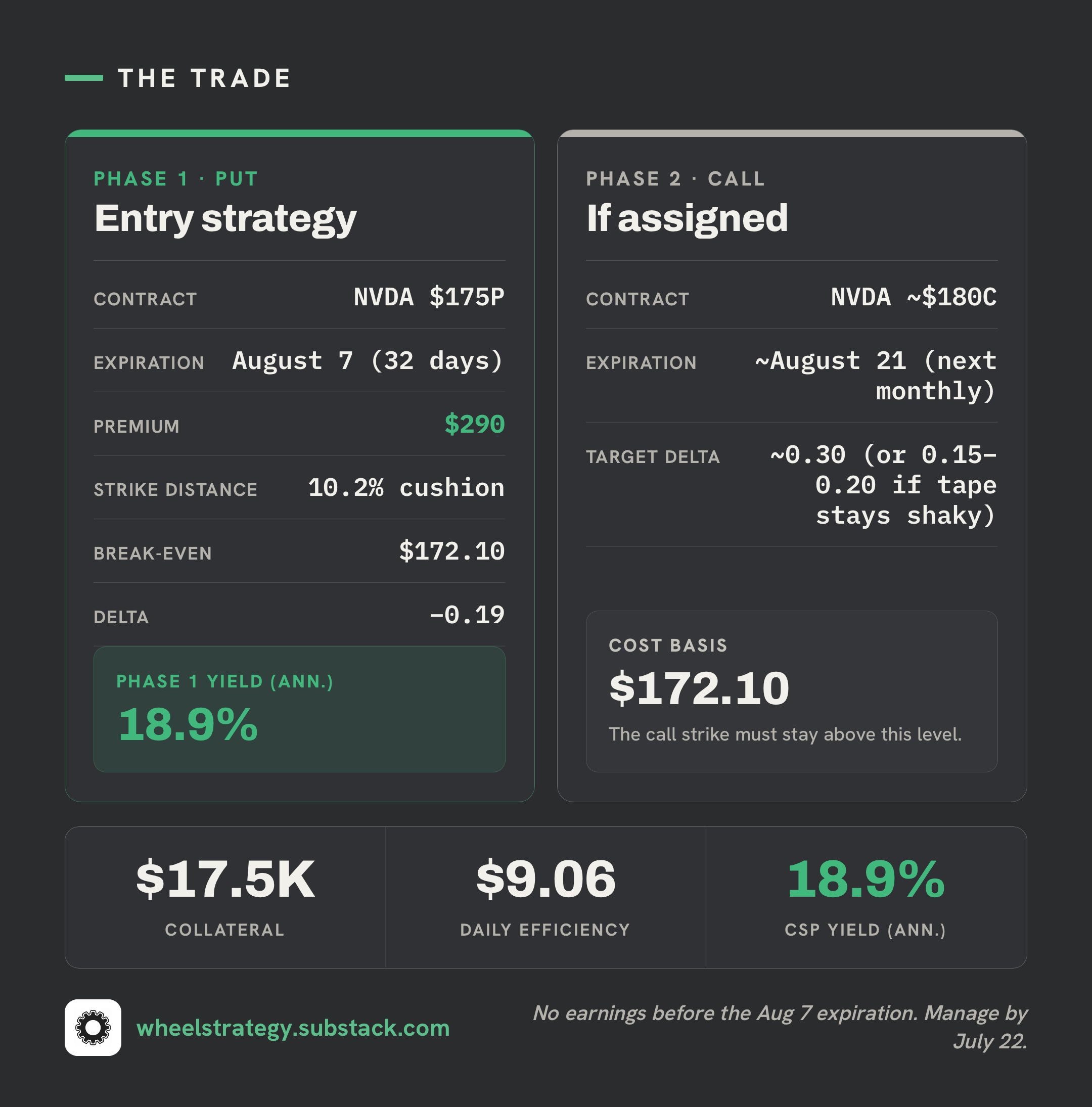
Nvidia designs the graphics and AI chips at the center of the data-center buildout. This 32-day put carries a 10.2% cushion, the widest among the tech names here. Implied volatility is running roughly in line with realized movement, which keeps the premium fair rather than stretched. The shorter August 7 expiration also pulls the manage-by checkpoint forward relative to the rest of the report.
Sell the NVDA $175 put for $290 against $17.5K collateral, an 18.9% annualized yield. This is a CSP-only setup: if assigned at a $172.10 cost basis, the next-cycle covered call targets ~$180 at roughly 0.30 delta, stepping down to 0.15–0.20 delta if the tape stays shaky on this mega-cap tech name.
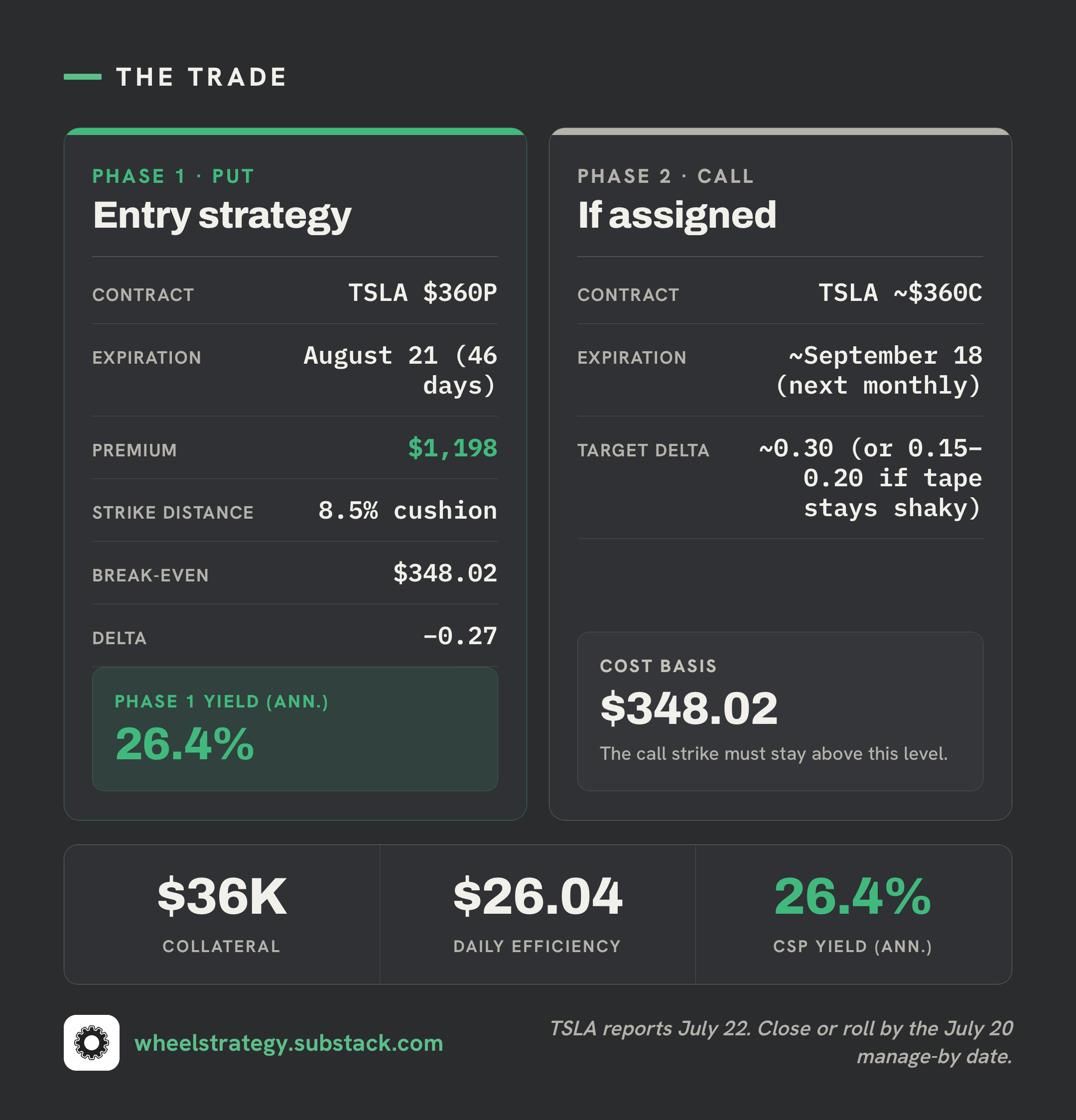
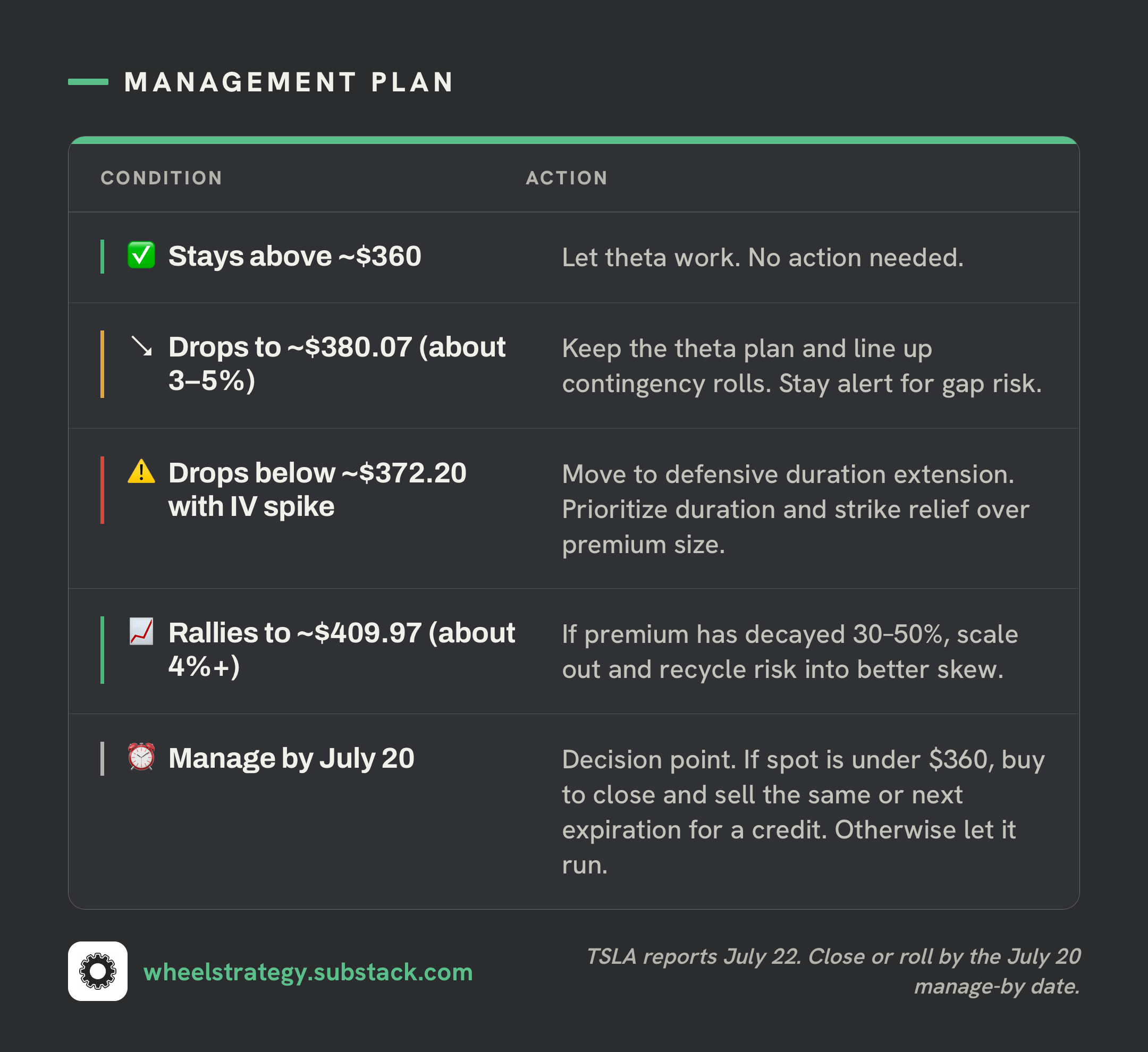
Tesla builds electric vehicles and energy storage systems. This 46-day put sits 8.5% below spot and pays $1,198, the largest premium in the report. Implied volatility is running below realized movement, so the premium is on the subdued side, though the annualized yield still clears 26%.
Sell the TSLA $360 put for $1,198 against $36K collateral, a 26.4% annualized yield — the largest premium in the report. This is a CSP-only setup: if assigned at a $348.02 cost basis, the next-cycle covered call targets ~$360 at roughly 0.30 delta.
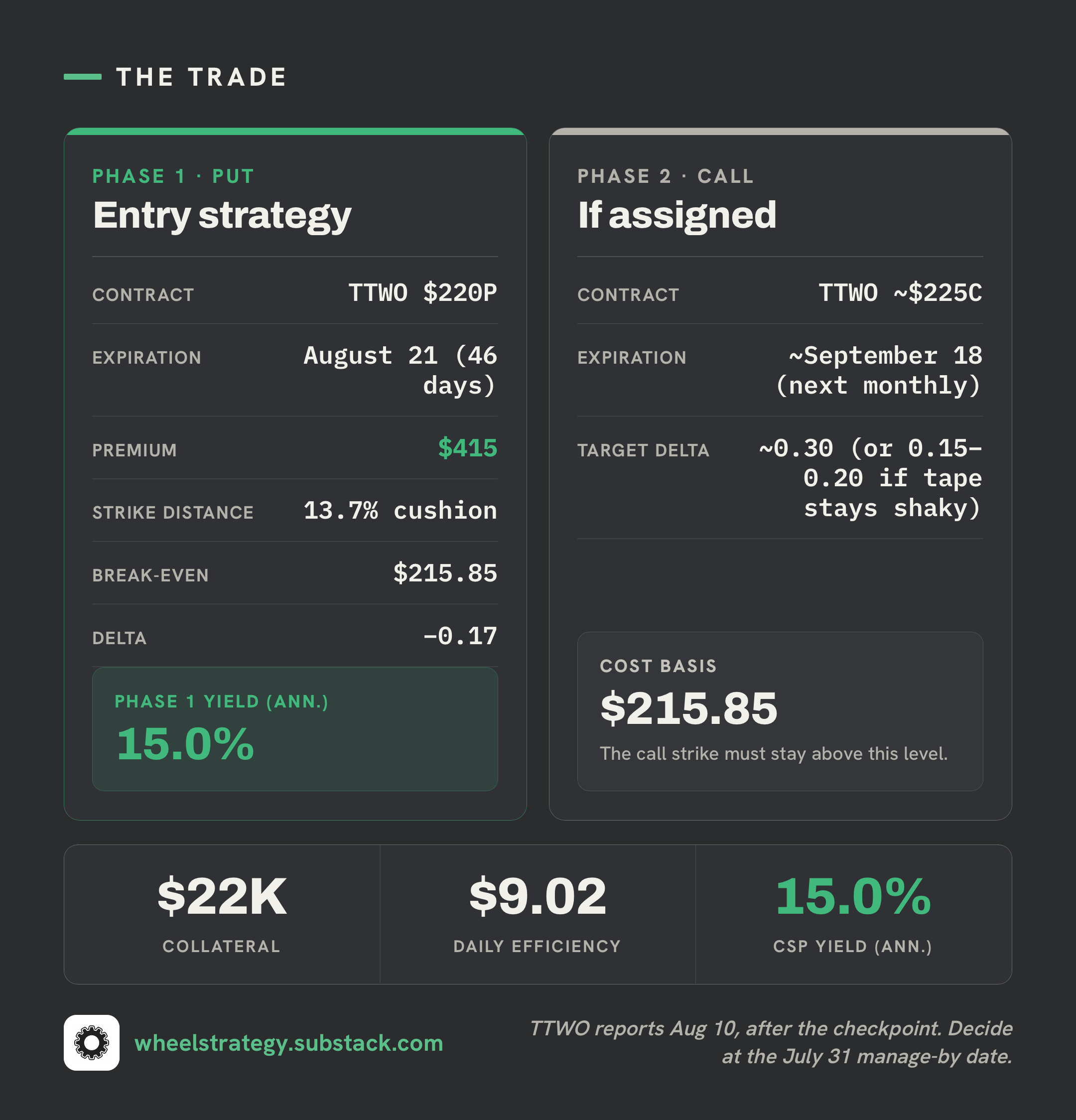
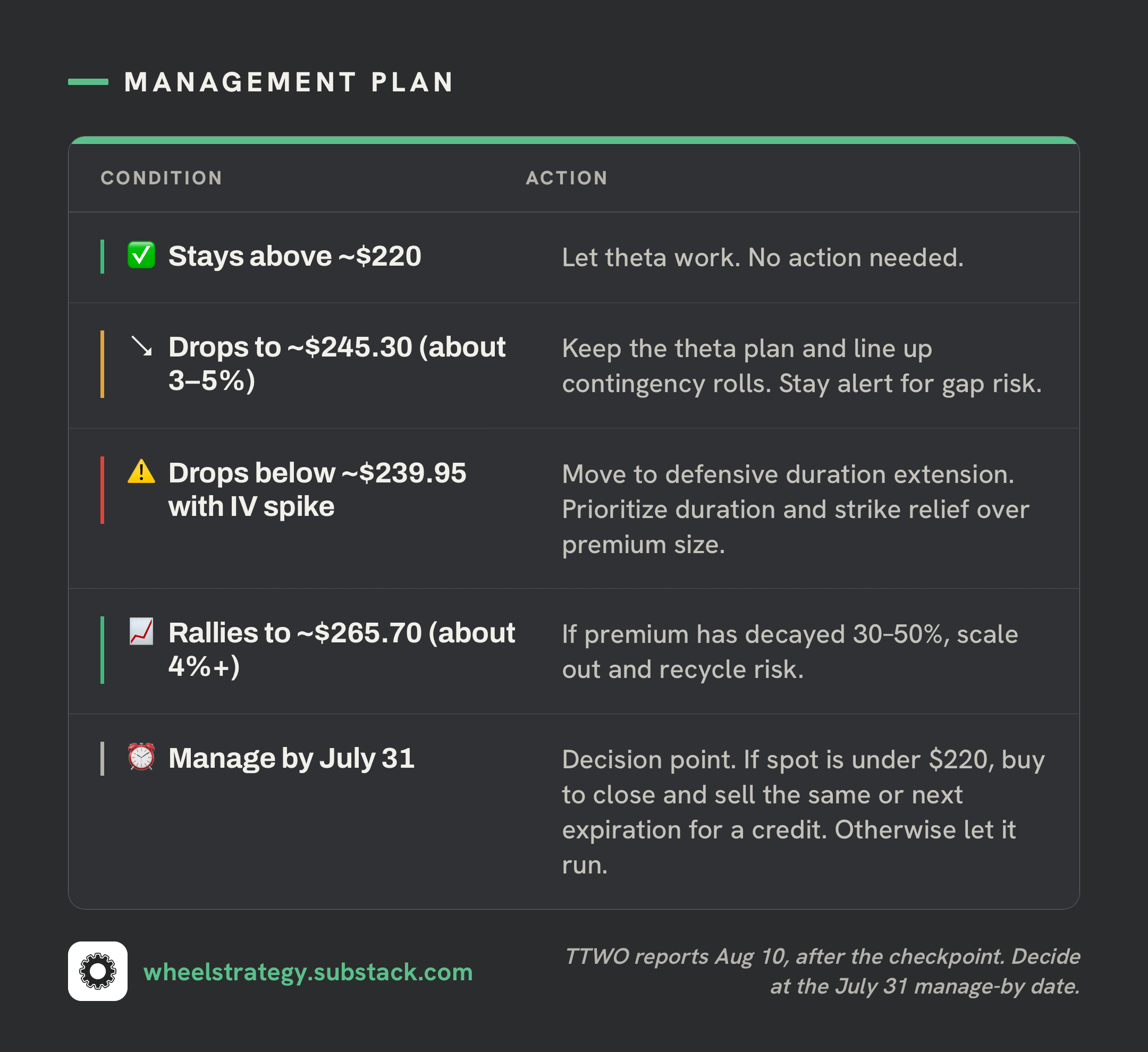
Take-Two Interactive publishes video games, including the Grand Theft Auto and NBA 2K franchises. This 46-day put carries a 13.7% cushion, one of the two widest in the report. Implied volatility is running well above realized movement, so the premium here is genuinely rich. The spread is wide near 12%, so work the order: start at mid $4.15 and expect to give up a few cents, but don’t chase below about $3.82.
Sell the TTWO $220 put for $415 against $22K collateral, a 15.0% annualized yield, with a 13.7% cushion. This is a CSP-only setup: if assigned at a $215.85 cost basis, the next-cycle covered call targets ~$225 at roughly 0.30 delta. The spread is wide near 12% — work the order at mid $4.15 and don’t chase below about $3.82.
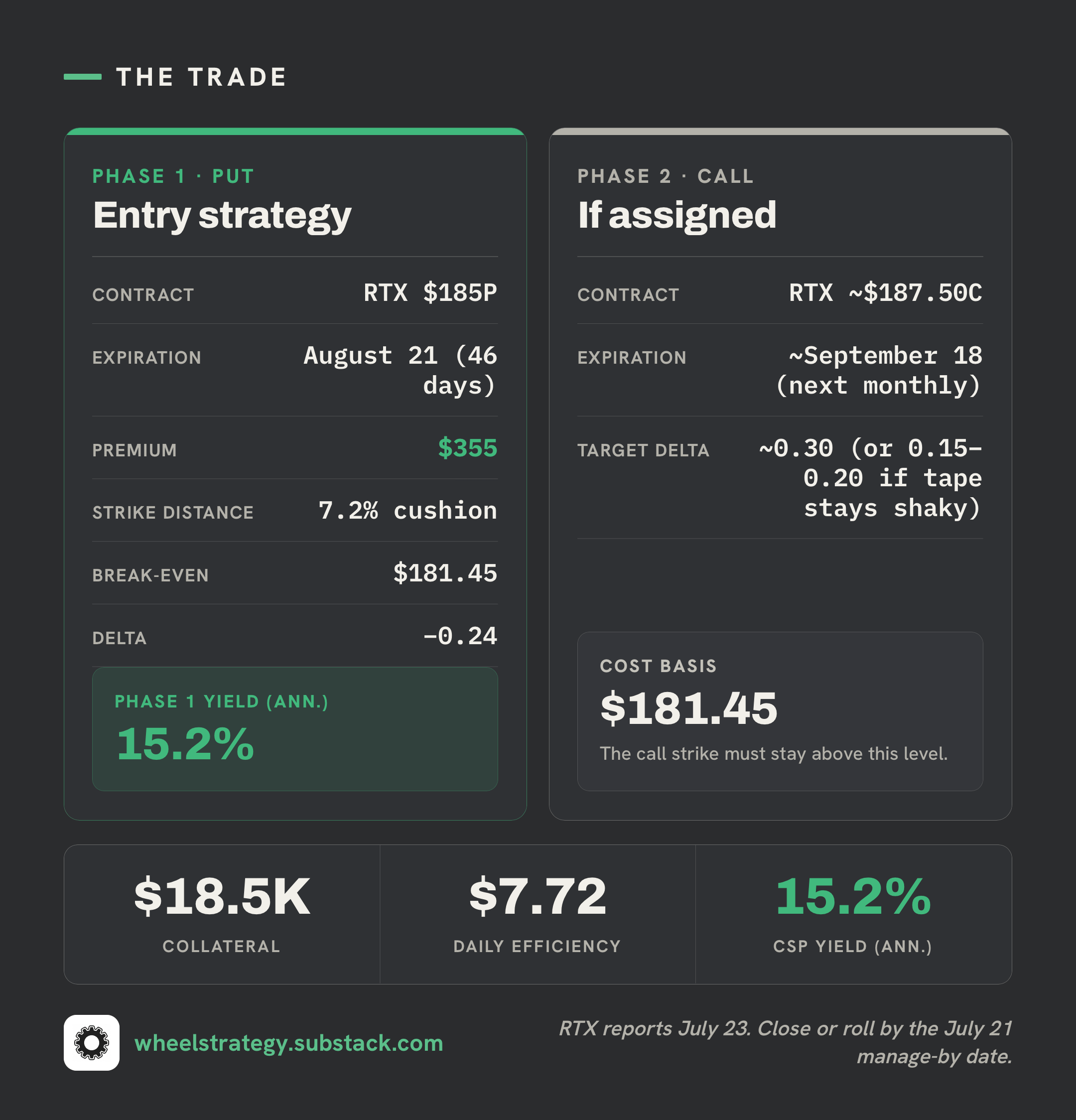
RTX builds jet engines, missiles, and defense systems for commercial and military customers. This 46-day put sits 7.2% below spot with the strike above the 200-day moving average. Implied volatility is subdued relative to realized movement, so the premium is modest, and the case rests on a steady industrial name. The spread is wide near 8%, so work the order: start at mid $3.55 and don’t chase below about $3.27.
Sell the RTX $185 put for $355 against $18.5K collateral, a 15.2% annualized yield. This is a CSP-only setup: if assigned at a $181.45 cost basis, the next-cycle covered call targets ~$187.50 at roughly 0.30 delta. Work the wide 8% spread at mid $3.55; don’t chase below about $3.27.
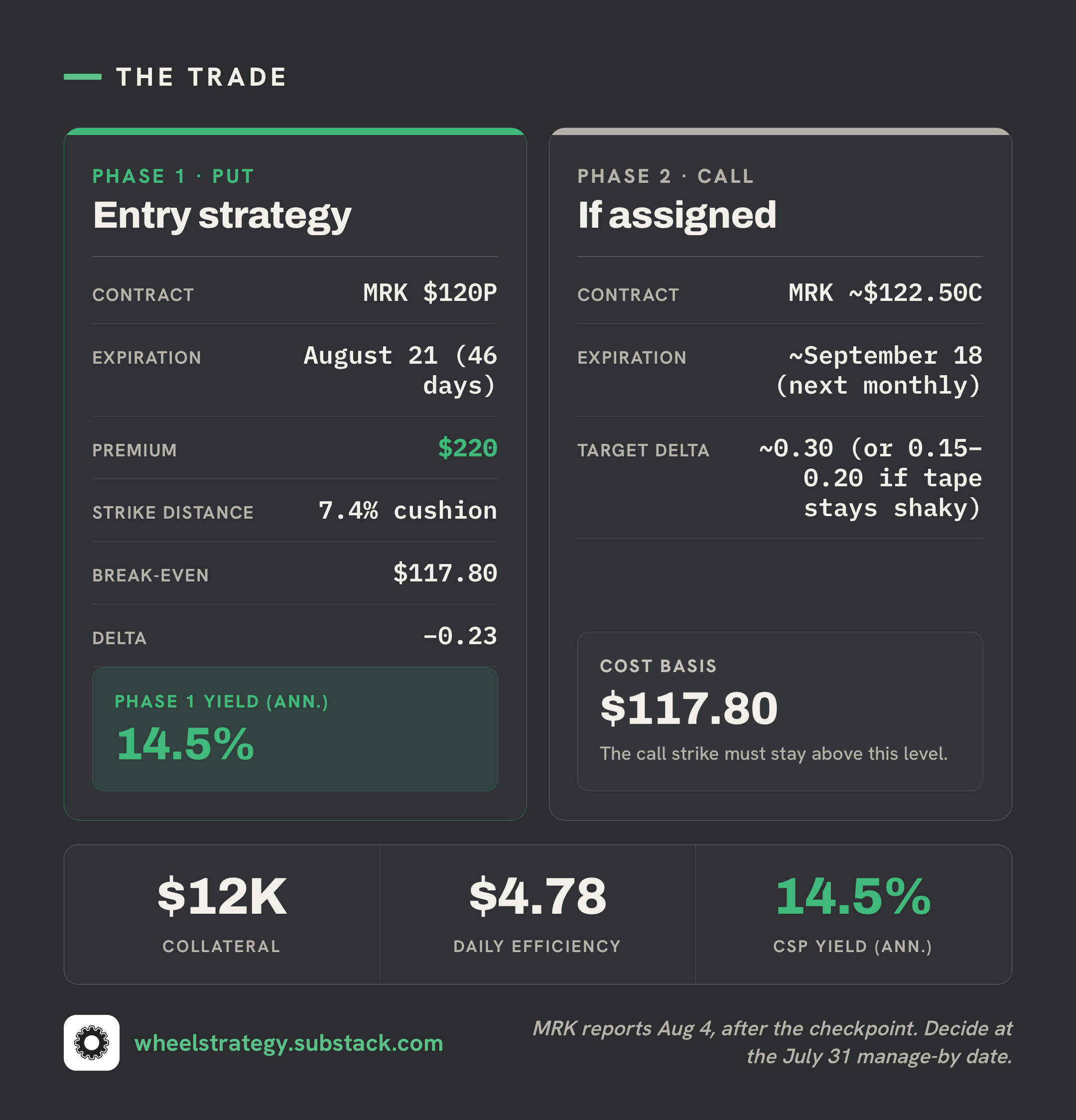
Merck is a large pharmaceutical company known for its oncology and vaccine businesses. This 46-day put sits 7.4% below spot with the strike above the 200-day moving average. Implied volatility is running below realized movement, so the premium is modest, and the case rests on a defensive healthcare name with a steady tape. Work the order on the wide 8% spread: start at mid $2.20 and don’t chase below about $2.02.
Sell the MRK $120 put for $220 against $12K collateral, a 14.5% annualized yield. This is a CSP-only setup: if assigned at a $117.80 cost basis, the next-cycle covered call targets ~$122.50 at roughly 0.30 delta. Work the wide 8% spread at mid $2.20; don’t chase below about $2.02.
Ten more setups below. Industrials in UPS and Boeing, consumer names in Starbucks, Best Buy, and Carnival, financials in Schwab and Morgan Stanley, healthcare in Novo Nordisk and Bristol Myers Squibb, and tech in IBM.
IV ranges from 30.1% to 53.5% across the ten. Every setup is a cash-secured-put entry with a next-cycle covered call plan, all on August 21 expirations at 46 days, which leaves more room for theta and management than recent weeks.
Collateral runs from $2.5K to $25K, and six of the ten fit a sub-$10K account. Members receive the full list each week — complete opportunity set, same depth on every setup.
Paid subscribers also receive: a downloadable PDF with the complete 15-setup report, ready to print or save for the week.

Comments
Nothing yet. Say the first thing.
Sign in to join the conversation.