
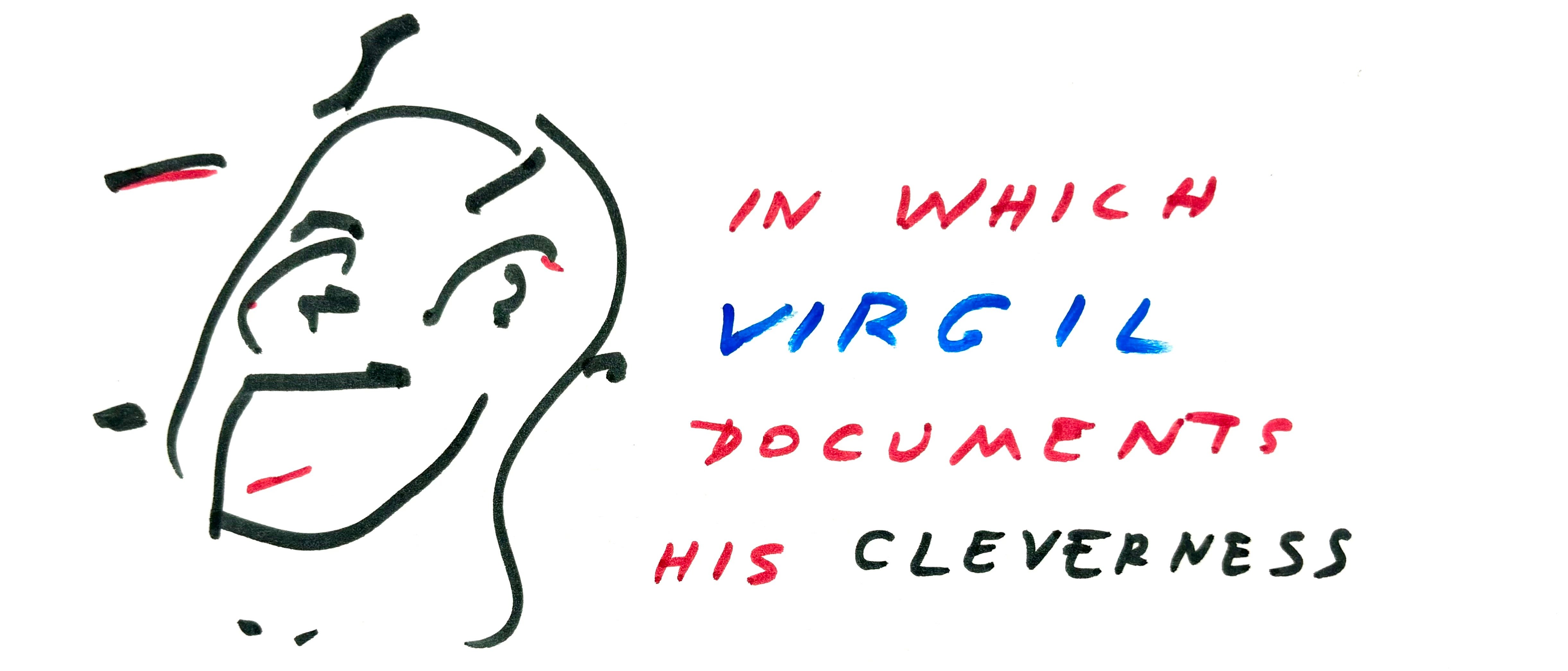
Tonight I am finally revving up on caffeine. Then again, it is hardly night. It is 7:05 p.m., the sun hasn’t started its initial descent, there are the various beginnings of grandstandings going on at pubs on Bloor St. (Blue Jays this, Yankees that), where I sit outside at a coffee shop, articulating or (“if I’m honest”) misarticulating. How will I manifest-on-paper whilst in public?
Earlier in the day, I did my usual circuit: over to Trinity Bellwoods, back to Kensington, the bagel, and the coffee. Not seeing Kia or Gordon, I decided I would text Gordon, since (1) I’d seen Kia yesterday; (2) Gordon is my friend; (3) Harriet hadn’t contacted me since electing to pause our relationship, nor had I her (nor had Bruce me); I felt an umbilical despair. I said, quite simply, to Gordon: Would you like to hang out today, Gordon? A vanilla Canadian text, right down the middle of the plate. He wrote back after a few minutes: Actually I’m hanging out with my friend Peggy in the Annex but you can join!
I popped the last nubbin of bagel in my mouth & spirited to the address Gordon provided. It was a magnificent home with Virginia creeper. Or some creeper. I rang the bell, and an elderly woman with birthday streamer hair let me in. She said, Hi, I’m Peggy. Peggy said Gordon hadn’t arrived yet, which was dispiriting. We had suffered a present tense misunderstanding, he & I, viz. he had written “I’m hanging out” instead of “I will be hanging out,” and I had failed to litigate his usage. I said to Peggy, When will he arrive? She said, Soon, I expect. By this point, she had ushered me in and closed the door behind her, in the typical manner of elderly females, and I had taken a few steps into her entryway. Then she was asking my name, offering me herbal tea, all the usuals. I asked her if I could have coffee instead, and she bellowed, No, never caffeine in my house! It seemed performative, nonetheless I didn’t care for it, one should not bellow around a new acquaintance. I said, I assumed you would be younger! She raised an eyebrow but didn’t reply. Never fear, I pressed the matter: Like, Gordon’s age, I mean. With a low laugh, she said, I am indeed older. I said, It’s unusual to be friends with such a young person, & she said, I used to be his writing teacher, it would appear we have transitioned into being friends.
Her home smelled earthy, it had twenty thousand flowers, it felt like she was composting something, or compensating for something, or — Anyway she showed me into her Sitting Room, poured me a cup of tasteless tea, and asked if I was a student at the U of T. I said I was from New York, and she said, Ah, America. I said, America (I too dislike it). She didn’t react. I said, Tell me, Peggy, do you spell it emprison with an e, like the British do, or imprison with an i, like the Americans do? She said, You’re thinking of inquiry, I would imagine; regardless, British English and Canadian English are distinct. I said, Why don’t we kiss under the narcissism of small differences?
Peggy said, So tell me about yourself, Virgil (even as I was steeling myself to ask her the very same question)! I relayed my vitals, told her what had brought me to Toronto, sped through my in-media-res Cold War w/ my sister (I included Harriet’s CV, seeing as Peggy was a teacher; she seemed impressed with the Princeton job prospect). Peggy said, And Gordon has befriended you? I said, And Kia too! She said, That makes sense you’ve found friends, Canadians are polite. I noted it was a bit early in our conversation for her to issue snide remarks like that. But I noted it internally, I didn’t show her my hand. Instead I replied, Your house smells rather like peat. She wore purple-rimmed glasses, have I mentioned, she took them off now, revealing large divots on either side of her nose. She said, My husband, Eli, is in the basement tinkering with something, he’s an old grump, maybe you’ll enjoy talking w/ him. I said, Am I an old grump? She guffawed in a hoarse way. & I said, Let me get acclimated to you first, before we go adding a 2nd person.
After smelling the dirt in her house for a while and listening to the quiet music, ambient meets classical, I would say, in the background, she cleared her throat and said, Why don’t we go outside while we wait for Gordon and I can show you my flower gardens (he didn’t tell me, by the way, that you were coming, if I seem like an imperfect host)? There was no need, of course, for me (Virgil) to apologize, since I’d committed no impertinence, the blame lay with Gordon, but I said, That’ll do, and walked outside with her, and listened to her enumerate her flowers. I said, So are you a gardener or a teacher by trade? She said, I’m a fiction writer by trade. I said, Really? And then I realized that she was Peggy Blanchard, whose fantasy paperbacks I greatly enjoyed in middle school. I said, Ms. Blanchard, I have an idea for a novel. She asked what it was. I said, It’s a time travel novel. The book opens, and then some stuff happens, when all of a sudden, boom, we go 200 years into the past! Peggy frowned; but I could tell her frown didn’t come from sadness. She said, But what stuff happens, and why does it happen? I said, That’s not the point; the point is, it’s not the characters who travel 200 years into the past; it’s the *reader* who does! This conceit didn’t sit well with her; I wondered if it was better suited for a Gen Z audience. It’s a campus novel, I added.
Peggy stared up at a plane flying overhead, YYZ to JFK perhaps or YYZ to YUL, and then showed me her zinnias, and then I said, What are you working on these days? She said, My writing group says my newer works are dystopian, although I’m wary of all genre terms. I said, I don’t enjoy morose stories either. She said, Then again, Virgil, you can’t justify levity without sadness. Take Dickens, for example. I said, Kim Dickens? She said, Charles Dickens. I said, Oh, Boz. She said, You think you’re rather funny; perhaps you are. Nobody had accused me of being funny in recent memory, and I didn’t have an opinion on the matter, since one must recuse oneself from the court of one’s own humour, recuse oneself from amusing oneself, in other words, don’t get high on your own, etc.
Sniffing her zinnias & dahlias & bougainvilleas, I said, My head hurts, and I’m dizzy, is there truly no caffeine in your house? Peggy said, It’s a rule. I told her, However, Balzac drank litres of caffeine, and look at all that he accomplished! In fact some posit that the Renaissance was wholly a caffeine event. She nodded and said, An intellectual Tonguska. Yes, I’ve heard that theory. Are you likening yourself to Balzac? I told her I wasn’t sure, my output was slim, and I had never read his books, except for ten pages of Pere Goriot. But that’s my reading habit, I went on, I go to the bookstore and read the opening ten pages of a few books & then stop!
This caused Peggy to sigh like a westerly wind, and she suggested we sit on a wooden bench near a decorative fountain in her yard, an ample yard for Toronto but small for real life. I said, It’d be a relief for me if we could discuss our favourite streets in the city; mine are Dundas, Bloor, Palm — She cut me off: No, let’s get some food. I said, Dim sum? Peggy said, No way. I considered arguing, but she was wearing a tie dyed shirt & I had a feeling she would successfully mount a defence on her food choices, anyway I was up for trying different fare, so long as it was tasty. Peggy said, I’ll make you an egg sandwich. I said, Will it have bacon jam on it? She said, No, I can’t stand bacon jam. We were in concordance.
Peggy walked with disinterest, she talked with disinterest, as if I were the least alluring part of her day! And there is no harm in saying that acting this way can be hurtful, even to people in the snug bosom of the Bell Curve, the Normal People. Nor are there any demerits added to my record, nor any Dependence implied, by saying that in that moment I did long for Harriet, whom I hadn’t seen in three days, which felt like half a lifetime, although it was only three days, which honestly isn’t that long if you think about it.
∰
Had Harriet been with us, or had I been willing to contact her (which I didn’t need to do, indeed scarcely wanted to do), I might have solicited some praise about how expertly I was coping with yet another new contact in this foreign land. As it was, I humbly followed Peggy to the kitchen for my sandwich. A text came in from Bruce, I didn’t read it, not yet. Peggy said, I doubt I need to explain that your reading habits trouble me, both as a lover of books and a working author. I said, Perhaps books need to be — She tossed the plate with the sandwich down on the table and held up a hand, palm out. She said, You seem hellbent on interrupting. I was trying to say, stories serve a purpose for us. They’re our way, as a species, of communicating lessons. And not that I have any hope of convincing you (she let out a gargling laugh), but I’d say you might be cheating yourself of an important life lesson if you bail on a book after only ten pages. Just imagine your caveman buddy in Lascaux or Chauvet trying to tell you where the jackal was this morning, but oh-oh, you say, Sorry, I’m bored, I’ve got to move on.
At this point, I thought, Are you *quite* done? But I didn’t say it, out of civility, again, & also because the egg sandwich was *quite* delicious. Peggy paused too to take a bite of her own sandwich. After counting to 30 in my head, I said, So, I should read more than ten pages? Peggy replied, Sure. I told her I didn’t enjoy dystopias, why couldn’t she write something with centaurs like she used to, or (better yet) something utopian, or (one rung higher) something absurdist? She said, Your sister’s a 19th century scholar? Ask *her* about utopias. They were all the rage back then. We don’t live in an inspiring era now; we need our dystopian fictions in order to illustrate how things might get worse. Besides, I don’t find utopias credible. They always fail.
Her kitchen was green & verdant, not merely from the (over)abundance of plants, as well as a bookshelf of musty rare titles, but the woodworking was green, the curtains were green, the tiles were white and green. She seemed to be at peace, albeit a fragile peace. Regardless, she went on, (and thank you for letting me talk by the way, I can see it’s a Herculean effort on your part (she guffawed)), regardless of whether it’s a utopia, a dystopia, or a mistopia, we need stories. I’m not talking about novels or short stories, I’m talking about the business of daily living. I said, E.g. adding mayonnaise to your sandwich? Peggy nodded, Possibly, it could be as simple as that, though for many, the material conditions of life push the choice of a condiment to the margins. Now you say you don’t like dystopian fiction; alright, but don’t you think we might owe it to the future, a future that’s rapidly getting frittered away, to engage with these issues? You can’t do it every second of every day — but you’re a good guy, right, Virgil? And you can see that you have a certain responsibility to the world and to your community to get your head out of the sand every now and then. Not everybody has that luxury, many people are too busy surviving, but you do have the luxury, Virgil, wouldn’t you say?
We squinted hard at each other, I couldn’t tell if she was on a high horse or if I was on a low horse. Anyway all sides of all issues are evident to my pulsar-like mind, and I could see her point, and could argue its opposite too. I said, Peggy, obviously I don’t have a good response to any of that.
Her phone buzzed. She read the news with a sigh: Gordon can’t make it. He’s been in a bit of a car accident. Don’t worry, he’s fine. I said, How dystopian! Peggy said, Let me go check on my husband. I said, Your woolen lover? She squinted and said, Make yourself at home. & I, who never fail to interpret people literally w.r.t that phrase, said I would.
∰
On the second floor, Peggy had a little writing alcove, where there were some dapper pens and a smattering of antique desks. I noticed, too, a stack of typed pages, with a title that I’ve forgotten. Common wisdom said I shouldn’t glance at them, since she is a Public Figure, nor indeed (says c.w.) should I reveal that she lives on B— Ave., but my wisdom is uncommon. I sat in an armchair, gazed out the north-facing window, seeing Casa Loma, the Scottish castle portaged by some baron for his wife’s or lover’s benefit, and I read the first page of the book. Indeed I took a photo of it so I could transcribe it faithfully:
A new year, and she was surprised to find herself alive. She rose from her bed, the rough sheets chafing her thigh, and boiled water. Her son stirred in the next room. He would be hungry. Sweaty, too, feverish, like when he was a newborn, clawing at her. She would have little to offer him today, however.
Outside there were berries, nuts, and edible bark, yellow with lichens, the colour of her sister’s hair. The mist rose from the ground like a tired guard and watched her as she foraged. At the end of November, the Ministry had taken away her chickens — a tax, they said. She had hidden several dozen eggs in a hollow half a mile from the house. These were long since gone. Some eaten by her son, some by roving pigs.
The day was getting warm fast. In her childhood, the autumn leaves would have been buried under a coating of snow. Now they were exposed, desiccated, and they crunched underfoot as she sought sustenance.
She had only a handful of berries when the first car approached. She could see it from afar, its tires kicking up dust like a swarm of bees. The men from the Ministry came to see her at least once a week, due to her special talent. It was a thing, they explained, to be monitored and cared for. “Just as we care for a lamb,” one of them had said, back when she was a child and her talent had first revealed itself.
The car came to a halt in her driveway, crushing the small patch of daffodils she had managed to cultivate the past year. The flowers lay calmly, never expecting life.
I grabbed a red pen from Peggy’s cup. Herewith, what I circled, and the notes I wrote on my own steno pad:
[1] “surprised to find herself alive” — Neither silly nor evocative. Why would I want to read this? Welcome the reader in.
[2] “chafing” — This is an off-putting word, in general, bad mouthfeel.
[3] “boiled water” — How? Electricity? Fire indoors (somehow)? You need to detail the post-apocalyptic amenities.
[4] “like a tired guard” — I enjoyed this.
[5 “Ministry” — Is this set in Canada? Ministry is a spooky word, though I gather it’s how your bureaucracies operate here.
[6] “a hollow” — Charming, but who can truly picture a hollow?
[7] “some eaten by her son” — I read this as “some eatin’ by her son!” Consider the plight of the audiobook narrator.
[8] “childhood” — Purple word.
[9] “autumn” — Medium purple world.
[10] “underfoot” — So purple! I am on a campaign to eject this word from the English language. Including Canadian English. Please do not use this word. It is not a word that ordinary people use in ordinary situations.
After which, I got bored and took a moment to glance at what Harriet had posted recently. It was a Moby-Dick quote (about which more in two sentences) with the caption: I feel seen.
In my opinion, you have two ways to prop up your story (I’ll label them (a) and (b)): (a) Use run-of-the-mill words; (b) Use absurd, non-ornamental words. Here’s a line from Moby-Dick, for inspiration: For unless you own the whale, you are but a provincial and sentimentalist in Truth.
[11] “swarm of bees” — But why? When you said dust, I pictured dust, but then you said bees, and now I’m picturing bees?
[12] “special talent” — I expect you will ride this phrase to a forbidding conclusion, but I am picturing fun things!
[13] “having never expected life” — One whole page and not a scintilla of joy!
These comments notwithstanding, a bracing start. You could avail yourself of Germanic Noun Capitalization, perhaps. It can help w/ variety and emphasis; e.g. Special Talent.
Give your people proper names. You’re trying to make me feel pity for them since they don’t have names, but you’re the one keeping them anonymous, Peggy, not the Ministry.
∰
When I looked up from my edits, wielding my baton rouge, Peggy was there. I said, When did you sneak up on me? She said, You yelped, and I came to check on you. I told her it was probably because of the word “underfoot,” and she said, Glad to see you’ve made yourself at home.
Her eyeballs moved *audibly* to the shelf beside us, where several of her books (many with an embossed Bestseller stamp) were displayed. She took a few moments to debate, I could see, in private, whether all the red ink on the first page of her story was duly offset by her prior art. In any case, I received a text, again from Bruce, and muttered, Mr. Collins is texting me; Bruce said, Let’s get a drink, Virgil, can we? — and Peggy said, Mr. Collins from Pride and Prejudice? And I said, Goodness not literally. But she was curious, if only to distract herself, to know why I called my brother-in-law-to-be by that moniker if he indeed bore no resemblance, physical or attitudinal, to Charlotte’s man. I said, It just fits. She said, And who are you, Lizzy? No, I said, I’m Mr. Bingley! She said, Why does Bruce want to get in touch? & I elaborated on how I had commandeered Harriet’s social media and hadn’t seen her in a few days and had never quite given her my blessing, how our Cold War was due to a mélange of the above.
Peggy’s office was full of red hues, not green like the kitchen, a plush maroon rug that my feet sunk into, a wine-dark wooden chair, curtains that blocked out daytime / sent the room’s light inward toward itself. She sat beside me on the couch, her eyes sunken in shadows, she made a motion for me to hand over my notes, and said, Your sister is a strong influence on you. But — you truly don’t care about stories, do you? Even when it comes to your own life, you don’t believe there’s some story? (I frowned.) It’s a guileless question, Virgil. Don’t you ever think you’re on some quest to learn a lesson about yourself? Or to help somebody? I said, No, ma’am. She said, Even on this trip to Toronto? You must have some goals, no? To see a Blue Jays game? To visit the zoo? I said, I *have* been to the aquarium, but honestly that was Harriet’s idea, and it was puerile. She said, You talk about Harriet and Bruce a great deal; there must be some portion of your identity, your needs, bound up in them. I’d bet you have aspirations related to your sister, ones you haven’t even told yourself. I shrugged. She carried on, And speaking of Moby-Dick, if ever there were a book with a story, with a great mission, it’s that. Alas (citing the research of Prof. Harriet O’Shaughnessy, Barnard College) I knew Peggy was wrong, that indeed the thrust of the book was the asides, that Ahab’s arc was not the arc of interest, etc., etc. Peggy said, What if we do have missions, though? What if most people view their lives through this lens? What if life is a journey? I said, What if lots of things? & felt embarrassed (sorry to say) to be myself.
Peggy criss-crossed her legs a couple times, criss-cross applesauce, then said, Why don’t you go to the corner of the room, where I can’t hear you, and whisper your goals to the wall? It’s important to be a good guest, I know that at least, so I stood, walked to the corner, & whispered a Truth to the unseen world. When I returned, she said, How do you feel? I said, I had a quibble or two with your new book. Peggy said, I can see that! and stuttered out a laugh, then added, It’s by a student of mine; I’ll let her know. She asked if I wrote stories myself, and I said, No, but I keep a daily Journal. Of course, it wouldn’t do to keep talking in this wine-dark room, where she had home field advantage, so I said, I’ll tell you more about my lovely Journal if we go for a walk on Palmerston Avenue. She said, Why would I want to hear about your Journal? I said, Why not?
Even so, we were soon back in her yard, not walking toward Palmerston Avenue, and I was expatriating expatiating, and she was regarding me with Diagnostic curiosity (I don’t know how to define it, but I know it when I see it!), still I didn’t mind, I was tired of being immersed in her world, her house, her words, her thoughts, it had brought me to the precipice of overwhelm, being outside allayed that somewhat. (Relatedly, I texted Gordon, It’s not too late to come! (But I had forgotten about his car accident. I followed up with an apology, one can hardly be expected to remember every sheer fact of the day.))
I said, Peggy, here’s how I see it. We are mere fragments. What we say, what we do, it gets pulverized the minute it leaves us. And then it’s memorialized in the Spectacle. These dreary narratives with their dreary adjectives, they don’t correspond to our contemporary life! The only story arcs that matter are conspiracy theories; and even these are strung together on the thinnest horsehair. Maybe I didn’t put it quite so fire-fangledly, but Peggy took it seriously, she said, You are describing a problem, not a worldview, and I feel sorry for you that you have never lived in an era where things were otherwise. Diminishing attention is a tragedy, Virgil, you haven’t been alive until you’ve zeroed in on a person or a place or some passion of yours for hours on end. I said, How would you know what I — But Peggy interrupted: Let me get us some popcorn, I’m peckish! I said, It’s my birthday tomorrow! But Peggy kept walking.
When she came back, some dark clouds had passed over the sun, if I dare to describe the maudlin scene, soon they would pass, it’s fine, and Peggy said, What concerns me is that in all this fragmentation you’re describing, and in the kind of storytelling you seem to prefer, there’s a clear avoidance. Of what I’m not sure. And don’t get me wrong, I enjoy experimental, abstract, pulverized art, but only in balance with more cohesive forms, ones that give us some connection and grounding to humanity. She flicked her tongue out to taste some popcorn, waiting for my response. I tiptoed over to the corner of the garden and whispered another private thought (I’ll not say what! a goal before the trip’s end!), then returned to Peggy’s side.
I said, There are no arcs in life. Every day is a mishmash. My goodness, I’m blinded by all the novelties and bright colours in your house, that’s all my brain can handle without thinking about arcs. The day has an arc: the day begins and the day ends. Beyond that? I don’t give much credence to the arc of the year, the seasons, &c. There is only the Day. That’s the only timescale, and when you wake up in the morning, everything is erased. You seem to be exhorting me to find myself on this jaunt to Toronto, but I’ll do no such thing. Even if I wanted to! I’m a full person, I know who I am! The only things that change are browning bananas. Surely you aren’t comparing me to a banana? And re: Harriet, since you are so keen on her (no doubt you are excited by her Ph.D.), she & I will reconcile. I’m not at all worried. She’s taking a break from being my sister — Peggy interrupted, You didn’t mention that. — I went on, Sure, but that can’t last forever, and she will keep being herself, her hair will return to its old style before long, one can’t fight nature, & she’s in the same boat as Ahab. We cobble together fascinating nests of words over the course of the day, and then we spring up again in the morning. Isn’t it wonderful? That’s all we can do, and it’s wonderful; these, I posit, are my Aesthetics.
Peggy squinted at me, a squirt of melancholy in her eye, and I modulated: That said, I do like Pride and Prejudice. And Pet Sematary. & since I’d been talking so much about Days, which our friend Hesiod wrote about, I took out my phone and played for her the nice song “Days” by Television, which I’d been recommended on Wednesday and felt kindly toward. What a sunny, snaking, melodic guitar. Peggy seemed to know the tune already, she leaned back with joy on the railing of her porch steps and reminisced about living in New York for a few years in the 1970s and seeing this song live, I guess she’s friends with Patti Smith, she hadn’t mentioned living anywhere but Canada prior to now, though of course we’d been focused on other matters. After the song was over, Peggy asked how old I was, and I told her I’d be 27 tomorrow. She said, You’re a poet at heart, I have a feeling; this Quality Assurance job you have, it will pass, you’ll become a poet before too long. And she added, You’ve got loads of life still ahead of you (solemnly, as if this were a judicial ruling). It’s nearly suppertime, it’s time for you to go, Virgil. To which I said, But it’s impressive how long I stayed & chatted, eh, Peggy? Also, before I leave, I need your washroom.
On the street, I realized I had a few more messages from Bruce, including one that dialled up the Englishness: Come on, mate, let’s meet. Would there be any harm to meeting him? Was I, indeed, on a trajectory for poetry? As a litmus test of sorts, I allowed myself to fall victim to the clouds, and let them tickle my vagus nerve with their wild colours, however it was a far cry from sunset, and the clouds were but a single cirrus smear. The Natural World doesn’t always provide, O Journal of Infinite Mental Mirrors. So I sat on the author’s stoop, closed my eyes, and found my own beating lyricism. In my hand I held a musty almanac, plucked from Peggy’s shelf.
∰∰∰
( ( ( P.P.P.P.P.P.P.P.S. If you enjoyed this, you could buy me a coffee? ) ) )
No posts
Comments
Nothing yet. Say the first thing.
Sign in to join the conversation.