
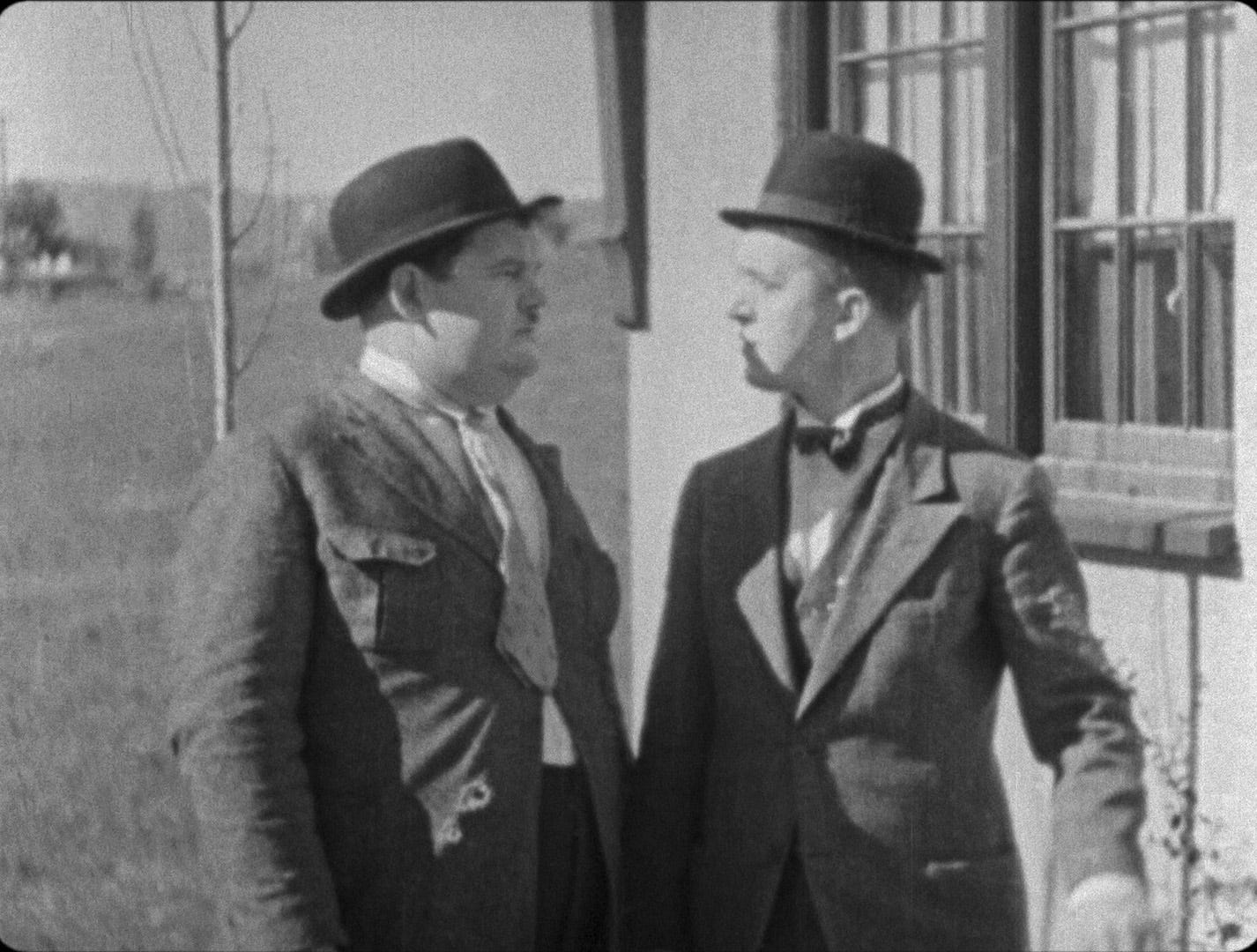
Laurel & Hardy: The Silent Years (1929) is available now via Eureka Entertainment.
Laurel & Hardy were part of a select group that successfully made the transition from silent cinema to sound, and while studio machinations would see them split briefly at the end of the 1930s, they would remain forever linked in the minds of film fans.
The level of output is incredible as well. The duo was put together by Hal Roach in 1927, and would work at pace, as demonstrated here by this collection of shorts released in 1929 alone. Remastered using the best possible materials by Blackhawk Films, and released by Eureka Entertainment, this features nine headline shorts which take the pair up until their first sound films, as well as excerpts from the 1929 Hollywood Revue, radio skits, as well as a selection of their first sound films.
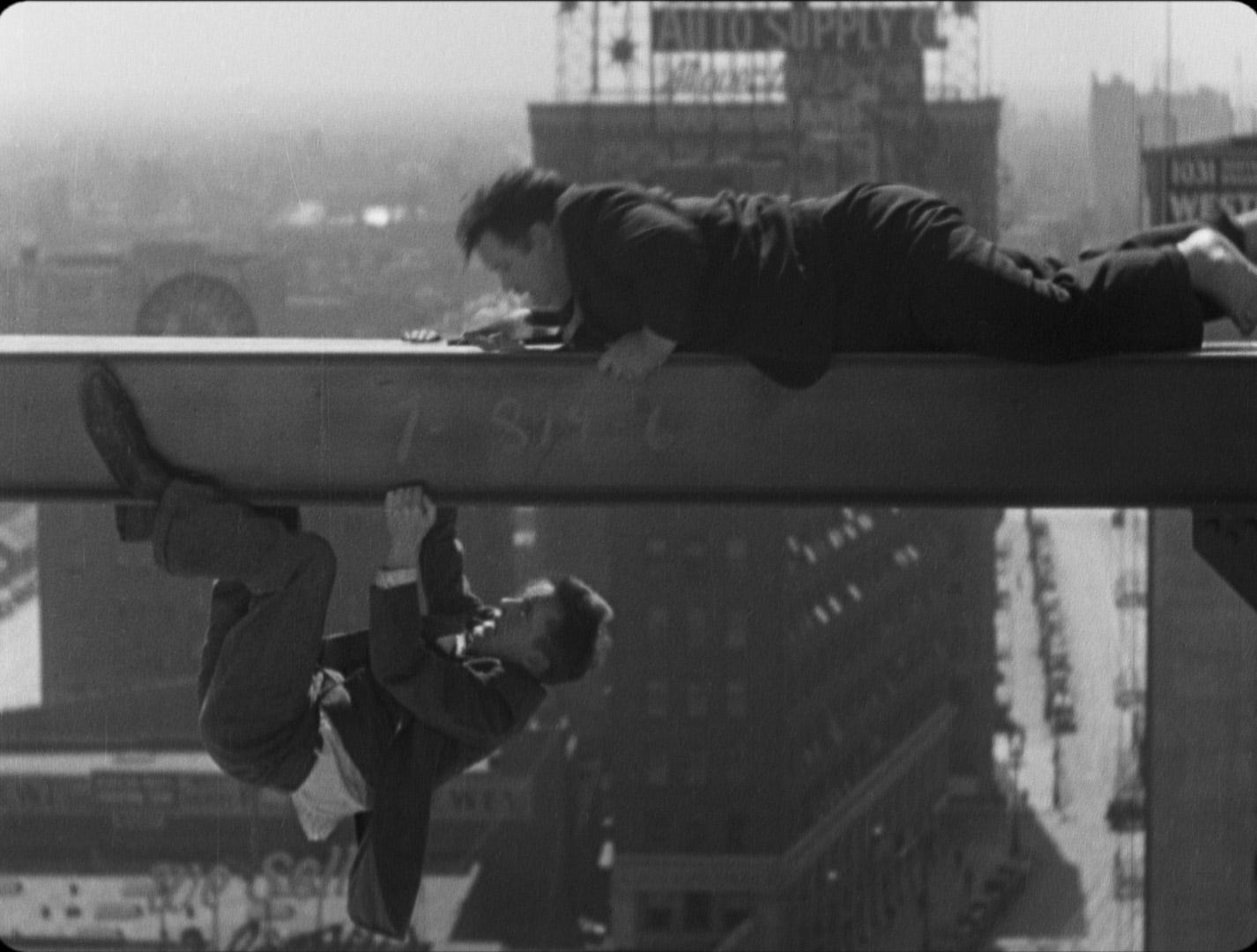
Liberty (dir: Leo McCarey), the first on the disc, stands out from the rest as the pair attempt to match Buster Keaton or Harold Lloyd for daredevil antics. Built around a cut scene from their previous film, We Faw Down (1928), the pair are convicts are the run who end up wearing the wrong trousers. This simple set up builds as they attempt to swap trousers without scandalising passers-by, eventually leading to them scaling and hanging from a construction site.
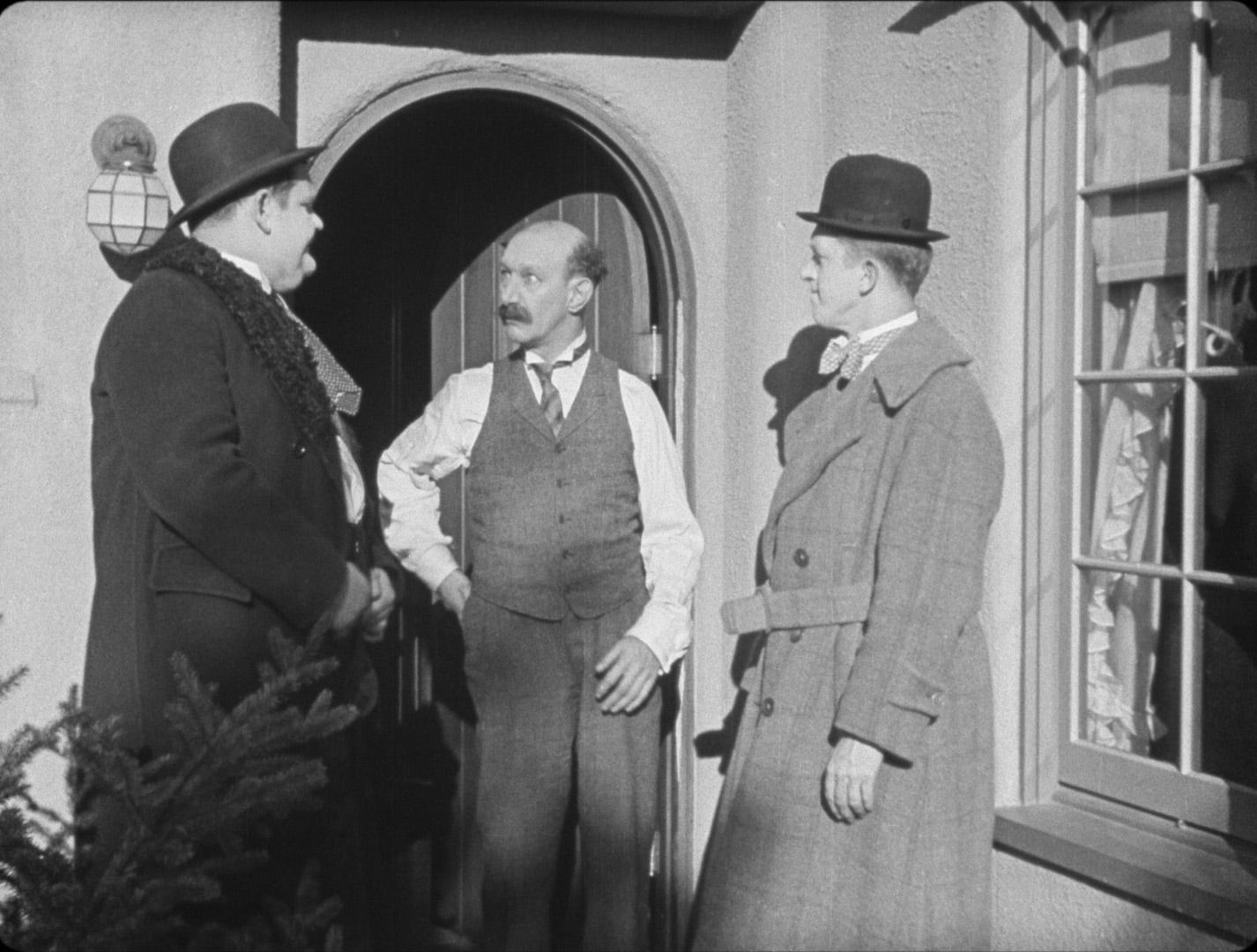
For anyone unfamiliar with their work, the film acts as a wonderful introduction. Hardy’s stature and expressive face, contrasting the slight Laurel, who’s shock of hair and exaggerated gormless, or sad, expressions, meant that they could quickly swap between straight man and comedic foil. Laurel would often, quietly, have the best ideas, overruled by the louder Hardy until it was too late for any plan to succeed.
Wrong Again (dir: Leo McCarey) and Big Business (dir: James W. Horne) stand out as the funniest films in the collection. Without contemplating the laws around animal welfare at the time, Wrong Again contains some of the best visual humour, as the pair mistakenly take a horse named Blue Boy to the house of a man who has lost the painting Blue Boy.
Big Business is a little more mean-spirited, but never offputtingly so. The pair are Christmas tree salesmen who argue with a would-be customer (James Finlayson), eventually going as far to systemically destroy the man’s property. Like the best Laurel & Hardy films, it’s this escalation, never letting you finish laughing before the next joke begins that makes them such a joy to watch.
NON-CANONICAL: THE GENERAL
·
May 18
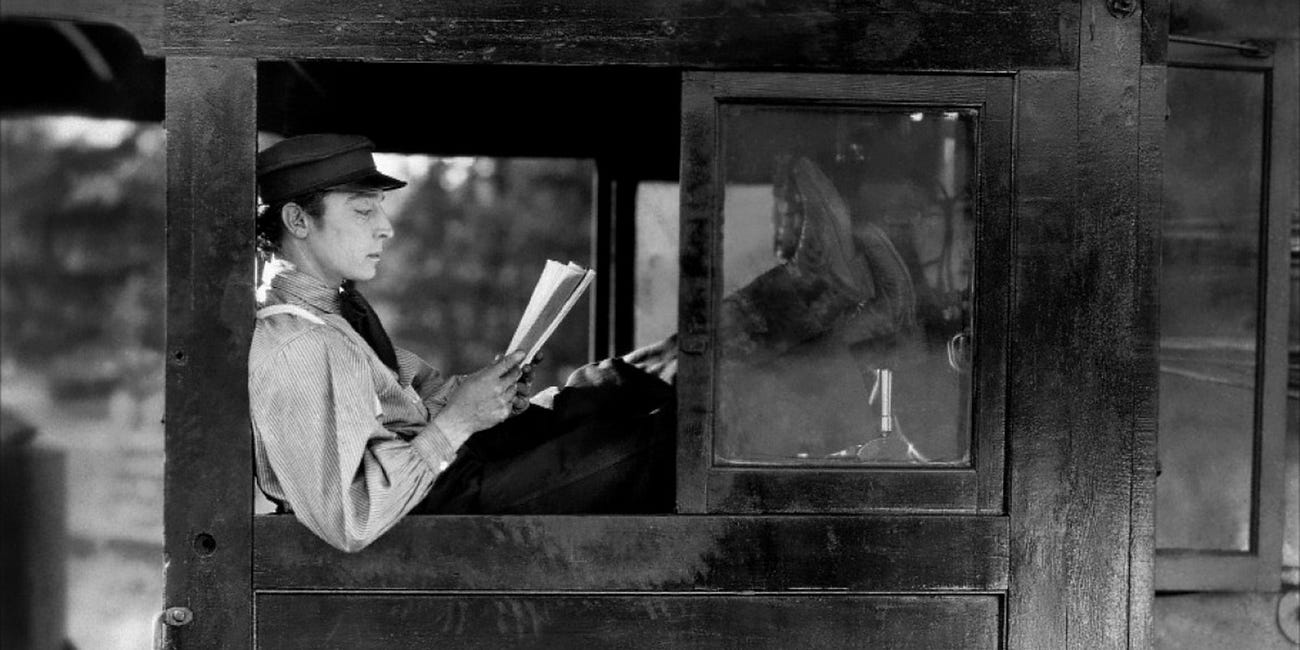
Spoilers for The General (1926). The General is available on 4K/Blu-ray now as part of Eureka Entertainment’s Masters of Cinema collection.
We also get That’s My Wife (dir: Lloyd French) in which Laurel must pretend to be Hardy’s wife to ensure an inheritance; Double Whoopee (dir: Lewis R. Foster), where the pair cause havoc at an upmarket hotel, including nearly stripping off Jean Harlow in one of the actress’ first roles; Bacon Grabbers (dir: Lewis R. Foster), which follows a similar chaotic pattern to Big Business as the pair try to repossess a radio; Angora Love (dir: Lewis R. Foster), where the pair are accosted by a wandering goat; and Unaccustomed As We Are (dir: Lewis R. Foster, Hal Roach) and Berth Marks (dir: Lewis R. Foster).
What’s interesting about the last two is that they mark the true end of the silent era for the comedy duo. Both were released in silent versions and in sound, and this is clear from the increased amount of dialogue given to the pair. Both versions of Unaccustomed… are included, and the sound version works far better because the rapid-fire dialogue given to Laurel & Hardy isn’t cut down to a few intertitles.
Hidden away in the comprehensive special features are two additional shorts, They Go Boom! and The Hoose-Gow (both directed by James Parrott), which were the first sound only shorts the duo would make. We also get the 1925 short Hop to It (dir: Ted Burnsten), which starred Oliver Hardy, billed as Babe Hardy, as a bellhop to an upmarket hotel. There are clear parallels to Double Whoopee here, only with Bobby Ray standing in for Stan Laurel.
Despite the age of the materials, the upscaling work is incredible. Blackhawk has done a wonderful job here. For the most part, the films are crisp, with only a few scenes not meeting that standard – all of which are highlighted in the details at the start of each presentation.
Matched to this is the comprehensive extras that Eureka has pulled together. Multiple scores for many of the films, commentaries on every one of the main films, and various presentations of films, including some on Super 8 film.
There is also a wonderful and informative documentary by David Cairns and Fiona Watson, and writing from Paul Merton on each of the films included here.
Comments
Nothing yet. Say the first thing.
Sign in to join the conversation.