
Just a quick note to let you know that, after this week, I am taking a 2-week summer break from posting new articles. You will receive “From the Archives” editions on Friday, June 26th and Friday, July 3rd. I’ll be back on Friday, July 10th with three consecutive issues dedicated to Disability Pride Month (July). Then, I will have a special celebration of this publication’s 1st Birthday, which is on August 1st!
When I was diagnosed with the genetic heart condition Hypertrophic Cardiomyopathy (HCM) in 2011, one of the many aspects that overwhelmed me was the medical terminology. Cardiologists and nurses were bandying about phrases like ejection fraction, left ventricular outflow tract obstruction, septal wall, and mitral regurgitation.1 I felt like they were speaking a foreign language that I had yet to learn.
Thankfully, I have always been very good with languages. I was a straight-A Spanish student from 7th grade through the end of high school. I even earned a 5 on the Spanish Advanced Placement (AP) exam, which is the highest possible score (she said, patting herself on the back). When I got to college, that AP score would have allowed me to become exempt from the foreign language requirement. Instead, I made Spanish my major and spent the summer after graduation studying abroad at the University of Salamanca in Spain.
During my senior year of college, I decided, what the heck, I should spend two semesters learning some French too. It came in handy after I studied abroad when my best friend and I traveled through Europe, including French-speaking locales such as Nice, Monte Carlo, Geneva, and Paris. Since then, I have, sadly, let my language skills deteriorate. (Anyone want to start a Spanish conversation club?!)
However, there are two notable exceptions. I’ve been helping my godson, who is currently finishing his junior year of high school, study for Spanish tests since he was in elementary school. We have so much fun, and it’s been a great reminder that I retained a remarkable amount of what I learned, especially as compared to every other school subject. Three years ago, he won the Spanish Award at his middle school academic awards ceremony, and I’ve literally never been prouder of anyone.
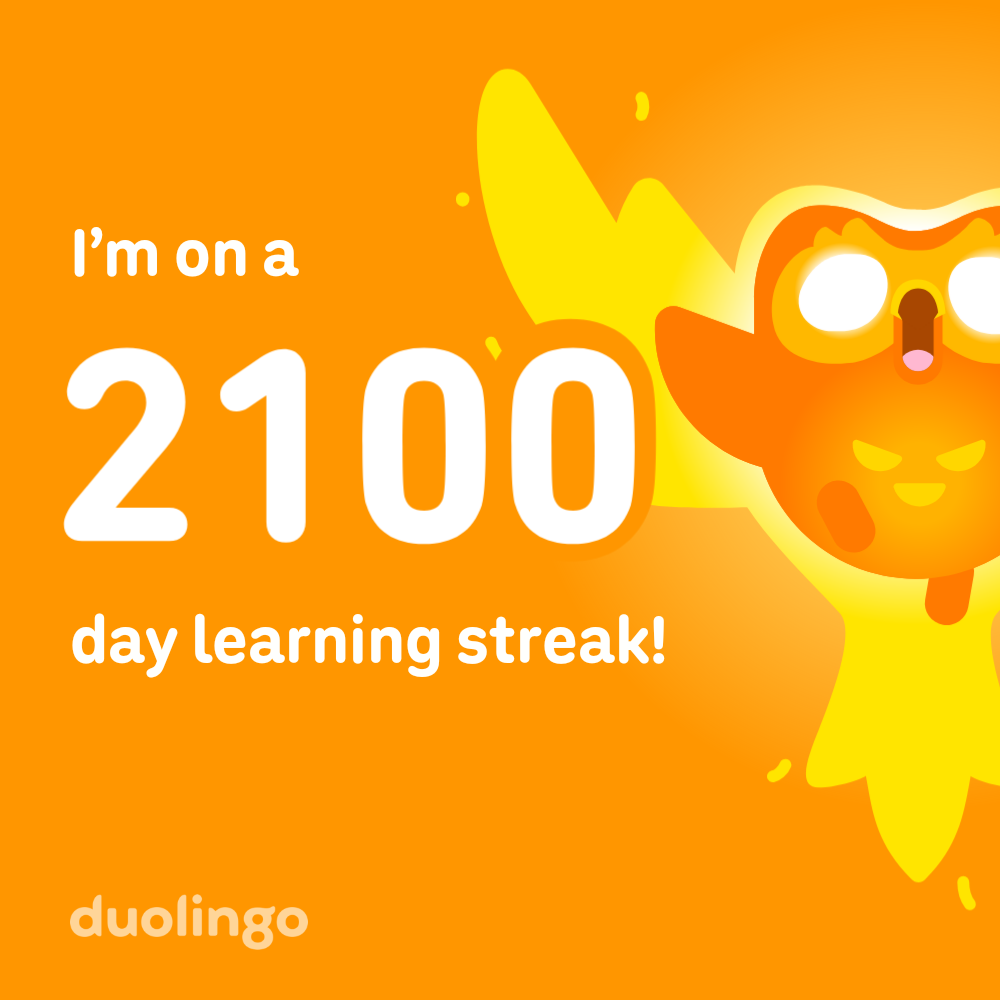
And when the pandemic started, I picked up French again on Duolingo. My learning streak on that app now extends nearly 2200 days, and although my French speaking is awful, my reading and listening are decent again, and it’s something I enjoy doing for 10-15 minutes as I wind down at the end of each night.
So, when I received my HCM diagnosis, I knew I had to start studying and get up to speed. If I did, it was only a matter of time before I would become proficient in that medical language, just as I did with Spanish and French. I might even become fluent. The same has been true with every additional medical diagnosis since, whether it’s a chronic illness, a disability, or an implanted cardiac device.
Why are apps like Duolingo, Babbel, and Rosetta Stone so popular for foreign language learners? Well, it’s accessible to most people right on their phone. You can learn on your own time. And you can do so in bite-size portions. If I only have 2 minutes to maintain my Duolingo streak on a busy day, then I only spend 2 minutes. On other nights, I have more time and treat it like a video game, racking up points in exchange for my studies. Either way, I keep my learning streak intact.
When I apply that to medicine, my approach is a little less structured but follows the same concept. When organizations like the Hypertrophic Cardiomyopathy Association (HCMA) or WomenHeart hold educational webinars, I sign up for as many as I am available for. If I don’t have time for a 60-minute webinar, I might just watch a clip from the recording after the fact. I may read an article about HCM or cardiovascular disease in women, whether it’s in a major newspaper, a scientific journal, or here on Substack. Sometimes I save up my reading material for weeks until I’m able to dive into it and absorb the information.
I recently heard a marketing professional say that we are bombarded with 5000-7000 pieces of information per day, most of which is on social media, and we only retain a small portion of it. As such, I follow a number of medical organizations and creators on the various social media platforms so that I am constantly absorbing whatever new information I can and maintaining my learning streak. Even if I only retain some of it, I’m still increasing my knowledge base.
Starting to learn a new language is daunting, but it can be helpful to begin by breaking down the common grammatical patterns. Medical terminology is based in Greek or Latin and is, conveniently, arranged in such a way that you can break words down into the prefix, root, and suffix to figure out their meaning.2 Let’s use Hypertrophic Cardiomyopathy as an example:
Hyper = A prefix that translates to ‘too much, or above average’
Trophic = A suffix that translates to ‘growth’
Cardio = A root word that translates to ‘heart’
Myo = A prefix that translates to ‘muscle’
Pathy = A suffix that translates to ‘disease’
When you put that all together, you learn that Hypertrophic Cardiomyopathy literally just means that it’s a heart disease where there is too much growth of the muscle. Way less intimidating than the whole name, right?
Once you know how to break down the words, you can start building up your vocabulary. And, in my personal opinion, learning the correct pronunciation is just as important as knowing the words. Here’s a fun way to learn how to pronounce Hypertrophic Cardiomyopathy (see if you can spot my cameo in the video!):
This reminds me of the way I learned Spanish, and the way I helped my godson learn Spanish. Always go back to the basics…the alphabet. Once you know all the letters and how to pronounce them, you can start to sound out words. Any time he struggles with pronunciation, I suggest that he repeat the Spanish vowel sounds out loud…. a e i o u (pronounced: ah ay ee oh oo). 99.9% of the time, he nails the pronunciation of the word on the next try. This applies to medical terminology too. It’s ok for it to look foreign at first, but dig in.
A tip for language learning that I subscribe to is:
“Focus on patterns, not fine details — your brain learns through exposure, not memorizing rules. Spend enough time with the language — the more meaningful input you get, the faster you grow. Trust yourself & trust the process — language learning has ups and downs, but consistency pays off.”3
You can learn vocabulary by reading books, watching tv shows or movies, or listening to podcasts. The method matters less than the exposure to the content. I used to study and read enough Spanish that I was thinking in Spanish instead of English. My vocabulary was large enough to do so.
Similarly, building up a large medical vocabulary and nailing the pronunciations just takes time and exposure. Now, I think in medical terminology, which has been helpful in managing my diagnoses. I think doctors are sometimes more transparent with me or willing to get into the weeds of a diagnosis or recommendation because they know I have studied up and can hold my own in the conversation. In turn, that vocabulary enhances my ability to advocate for myself because the doctor and I are speaking the same language.
A trusty Spanish-English dictionary was nearby at all times when I started learning. As I write this, I can see two Spanish-English dictionaries and one French-English dictionary on the bookshelf next to me. Now, these tools are available to us on our computers or smart devices. But I would argue there is still value in supplementing those with physical glossaries or dictionaries.
For example, that same bookshelf contains the book A Guide to Hypertrophic Cardiomyopathy: For Patients, Their Families and Interested Physicians (Third Edition)4 by Barry J. Maron MD and Lisa Salberg, with a Foreword by the recently-deceased Eugene Braunwald MD (may he rest in peace). The glossary at the back of this book has been a foundational vocabulary lesson for me in HCM over the years.
Likewise, I have a Mayo Clinic book called Guide to Integrative Medicine by Brent A. Bauer M.D. As I tried to find healing modalities that would be effective for my Autoimmune Sensory Neuropathy, I wanted to learn more about some of my options. The book is basically a 200+-page dictionary for options including nutrition, mind-body techniques, acupuncture, massage therapy, herbs and supplements, alongside the scientific rationale for each and how to be sure you find good research and reputable practitioners in those fields.
All that being said, no matter what medical challenge you face, you can find online glossaries to refer to for your condition, resources at your local bookstore, or definitions provided by most major medical centers. And if there is a word you don’t understand, just look it up! That’s a good rule of thumb, even if what you’re reading is in plain English.
It’s also completely ok to make mistakes, especially with a new diagnosis. I was out of my depth when I first began to meet other patients with HCM. Not only did they know the terminology, but they knew their own heart measurements from echocardiograms, and they shared those stats like a badge of honor.
Rather than feeling like I’d never be able to keep up, I asked questions, even if they seemed silly. Now, I typically recognize the language they are using. But if I don’t, I still say so! Just a few weeks ago, while I was moderating an online discussion group, an attendee said they had Afib with RVR.5 I wasn’t sure what RVR was, so I asked them to explain. It stands for rapid ventricular response, and when combined with Afib, or atrial fibrillation, it can be a dangerous arrhythmia. Once we were on the same page, speaking the same language, we could chat about her concerns more fluently.
We can’t achieve fluency in our disease until we’ve conquered the basics. With Hypertrophic Cardiomyopathy, as well as my other diagnoses, I consider myself a lifelong learner. This helps me have more informed conversations with my doctors and increases the potential to improve my own outcomes.
While my Duolingo streak surges ahead, my medical learning streak will always beat it. 15 years and counting with HCM, and there’s still so much more vocabulary to learn.

Each issue of “What’s Her Problem?” includes questions for further discussion. Leave a comment below!
This week’s question:
What terminology that you had never heard until the start of an illness or disability is part of your everyday vocabulary now?
Related Posts:
Ejection fraction = The percentage of blood your heart pumps out each time it beats.
Left Ventricular Outflow Tract (LVOT) = The muscular channel in the heart where oxygen-rich blood passes from the left ventricle into the aorta. Often obstructed in Hypertrophic Cardiomyopathy.
Septal wall = The wall of the left ventricle, or lower chamber, of your heart.
Mitral regurgitation = Blood flowing back the wrong way after passing through the mitral valve.
Disclaimer: As an Amazon Associate, I earn from qualifying purchases.
Comments
Nothing yet. Say the first thing.
Sign in to join the conversation.