
For someone who works in the fashion industry, this is surprisingly difficult to write, but it’s something that’s been sitting at the back of my mind for a couple of years now and shows no sign of going away. In fact, the more I think about it, the more convinced I become.
We have enough clothes.
A couple of years ago I decided to see how long I could go without buying any new clothing. Hosiery was exempt, naturally, but everything else was off limits. I managed a good six months before finally giving in. What broke me wasn’t fashion, temptation, or a particularly beautiful vintage dress. It was the gym. The yoga pants I’d been wearing for the best part of a decade had finally reached the point where replacement was unavoidable.
Since then I’ve become very wary of buying anything brand new.
The thing is, not only do we have enough clothes, we also have enough old clothes. By “old clothes” I don’t mean worn-out garments destined for the rag pile. I mean clothes made from good fabrics, with proper construction, that have already survived for years or even decades. The one thing we don’t seem to have enough of is time. Finding quality pre-loved clothing takes effort. You need to know where to look and often be willing to learn a few basic skills along the way. You might need to sew on a button, replace a zip, repair a seam, or simply learn how to launder and iron different fabrics properly.
Those skills used to be considered completely normal. Now they’re almost seen as specialist knowledge.
When I started What Katie Did in 1999, I focused exclusively on lingerie and hosiery because those were the areas where vintage clothing genuinely fell short. In the 1990s it was still relatively easy to find affordable vintage dresses, coats, suits, and separates. Every Friday morning before work I’d be at Portobello Road Market hunting for bargains, and on Sundays I’d head up to Camden.
That was where my love of vintage lingerie first began, but before What Katie Did came along it was actually dresses and outerwear that I spent most of my time searching for
The lingerie I designed was intended to replace vintage pieces that had become too delicate for everyday wear or were simply difficult to find in sizes that suited modern bodies. I assumed my customers would be fellow vintage enthusiasts looking for practical alternatives to fragile originals. What surprised me was just how mainstream the brand eventually became.
Throughout the early years of What Katie Did I wore almost entirely vintage clothing, and one of the reasons was simple: it was affordable. I still remember finding a dress at a Rhythm Riot morning boot sale for the princely sum of £2. As I write this, it’s hanging on a rail waiting to make its way onto Vinted. I’m fairly certain I’ll make a profit.
Back then there were very few reproduction vintage brands. Vivien of Holloway was the obvious one. I know Collectif launched in 1999, the same year as What Katie Did, but somehow I completely missed that at the time. Then things started to change. Vintage prices rose dramatically, reproduction brands appeared everywhere, and I moved from London to the Berkshire countryside, where mud, wellies, and country life made wearing true vintage a little less practical.
Almost without noticing, I went from being 100% vintage to almost 100% reproduction vintage.
Why Are Retro Brands Selling Fast Fashion?
·
May 19
I promise I do have some arty fashion things I’m desperate to write about (maybe over the weekend), but something else has just caught my attention. Running a micro brand, and having been in the vintage fashion world for 30 years now, means I’ve watched a lot of changes happen in real time. Brands come and go, customer habits shift, prices creep upwards…
It’s only within the last year that I’ve really started returning to true vintage clothing, and oddly enough I think reproduction fashion is partly responsible.
There are now so many reproduction brands producing vintage-inspired clothing that original vintage has become affordable again. In most cases it’s actually cheaper than buying a newly made reproduction dress.
At What Katie Did we started with lingerie and hosiery, and sometimes I wonder if that's where we'll eventually end up again. We currently produce a very small capsule collection of clothing alongside our lingerie, although even that is something we're reviewing. I've always admired the approach taken by Fifi Chachnil, which remains firmly focused on lingerie but occasionally introduces a beautiful dress, skirt, or sweater. Rather than constantly creating new collections, each piece feels considered and special.
Over the years I’ve become increasingly fussy about fabrics, which makes shopping in most high street stores surprisingly difficult. Something might look wonderful online, but I know from experience that the fabric often won’t live up to the photographs. A couple of months ago Marks & Spencer had a pair of linen palazzo trousers that caught my eye. Rather than ordering online, I visited my local store to inspect them in person. Amongst racks of fabrics that didn’t particularly inspire me was this one genuinely lovely pair made from a beautiful linen blend. Unfortunately they didn’t have my size, which was probably for the best because I was genuinely tempted. At least I confirmed they were every bit as nice as they looked online.
These days I very very rarely shop in conventional clothing stores. Instead, I spend my time at charity shops, vintage fairs, and local events.
I’m particularly lucky in Pangbourne, where What Katie Did is based. For a relatively small village, we’re blessed with three charity shops. Just last week I came home with a pink summer dress, a pair of satin shoes, and a matching handbag.
Somerset has become another favourite hunting ground. The county seems to be full of vintage fairs, haberdashery events, textile markets, and thrift sales. One of my favourites is The Vintage Bazaar, held twice a year at the Cheese and Grain in Frome. It’s become such a fixture in my calendar that I’m even considering trading there myself.
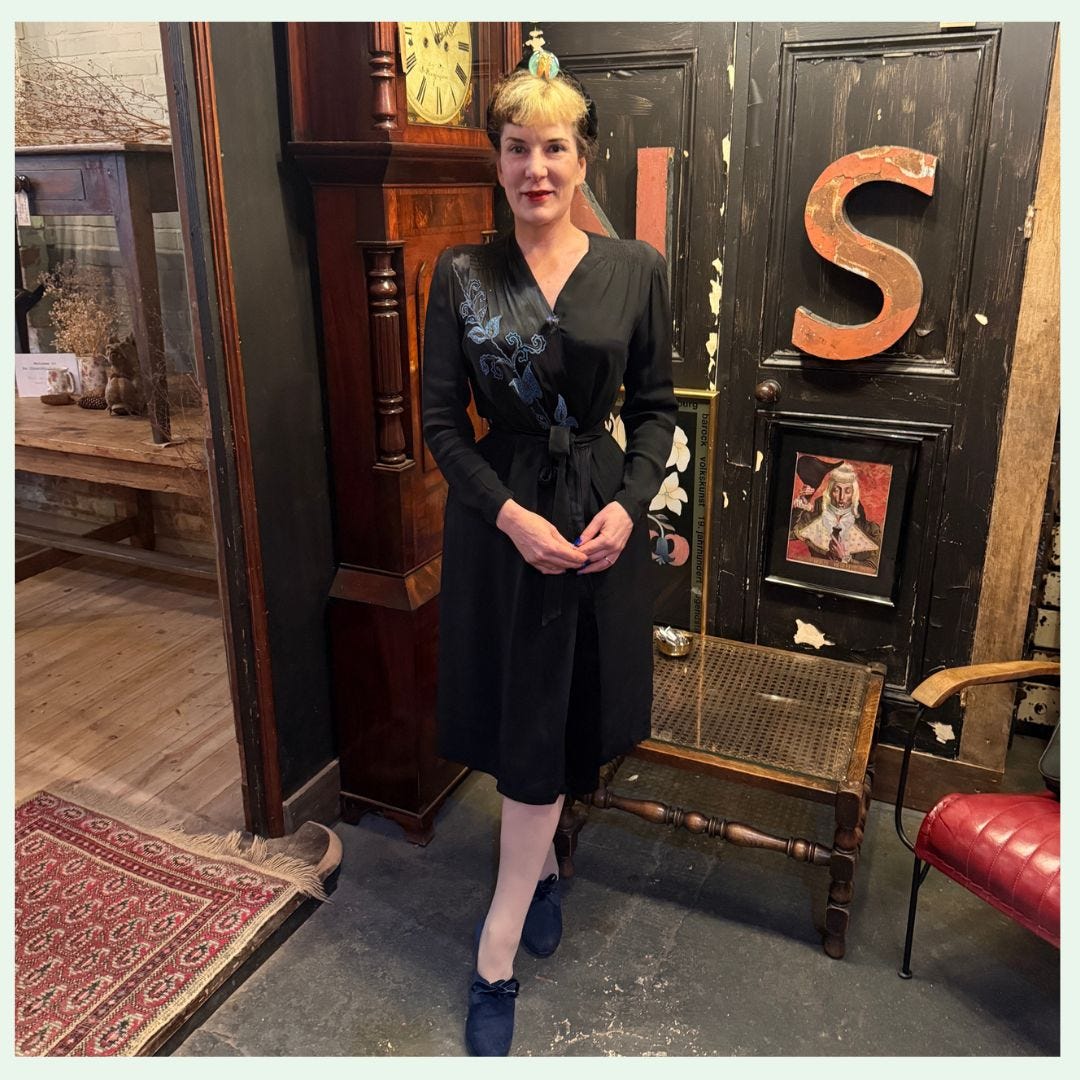
Last year I bought a black dress with a pink floral print for £10. It needed a new zip, and I actually banned myself from attending the next event until I’d repaired it. Thankfully I eventually got around to doing the job, which means I can return guilt-free next time.
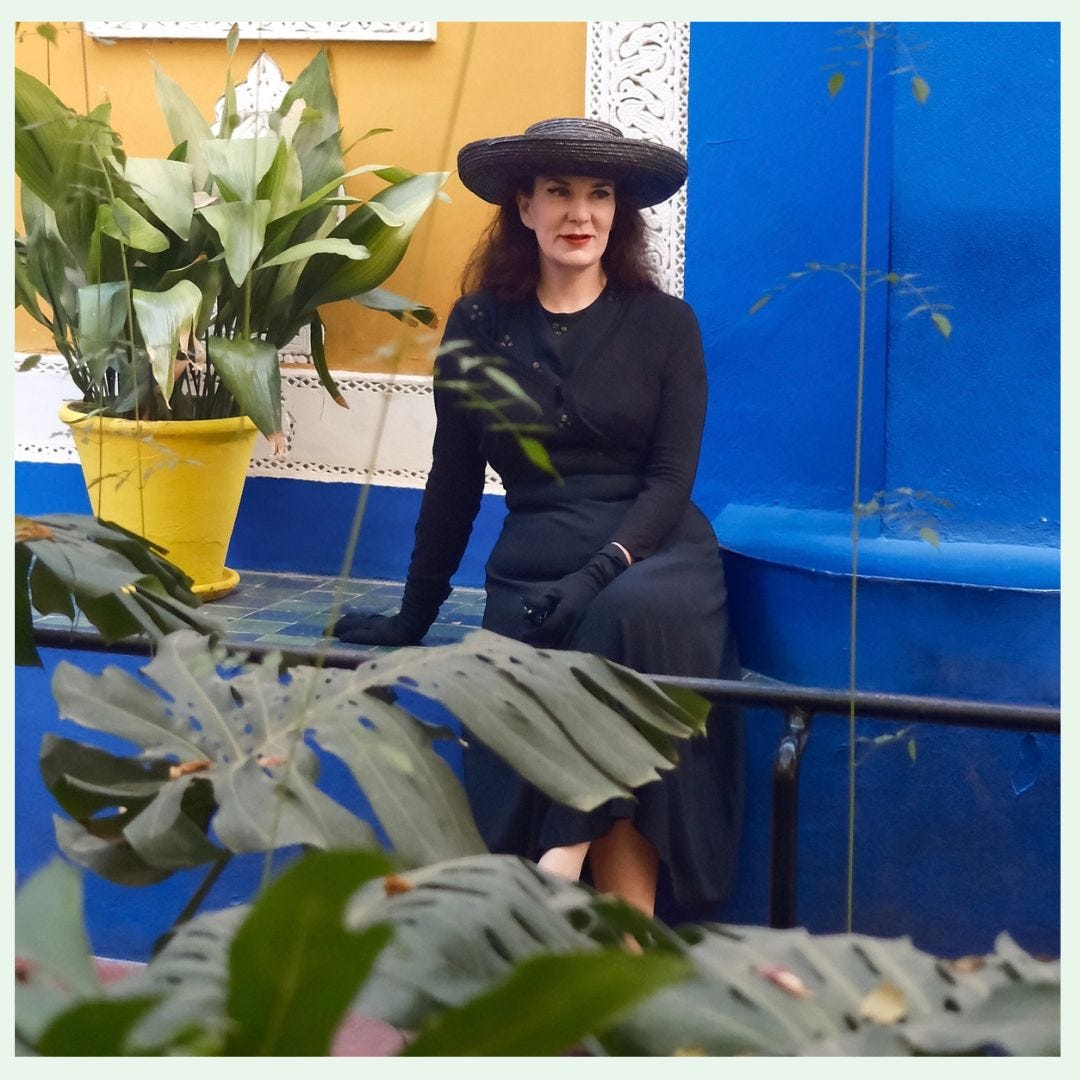
At the same event I picked up a lovely black dress with gold beaded detailing for £35. I’ve worn it countless times since, including on a trip to Marrakech. Another favourite is a 1940s black dress with blue detailing, also around the £45 mark, which I found at the Shepton Flea. Another favourite events are the wonderful vintage textile events organised by Lizzie at The Washerwoman. They’re relatively small affairs compared to the larger vintage fairs, but once you start looking for these local events they seem to appear everywhere.
Of course, there is a catch: finding these treasures takes time.
I’m naturally a bit of a magpie and genuinely enjoy the hunt, so I don’t really think of it as work. If I calculated the hours spent visiting fairs, rummaging through rails, researching labels, and carrying out repairs, I’d probably discover it was far ‘cheaper in time’ to buy from a curated collection.
That’s something worth remembering when people question the prices charged by professional vintage resellers. The garment itself may have cost little, but sourcing it, cleaning it, repairing it, photographing it, and presenting it for sale all takes a lot of time.
For me, though, the searching is half the fun. I enjoy finding things that nobody else has noticed. I enjoy learning about fabrics and construction techniques. I enjoy rescuing garments that simply need a little attention before they can be worn again.
The fashion industry is built around persuading us that we constantly need something new. Yet the older I get, the more I find myself thinking the opposite. We already have wardrobes, charity shops, vintage fairs, attics, wardrobes belonging to parents and grandparents, and an extraordinary number of beautifully made garments waiting to be worn again.
Perhaps what we really need isn’t more clothes. Perhaps we just need to make a little more time for the ones that already exist.
Links
It’s Vintage Darling by Christa Weil Menegas. This book is nearly 20 years old but it tells you how to care for and repair vintage fashion. One of my favourites.
The Washerwoman West country vintage haberdashery and fabric shows
The Vintage Bazaar Frome, Somerset
Shepton Flea Somerset
Fifi Chachnil Paris based lingerie brand which now makes most of their pieces to order
Katie Thomas is the founder of What Katie Did, a vintage-inspired lingerie and fashion brand that brings mid-century glamour to modern wardrobes. When not designing new collections, she can be found hunting for vintage treasures across Somerset and beyond.
Curious to explore more vintage-inspired treasures? Our lovingly crafted lingerie and fashion collections at What Katie Did bring the elegance of yesteryear into your modern wardrobe, from perfectly structured corsets to the most delicate of intimates. Each piece tells its own story of timeless glamour.
Comments
Nothing yet. Say the first thing.
Sign in to join the conversation.