
Not ready to commit to becoming a paid subscriber? We totally understand. But if you’d like to support our efforts, you can now make a one-time contribution for as little as $3. Every little bit helps!
Donald Trump has apparently discovered a novel solution to stubbornly high beef prices: import a massive quantity of cheaper foreign beef, temporarily waive the tariffs his administration has spent years championing, promise consumers a discount, and continue blaming Joe Biden for the underlying problem.
The administration announced Friday that it would allow as much as 300,000 metric tons of ground-beef product to enter the United States over the next 90 days without the usual out-of-quota tariff. Trump also claimed foreign exporters had agreed that the beef would be sold at 25 percent below current market prices. Yet the White House initially provided remarkably few details about who these exporters were, which countries would supply the beef, how the discount would be enforced or how the administration could ensure that savings actually reached consumers. Current reporting confirms that the White House says an executive order formalizing the arrangement is expected within two weeks.
Even if the plan works exactly as advertised, however, it amounts to treating the symptom while potentially aggravating the disease.
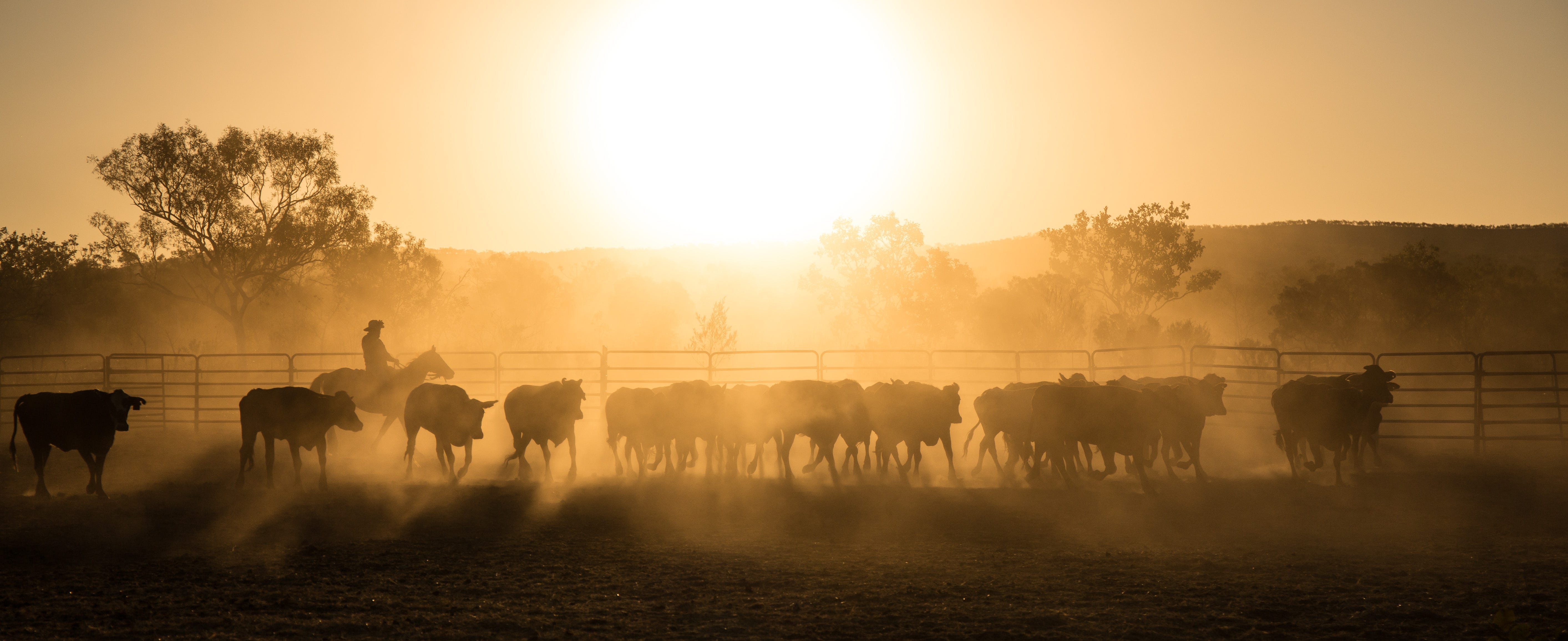
America does not have expensive beef simply because someone forgot to import enough hamburger. The country has a structural cattle-supply problem years in the making. Drought, high feed costs, poor margins and years of herd liquidation have left cattle numbers near historic lows. USDA reported 94.2 million cattle and calves as of July 1, 2026, but the number of beef cows actually fell another 1 percent from the previous year, to 28.5 million, while the projected calf crop declined 2 percent.
Rebuilding that supply takes years. Ranchers cannot manufacture calves on an assembly line because politicians are suddenly nervous about supermarket prices. Producers must retain breeding animals rather than send them to slaughter, absorb the resulting short-term loss of income, breed those animals, wait through gestation and then wait again for calves to grow to market weight. That requires something the administration’s latest policy threatens to undermine: confidence that investing in herd expansion will ultimately pay off.
Instead, Washington is preparing to inject hundreds of thousands of tons of discounted foreign beef into the market.
That explains why cattle producers reacted so angrily. The National Cattlemen’s Beef Association warned that bringing government-facilitated, below-market foreign beef into the country could discourage precisely the herd expansion needed to solve the shortage permanently. Reuters reported that cattle futures fell to eight-month lows following the announcement, illustrating how quickly expectations can change when the government suddenly intervenes in the market.
The contradiction is difficult to miss. For years, Trump has presented tariffs as a way to protect American producers from foreign competition. Now, confronted with politically damaging grocery prices, his administration is temporarily removing tariffs specifically so foreign producers can compete more aggressively against American ranchers.
In other words, protectionism apparently lasts until protection becomes inconvenient.
Consumers understandably want relief. Ground beef approaching $7 a pound is a genuine household expense, and there is nothing unreasonable about wanting government policy to address it. But dumping discounted imports into the market for 90 days is not the same thing as repairing the domestic beef industry. It may produce some temporary price relief, although analysts have questioned whether an import increase of this size can meaningfully transform retail prices across the enormous U.S. beef market. Reuters characterized the measure as limited relative to overall consumption and noted that analysts see the underlying supply shortage as the fundamental problem.
There is also an uncomfortable irony in using foreign beef to rescue consumers from prices that tariffs themselves can make worse. Trump has repeatedly argued that tariffs protect domestic industry without emphasizing that import taxes can also raise the price of imported goods. The administration is now effectively acknowledging that reality by suspending one of those tariffs specifically because eliminating it should make beef cheaper. As one economist told Fortune, imposing tariffs on imported beef becomes especially problematic when domestic supply is already constrained.
The larger concern is what happens after the 90 days are over.
If imported beef pushes cattle prices downward enough to make ranchers more cautious about retaining heifers, expanding herds or investing in additional production, today’s consumer relief could help perpetuate tomorrow’s shortage. That is the central criticism coming from cattle producers: manipulating supply to achieve an immediate retail-price victory can work directly against the slower process required to rebuild domestic capacity.
And then there is the administration’s continuing insistence that the problem belongs to Biden.
USDA said Friday that America’s cattle supply had fallen dramatically “under the Biden administration.” There is historical truth behind the observation that the herd contracted substantially during Biden’s presidency. But that does not make the current administration a spectator to everything that has happened since January 2025.
Trump has now been back in office for roughly 19 months. During that period, the fundamental problem has remained unresolved, and beef prices have continued climbing. The administration cannot plausibly claim that every unfavorable economic condition it inherited remains exclusively the previous president’s responsibility indefinitely while simultaneously taking credit for favorable economic developments occurring on its watch.
More importantly, cattle production does not obey presidential press releases. The administration knew when Trump returned to office that herd numbers were historically low. It knew drought and high production costs had battered ranchers. It knew rebuilding would require a long-term strategy. Yet USDA’s July 2026 figures show beef-cow numbers still declining and the calf crop falling another 2 percent.
After nearly two years, “Biden did it” increasingly functions less as an explanation than as a way of avoiding the more relevant question: What has the current administration done to fix it?
Trump’s latest proposal may temporarily put cheaper hamburger in some grocery carts. If it does, consumers will understandably welcome the savings. But temporary affordability purchased by placing additional pressure on the domestic producers America needs to rebuild its cattle supply is not a durable agricultural policy.
It is a 90-day answer to a multiyear problem.
And if Washington succeeds in making foreign beef cheaper today while giving American ranchers another reason not to expand tomorrow, Americans could eventually discover that the price of that short-term discount was simply deferred to a later grocery bill.
Additional Source: New York Times (Gift Article)
Not ready to commit to becoming a paid subscriber? We totally understand. But if you’d like to support our efforts, you can now make a one-time contribution for as little as $3. Every little bit helps!
No posts
Comments
Nothing yet. Say the first thing.
Sign in to join the conversation.