
Padilla’s Corner

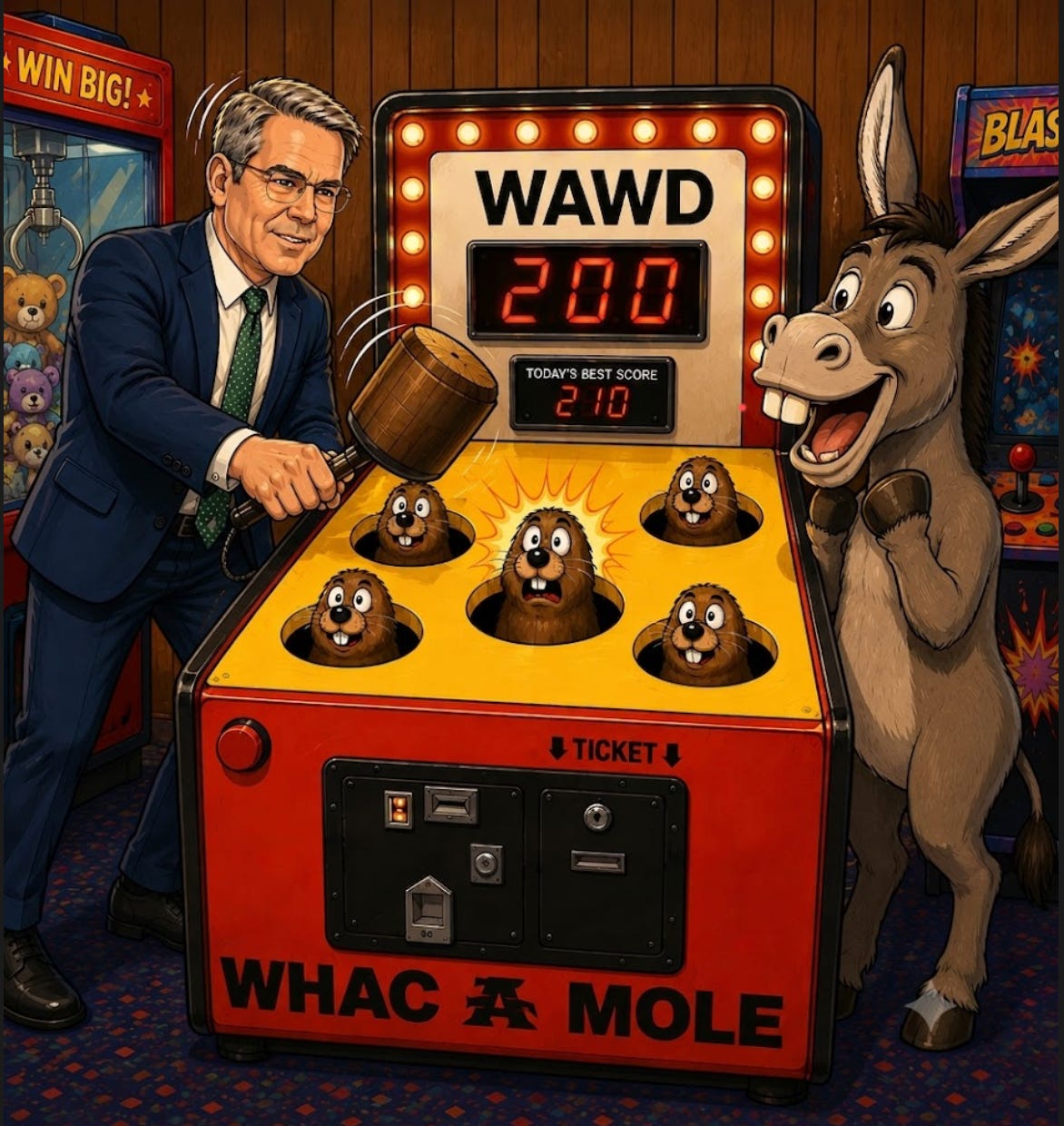
I think a good analogy to many of the macro challenges facing the global monetary system and economies can best be explained through the game of “Whac-A-Mole”.
Ironically, “Whac-A-Mole” was created in Japan in 1975 as the Japanese economy was beginning the transition away from rapid postwar growth and feeling the impact of the 1973 oil shock that sent Crude from $3 to $12 due to supply constraints. The price of fuel forced the Japanese economy to adapt to developing technology and electronic products while focusing less on energy intensive industries.
For those not familiar with the game, if the player does not strike a mole within a certain time or with enough force, it eventually sinks back into its hole with no score. Although the game starts out slow enough for most people to hit all of the moles that rise, it gradually increases in speed, with each mole spending less time exposed and with more moles exposed at once. After a designated time limit, the game ends, regardless of the player’s score. The final score is based on the number of moles the player struck.
For the sake of simplicity, the original game had 5 holes where the moles would pop up from and we will focus on 5 macro challenges we are seeing today. It’s hard to really “fix” any of them without tough decisions that just aren’t palatable in today’s political environment, so instead we just try and knock them back into their hole when they keep popping up.
MADE IN JAPAN
Let’s start where the game was created, Japan. A financial crisis has been brewing since 1991 when Japan’s asset bubble collapsed. The years that followed, called “The Lost Decades”, were filled with stagflation, large fiscal deficits and an aging demographic. Japan launched “rescue packages” dedicated to infrastructure projects and construction, as well as loan guarantees for small businesses and was the first, years ahead of Bernanke, to employ quantitative easing (QE) in March 2001 in order to stimulate the economy. This went on for five years before they began a second round of QE in October 2010. Then came “Abenomics” and Japan also began what is called “Yield Curve Control” (YCC) in 2016 and artificially suppressed bond yields to try and stimulate inflation and economic growth and more stimulus followed the COVD pandemic. As a result, Japan is now saddled with the largest debt/GDP ratio of any developed nation at @ 250%.
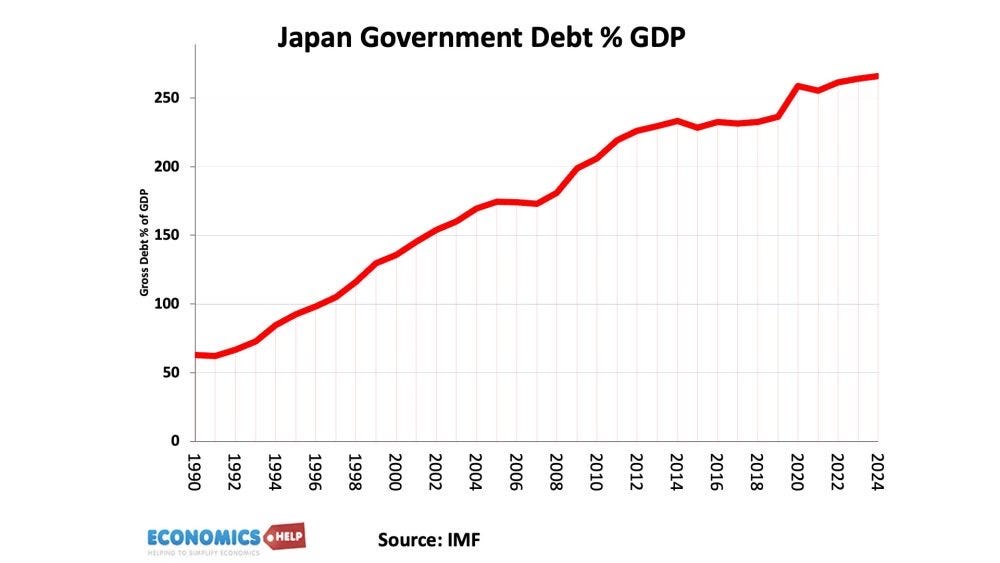
Over the last few years, Japan has attempted to wean off of their fiscal and monetary stimulus by both raising rates and ending their “Yield Curve Control” (YCC) (2024) where they had been artificially suppressing bond yields. Japan wanted inflation and they finally began to get it, what they didn’t prepare for was the rapid increase in oil prices in a still stagnant economy.
The YEN (USD/JPY) had been already been weakening vs. the Dollar leading up to the war with Iran. The wicked combination of a weak Yen and higher oil prices only exacerbated the economic headwinds already facing Japan as they import almost all of their energy needs.
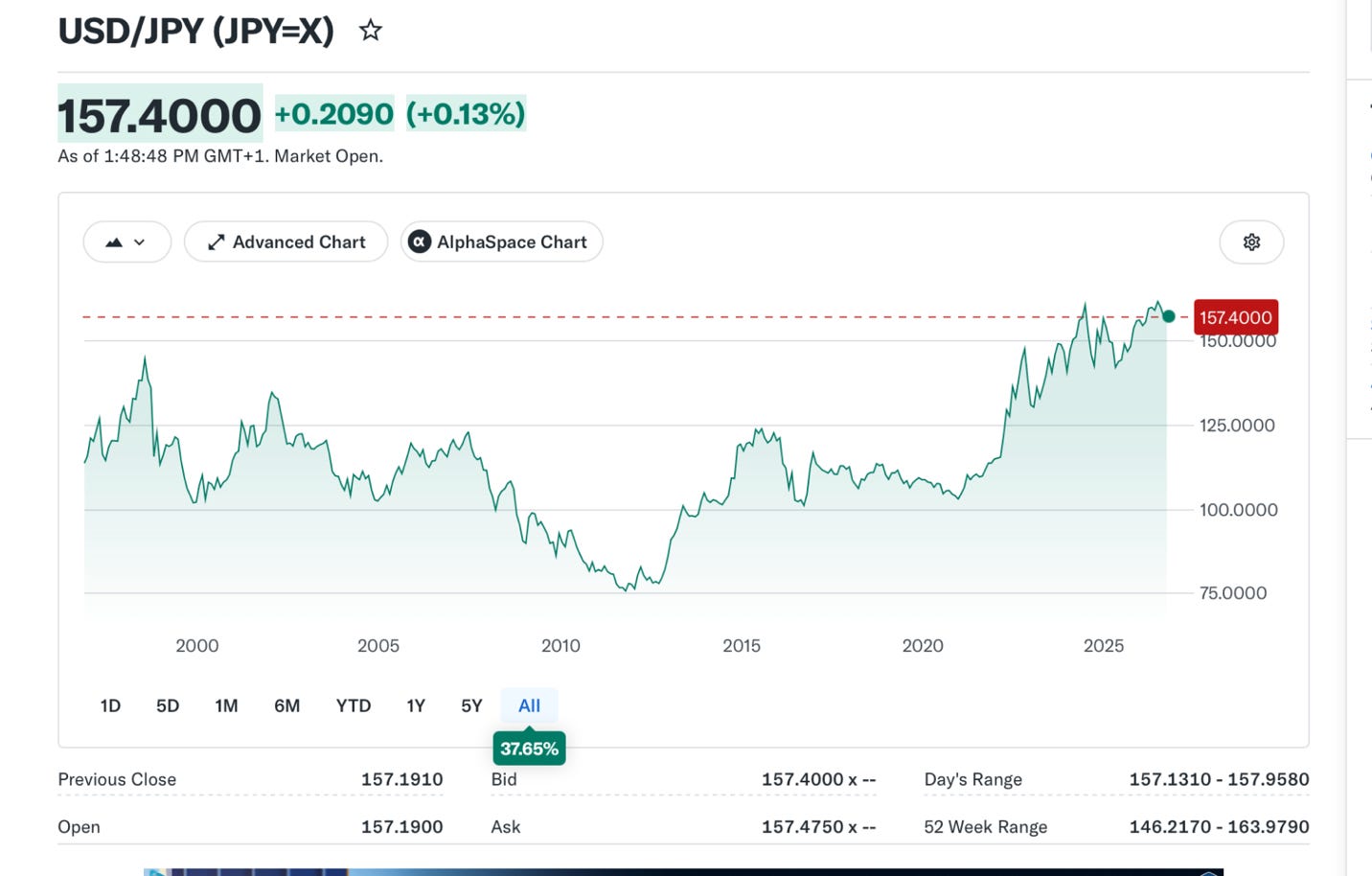
So, Japan has been left with some tough choices. Do they intervene and buy the Yen or do they intervene and buy JGB’s (Bonds) to lower rates? With the state of their balance sheet, they were forced to turn to selling U.S. Treasuries. Well, as the largest foreign holder of Treasuries, this began to cause U.S. Yields to rise. The markets, and especially U.S. Treasury Secretary Bessent, couldn’t sit idly by.
Following Warsh’s second meeting as Fed Chair last week and his slate of rhetorical questions and third person references to himself during the press conference, there was no clear message other than if U.S. rates naturally stay higher on the long end, then that should solve for a form of “tightening” in the markets. But in my mind, it was partially a cover to protect the largest foreign holder of U.S. Treasuries, Japan. Knowing that the BOJ was releasing the results of their meeting just a day later and with the odds of a Japanese rate hike at just 1%, the U.S. had to provide cover so that the Yen would not weaken further and buy Japan more time. The double whammy was that the U.S. was already exploring an intervention to help prop up the Yen and, in their commentary, following the intervention, Bessent gave the equivalent of the “do whatever it takes to preserve the Euro” speech given by then ECB President Mario Draghi in 2012.
Bessent: “Friday’s (July 31st) coordinated foreign exchange actions countered disorderly yen movements. Treasury remains attentive and in close communication with our counterparts at MOF and BOJ. We will not hesitate to participate in further joint intervention. The FIMA Repo Facility is an important backstop. We would encourage it to be upsized in the coming months. We strongly support Japan’s decisive market and monetary steps to correct the substantial undervaluation of the yen. The Takaichi government is moving into an exciting new phase of Abenomics, as nearly 15 years of powerful stimulus have created durable, robust underlying economic dynamics.”
NEED TO “WHAC” OIL AS WELL
In addition to the action taken by Treasury, the U.S called off a planned attack on Iran which sent oil prices lower. As Japan relies almost solely on imports for their energy needs, a weaker Yen only makes it more expensive. So, this “whac-a-mole” intervention by Bessent is keeping the Yen from weakening further preventing Japan, for now, from selling U.S. Treasuries and hoping oil prices keep falling.
In addition to the impact higher oil has on Japan, and other countries, like India, higher oil is a tax on the U.S. consumer at the pump and in most of the products we buy. There is only so much the consumer driven economy can take before it dramatically slows. The whac-a-mole routine to keep the “oil mole” from rearing its head has involved several actions including a large SPR release, a waiver related to the Jones Act, Russia oil sanction relief and talk of a truce/negotiation whenever Oil nears $100 a barrel.
THE US DOLLAR NEEDS TO BE “WHACKED”
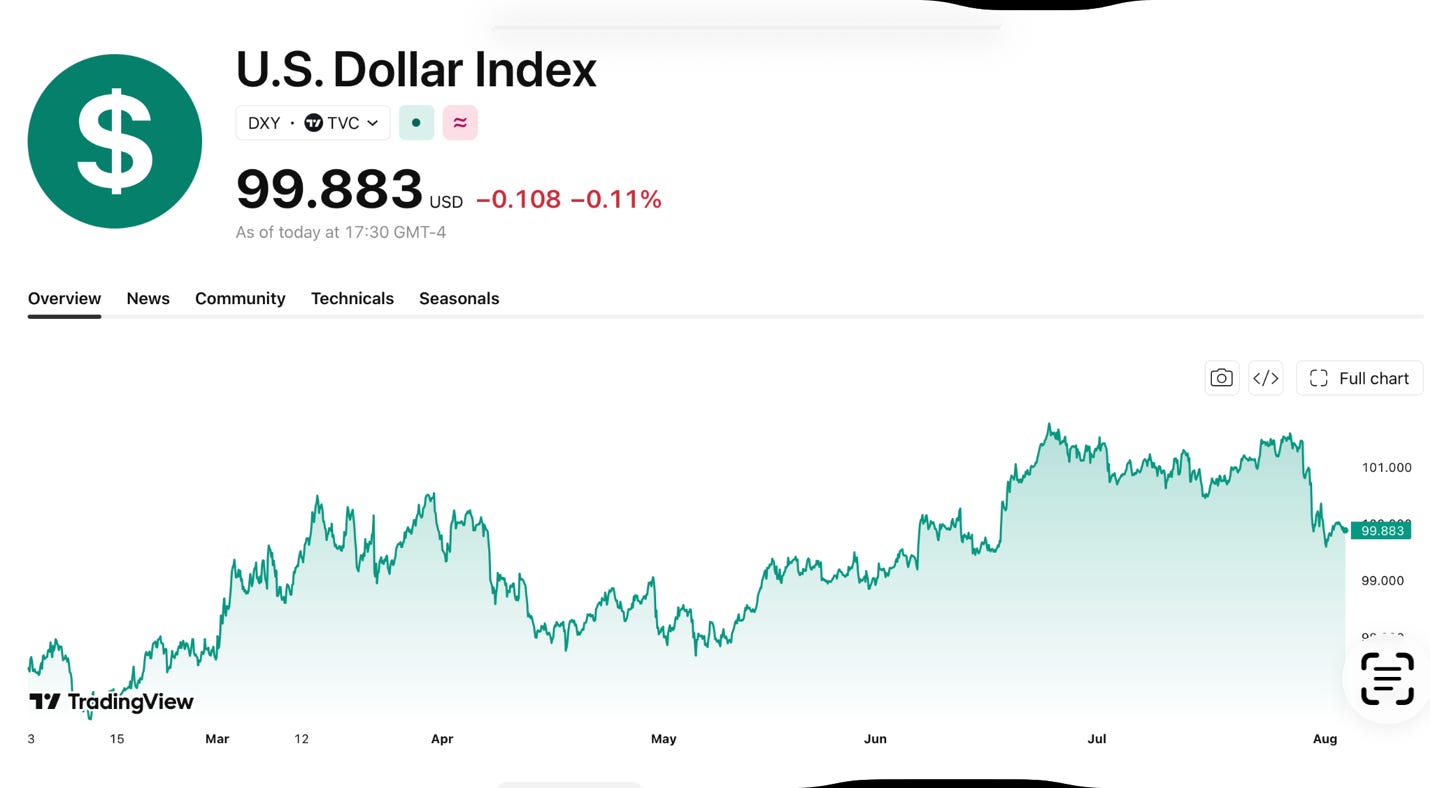
The U.S. Dollar is another mole that bears watching. With inflation running above target here in the U.S. as a result of tariffs and other protectionist policies, as well as a war in the Middle East, the U.S. Dollar has moved higher (as expected). What did the U.S. do about it? They didn’t raise rates; they provided Japan a financial lifeline and they stopped bombing Iran. Again, weakening the U.S. Dollar in the current environment provides a near term bid to risk assets and keeps the mole in its hole, for now.
THE A.I. CAP-EX MOLE
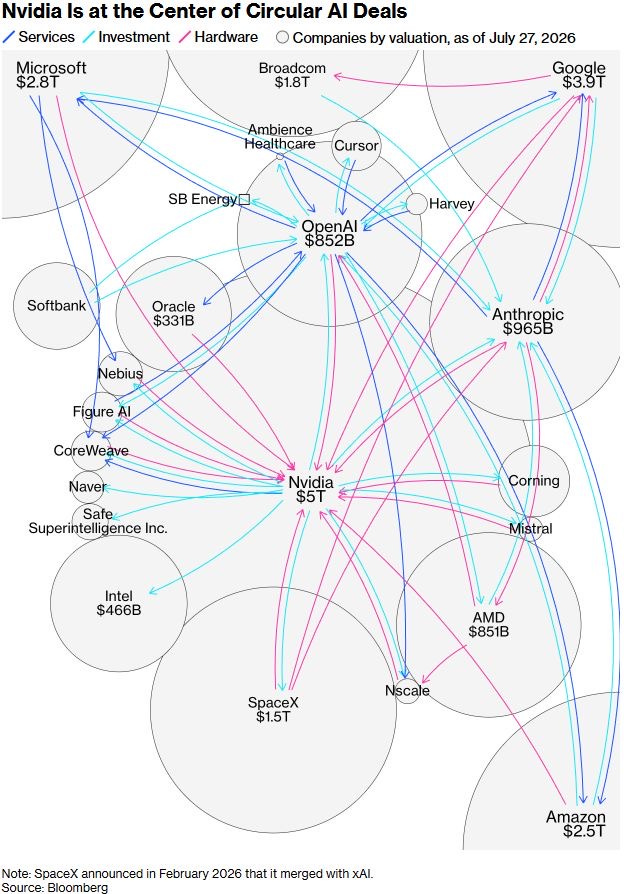
It isn’t just Scott Bessent holding the mallet, this a multiplayer game and Nvidia’s CEO, Jensen Huang has been very active as well. Providing financing and capital to dozens of A.I. related companies that, in turn, purchase Nvidia’s products has provided additional liquidity into a capital intense minefield. Most recently, Nvidia announced A.I. deals worth more than $750 Billion ($500 Billion partnership with SK Group (Hynix) and providing a $250 Billion backstop to help Open A.I. lease computing power from a U.S. data center project.) While this may end up “working out”, it’s hard not to think back to 1999-2000 and the times when Lucent and Nortel were doing similar things. Yes, I know times were different then, blah blah blah, but the Internet was today’s A.I. and the demand for fiber was “endless”. Nobody stopped to do the math and check on the economics of what all the excess fiber in the ground might mean for financial models, similar to trying to calculate AI Token economics.
LAST BUT NOT LEAST, THE VOL MOLE
Whether the VIX and MOVE (VIX of Bonds) are the horses or the carts when signaling distress in the market, it’s always worth watching as a temperature gauge and serves as a precursor to some form of intervention (whac). Over the last few years, we have seen bouts of volatility occur in both stocks and bonds caused by many of the “moles” mentioned above. I would note that as the markets, both equity and fixed income, have become more passive driven over the years, it has lent itself to seemingly more violent moves in the VIX/MOVE but of course vol gets driven back into its hole by what feels like endless demand from passive investors.
It’s hard to see this “Whac-A-Mole” game ending anytime soon as neither politicians nor taxpayers have the stomach to allow markets to behave naturally. The monetary and fiscal experiments that began in Japan and made its way west have created a moral hazard that if unwound would be catastrophic. The interconnectedness of global assets including fixed income, currencies, and commodities as well as the endless appetite for debt fueled investments like datacenters create risks that if they were to begin to unwind, would be “Game Over” and the volatility Mole would be the winner. But for now, Governments and Central Banks will continue to “whac” every mole they see and worry about the consequences later. In the arcade version of “Whac-A-Mole”, you receive tickets based on your score that you can exchange for prizes. In this modern day version, I believe that Gold is the big prize as there has to be a consequence for not letting the markets function naturally. Did you think we wouldn’t mention Gold in this note????
Comments
Nothing yet. Say the first thing.
Sign in to join the conversation.